
How Gantry Cranes Are Used in Shipyards and Shipbuilding?
How Gantry Cranes Are Used in Shipyards and Shipbuilding?
In the modern shipbuilding industry, gantry cranes are absolutely indispensable core equipment – with the increasing tonnage of ships, the popularity of modular construction mode, the global shipyards for large-tonnage, large-span lifting equipment demand continues to grow.
Many people do not know that the construction of a 10,000-ton ship, from steel processing to hull forming, and then to the installation of equipment, each key link is inseparable from the support of gantry cranes. Especially after the rise of modular construction, gantry cranes have taken up the lifting, transfer and assembly of large hull segments, which directly determines the shipyard’s production efficiency and shipbuilding quality.
The Role of Gantry Cranes in Modern Shipbuilding
The biggest difference between modern shipbuilding and traditional shipbuilding is the popularization of modular construction mode, and gantry cranes are the key equipment to support this construction mode. Its role is not only simple “lifting and carrying”, but also to optimize the shipbuilding process and enhance operational safety.
Supporting Modular Construction Methods
Nowadays, shipyards basically adopt modular construction method, which simply means that the hull is split into several independent segment modules, such as the hull deck section, cabin section and superstructure section, which are prefabricated in the workshop and then transported to the ship platform or dry dock for overall assembly.
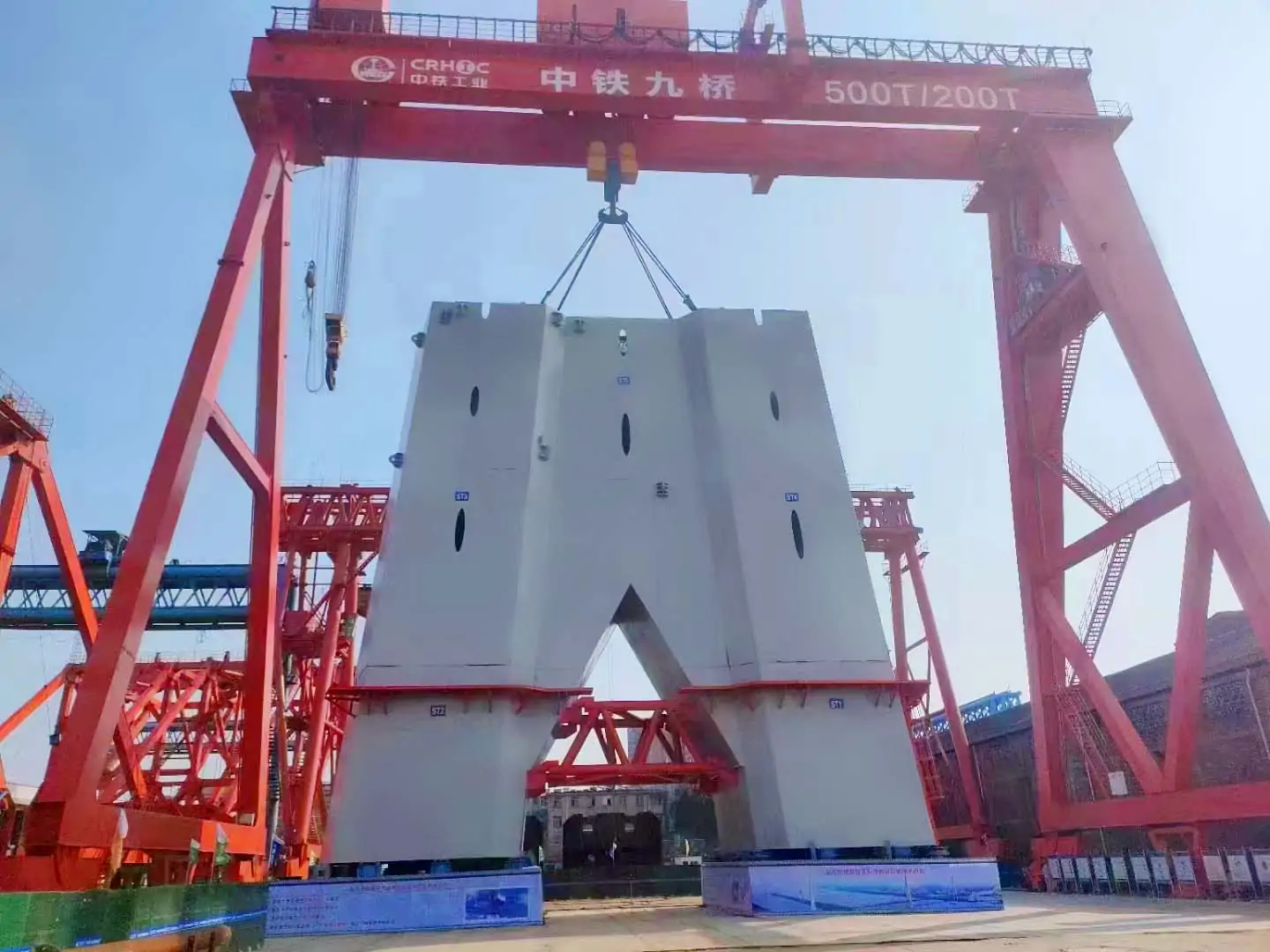
The core role of gantry cranes in this process is to lift and transfer these large hull segments. The weight of each segment ranges from dozens of tons to hundreds of tons, and the segments of large ships can even reach thousands of tons, ordinary lifting equipment is simply not capable of lifting, and can only rely on heavy-duty gantry cranes.
When lifting, the crane needs to accurately control the position of the segments, lifting them smoothly to the designated assembly point, and other segments of the precise docking, welding. If the lifting precision is not enough, it will not only affect the assembly efficiency, but also lead to the segment docking deviation, which will increase the subsequent rectification cost.
Increasing Production Efficiency
The application of gantry cranes has completely changed the traditional shipbuilding mode of “slow and careful work”, shortening the shipbuilding cycle significantly. In the past, it was not only time-consuming and labor-intensive to carry and dock the segments by manual labor and small lifting equipment, but also prone to safety hazards.
With gantry cranes, the transfer and lifting of large segments can be completed in one go, without having to reverse several times, greatly reducing the intermediate links and accelerating the assembly cycle. For example, a conventional cargo ship, the use of gantry cranes to assist modular construction, can shorten the construction time by 10%-20% compared with the traditional way.
At the same time, it can also reduce the workload of manual handling, reduce the error of manual operation, and improve the precision of segment docking. Especially the gantry cranes with synchronized lifting of two hoists can ensure the levelness of large-scale segments, avoiding tilting during docking and further improving the assembly quality.
Main Types of Gantry Cranes Used in Shipyards
Shipyards have complex operation scenarios, and the requirements for gantry cranes in different areas and processes vary greatly, so not a single model can meet all the needs. Combined with the actual operational needs of shipyards, there are three main types of gantry cranes that are most widely used, each with its own focus and complement each other.
Goliath Gantry Crane
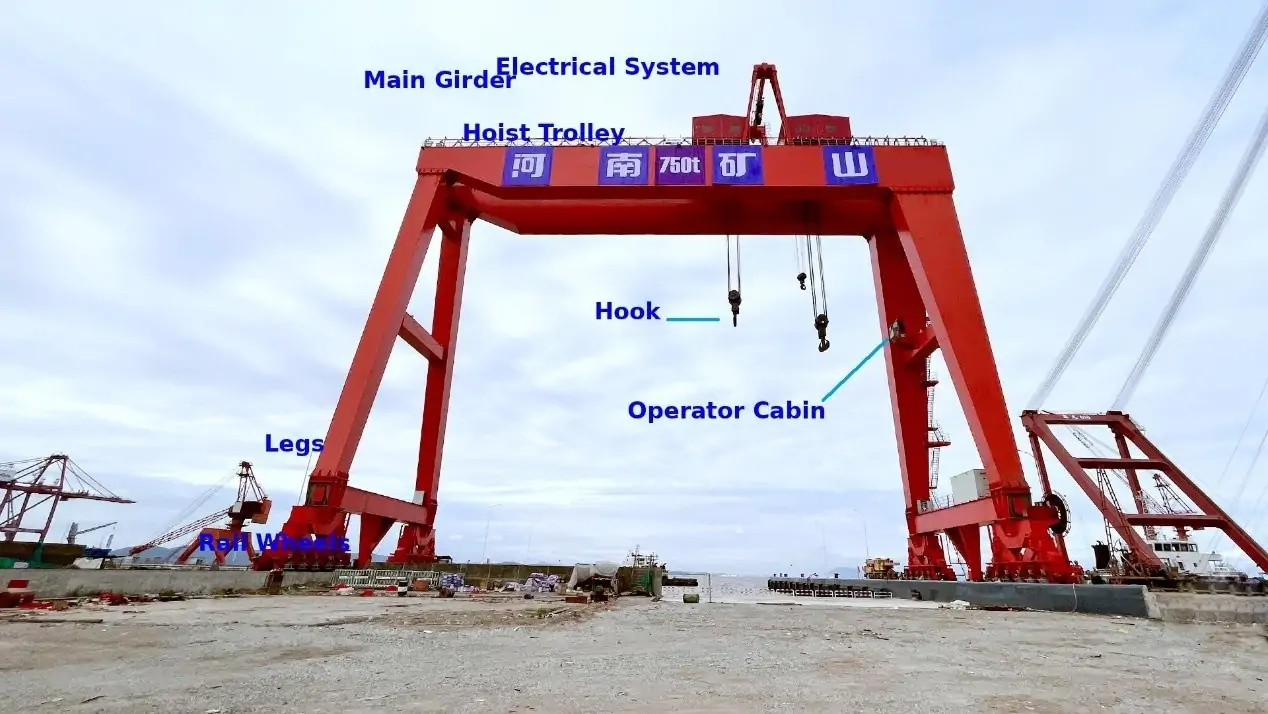
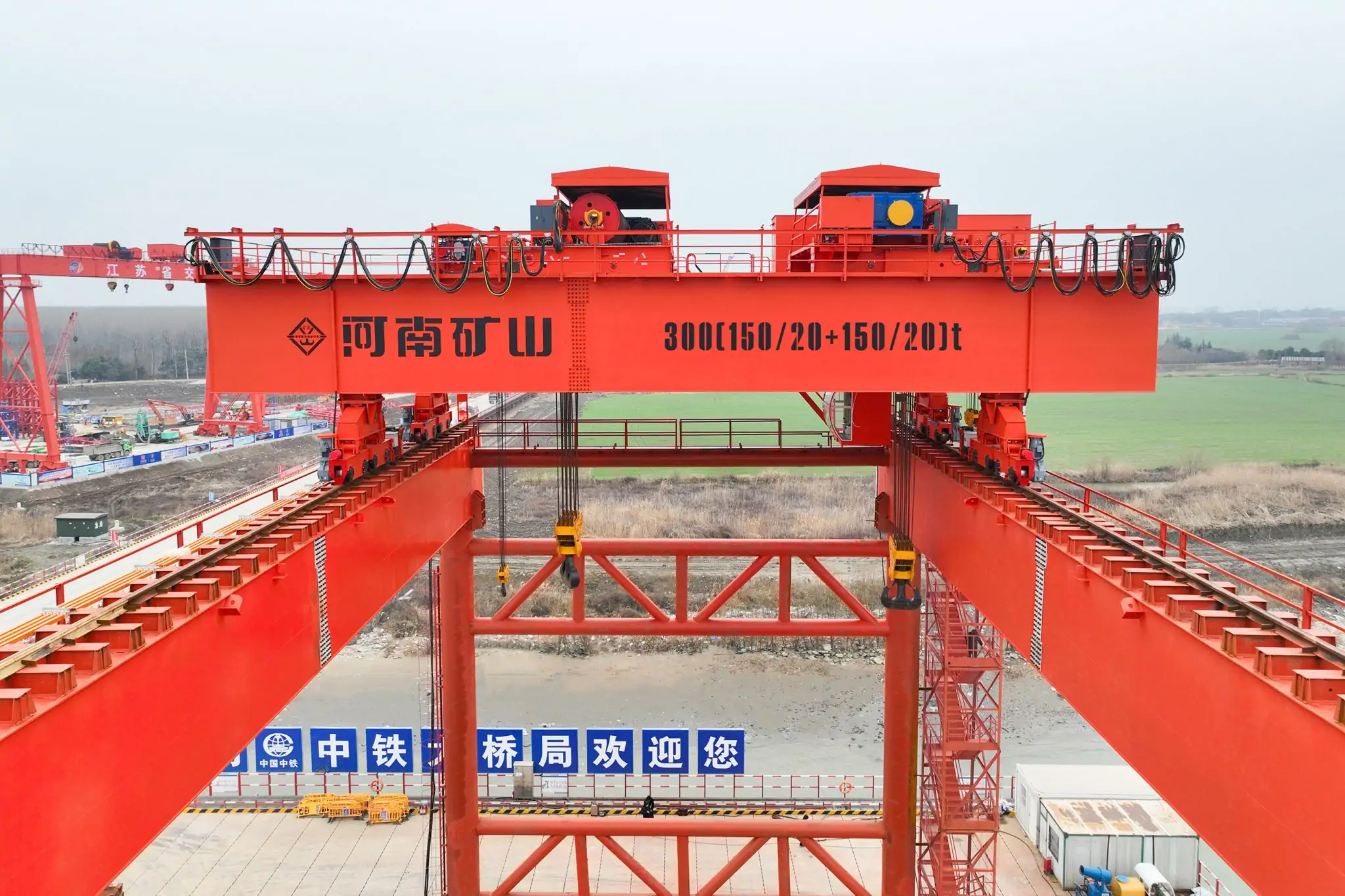
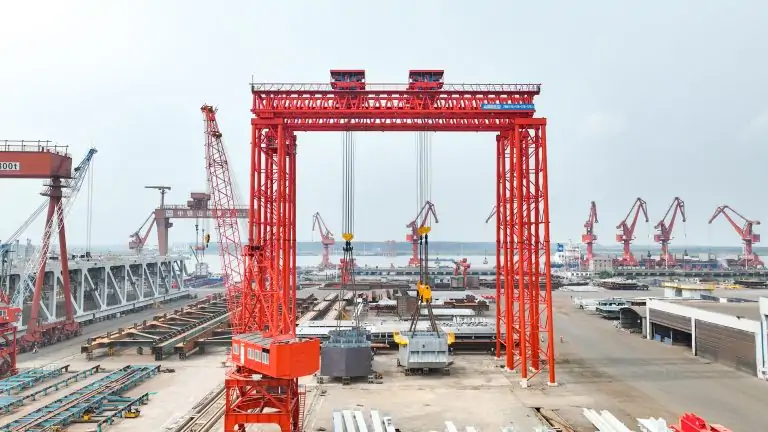
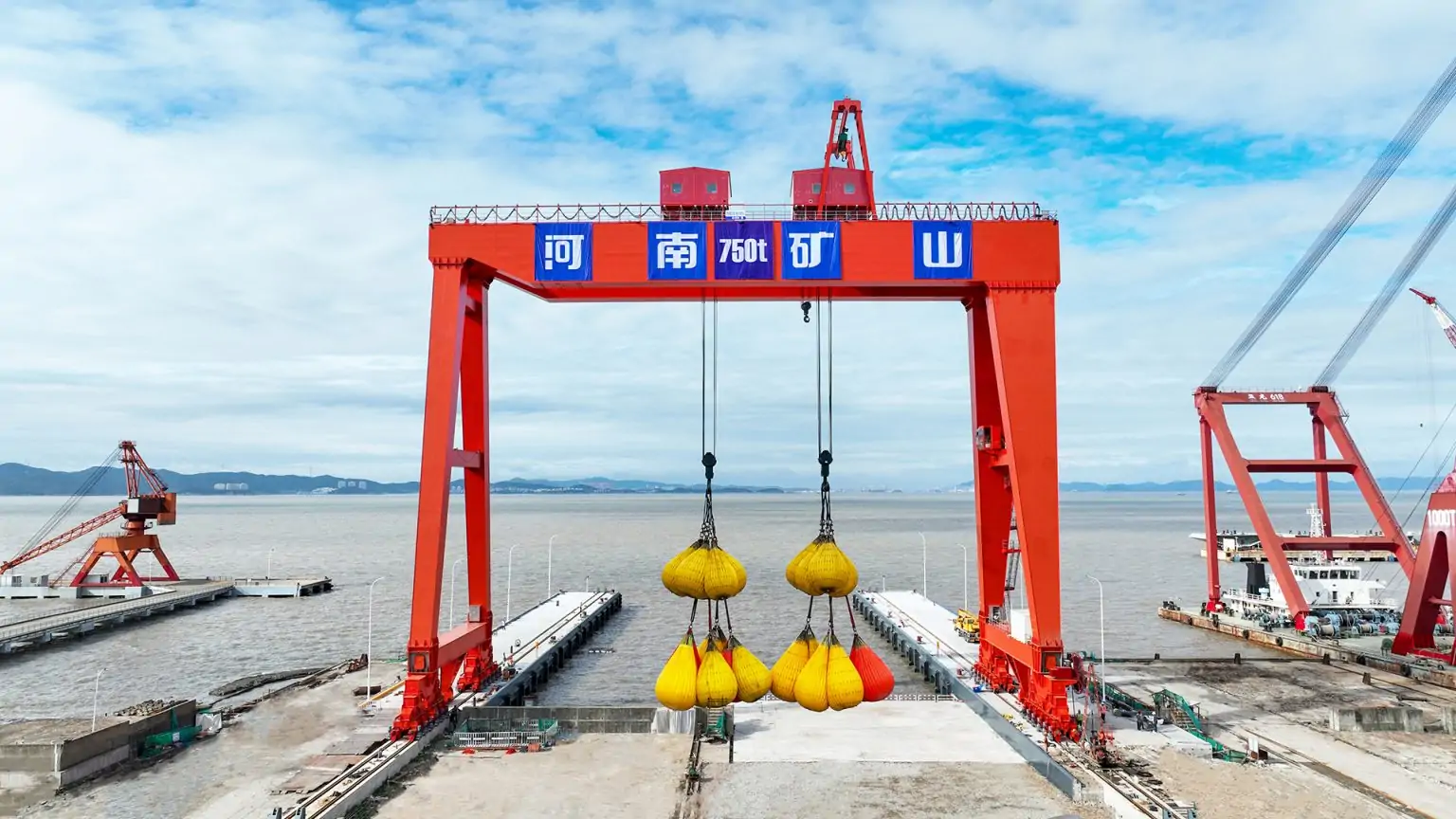
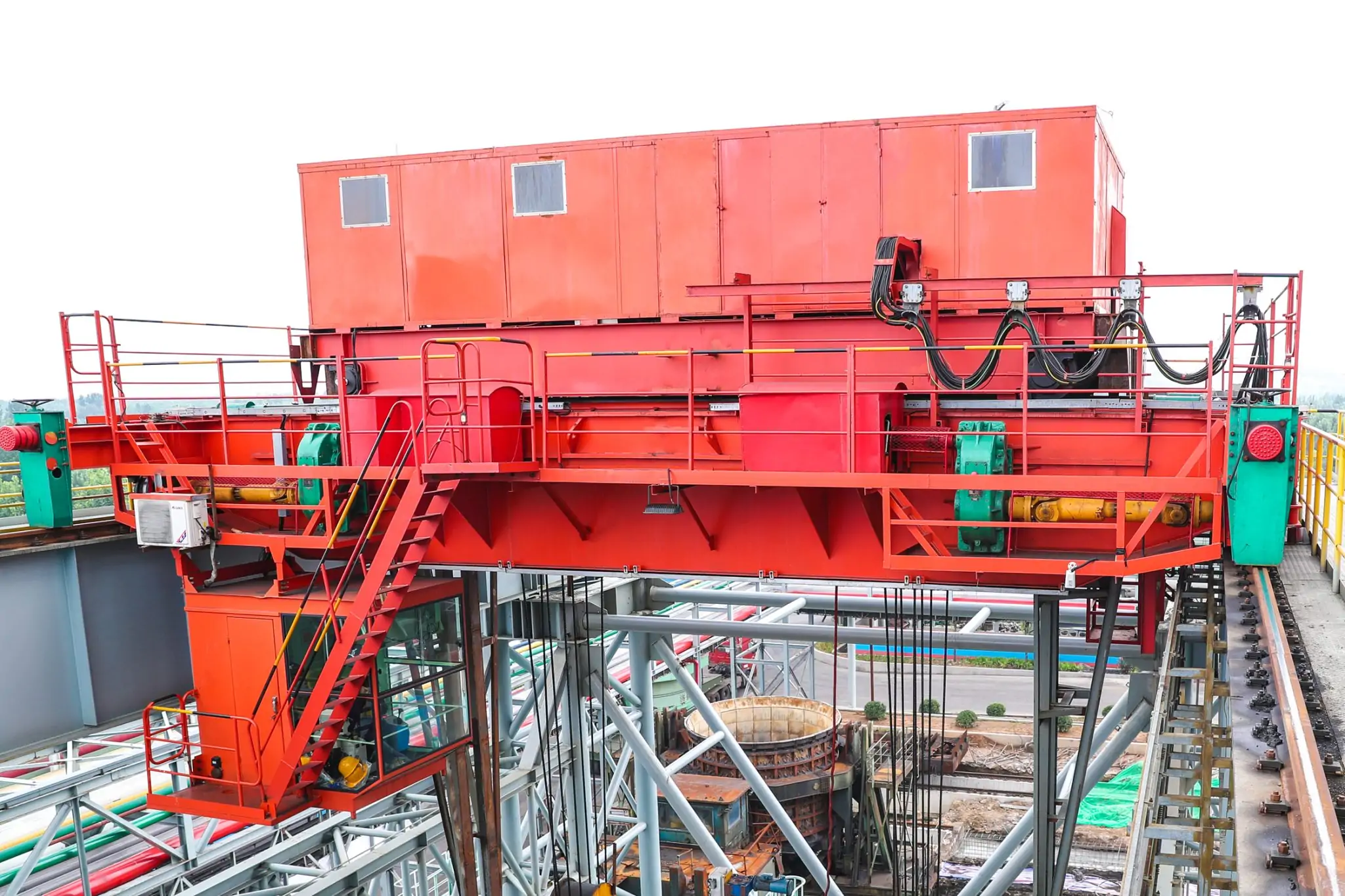
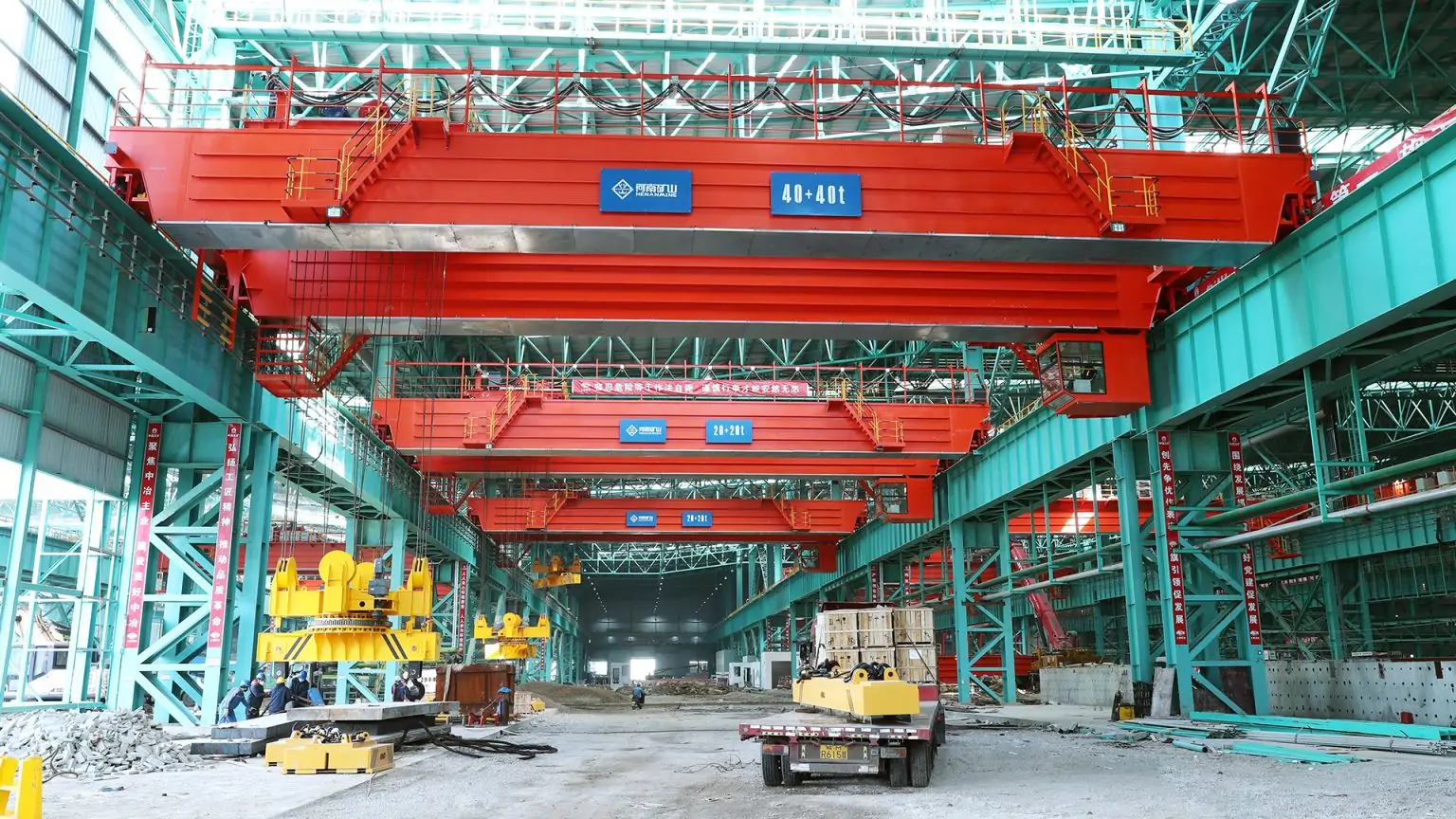
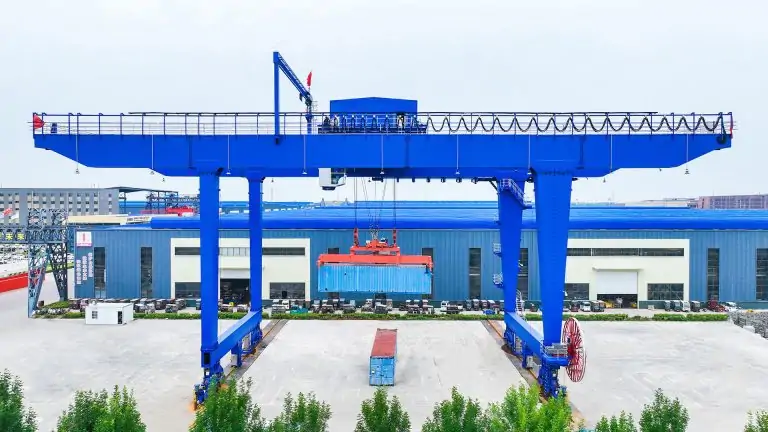
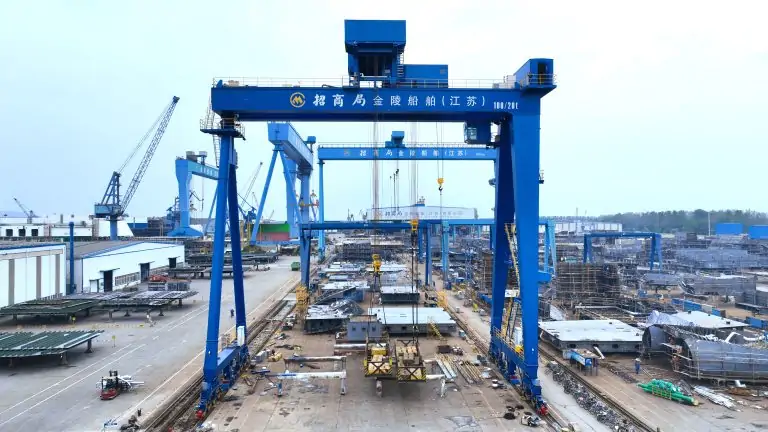
Goliath Gantry Crane (Goliath Gantry Crane), is the most core of the shipyard, the most conspicuous lifting equipment, but also “heavy duty gantry crane for shipbuilding” on behalf of many large shipyards above the dry dock, you can see it! The most important feature of the crane is its large span.
Its most important feature is the large span and ultra-high lifting capacity, the span usually reaches 50-100 meters, lifting capacity from 200t to 1000t + ranging, specially used for lifting large hull segments, superstructures, and even lifting the entire ship module.
Most of these cranes are fixedly installed above dry docks or large ship platforms, running along the track and covering the entire operating area. With its sturdy structure and strong stability, it can undertake heavy lifting tasks for a long time in the open environment, and is an indispensable equipment for the construction of large ships.
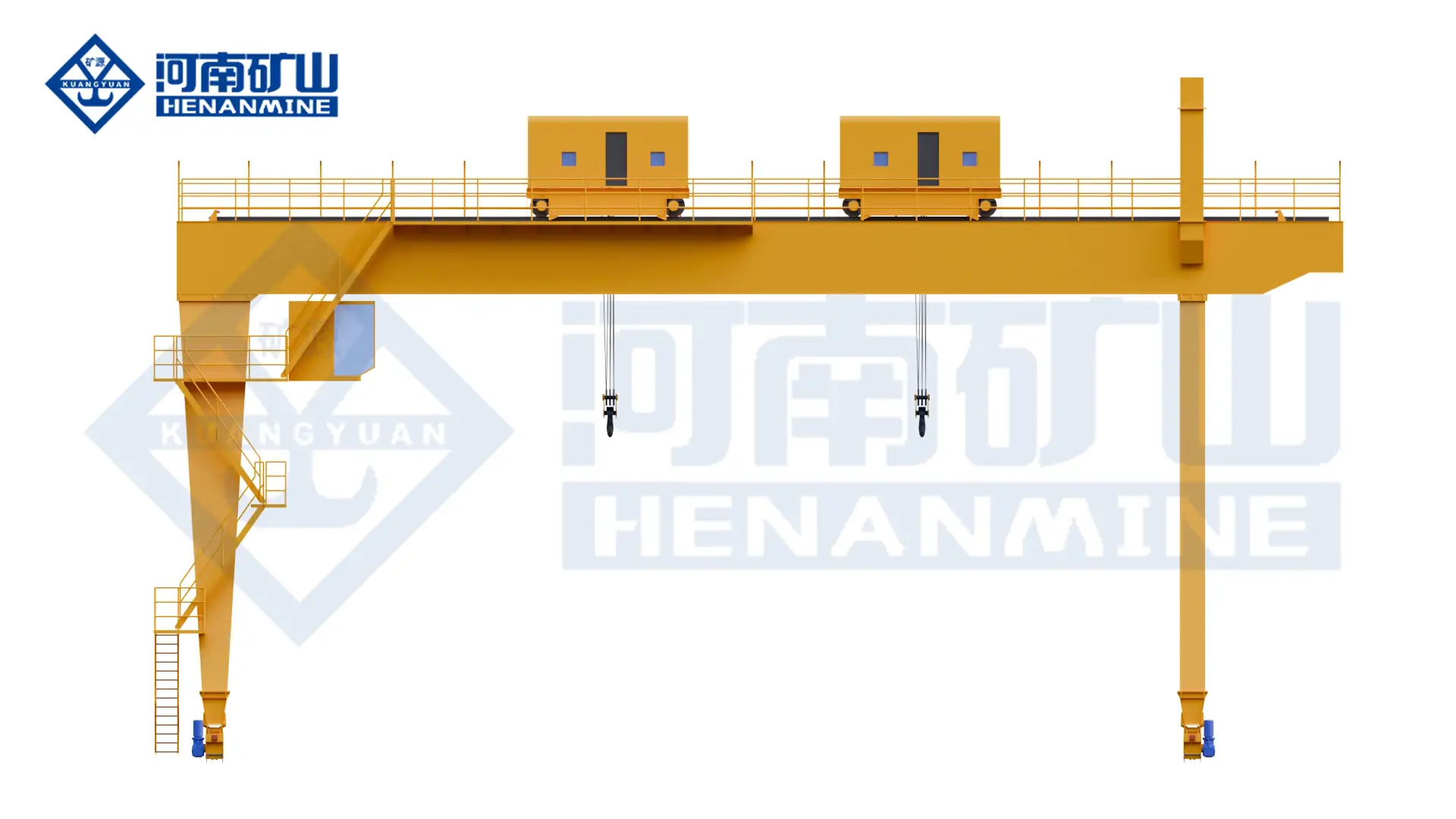
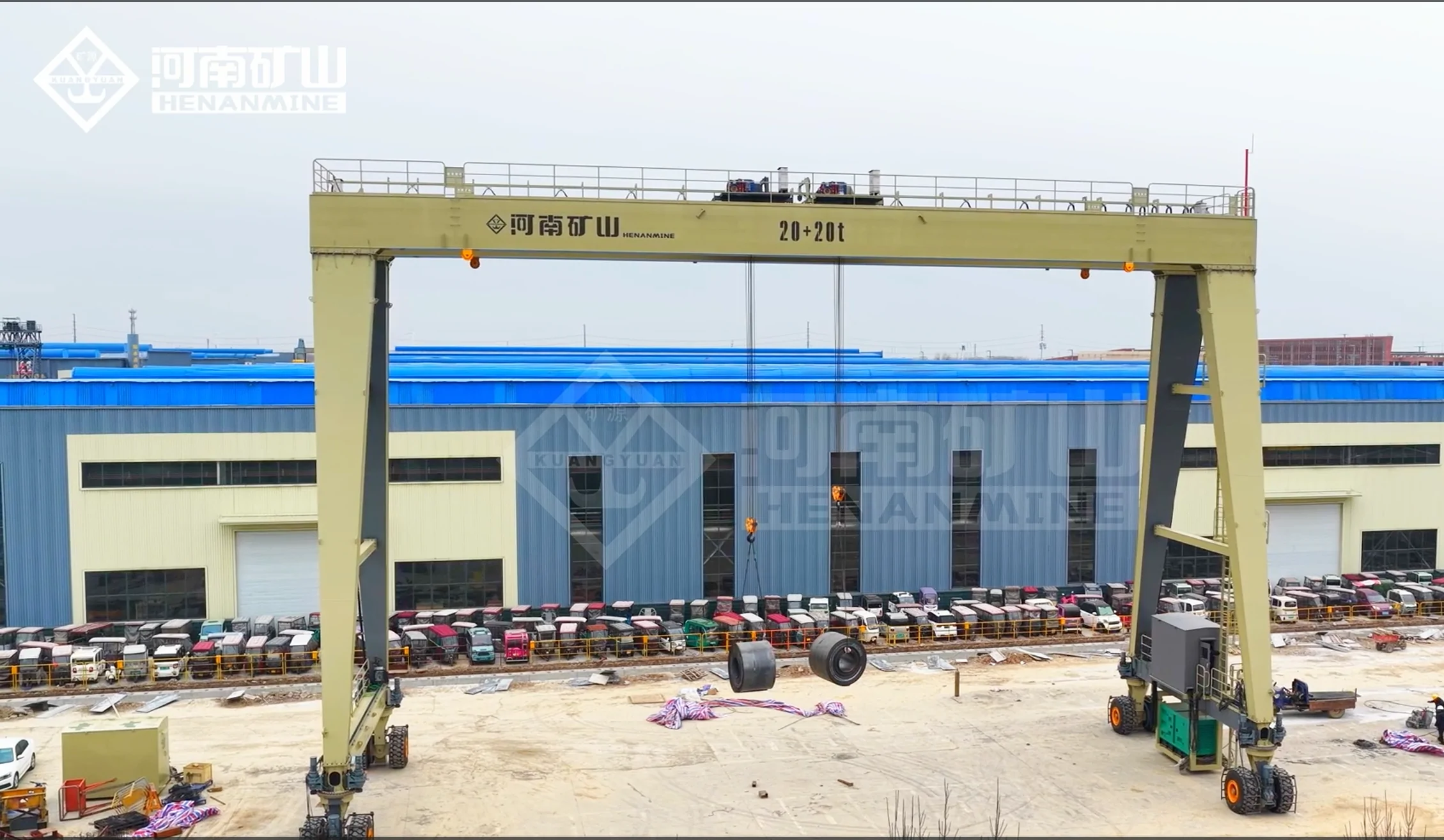
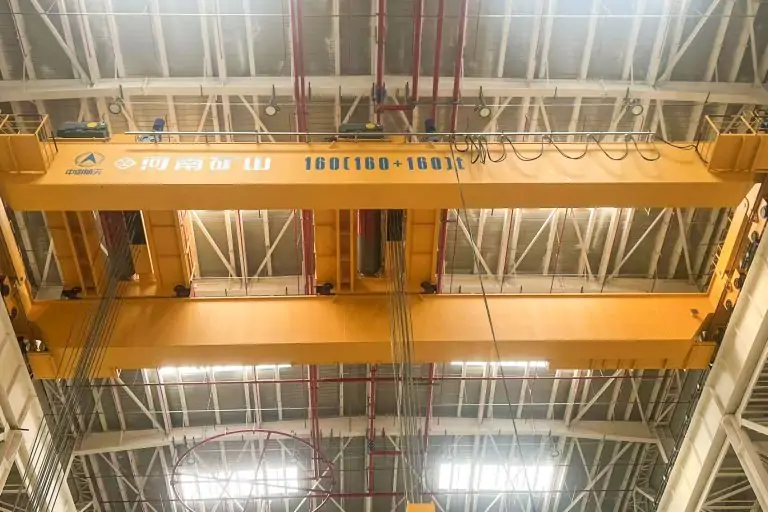
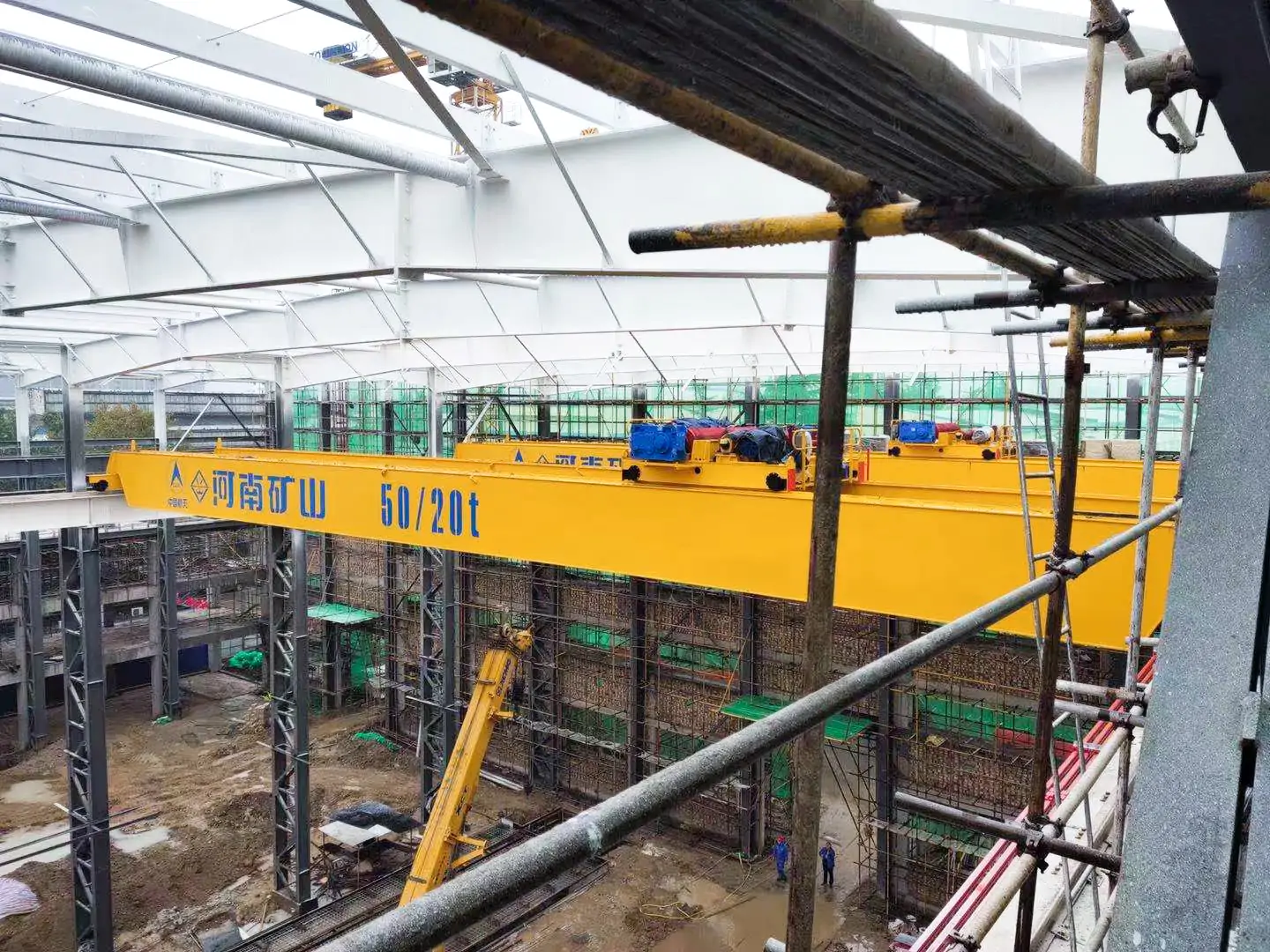
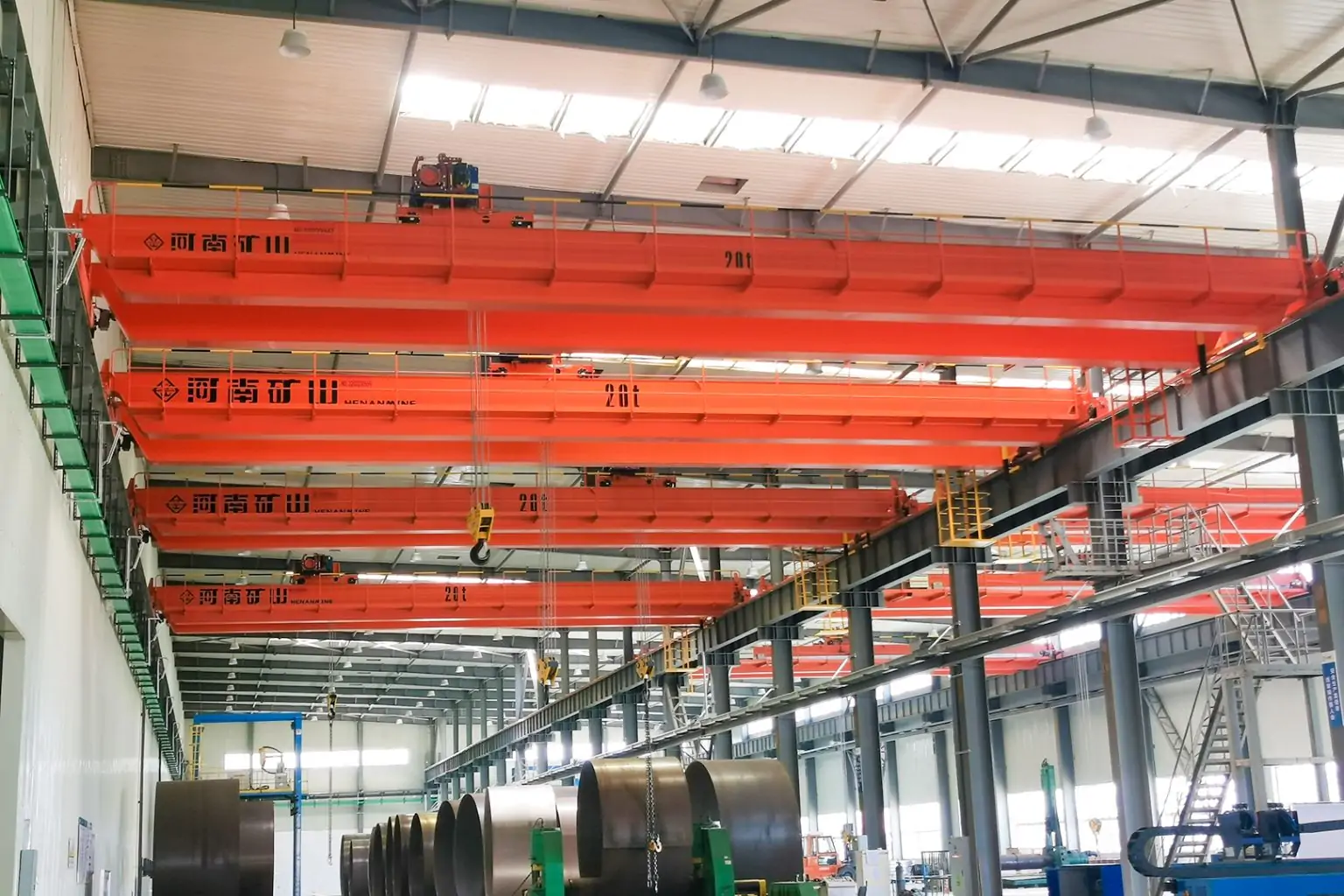
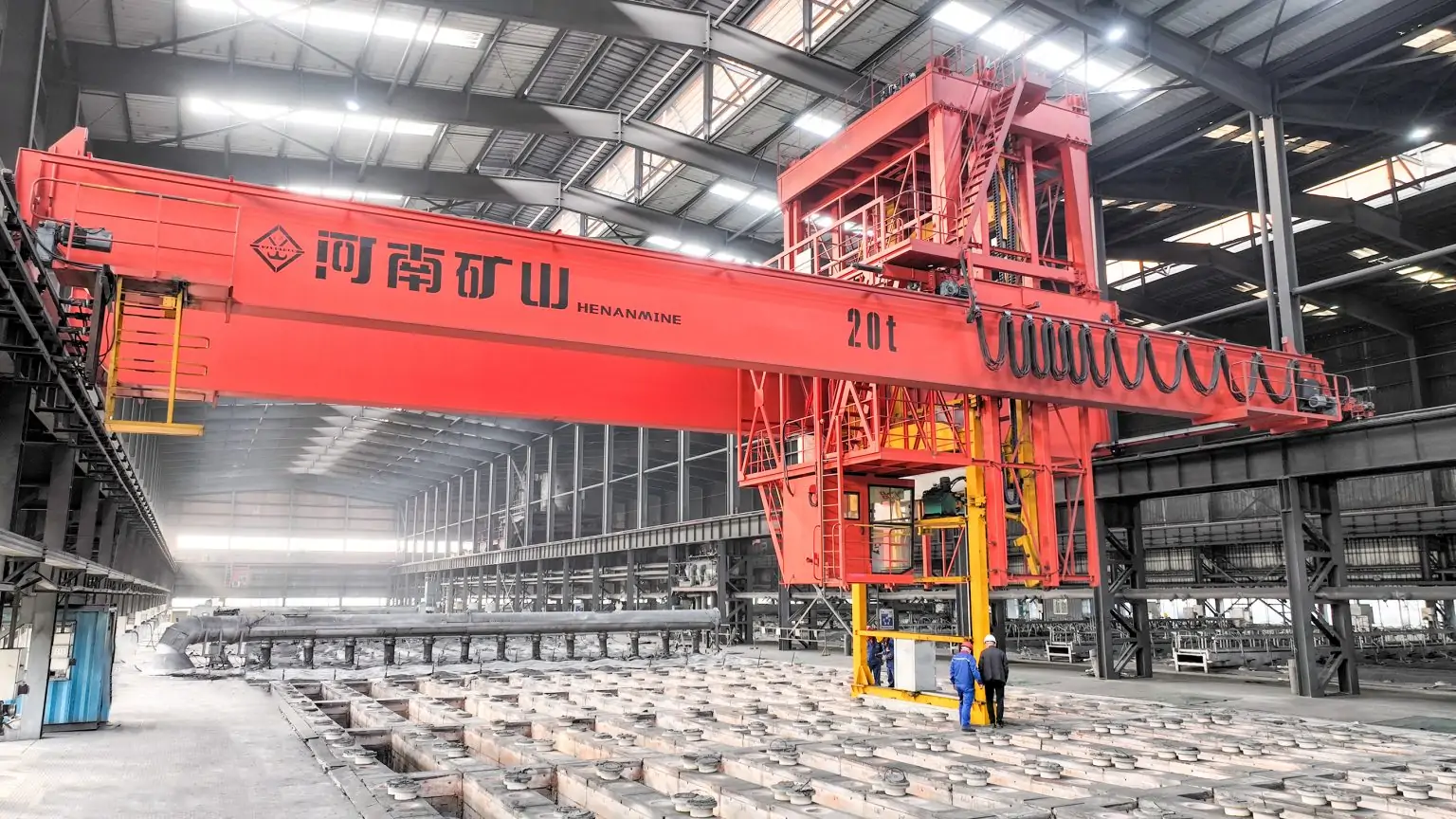
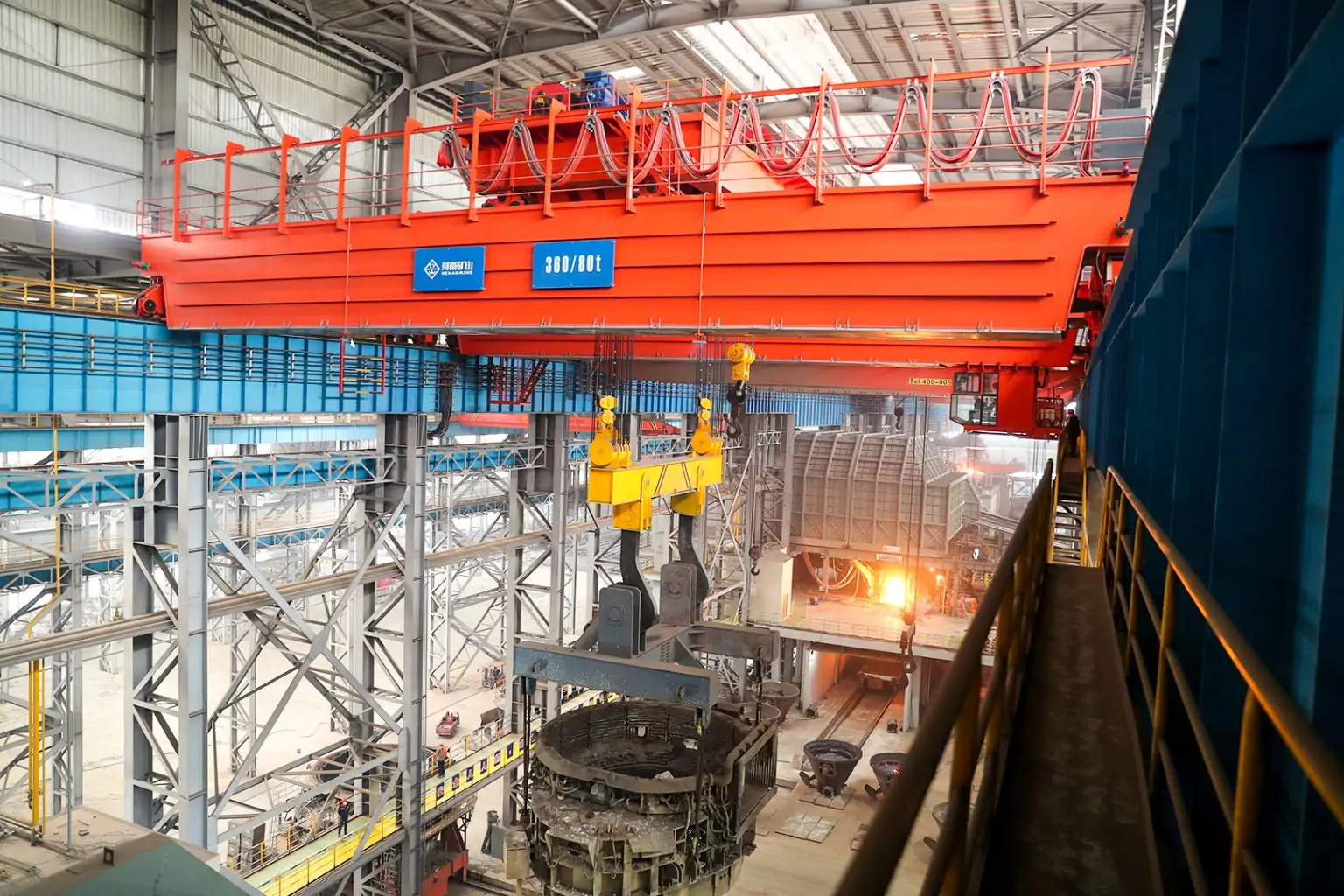
Henan Mine Crane manufactured Shipbuilding Gantry Crane
Double Girder Rail-Mounted Gantry Crane
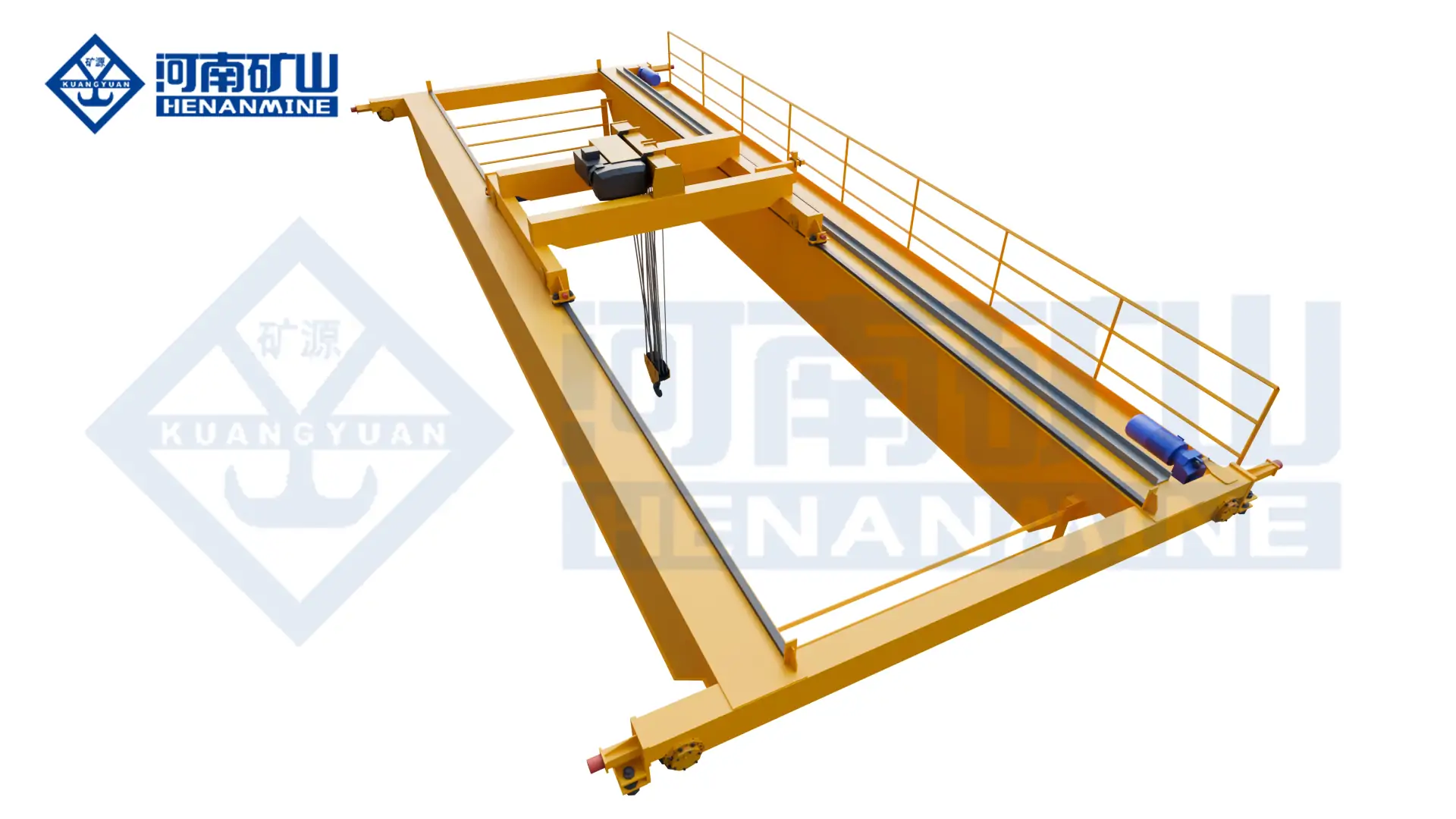
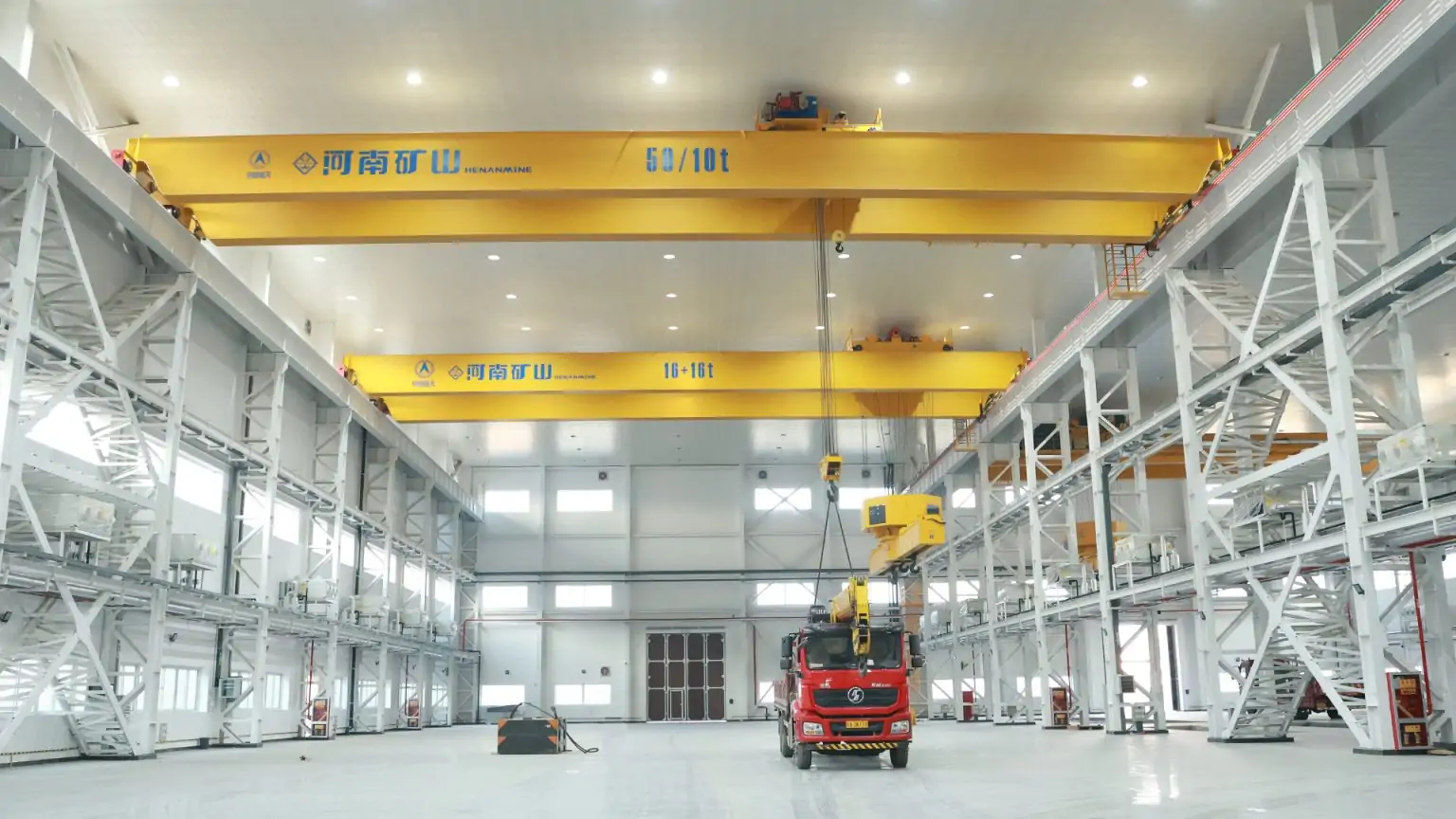
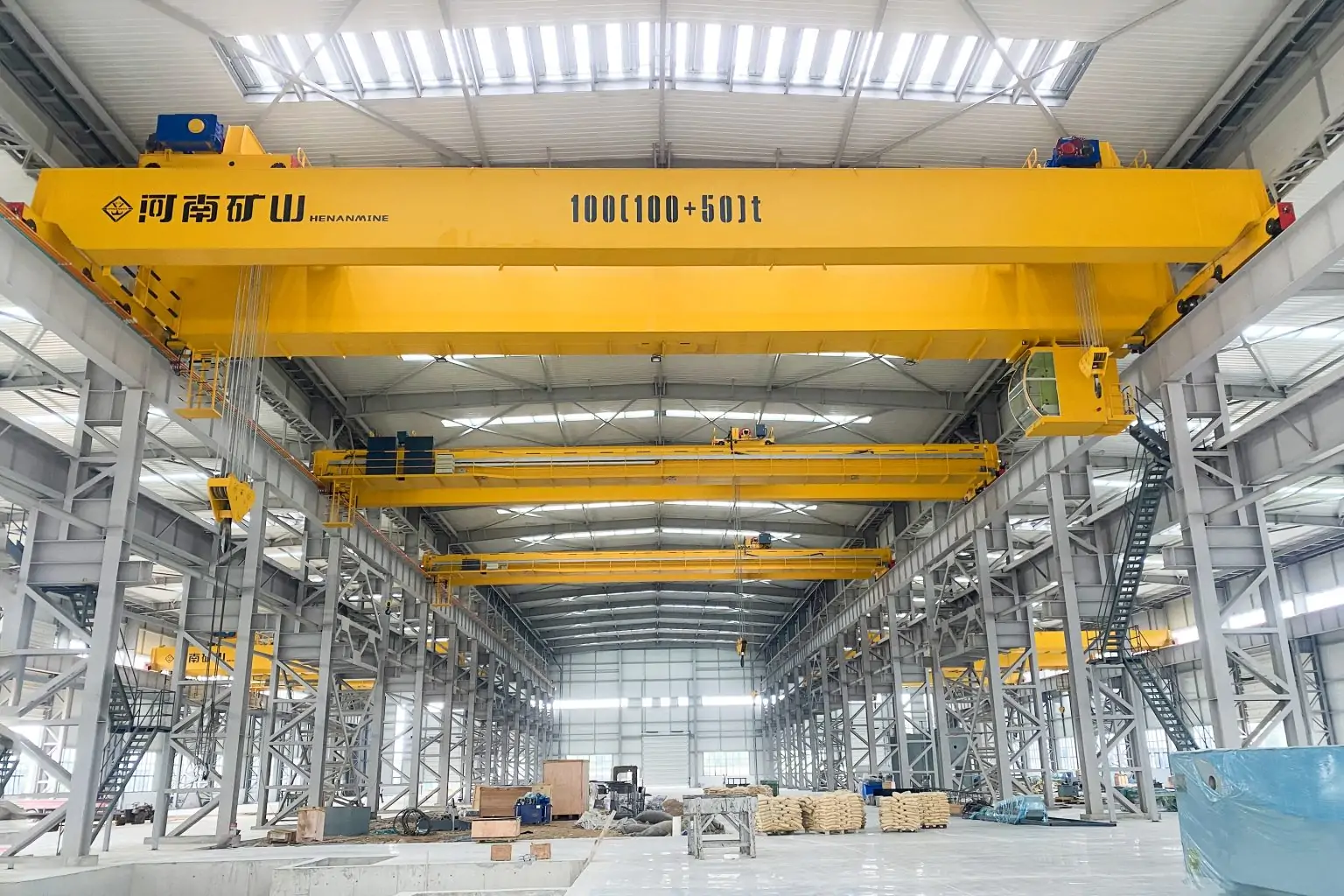
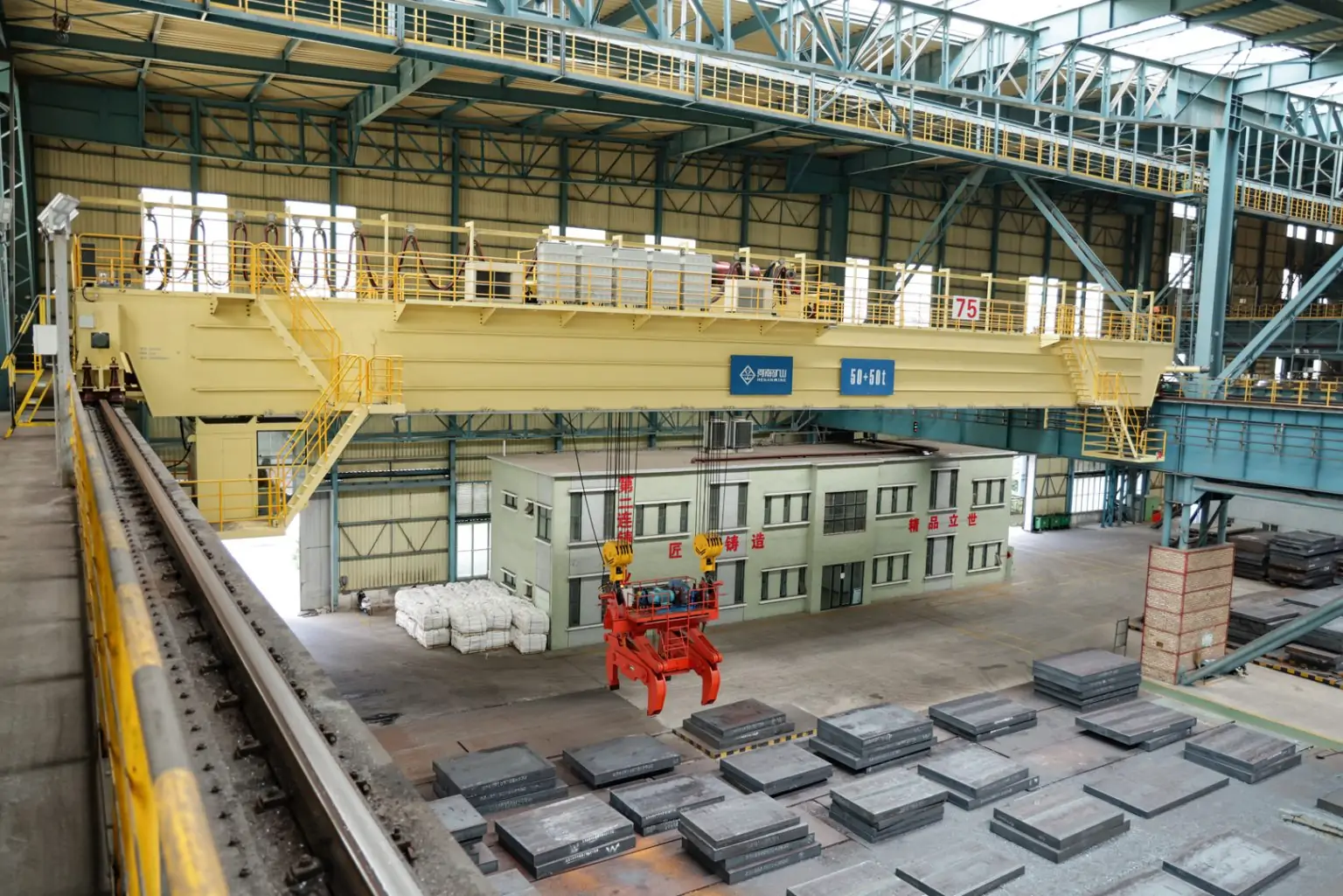
Double Girder Rail-Mounted Gantry Crane (double girder gantry crane shipyard) is mainly used in the raw material yard and prefabrication workshop of shipyards, to undertake the handling and transfer of steel plates, profiles, and small segments.
Its lifting capacity is usually between 50-200t, and the span is smaller than that of giant gantry crane, usually between 20-50 meters, running along the fixed rail, with high positioning accuracy, which is suitable for high-frequency material handling operations.
In the steel plate yard, it is responsible for lifting steel from the raw material area to the processing workshop; in the prefabrication workshop, it is responsible for transferring the processed small segments to the assembly area, connecting all the production links to ensure a smooth production process.
Semi-Gantry Cranes for Workshop Areas
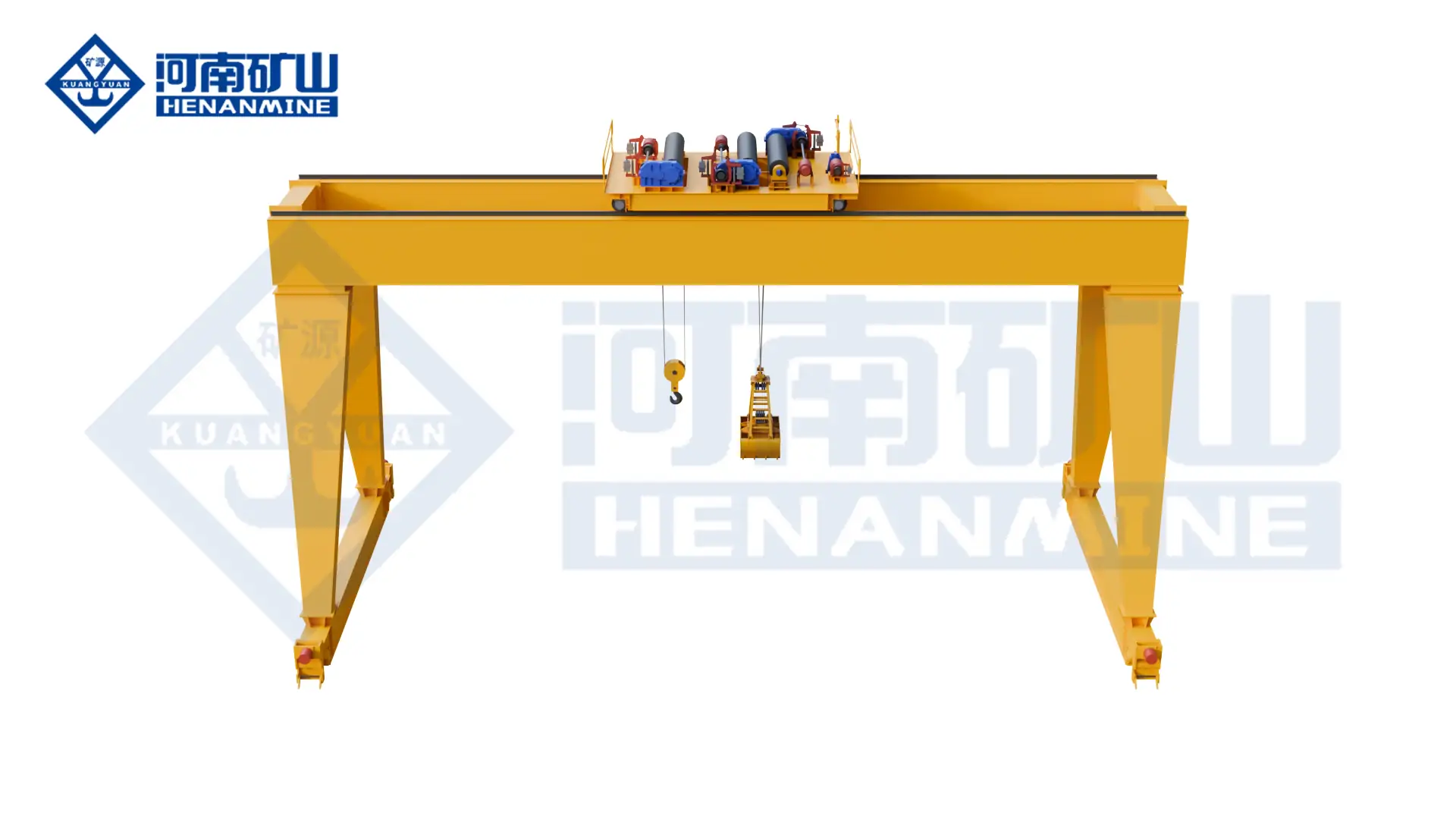
Semi-gantry cranes, mainly used in shipyards’ assembly workshops and small processing areas, are a cost-saving solution and are widely used in small and medium-sized shipyards.
It has a special structure, one side of the outrigger falls to the ground and runs along the ground track, while the other side of the outrigger is attached to the columns or walls of the workshop, which does not need an independent track foundation, and can save space and equipment costs.
The lifting capacity of this kind of crane is usually between 20-100t, and the span is small, which is suitable for small sectional assembly, equipment maintenance and material handling in the workshop, and the flexibility is strong, which can be adapted to the narrow working space in the workshop.
Key Applications of Gantry Cranes in Shipyards
The application of gantry cranes in shipyards runs through the entire shipbuilding process, from raw materials to the ship launching, every key link has its participation. Different application scenarios have different requirements and operation methods for cranes.
Lifting Ship Hull Blocks
Lifting ship hull segments is the core application of gantry cranes and one of the most critical processes in the shipbuilding process. The weight and size of the hull segments are large, and the lifting difficulty is high, so the lifting capacity, precision and stability of the crane are highly required.
Before lifting, it is necessary to adjust the crane’s spreader and lifting angle according to the weight and size of the segments to ensure uniform force. During the lifting process, it is necessary to accurately control the running speed of the crane to avoid shaking of the segments and prevent collision with other equipment or structures.
Especially for large hull segments, it is usually necessary to use double hoists to synchronize the lifting to ensure the level of the segments and the accuracy of docking. After the lifting is completed, it is necessary to cooperate with other equipment to position the segments accurately, so as to prepare for the subsequent welding operation.
Moving Large Marine Components
In addition to hull segments, large components of the ship, such as engines, propulsion systems, deck modules, large valves, etc., also need to rely on gantry cranes for handling and installation.
The weight of these components usually ranges from dozens of tons to hundreds of tons, and the precision requirements are extremely high, especially for the engine and propulsion system, which may affect the power performance of the whole ship once lifting deviation.
Gantry cranes, with their precise control system and stable operation performance, can smoothly lift these large components to the designated position of the ship to complete the installation and commissioning. In this process, the anti-shaking performance and positioning accuracy of the crane directly determine the quality of the installation.
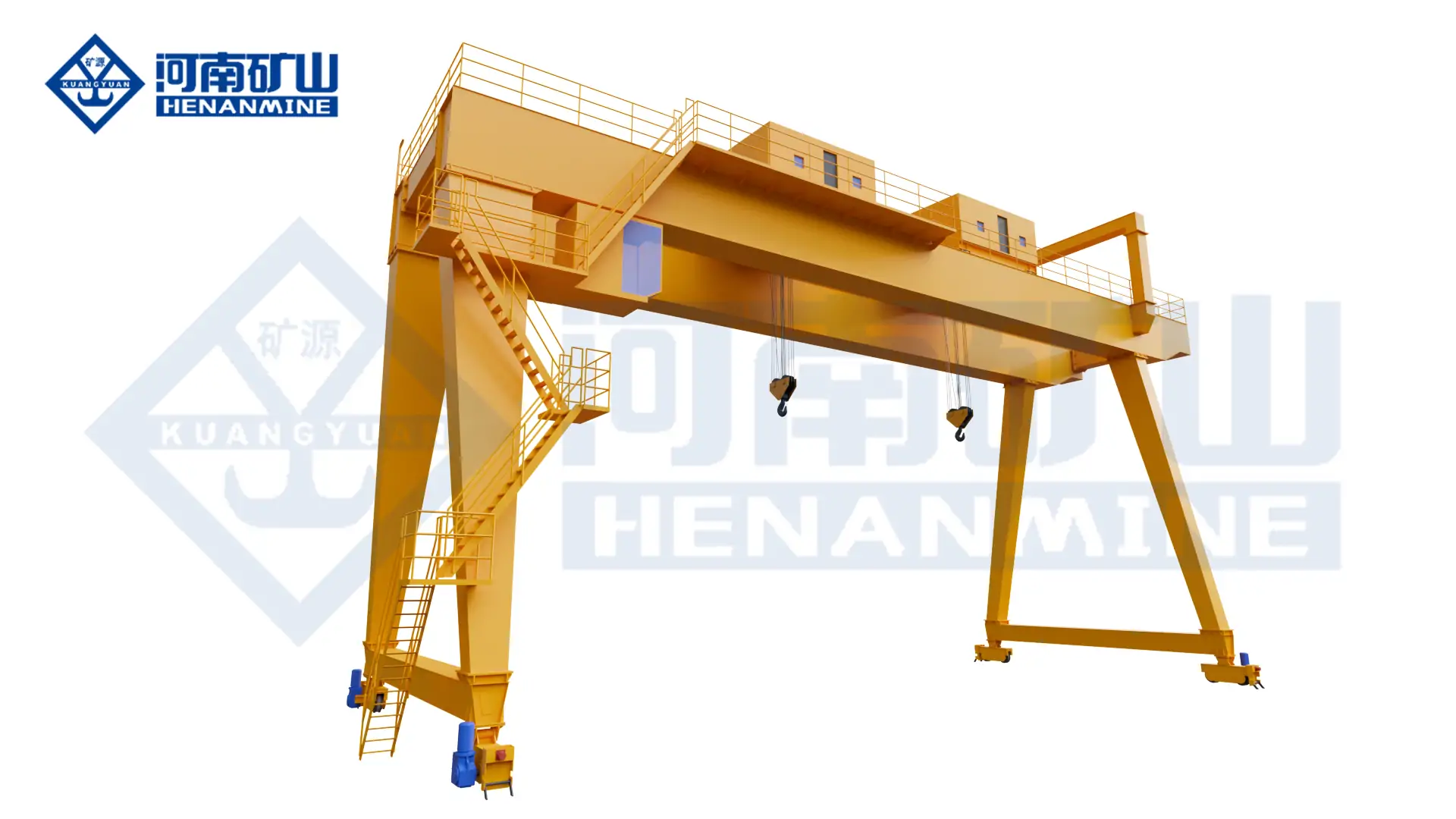
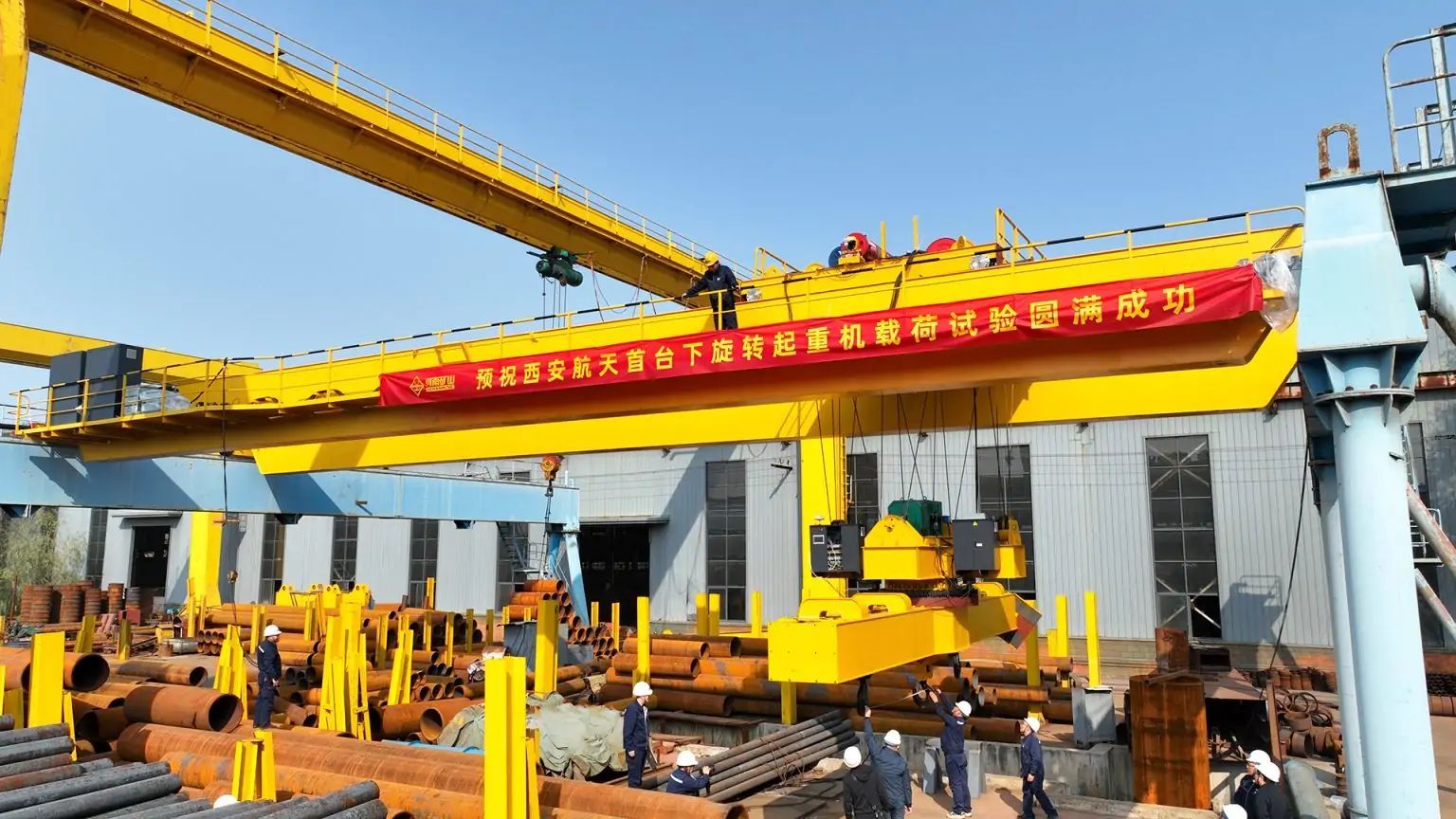
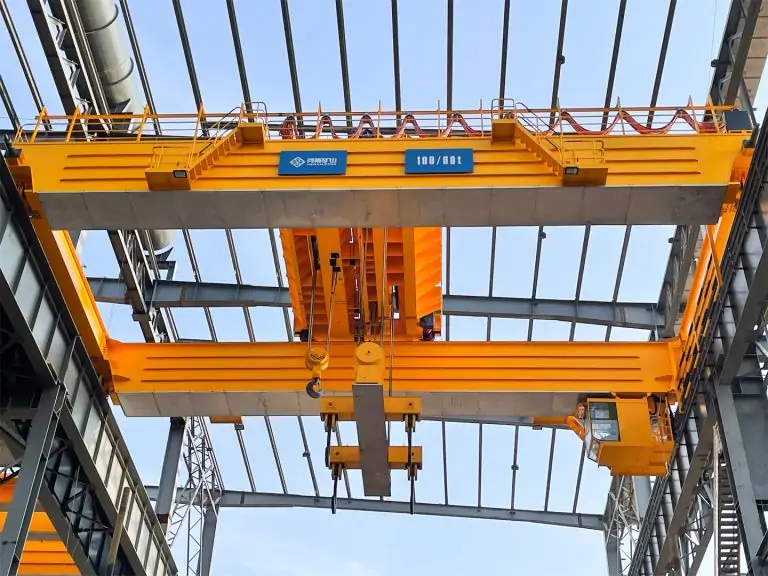
Henan Mine Crane manufactured Shipbuilding Gantry Crane
Steel Plate and Section Handling
Steel is the core raw material for shipbuilding, and the raw material yard of the shipyard usually stores a large number of steel plates and sections, etc. The handling of these raw materials mainly relies on the double girder rail type gantry cranes.
The crane will lift the steel plate from the raw material yard to the processing workshop, after cutting, bending, welding and other processes, processing into the required parts of the hull; after processing is completed, these parts will then be lifted to the prefabrication workshop for segmental assembly.
This kind of high-frequency material handling requires cranes to run stably, operate conveniently, and be able to adapt to long hours of continuous operation. The double girder gantry cranes with sturdy structure and high durability can just meet the requirements of this kind of operation.
Dry Dock Operations
Dry dock is the core area for ship construction and maintenance, and gantry cranes in dry dock operations mainly support ship construction and maintenance work.
In the ship construction stage, gantry cranes are responsible for lifting large segments into the dry dock for overall assembly; in the ship repair stage, they are responsible for lifting out damaged parts of the ship for repair or replacement, and then lifting the repaired parts back to their original positions.
The operating environment of the dry dock is complex, mostly open-air scene, affected by the wind, which requires the gantry crane to have strong wind resistance and stability, and can work safely in the complex environment.
Key Technical Requirements for Shipbuilding Gantry Cranes
Shipyards operate in harsh environments, with large lifting loads and high precision requirements, and also need to operate in open air and coastal environments for long periods of time. Therefore, the technical requirements of gantry cranes for shipyards are higher than those of ordinary industrial gantry cranes, and every parameter should be adapted to the shipbuilding working conditions.
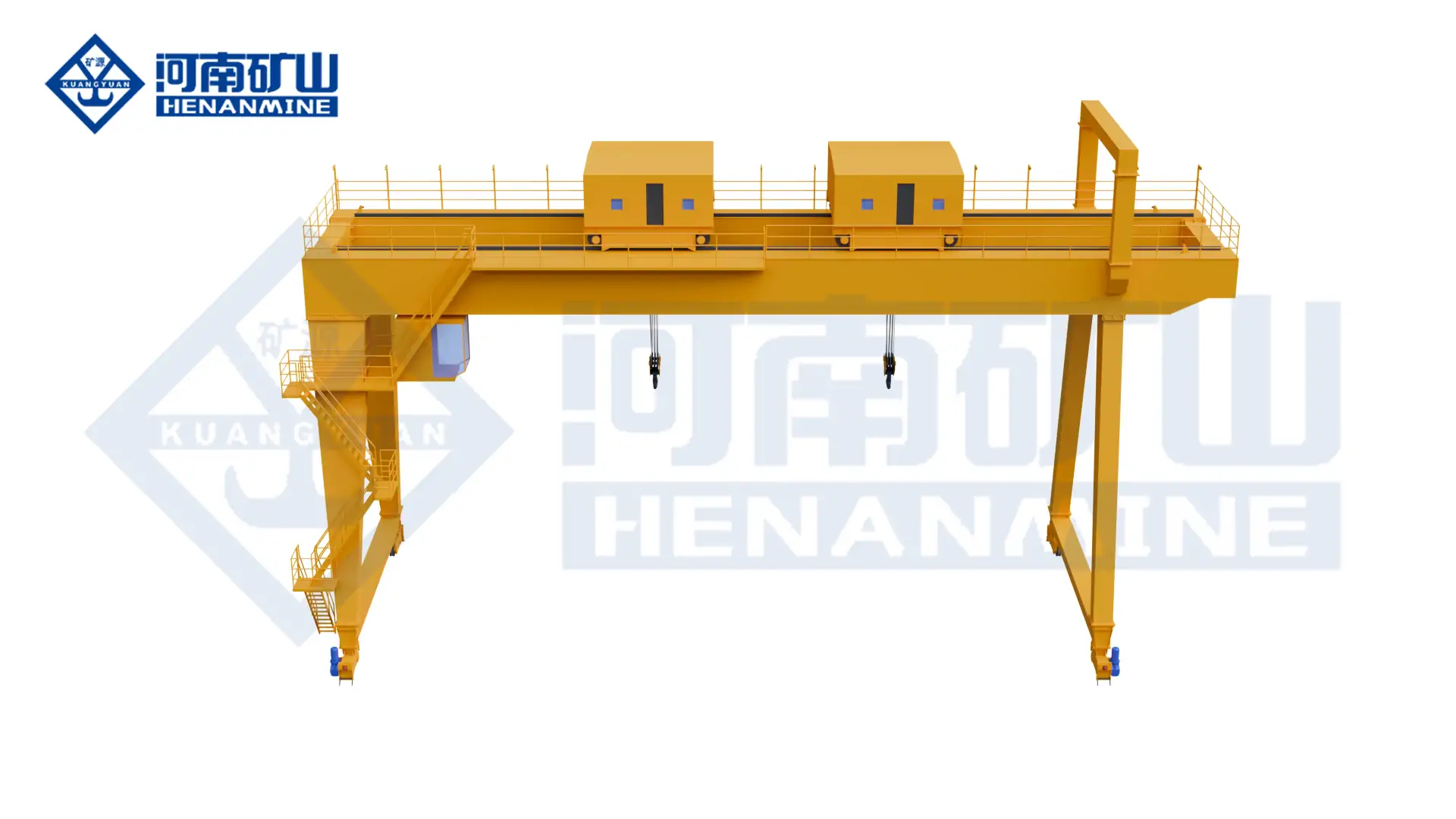
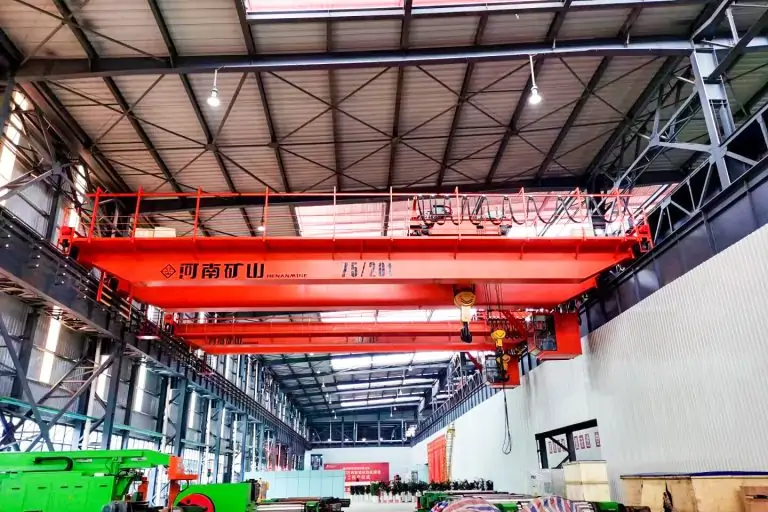
Henan Mine Crane manufactured Shipbuilding Gantry Crane
High Lifting Capacity
The lifting capacity of shipyard gantry cranes is usually between 100t and 1000t+, which is determined according to the shipyard’s shipbuilding scale and ship tonnage. Large shipyards constructing ships of more than 10,000 tons require heavy gantry cranes with a lifting capacity of more than 500t.
The lifting of many large-scale segments requires the use of double hoist synchronous lifting, which requires the crane to have double hoist synchronization control function, to ensure that the lifting speed of the two hoists is the same, the force is uniform, to avoid tilting of the segments.
At the same time, the design of the crane should also reserve a certain safety margin to cope with the dynamic load in the lifting process, to prevent overloading leading to equipment failure or safety accidents.
Large Span Design
The dry dock, shipyard and raw material yard of the shipyard are relatively large in area, which requires the gantry crane to have a large span in order to cover the whole operation area.
Giant gantry cranes usually have a span of 50-100 meters, which can cover the entire dry dock; double girder rail gantry cranes have a span of 20-50 meters, which is suitable for the raw material yard and prefabrication workshop.
The large span design requires high structural rigidity of the crane, which requires the use of high-strength steel and reasonable structural design to reduce the structural deflection of the crane during operation and ensure lifting precision and operational safety.
Wind Resistance and Outdoor Durability
Most of the shipyards are located in coastal areas, the open-air operating environment, wind, high humidity, and salt spray corrosion, which puts forward high requirements on the wind resistance and durability of the gantry crane.
Cranes need to have strong wind resistance and be equipped with perfect windproof devices, such as rail clamps, anchoring devices, etc., to prevent the crane from shifting and tipping in windy weather. At the same time, the surface of the equipment needs to be coated with C5 standard anticorrosion coating to resist salt spray corrosion and extend the service life of the equipment.
In addition, the electrical system and mechanical components of the crane also need to have good sealing performance to prevent rainwater and salt spray from entering and causing equipment failure.
Precision Control Systems
Shipbuilding operations require high lifting precision, especially the docking of hull segments and the installation of large equipment, the deviation can not be more than a few millimeters, which requires gantry cranes to have an accurate control system.
Anti-swaying technology is the core, which can effectively inhibit the swaying of the cargo during the lifting process and ensure the accurate positioning of the segments and equipment; the variable frequency drive (VFD) system, which can realize the smooth lifting and operation of the crane, reduce the mechanical impact, and protect the equipment and cargo.
For cranes with synchronized lifting of two hoists, synchronized control is also required to ensure that the movements of the two hoists are coordinated to further enhance lifting accuracy.
Safety Features Required in Shipyard Gantry Cranes
Shipyard lifting operations are high-risk, large loads, complex operating environment, so the gantry crane safety devices must be complete and reliable, which is the key to protect the safety of personnel and equipment, but also the shipyard selection of key concerns.
The wind speed monitoring system is a must, which can monitor the wind speed at the site in real time, and when the wind speed exceeds the safety threshold, it will automatically issue an alarm to prohibit the crane from operating, preventing high winds from causing the cargo to sway or equipment displacement.
Rail clamps and storm brakes can firmly fix the crane on the rail when the crane stops operation or encounters windy weather, preventing the crane from sliding and avoiding safety accidents.
The overload protection device can detect the lifting load in real time, and when the load exceeds the rated lifting capacity, it will automatically cut off the lifting power and stop the lifting action to prevent the equipment from being overloaded and damaged.
Redundant braking system is an important safety guarantee, even if the main braking system fails, the redundant braking system can be activated in time to ensure that the crane stops smoothly to avoid the expansion of the accident.
Collision avoidance system can detect the distance between the crane and other equipment and structures, when the distance is too close, it will issue an alarm and automatically slow down to prevent collision accidents, especially suitable for multiple cranes working at the same time.
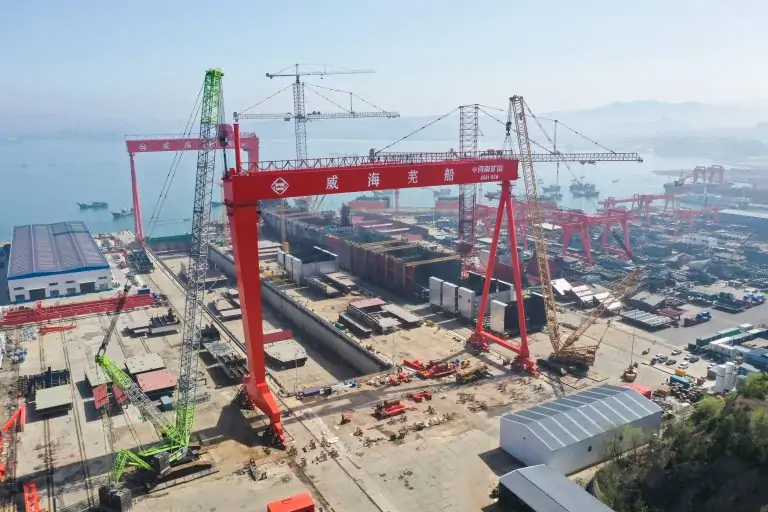
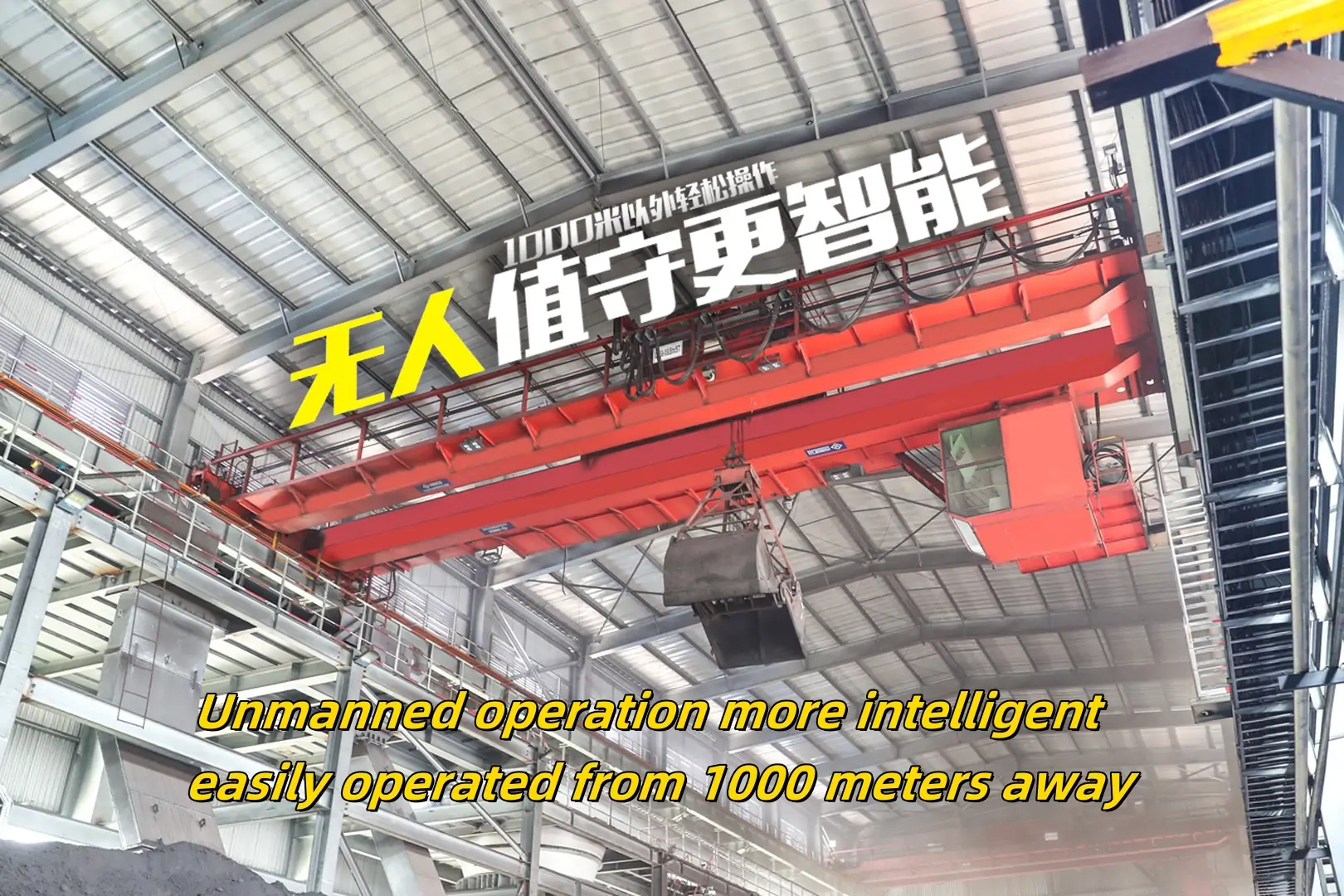
Henan Mine Crane manufactured Shipbuilding Gantry Crane
Engineering Challenges in Shipyard Crane Design
Designing gantry cranes for shipyards is much more difficult than ordinary industrial cranes, and requires solving a number of engineering challenges, not only to meet the needs of large span and large tonnage, but also to ensure the stability and safety of the equipment.
One of the biggest challenges is the structural deflection problem brought about by the large span. The larger the span, the more pronounced the structural deformation during crane operation, which will affect the lifting accuracy and may even lead to structural damage. Therefore, the design needs to use high-strength steel and optimize the structural design to reduce the deflection.
The second is the load distribution problem of the super heavy module. The weight of large hull segments is not uniform, and it is easy to have uneven force when lifting, which requires crane spreader and structural design that can realize uniform distribution of load and avoid excessive local force.
Ground and track foundation requirements are also very high. Gantry cranes have a large weight and will generate large pressure on the ground and track when running, so the track foundation needs special reinforcement to ensure the carrying capacity and avoid track deformation or ground settlement.
In addition, the transportation and on-site assembly of large cranes is also a challenge. Giant gantry cranes are difficult to transport due to their large size and heavy weight, and on-site assembly requires special equipment and professional technology, which is time-consuming and labor-intensive, and needs to be planned well in advance.
Advantages of Gantry Cranes in Shipbuilding
The reason why gantry cranes can become the core equipment of shipyards, the core is that its advantages are just suitable for the operational needs of the shipbuilding industry, more practical and reliable than other lifting equipment.
The most prominent advantage is the independent structure, does not need to be attached to any plant columns or building structures, can be directly deployed in the open dry dock, ship platforms and yards, covering the entire operating area, without the need to carry out large-scale transformation of the site.
Suitable for outdoor large-scale operation, can adapt to the open-air and coastal environment of shipyards, with strong wind resistance and anti-corrosion ability, and can undertake heavy lifting tasks for a long time with strong durability.
High load handling capacity, can meet the needs of large hull segments, large equipment lifting, lifting capacity ranging from 100t to 1000t+, can be flexibly customized according to the needs of shipyards, suitable for different tonnage ship construction.
Strong scalability, with the expansion of shipyards and shipbuilding tonnage, gantry cranes can be upgraded to improve the lifting capacity and span, or new models to meet the needs of expanding production, without the need to replace the whole equipment, reducing long-term investment.
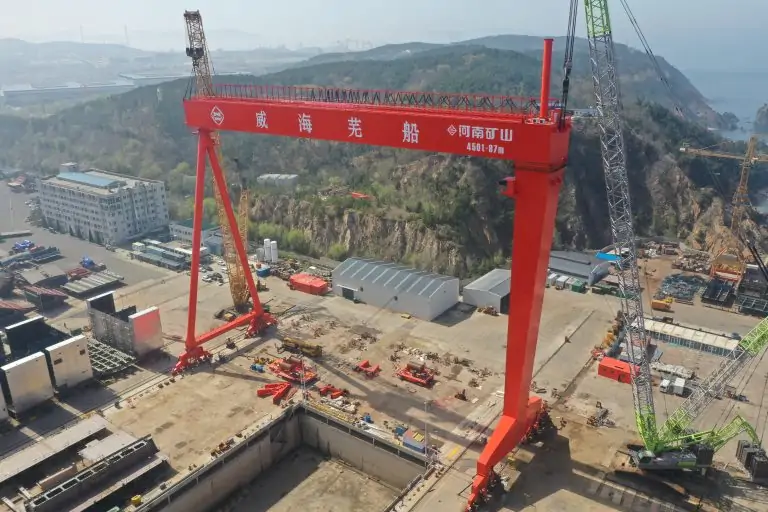
Henan Mine Crane manufactured Shipbuilding Gantry Crane
Case Study Example
Here to share with you an actual case, is a large shipyard equipped with 600t giant gantry cranes, but also the shipyard is more typical of the heavy-duty gantry crane configuration, can be more intuitive understanding of the application of gantry cranes in the shipyard.
The shipyard mainly builds 10,000-ton cargo ships and container ships, in order to enhance the efficiency of modular construction, equipped with a 600t giant gantry crane for lifting and assembly of large hull segments.
The crane has a span of 80 meters, a lifting height of 45 meters, and adopts double trolley and double hoist configuration to achieve the maximum lifting capacity of 600t, and the synchronized lifting precision of double hoists can be up to ±5mm, which fully meets the docking requirements of large hull segments.
Considering the coastal environment of the shipyard, the equipment adopts C5 standard anticorrosion coating and is equipped with perfect windproof system, including wind speed monitor, rail clamp and anchoring device, which can withstand grade 12 gusts of wind and ensure the safety of outdoor operation.
After the crane is put into use, the shipyard’s large-scale segment lifting efficiency has been increased by 30%, and the shipbuilding cycle has been shortened by 15%, which not only reduces the labor cost, but also reduces the rectification work brought by lifting deviation, and significantly improves the shipyard’s production competitiveness.
How to Choose the Right Gantry Crane for a Shipyard
Selection of gantry cranes for a shipyard, can not blindly pursue large tonnage, high configuration, combined with the actual working conditions of the shipyard, such as the scale of shipbuilding, ship tonnage, operating areas, environmental conditions, etc., in order to select the appropriate model, both to ensure operational safety, but also to save costs.
First of all, the required lifting capacity should be clearly defined, which is determined according to the maximum ship’s segment weight built by the shipyard, and usually there should be a safety margin of 10%-20% more than the maximum segment weight to avoid overloading. If the main lifting of large segments, it is recommended to choose more than 500t giant gantry cranes; if the raw material handling and small segment assembly is the main focus, double girder rail gantry cranes can be.
Next is the dock width and span, the span of the crane to match the width of the dry dock, ship platform or yard, to ensure that it can cover the entire operating area, but also to leave a safety gap to avoid collision with other equipment or structures.
Frequency of operation is also very critical, high-frequency continuous operation of the scene, to choose a high working level of the crane, to ensure the durability of the equipment, to reduce downtime; operating frequency of the scene is low, you can choose the ordinary working level of the model, to reduce costs.
Environmental conditions can not be ignored, coastal shipyards should choose equipment with high anti-corrosion level and strong wind resistance, equipped with perfect wind and corrosion protection devices; if the operating area has dust, salt spray and other pollutants, but also to strengthen the sealing and protection of equipment.
The automation level can be selected according to the needs of the shipyard. Large shipyards can choose cranes with high automation, equipped with remote control, automatic positioning and other functions to enhance operational efficiency; small and medium-sized shipyards can choose manual or semi-automatic control to reduce equipment costs.
Finally, we should consider the budget and the whole life cycle cost, not only look at the initial purchase price, but also calculate the maintenance cost, energy cost, spare parts cost and downtime loss, choose cost-effective, after-sales protection of the equipment, to avoid the later investment is too high.
Frequently Asked Questions
Combined with the usual shipyard customers consult the most questions, organized a few common questions, with easy-to-understand way to answer, to help you quickly clear thinking, to avoid the selection and use of the process of detour.
What is a Goliath crane in shipbuilding?
The shipyard’s giant gantry crane (Goliath crane), is a large span, large tonnage of heavy gantry cranes, mainly installed in dry docks or large ship platforms above, specifically for lifting large hull segments, superstructures and other super-heavy components. Its lifting capacity is usually more than 200t, and the span can reach 50-100 meters, which is the indispensable core equipment for the construction of large ships.
How much can a shipyard gantry crane lift?
The lifting capacity of shipyard gantry cranes ranges from 100t to 1000t+, depending on the model and configuration. Small and medium-sized shipyards mainly use 100-200t cranes for small-scale segmentation and equipment handling; large shipyards constructing ships of 10,000 tons or more need 500-1000t+ giant gantry cranes for lifting large-scale segments.
Why are double girder cranes preferred in shipyards?
The core reason why double girder gantry cranes are preferred in shipyards is that they have high structural rigidity and stability, and can withstand larger loads and spans. The lifting operations in shipyards are mostly heavy and high-frequency, and the double girder structure can reduce the deformation of the equipment during operation, improve the lifting accuracy, and be more durable and adaptable to the harsh operating environment in shipyards, which is more suitable for heavy-duty operations than single girder cranes.
How do gantry cranes handle strong coastal winds?
In response to strong winds in coastal areas, gantry cranes in shipyards are mainly used in two ways: one is equipped with perfect windproof devices, such as rail clamps, anchoring devices, windproof cable, etc., which can securely fix the crane on the track to prevent shifting; and the other is to install a wind monitoring system, which monitors the wind speed in real time, and stops the operation automatically when the wind exceeds the safety threshold, so as to avoid the goods swaying or equipment failures caused by high winds.
What is the typical lifespan of a shipyard gantry crane?
The service life of a shipyard gantry crane mainly depends on the quality of the equipment, the level of maintenance and the intensity of operation, usually between 20-30 years. If the equipment uses high-quality components, good regular maintenance, and moderate operating intensity, the service life can reach more than 30 years.
Conclusion
For modern shipyards, the gantry crane is the “backbone” of efficient operation, from raw material handling to hull assembly, from ship construction to maintenance, each link is inseparable from its support. Its performance and reliability directly determines the shipyard’s productivity, shipbuilding quality and market competitiveness.
Selection and design of gantry cranes for shipyards must be adapted to the actual operating conditions, focusing on the lifting capacity, span, wind resistance, corrosion resistance and safety devices, and only through professional engineering design and reasonable selection can we ensure the long-term stable operation of the equipment to avoid safety accidents and downtime losses.
Investing in high-quality gantry cranes, although the initial cost is high, can significantly improve productivity and reduce long-term maintenance costs, helping shipyards to dominate the fierce competition in the market and achieve sustainable development.
Henan Mine Crane manufactured Shipbuilding Gantry Crane
Call to Action
If your shipyard is planning for equipment upgrades, or need to customize suitable gantry cranes, you may want to submit your shipyard layout and operational needs, we will do a free site assessment for you, accurate matching of suitable models.
Henan Mine Crane Factory supply, as a professional crane manufacturer, integrates R&D, design, manufacturing, sales and service to provide customers Please feel free to contact us, we will provide you with free design drawings, and field survey!