
How Rubber Tyred Gantry Cranes Maneuver Efficiently in Limited Workspaces
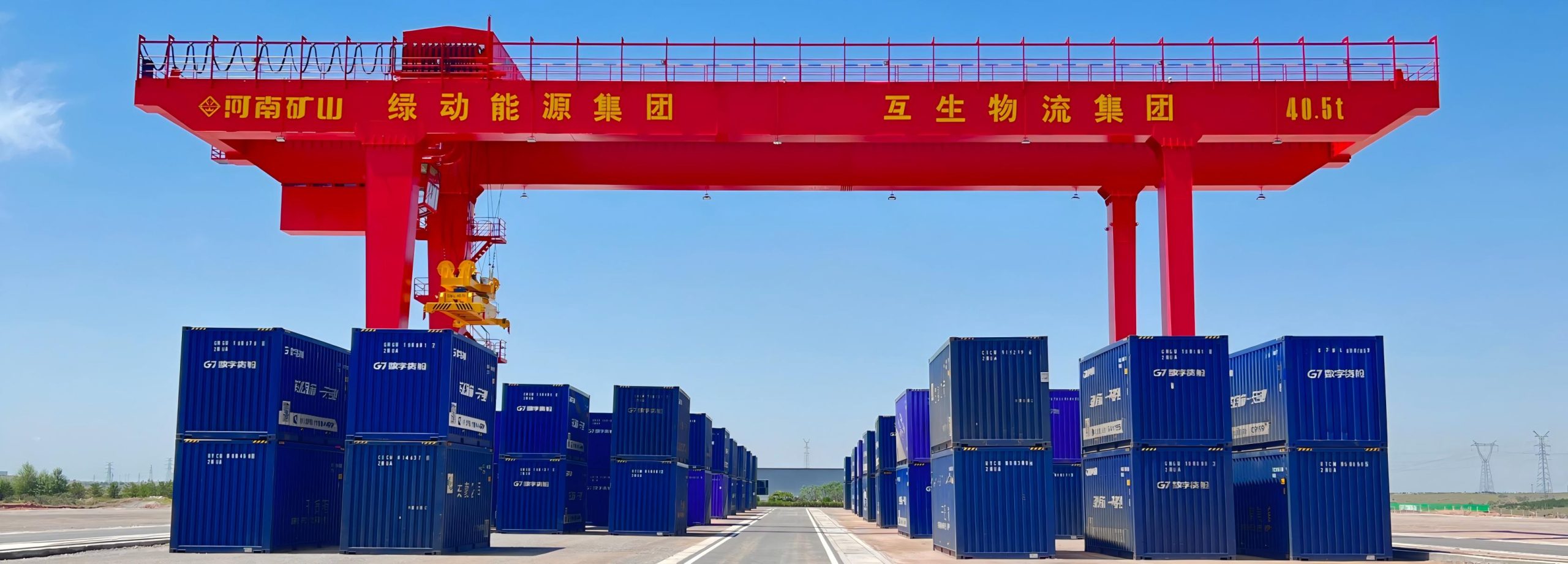
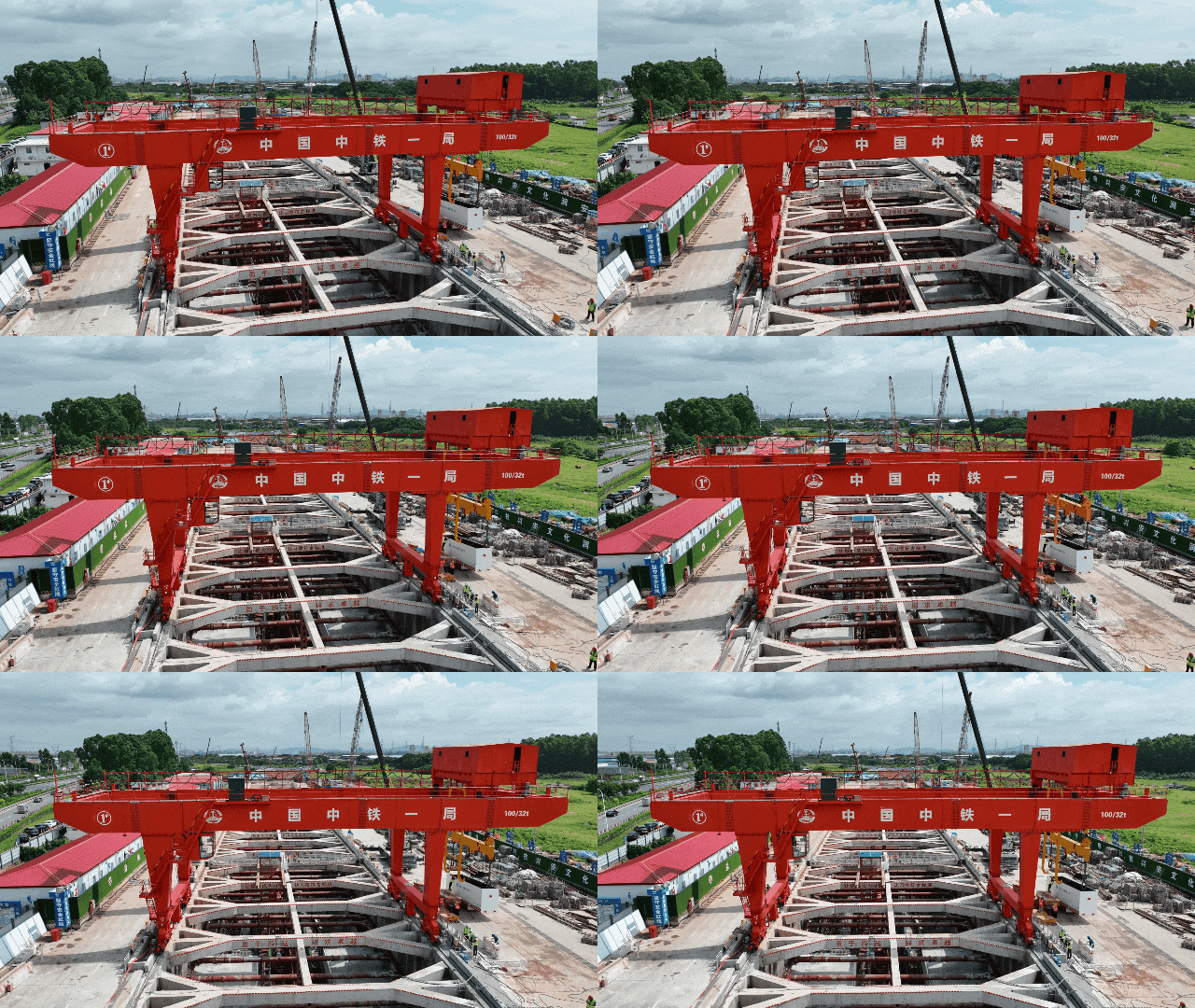
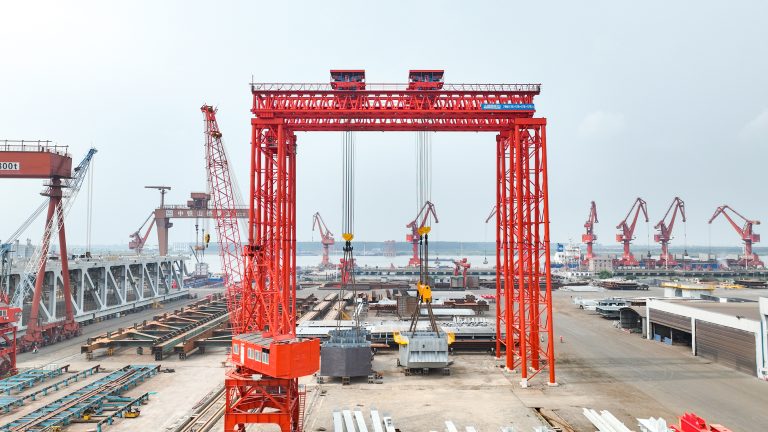
Rubber Tyred Gantry Cranes (RTG) are the core container handling equipment in container terminals and logistics yards where space is at a premium. Many logistics planners and yard managers will have this question: how can a heavy equipment with dozens of tons of weight and huge load capacity flexibly travel in a narrow yard and efficiently complete the loading, unloading and stacking of containers?
With the increasingly tight land resources, many yards have to increase the density of container storage, the operating space is further compressed – the distance between the rows of containers is getting narrower and narrower, and the operating channel is also constantly shrinking. This puts high demands on the maneuverability of RTG cranes.
In fact, tire gantry cranes (RTG) can work efficiently in limited space, the core lies in its steering system, travel mode, structural design and intelligent control of the synergistic cooperation.
What Is a Rubber Tyred Gantry Crane?
Basic Definition
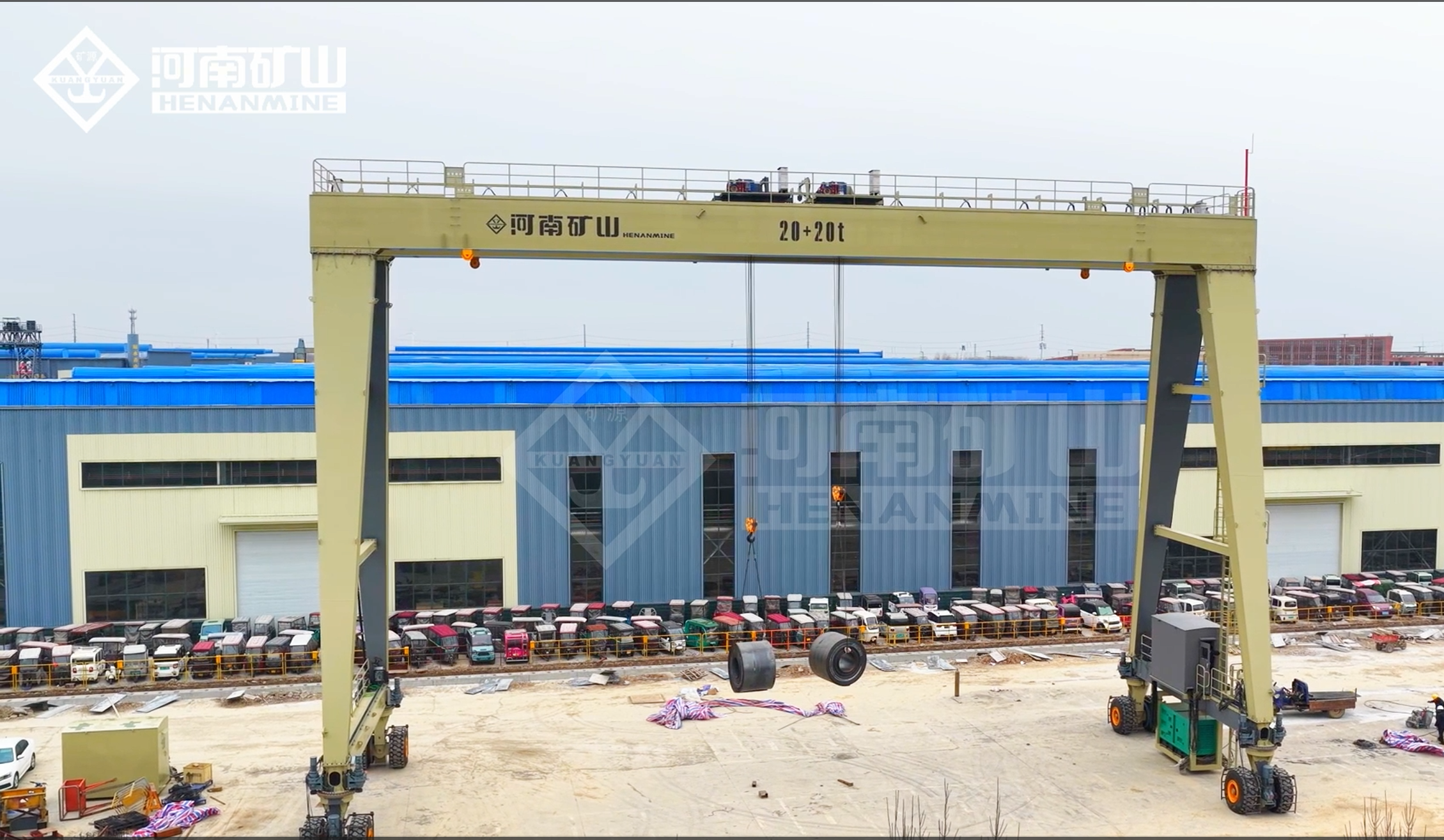
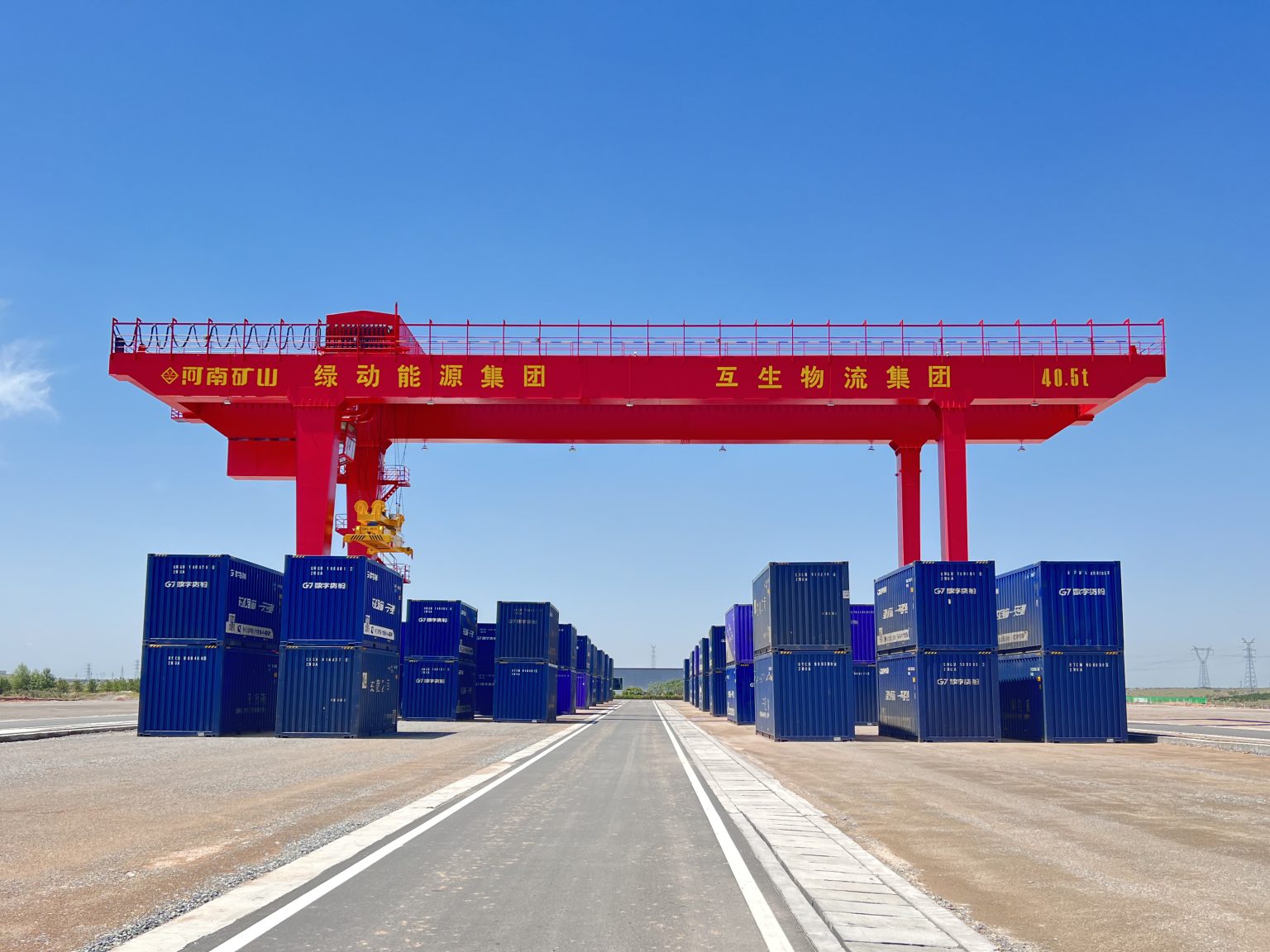
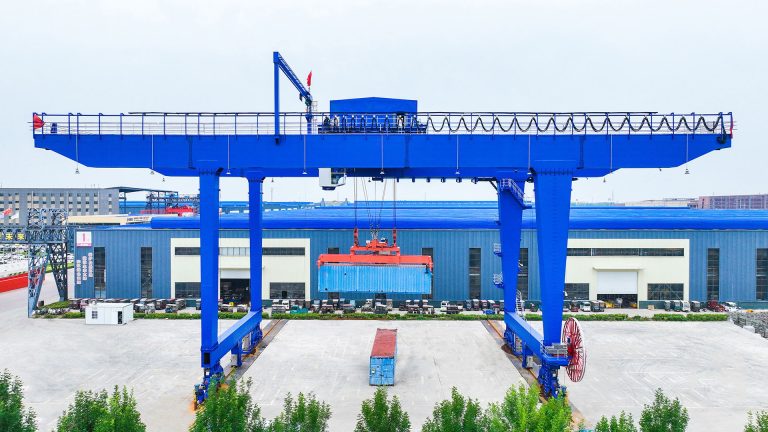
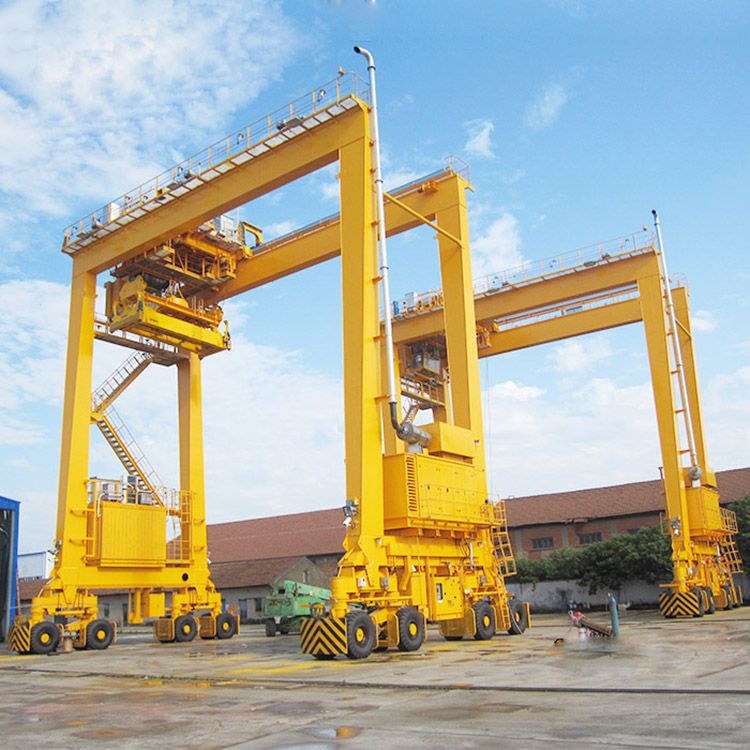
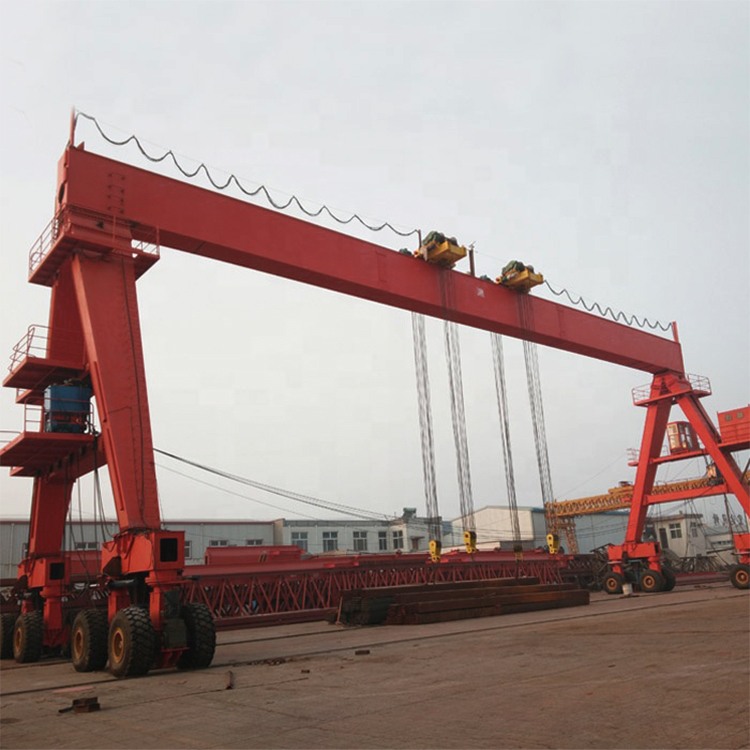
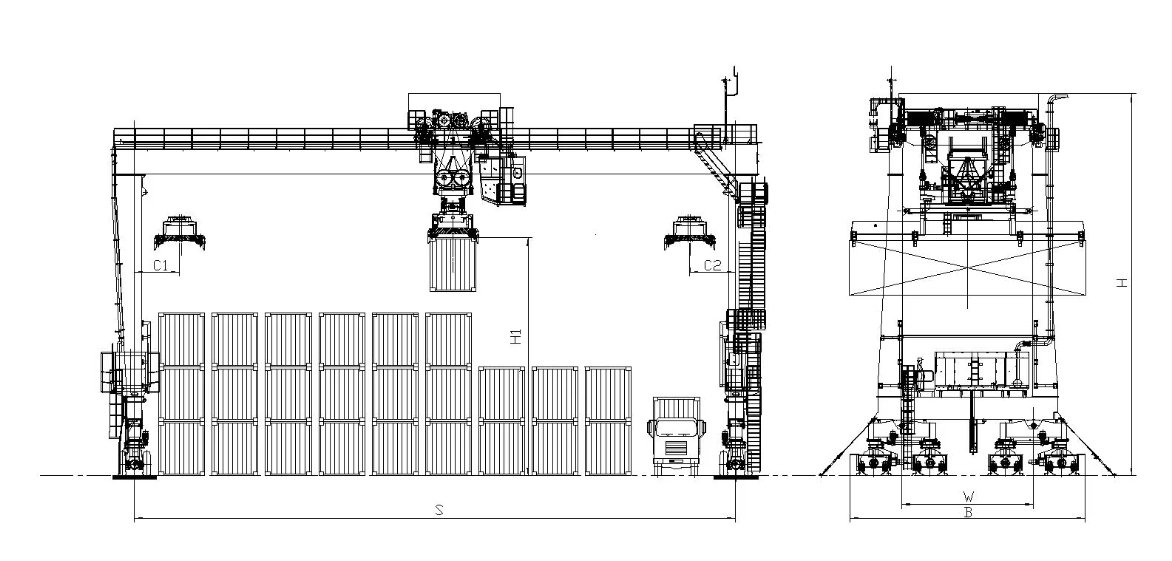
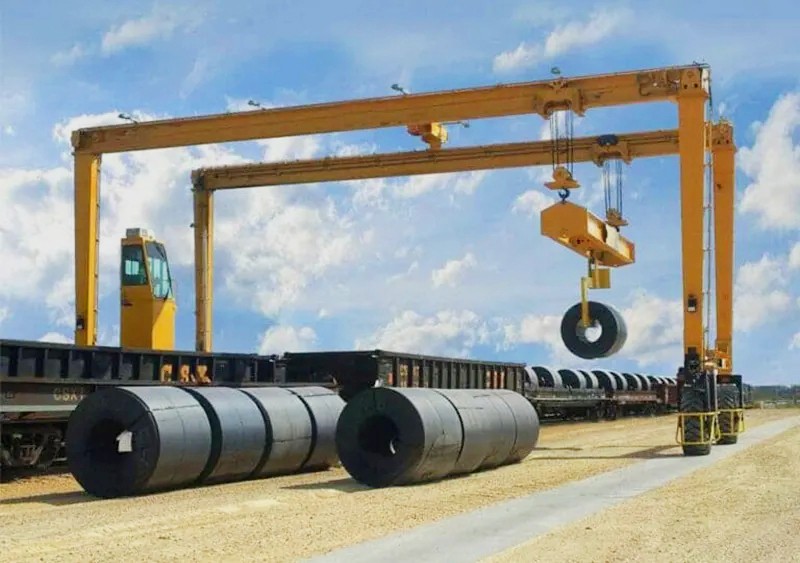
Rubber Tyred Gantry Crane, or RTG Crane for short, is a kind of mobile gantry crane with rubber tires as the traveling device. Its core structure is similar to that of an ordinary gantry crane, with main girder, outriggers, hoisting mechanism and trolley system, but the biggest difference is that it doesn’t need to rely on fixed rails, and can move freely on the level ground.
It is mainly used for container handling in container yards and logistics centers, and its core function is to complete the stacking, loading and unloading of containers, as well as the transfer between different areas. Compared with rail-mounted gantry cranes (RMG), its biggest advantage is its flexibility, which is not restricted by tracks and can be adapted to various complex yard layouts.
Key Features
Rubber tire mobility is its core feature. The use of high-strength rubber tires and the hydraulic drive system allow the RTG to withstand huge deadweight and lifting loads while moving smoothly on level ground without the need to lay special tracks, which significantly reduces the cost of site modification.
The independent travel system allows each tire of the RTG to be controlled independently, which is the basis for its ability to steer flexibly. Even in narrow aisles, accurate positioning and movement can be accomplished by adjusting wheel steering.
Adapting to flexible yard layout, no matter it is a regular rectangular yard or an irregular temporary yard, RTG can quickly adapt to it without having to readjust the equipment or the site due to the change of layout, which saves a lot of time.
Higher stacking capacity, capable of stacking containers up to 4-6 levels, maximizes the use of vertical space in the limited floor space and increases the storage capacity of the yard, which is one of the reasons for its popularity in space-constrained yards.
Why Maneuverability Matters in Limited Workspaces
Increasing Container Yard Density
Nowadays, land resources in ports and logistics yards are getting tighter and tighter, especially in coastal ports, where the cost of land is extremely high and unlimited expansion of yard area is not possible. In order to increase throughput, the container yard density can only be increased continuously.
This results in the spacing between rows of containers shrinking and the operating aisles becoming narrower. If the RTG’s maneuverability is not good, and it cannot turn around and move between the dense containers, the operation progress will be seriously affected, and even the lifting operation cannot be completed.
Operational Efficiency
The operational efficiency of the yard directly depends on the movement and lifting speed of the RTG. In the limited space, the better the mobility of the RTG, the faster it can complete the loading and unloading of containers, transfer and stacking, and shorten the processing cycle of a single container.
If the maneuverability is insufficient, the RTG needs to repeatedly adjust its position to complete a lifting, which not only wastes time, but also leads to traffic congestion inside the yard, affecting the passage of other operating vehicles and further reducing the overall operational efficiency.
Safety Considerations
In the limited space, the containers are piled up densely, and there are also forklifts, container trucks and other operating vehicles, so the operating environment is very complicated, and the mobility of RTG is directly related to the safety of the operation.
If the RTG is not flexible in steering and moving accurately, it is easy to collide with the surrounding containers and operating vehicles, which will not only damage the equipment and goods, but also may cause casualties. Good maneuverability allows RTGs to control their position accurately in narrow spaces and avoid collisions.
Advanced Steering Systems in RTG Cranes
The core reason why RTG can maneuver flexibly in limited space is its advanced steering system. Unlike ordinary vehicles that only have front wheel steering, RTG adopts multi-wheel independent steering design with multiple steering modes to cope with various needs in narrow spaces.
Multi-Wheel Steering Design
Most RTGs adopt a multi-wheel steering design, where each wheel on the bottom of the outrigger can adjust the steering angle independently, rather than in a fixed direction. This design allows RTGs to steer much more flexibly without the need for a large turning space as in a normal vehicle.
For example, in narrow container rows, the RTG can realize small-scale steering and movement by adjusting the steering angles of different wheels, without having to make large adjustments backward or forward, which saves operating space and time.
Crab Steering Mode
Crab Steering Mode is RTG’s specialty in limited space and one of its most unique steering modes. When this mode is turned on, all wheels will be synchronized to turn 90 degrees, and then the RTG can move sideways like a crab along the direction perpendicular to the main beam.
This side-to-side movement can accurately align the stacking position of the containers without adjusting the position back and forth, which is especially suitable for adjusting the working position between narrow container rows, avoiding the inability to get close to the target containers due to the limited space.
Pivot Steering
The pivot steering mode allows the RTG to rotate around a center point with a particularly small turning radius. This center point can be the center of the crane or the wheels of a certain set of outriggers, which can be adjusted according to the operating scenario.
In areas where space is extremely limited, such as corners of yards and narrow passages, pivot steering allows the RTG to change direction quickly without taking up too much operating space, avoiding hitting surrounding obstacles due to a large turning radius.
Coordinated Steering Control
The steering system of RTG adopts electronic synchronized control technology, all the wheels’ steering movements are precisely coordinated through the control system to ensure the steering process is smooth and precise, without any wheel shift or stuttering.
This coordinated control enables the RTG to keep its body stable during steering and moving, especially when lifting heavy objects, which will not be tilted due to unstable steering, thus not only ensuring the safety of the operation, but also improving the accuracy of the operation.
Flexible Travel Modes That Improve Maneuverability
In addition to the advanced steering system, RTG is also equipped with a variety of flexible travel modes, different travel modes are suitable for different operating scenarios, which further improves its maneuverability in limited space and makes the operation more efficient.
Straight Travel Mode
Straight Travel Mode is the most commonly used travel mode of RTG. When this mode is turned on, all the wheels remain in the same direction and the crane travels in a straight line, which is mainly used for moving back and forth in the passage between container rows to complete the loading and unloading of containers and transshipment.
In this mode, RTG’s traveling speed is stable, can quickly switch between different operating points, suitable for large, regular layout of the yard operation, although simple, but can ensure the efficiency of basic operations.
Diagonal Travel Mode
Diagonal Travel Mode is one of the key modes for RTG to enhance operational efficiency. When this mode is turned on, the RTG will move in a diagonal direction, without having to travel in a straight line and then make a turn, so that it can move directly from one container row to another.
In the limited space, this traveling mode can save a lot of time for adjusting the position, especially in the case of irregular layout of the yard and narrow aisles, diagonal turning can avoid repeated adjustments of the direction, which greatly improves the operational efficiency.
Rotational Turning
Rotational turning mode is similar to pivot turning, but it has a larger rotating angle, which allows the RTG to complete a 360-degree rotation in place, or to adjust any angle of steering according to demand.
This mode is suitable for use in extremely narrow spaces, such as the corners of the yard, equipment-intensive areas, where the RTG can quickly change the direction of operation by rotational turning, without taking up additional operating space and avoiding collision with the surrounding equipment and containers.
Compact Structural Design for Space Optimization
In addition to the steering and driving modes, the compact structural design of RTG plays a key role in its ability to operate efficiently in limited space. When designing, the engineers will try to optimize the structure under the premise of guaranteeing the structural strength and bearing capacity, so as to reduce the footprint of the equipment and improve the space utilization rate.
Optimized Wheelbase
The wheelbase of RTG is precisely optimized, neither too long nor too short. A long wheelbase will increase the turning radius, which is not conducive to steering in narrow spaces; while a short wheelbase will affect the stability of the equipment and make it easy to tilt when heavy loads are lifted.
The optimized wheelbase not only ensures the stability of the RTG during the lifting operation, but also minimizes the turning radius, allowing it to steer and move flexibly in narrow passages.
Lightweight but Strong Frame Design
The frame of RTG is made of high-strength steel, which ensures the structural strength and ability to withstand huge lifting loads, while minimizing the weight of the equipment. The lightweight design not only reduces the wear and tear of the tires, but also allows the equipment to move more flexibly without being too heavy and clumsy.
At the same time, the structure of the frame is very compact, the main beam and legs are well laid out and do not take up too much space, allowing the RTG to move flexibly between narrow rows of containers without being restricted by space due to its large structure.
Adjustable Span Configurations
Different yards have different container arrangement widths, stacking methods, and operating spaces, RTG adopts an adjustable span design, which allows the span of the main beam to be adjusted according to the layout of the yard and the size of the containers.
This adjustable design allows the RTG to adapt to different yard layouts without wasting operating space due to a fixed span, and without the need to replace the equipment in order to adapt to the site, which greatly improves the versatility of the equipment and the utilization of space.
Intelligent Control Systems That Improve Navigation
Modern RTG cranes are equipped with intelligent control systems that help operators control the equipment more accurately, improve navigation and maneuverability in limited space, reduce human error, and improve operational safety.
GPS and Automated Guidance Systems
Many RTGs are equipped with GPS and Automated Guidance Systems, which can accurately locate the crane’s position in the yard within centimeters. Through the control system, the operator can clearly see the real-time position of the RTG, as well as the distribution of the surrounding containers and operating vehicles.
This accurate positioning allows the operator to quickly find the target container without having to repeatedly adjust the position, especially in dense yards, avoiding the waste of space and time due to inaccurate positioning and improving operational efficiency.
Anti-Collision Systems
In a limited space, where the operating environment is complex and the risk of collision is high, RTG’s anti-collision system detects obstacles in real time through sensors, radar and other technologies, including containers, operating vehicles, personnel and so on.
Once the distance between the RTG and the obstacle is detected to be too close, the system will automatically send out an alarm to remind the operator to slow down or stop the operation; if the operator does not react in time, the system will automatically slow down and stop to avoid collision accidents and ensure the safety of the operation.
Automated RTG Operations
Many RTGs nowadays support remote operation or semi-automated control. The operator can control all the actions of the RTG through the screen in the control room, without having to follow the equipment on site, which not only improves the operational efficiency, but also reduces the safety risks of on-site operation.
Semi-automated or fully-automated operation reduces human errors and allows RTGs to move, steer, and lift more accurately, especially in limited spaces, avoiding wasted space or safety accidents caused by human errors.
Operational Advantages of RTG Cranes in Limited Spaces
Combined with the steering system, traveling mode, structural design and intelligent control mentioned above, the operational advantages of RTG in limited spaces are very obvious, which makes it the preferred equipment for yards and terminals where space is tight.
High Container Stacking Efficiency
The stacking height of RTG can reach 4-6 levels, which is higher than the stacking height of ordinary lifting equipment. In the limited ground space, it can maximize the use of vertical space, significantly increase the storage capacity of the yard, and solve the problem of land resources.
At the same time, its precise maneuver ability can make the containers stacked more neatly and densely, which further improves the space utilization and allows the limited yard to accommodate more containers.
Flexible Yard Layout Adaptation
Unlike rail-mounted gantry cranes (RMG), RTGs do not rely on fixed rails and can move freely on level ground. Whether the yard layout is regular or irregular, temporary or fixed, RTGs can adapt quickly.
If the layout of the yard needs to be adjusted, RTG can directly adjust the working route without re-laying the track, which saves a lot of time and infrastructure costs, especially suitable for temporary yards that need to adjust the layout frequently.
Reduced Infrastructure Requirements
One of the biggest advantages of RTG is that it does not require the laying of fixed tracks. Compared with RMG, it eliminates the need for infrastructure investment for track laying and does not affect the layout and operation of the yard due to the space occupied by the track.
As long as the yard floor is smooth and can bear the weight of RTG, it can be put into use directly, which greatly reduces the cost and cycle of site reconstruction, especially suitable for small yards or temporary operation sites where space is limited and tracks cannot be laid.
Typical Applications Where Space Efficiency Matters
RTG’s flexible maneuverability and space-optimized design make it play an important role in many space-constrained scenarios, especially where space utilization and operational efficiency are highly demanded.
Container Terminals
Container terminals are the most important applications for RTG. The land resources of the terminal are extremely tight, the density of container stacking is extremely high, the aisle between rows is narrow, and the operation is fast-paced.
RTG’s flexible steering and moving ability can quickly shuttle between dense containers to complete container loading, unloading, stacking and transshipment, which not only ensures operational efficiency, but also maximizes the use of limited space at the terminal.
Intermodal Logistics Yards
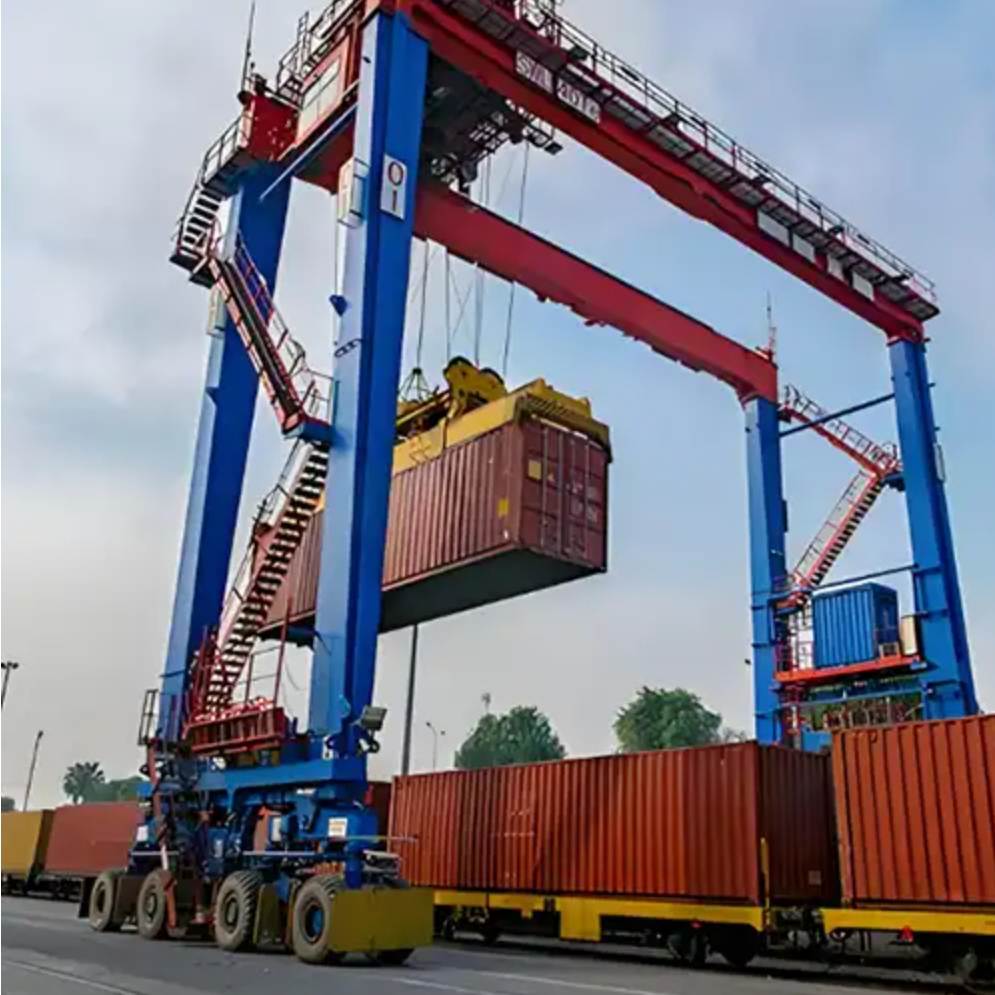
Intermodal logistics yards need to connect railroads and trucks for container transshipment, and the operation space is relatively complicated, with both container storage and loading/unloading areas, which makes the space very tight.
RTG’s flexible maneuver capability can quickly switch between different areas to complete the container transfer without affecting the efficiency of the railroad and truck connection due to limited space, thus improving the overall speed of intermodal transportation.
Precast Concrete Yards
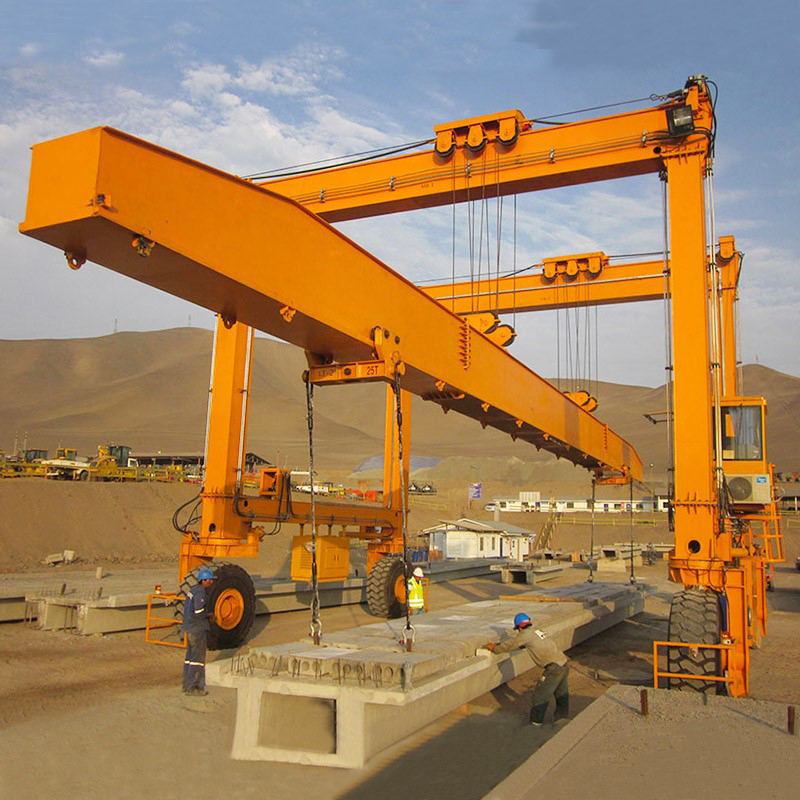
In precast concrete yards, precast panels, precast beams and other components are large in size and heavy in weight, so the space in the yard is often tight, and the density of components stacked is also high.
The RTG’s high load carrying capacity and flexible maneuverability allow it to accurately handle these heavy components and move flexibly in narrow yards, avoiding collisions between components while maximizing the use of yard space.
Industrial Equipment Storage Yards
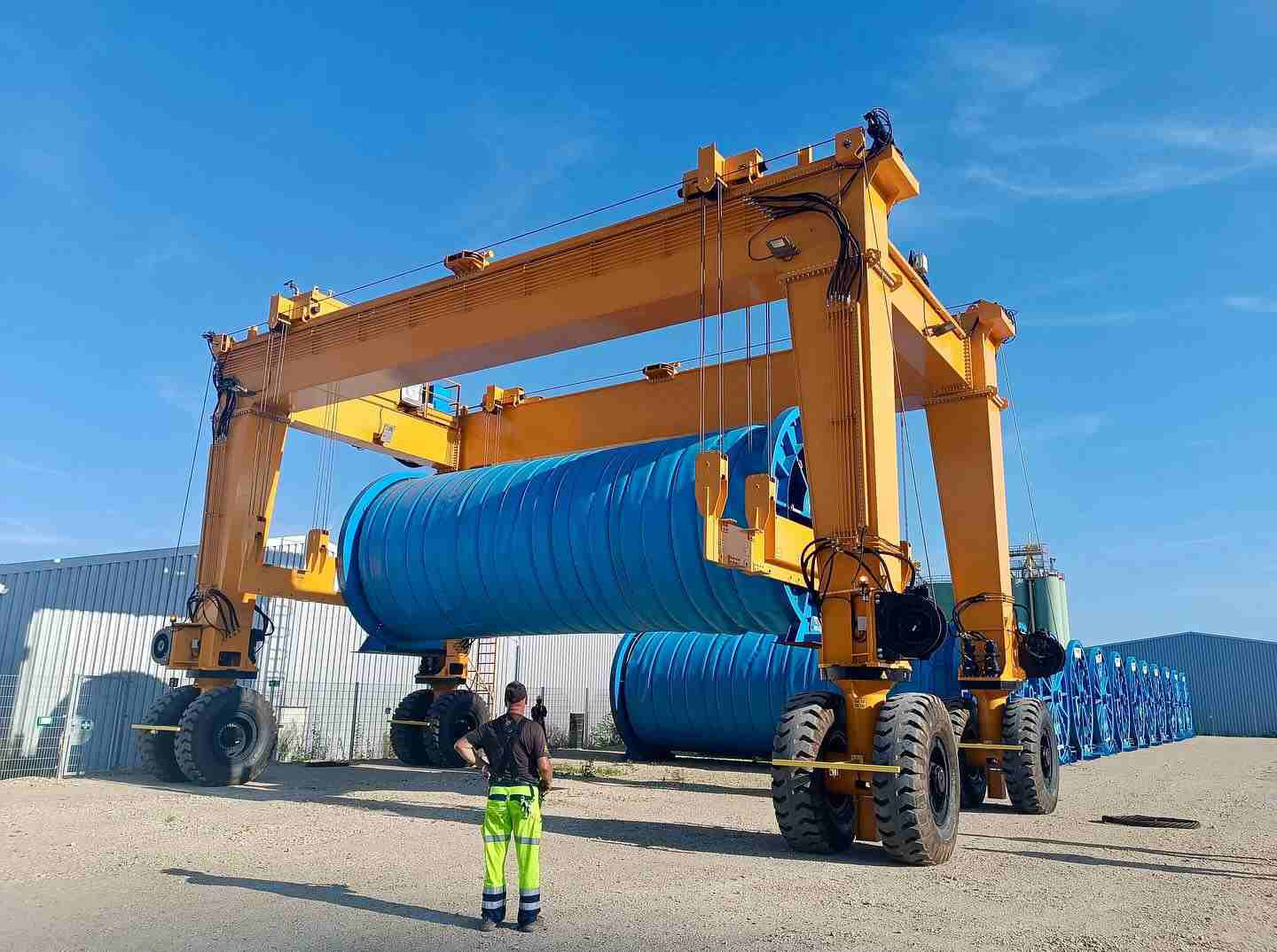
Industrial equipment storage yards are densely packed with large machinery and heavy components, with limited operating space and frequent adjustments to the position of equipment and components.
RTG’s flexible movement and precise lifting ability can complete the handling and storage of large equipment and parts in a narrow space, adapting to the limited space of the site and improving the operational efficiency of the yard.
Key Factors When Choosing an RTG Crane for Limited Workspaces
If you need to choose an RTG crane for limited workspace, you don’t need to blindly pursue high configuration, but focus on the following key factors in combination with your own operational needs, so that you can choose the most suitable equipment.
Wheel configuration is the basis, give priority to multi-wheel independent steering configuration, the number of wheels and layout will directly affect the maneuver ability of RTG, multi-wheel independent steering RTG, more flexible in narrow space.
The design of steering system is very critical, choose the RTG equipped with crab steering and pivot steering modes, these steering modes allow the equipment to quickly adjust the position in the limited space and improve the operational efficiency.
Turning radius capability, according to the width of the yard channel to choose the appropriate turning radius, the smaller the turning radius, RTG in the narrow space, the better the flexibility, the more adapted to the layout of the dense yard.
The level of automation, according to the operational needs to choose, high-frequency, high-precision operations, you can choose semi-automated or fully automated RTGs, which can reduce human error, improve operational efficiency and safety.
Compatibility of yard layout, choose the RTG with adjustable span to ensure that the equipment can adapt to the yard layout and container size, avoiding the waste of space due to the fixed span.
Frequently Asked Questions
Combined with the usual experience of receiving customers, I have organized a few of the most frequently asked questions and answered them in an easy-to-understand way to help you quickly clear up the key questions about RTG operation in limited space.
How many steering modes does an RTG crane typically have?
Conventional RTG cranes usually have 4 steering modes, namely straight line steering, crab steering, pivot steering and diagonal steering. Different steering modes are adapted to different operating scenarios, especially crab and pivot steering, which are especially practical in limited space and can greatly enhance the maneuverability.
What is the turning radius of a rubber tyred gantry crane?
There is no fixed value for the turning radius of an RTG, it depends on the wheelbase and wheel configuration of the machine, the turning radius of a regular model is around 5-8 meters. With pivot steering, the turning radius can be even smaller, and even in-situ rotation can be realized, which is especially suitable for narrow spaces.
Are RTG cranes better than rail-mounted gantry cranes in small yards?
RTGs are often better than rail-mounted gantry cranes (RMGs) in small yards. This is because RTGs do not need to lay tracks, which saves infrastructure costs and space, and are more flexible and adaptable to the irregular layout of small yards, whereas RMGs need to be fixed on tracks, which takes up extra space and makes it difficult to adjust the layout.
Can RTG cranes operate automatically?
Can RTG cranes operate automatically? Nowadays, many RTGs support semi-automated or fully automated operation, which can realize automatic loading and unloading, stacking and transshipment of containers through GPS guidance and automatic control system. Automation not only improves the operation efficiency, but also reduces human error, especially suitable for limited space and intensive operation scenarios.
What is the typical container stacking capacity of an RTG crane?
The typical container stacking capacity of an RTG crane is 4-6 layers, depending on the lifting capacity and span of the crane. Smaller RTGs can typically stack up to 4 floors, while heavier RTGs can stack up to 5-6 floors, maximizing the storage capacity of the yard in a limited floor space.
Conclusion
RTG cranes can maneuver efficiently in limited space, the core is the advanced steering system, flexible driving mode, compact structural design and intelligent control system, the synergistic cooperation of these four core strengths, so that this heavy equipment can flexibly shuttle in a narrow site, precise operation.
For container terminals and logistics yards where space is tight, RTG is the ideal equipment to enhance space utilization and operational efficiency. It does not have to rely on fixed tracks and can adapt to various complex layouts, maximizing the use of limited space while ensuring operational safety and efficiency.
By choosing the right RTG configuration and combining it with your own yard layout and operational needs, you can give full play to its advantages, maximize the value of your limited space, and improve the overall operational efficiency of your yard.
Call to Action
If you have limited space in your container yard or logistics site and need a flexible and efficient RTG crane, submit your yard layout, operational requirements and lifting parameters, and we will provide you with customized RTG solutions.
Henan Mine Crane Factory supply, as a professional crane manufacturer, integrates R&D, design, manufacturing, sales and service to provide customers Please feel free to contact us, we will provide you with free design drawings, and field survey!