

BULK MATERIAL STORES · MILL MAINTENANCE · SHUTDOWN SUPPORT
Cement Plant Cranes for Grab Handling and Maintenance
Move stored materials to the process. Lift service components out for repair.
Cement plant cranes serve two main duties: repetitive bulk-material transfer with a grab, and equipment removal and positioning with a hook. Each duty requires its own load assessment, working coverage, operating cycle and environmental protection.
Henan Mine Crane supplies grab overhead cranes, maintenance hook cranes, grab-and-hook configurations and gantry cranes for cement production facilities. Receive a crane selection, plant-area layout, technical specification and itemized quotation covering the equipment and contracted site services.

What Henan Mine Crane Supplies
A grab crane package for the material store
Crane structure, lifting and opening mechanisms, grab, travel drives and controls coordinated around the stored material and hopper-feeding route. The offer distinguishes rated lifting capacity, grab mass and net material payload.
Maintenance coverage for process equipment
Hook-crane arrangements developed around removable components, lifting points and laydown positions. The layout checks the route from the installed machine to the maintenance area, including rigging height and obstructions.
Engineering that connects the crane to the plant
General arrangement drawings, hook coverage, agreed wheel reactions, runway interfaces and electrical requirements support the building and process design. Dust, material temperature and any area classification are addressed in the specification.
A delivery and service package with defined scope
Receive an itemized equipment offer with agreed documentation, inspection and shipment arrangements. Installation support, commissioning, training and recommended spare parts can be included for the production or shutdown schedule.
Crane Applications Across a Cement Plant
| Plant area | Lifting duty | Equipment arrangement |
|---|---|---|
| Additive and corrective-material stores | Transfer suitable stored bulk materials between stockpiles and feed hoppers. | Grab overhead crane, bucket geometry and working coverage coordinated with the store and receiving points. |
| Coal or other solid-fuel storage | Handle the defined fuel within a grab-fed storage layout. | Grab crane with the required duty and protection for the material, dust and documented area conditions. |
| Clinker or mineral storage using grab handling | Transfer abrasive material where the process layout calls for a grab. | Bucket wear provisions and temperature protection selected for the actual material condition. |
| Crushers, raw mills and cement mills | Remove motors, gearboxes and other designated service components. | Hook crane with suitable capacity, headroom, approach and a clear route to the laydown area. |
| Kiln drives, fans and outdoor service areas | Lift defined components during planned maintenance. | Overhead or gantry arrangement selected around access, supporting works and the maintenance plan. |
Grab handling is assessed where it fits the plant process. Powder containment, dust extraction and interfaces with conveyors, hoppers or enclosed transfer equipment are considered with the crane layout.
QZ Grab Crane: A 10 t Reference Configuration
The Henan Mine Crane selection guide lists the following conventional QZ grab crane configuration. It provides a defined reference for comparing lifting performance and operating duty.
| Parameter | Catalog configuration |
|---|---|
| Rated lifting capacity | 10 t, including the grab self-weight |
| Crane span | 22.5 m |
| Maximum lifting height | 18 m |
| Crane working class | A6 |
| Catalog hoisting speed | 40.7 m/min |
| Power supply shown | 380 V, 50 Hz, three-phase AC |
The material payload is lower than the gross rated capacity because the grab and other carried equipment also consume lifting capacity. The ordered grab volume, speeds, duty and controls follow the material and process; these catalog values are not a universal cement-plant specification.
Select by Material, Throughput and Maintenance Access
1. Match the grab to the actual material
Bulk density, lump size, moisture, abrasiveness and material temperature guide bucket selection. A bucket suitable for a light, loose fuel may carry too much mass when filled with a denser mineral. Henan Mine Crane coordinates the bucket and lifting machinery for the specified materials.
2. Assess the complete handling cycle
The throughput assessment includes net material per cycle, grabbing time, loaded travel, discharge, return and available operating time. Hopper location and receiving capacity can limit output even when the crane has a high hoisting speed.
3. Draw the maintenance lift from machine to laydown
The heaviest removable component, lifting attachment and approved lifting points establish the load case. The proposed layout checks hook approaches, roof and service clearances, extraction direction and the height needed to clear the machine.
4. Keep feeding and shutdown requirements visible
A crane occupied by a long maintenance lift may be unavailable for material feeding. Dedicated cranes or a shared grab-and-hook arrangement are compared against the plant schedule, attachment changes and the consequences of an equipment outage.
Compare Cement Plant Crane Configurations
| Configuration | Suitable duty to assess | What the equipment proposal addresses |
|---|---|---|
| Dedicated grab overhead crane | Repeated stockpile transfer and hopper feeding. | Bucket and rope arrangement, payload, handling cycle, operating duty and optional automation. |
| Double-girder maintenance hook crane | Removal and positioning of defined mill, drive and other service components. | Complete suspended load, available headroom, low-speed positioning and the maintenance route. |
| Grab-and-hook dual-purpose crane | Defined bulk handling and occasional conventional hook lifts within a shared working area. | Permitted operating modes, attachment changeover, individual capacities and crane availability. |
| Explosion-protected crane configuration | Lifting within a documented hazardous area, where required. | Equipment protection selected against the site classification and operating conditions. |
| Gantry crane | Outdoor service yards and handling areas without a suitable overhead runway. | Ground rails, foundations, weather exposure, hook coverage and site access. |
A four-rope mechanical grab requires the matching lifting and opening machinery. It cannot be treated as an interchangeable attachment for every standard hook hoist.
Grab Weight, Material Payload and Bucket Volume
For an illustrative calculation, assume a 3.0 m³ bucket, material bulk density of 1.4 t/m³ and a fill factor of 0.90. The material payload is 3.0 × 1.4 × 0.90 = 3.78 t.
| Suspended item | Illustrative mass |
|---|---|
| Grab | 3.00 t |
| Other carried lifting equipment | 0.20 t |
| Material in the grab | 3.78 t |
| Total static suspended load | 6.98 t |
This arithmetic example is not a promised bucket size or throughput. The final arrangement also addresses the grab mechanism, crane duty, material variability and operating conditions. The quotation identifies whether the stated capacity includes the grab and other carried equipment.
Plan Mill and Kiln-Drive Maintenance Lifts
Maintenance lifting starts at the component in its installed position. A crane that reaches the workshop floor may still miss a gearbox behind a column or lack the headroom to remove a mill component with its lifting beam attached.
Henan Mine Crane develops the hook envelope around pickup points, machine clearances, the suspended assembly and the laydown position. Hoisting and travel controls can include the low-speed positioning needed for the specified removal and reinstallation task.
The scope also distinguishes lifting from extraction or breakout forces. Pulling a seized component or applying an unassessed side load is not an ordinary rated hook lift. Shutdown planning coordinates equipment isolation, access, crane readiness and the component-handling method.
Dust, Heat and Protective Functions
| Condition | Configuration addressed in the offer |
|---|---|
| Dust and abrasive material | Electrical enclosure protection, machinery covers, rope and brake access, bucket wear components and maintenance arrangements suited to the exposure. |
| Residual heat and hot material | Material temperature at pickup and ambient conditions at crane level assessed separately; thermal protection and component selection defined where required. |
| Combustible fuel areas | The documented hazardous-area classification and the required equipment protection. General dust protection does not establish explosion protection. |
| Crane movement and load holding | Specified overload protection, brakes, hoist and travel limits, emergency stops and any collision-prevention functions. |
| Operator visibility and automation | Control position, cameras or sensing equipment where selected, operating zones, alarms and the agreed response to faults or interrupted cycles. |
A material temperature limit is stated for the selected grab and crane arrangement; it is not inferred from the word “clinker.” Automatic operation also requires a defined operating area, site interfaces and a controlled method for exception recovery.
Bulk-Handling Project Reference: Baowu Shaogang
Henan Mine Crane supplied two unmanned grab cranes for the rotary hearth furnace project at Baowu Shaogang steelworks. The project incorporated functions including three-dimensional scanning, automatic positioning, obstacle avoidance and automatic grabbing.

This steel-industry project demonstrates experience with automated bulk-material handling. For a cement plant, the proposed functions are assessed against its own stockpile geometry, hopper-feeding requirements, dust conditions and operating procedures.
Engineering, Installation and Spare-Parts Support
| Stage | Deliverables and supply scope |
|---|---|
| Equipment proposal | Crane selection, working-area layout, technical schedule, grab or hook interfaces and itemized commercial offer. |
| Engineering coordination | Approved arrangement, agreed runway reactions, building clearances, electrical interfaces and process-control connections where specified. |
| Manufacture and inspection | Production against the agreed configuration, inspection plan and contracted assembly, electrical and functional-test records. |
| Installation and commissioning | Contracted erection guidance or site services, commissioning, agreed load tests, operator training and handover documents. |
| Maintenance and spare parts | Operating and maintenance manuals, component identification and a recommended stock of relevant rope, brake, wheel, control and grab wear items. |
For shutdown work, the offer identifies drawing approval, manufacturing, shipment and site-support milestones. Warranty coverage and its starting point, technical-support arrangements and replacement-part responsibilities are recorded in the commercial terms.
Access for servicing the crane is considered in the layout. Where a grab crane is critical to feeding, maintenance windows and any standby or alternative handling arrangements are coordinated with the plant operating plan.
Cement Plant Crane Prices
For initial equipment budgeting, standard 10–20 t double-girder hook-crane references span approximately US$12,000–42,000 per set. Published China-market references for standard 5–10 t double-girder grab cranes are approximately US$28,000–70,000 per set.
| Equipment reference | Approximate equipment budget, USD / set | Reference conditions |
|---|---|---|
| 10 t standard double-girder hook crane | US$12,000–26,000 | Standard factory-equipment reference; span, lift and duty priced to the selected arrangement. |
| 20 t standard double-girder hook crane | US$22,000–42,000 | Standard factory-equipment reference; special environments and lifting functions affect the offer. |
| 5–10 t standard double-girder grab crane | US$28,000–70,000 | China-market equipment budget reference; grab, duty and export scope are defined in the quotation. |
| 10 t four-rope grab crane example | Approximately US$42,000 | Published 31.5 m-span, A6 mechanical clamshell-grab example. |
These are market budget references. Henan Mine Crane provides a project quotation for the specified crane, material, operating cycle and supply package. A standard hook-crane budget does not cover a dedicated high-cycle grab system or an automated material store.
Runway steelwork, rails, building reinforcement, site power, hopper or dust-extraction work, freight, import charges, erection, commissioning and local testing are separate items unless expressly included. The offer states the currency, delivery term, validity and service scope.
Cement Plant Crane FAQs
Which cranes are used in a cement plant?
Grab overhead cranes handle suitable stored bulk materials where the process uses grab-fed storage. Hook cranes support equipment maintenance. Dual-purpose and gantry arrangements can be assessed for defined shared duties or outdoor areas.
Does grab crane capacity include the grab weight?
Yes for the QZ catalog configuration shown: the rated lifting capacity includes grab self-weight. Material payload is determined after accounting for the grab and other carried equipment, together with the applicable operating limits.
Can a single crane handle materials and maintenance lifts?
A grab-and-hook crane can be specified for defined duties. The proposal addresses operating modes, attachments, capacities and changeover. It also checks whether maintenance work would interrupt essential material feeding.
Can a grab crane handle hot clinker?
Only within the material-temperature and environmental limits established for the selected equipment. The grab, ropes or hydraulic equipment, electrical components and surrounding crane arrangement are assessed for the actual exposure.
Is explosion protection required for every cement plant crane?
The requirement follows the documented site classification and operating conditions. Fuel areas may introduce hazardous-area requirements. General dust-tight protection is not an explosion-protection approval.
What determines a mill maintenance crane capacity?
The complete suspended assembly, lifting accessories, lifting points and component-removal method determine the load case. Hook coverage, headroom and the route to the laydown area must also fit the maintenance task.
How much does a cement plant crane cost?
The listed references cover approximately US$12,000–42,000 for standard 10–20 t hook cranes and US$28,000–70,000 for standard 5–10 t grab cranes. These are equipment budget references; the quotation defines final scope.
What will Henan Mine Crane provide with a proposal?
Receive a recommended crane configuration, working-area layout, technical schedule and itemized quotation. The agreed package identifies attachments, interface data, inspection documents, delivery arrangements, site services and spare-parts support.
Crane Equipment for Cement Plant Handling and Maintenance

Intelligent Grab Overhead Crane
Grab and control arrangements for defined bulk-material storage and transfer duties.
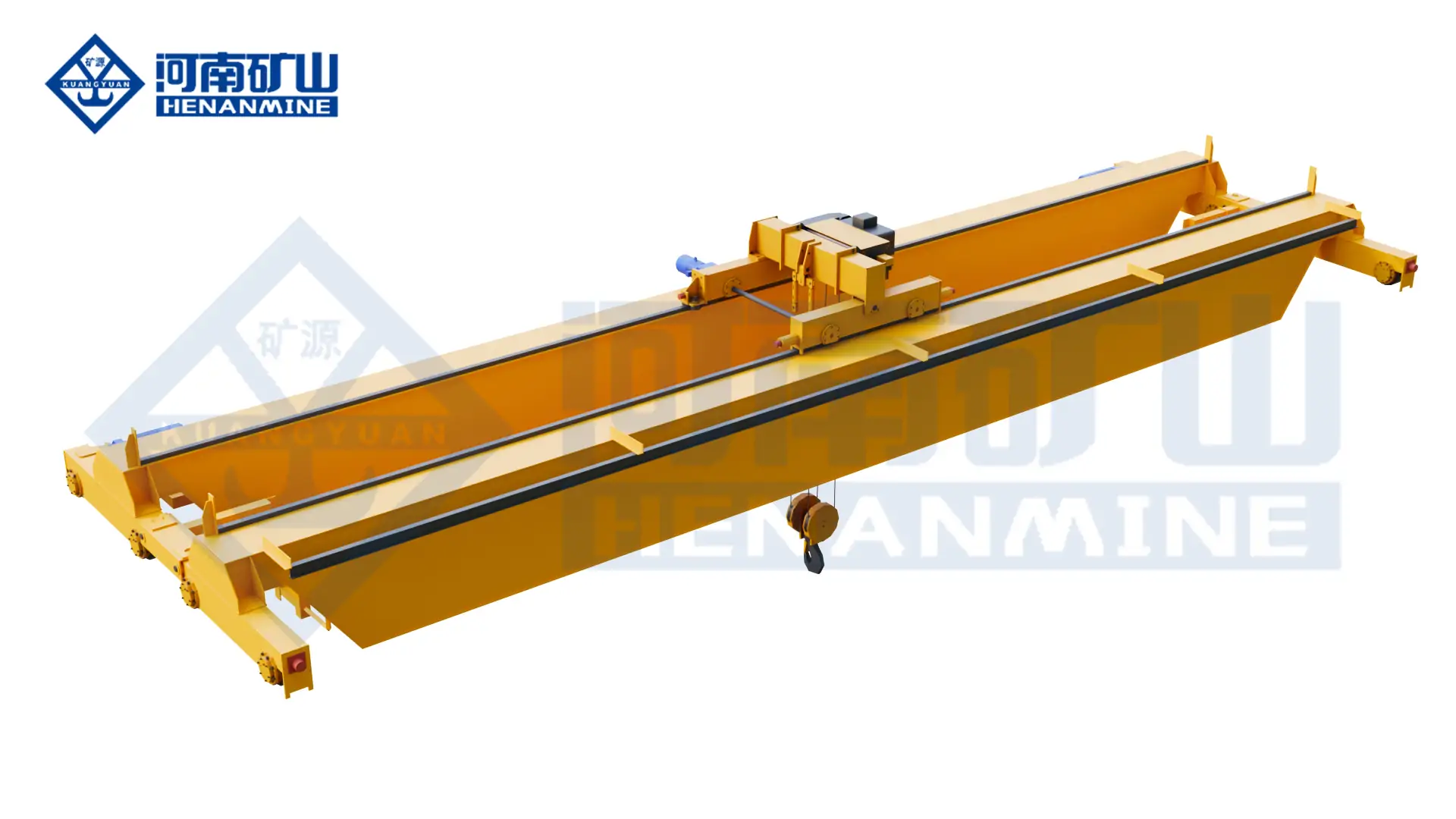
Double-Girder Overhead Crane
Hook-lifting configurations for equipment handling, removal and maintenance access.

Grab-and-Hook Dual-Purpose Crane
A shared arrangement for specified grab handling and conventional hook lifts.
Request a Cement Plant Crane Quote
Plan material transfer and equipment maintenance with Henan Mine Crane.
Receive a crane selection, working-area layout, technical specification and itemized quotation. The proposal identifies crane equipment, grab or hook interfaces, agreed engineering data and the delivery and site-support package.
Start with the plant-area drawing and lifting duty. For a grab crane, include the material, bulk density, temperature and required throughput. For maintenance lifting, include component weights, lifting points, available headroom and the planned removal route. Add the power supply, destination and target installation window.
Email: info@hnksglobal.com | WhatsApp: +86 188 3620 7779