

Henan Mine Crane · 4 Tonne Gantry Lifting Systems
4 Ton Gantry Crane
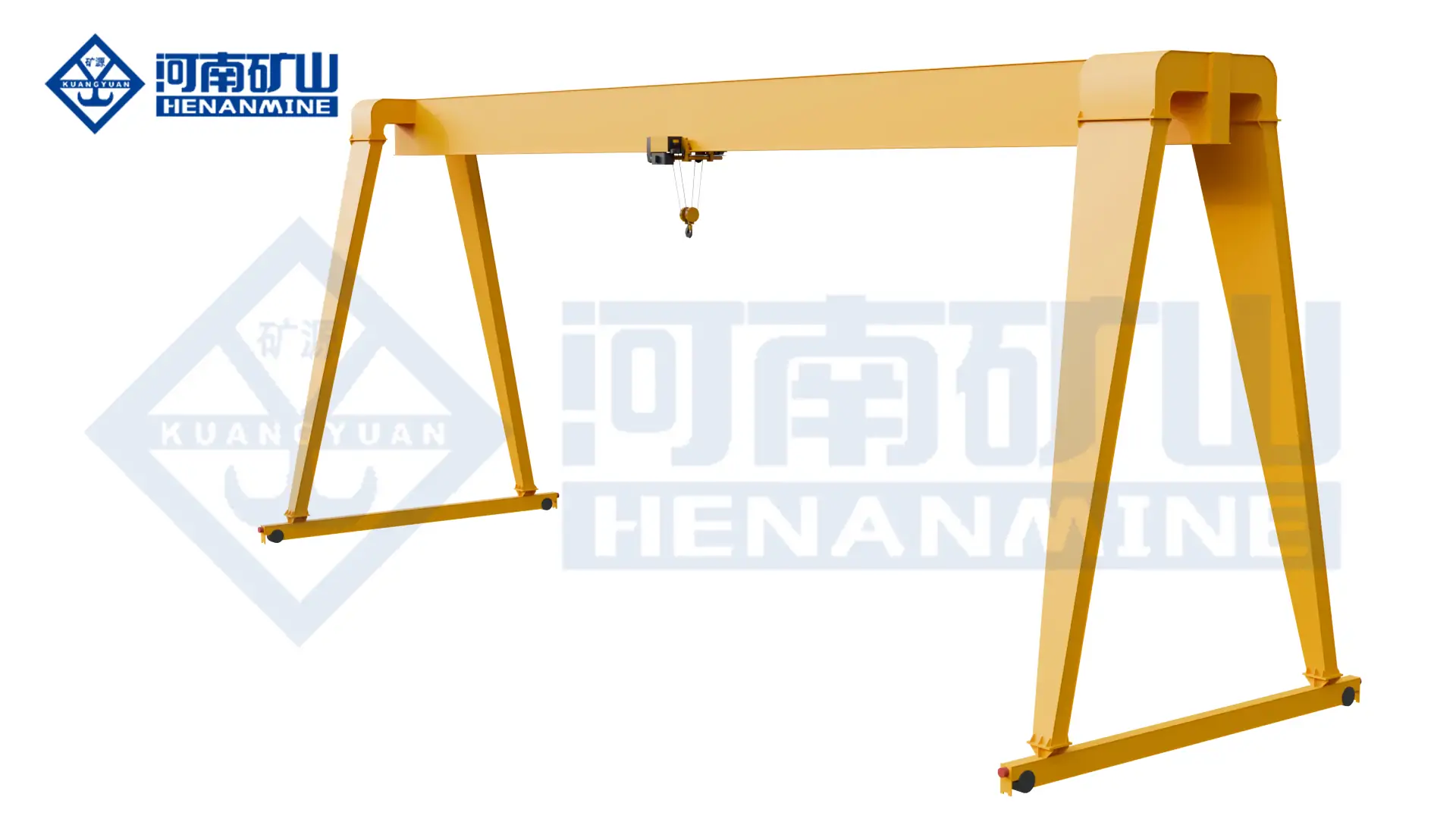
Configure a 4 metric tonne (4,000 kg) gantry crane for lifting machinery, steel fabrications, precast components and other industrial loads across a workshop or outdoor yard. Henan Mine Crane manufactures rail-mounted single-girder, double-girder, semi-gantry and application-specific arrangements.
RATED CAPACITY
4 t / 4,000 kg
PRIMARY STRUCTURES
Single Girder or Double Girder
TRAVEL ARRANGEMENT
Powered Ground-Rail Travel
PROJECT INPUTS
Span, Lift, Duty & Site Conditions
Is a 4 Ton Gantry Crane the Right Capacity?
A 4 metric tonne gantry crane is rated for 4,000 kg, approximately 8,818 lb. Four US short tons equals 8,000 lb, approximately 3,629 kg. Specify the required unit before quotation because an 8,000 lb portable gantry does not provide a 4,000 kg rated capacity. Slings, lifting beams, grabs, magnets and other separately suspended attachments must be included in the total suspended-load calculation.
Capacity example: a 3,550 kg component plus a 500 kg lifting beam and slings totals 4,050 kg. That exceeds a 4,000 kg rating. Provide the complete suspended-load calculation instead of quoting only the payload.
Choose a rail-mounted industrial gantry when the load must travel repeatedly along a fixed workshop or yard route. The bridge is supported by legs running on ground-level rails and may also be called a goliath or portal crane. Choose a portable frame only for localized, intermittent lifting after confirming floor capacity, wheel arrangement and whether the selected model permits loaded travel.
Fabrication and Assembly
Move structural sections, frames and machinery between fabrication, inspection and assembly positions. Define load dimensions, orientation and centre of gravity throughout the route.
Storage and Loading Yards
Serve designated storage, truck-loading and transfer positions. Coordinate crane travel with vehicle routes, drainage, wind exposure and outdoor operating conditions.
Maintenance and Construction
Lift equipment or project components within a defined rail corridor. Include temporary access restrictions, infrequent heavy lifts and changing site conditions in the duty assessment.
Selection Considerations
01 / LOAD
Load and Attachment
State the maximum and typical payloads, dimensions, centre of gravity and lifting points. Include the mass of all separately suspended lifting accessories.
02 / LAYOUT
Coverage and Clearances
Mark pickup, travel and placement positions. Check the clear width between the legs, hook approaches, cantilever outreach and the swept path of long loads.
03 / SITE
Rails and Ground Support
Provide runway and foundation information where available. The selected wheel loads, wheel spacing and operating forces are required for civil and structural assessment.
04 / OPERATION
Duty and Environment
Describe lifts per hour, travel distances, shifts and near-capacity lifts. Record wind, rain, temperature, dust, corrosion and any hazardous conditions.
A 4 t rating identifies capacity, not duty. Single and double girder describe the bridge structure; full and semi-gantry describe how the crane is supported. Select these characteristics separately around the work and site.
4 Ton Gantry Crane Compared with Other Crane Configurations
Compare the complete installed arrangements at the same 4 t load and hook position. Structural form, mechanism duty, runway work and outdoor protection can change both suitability and total project cost.
| Configuration | Arrangement | Application Fit | Main Selection Check |
|---|---|---|---|
| Single-Girder Full Gantry | One bridge girder supported by travelling legs on both sides. | General hook handling where the electric-hoist layout meets the span, lift and duty. | Compare hoist headroom, equipment weight, hook approaches and rail reactions. |
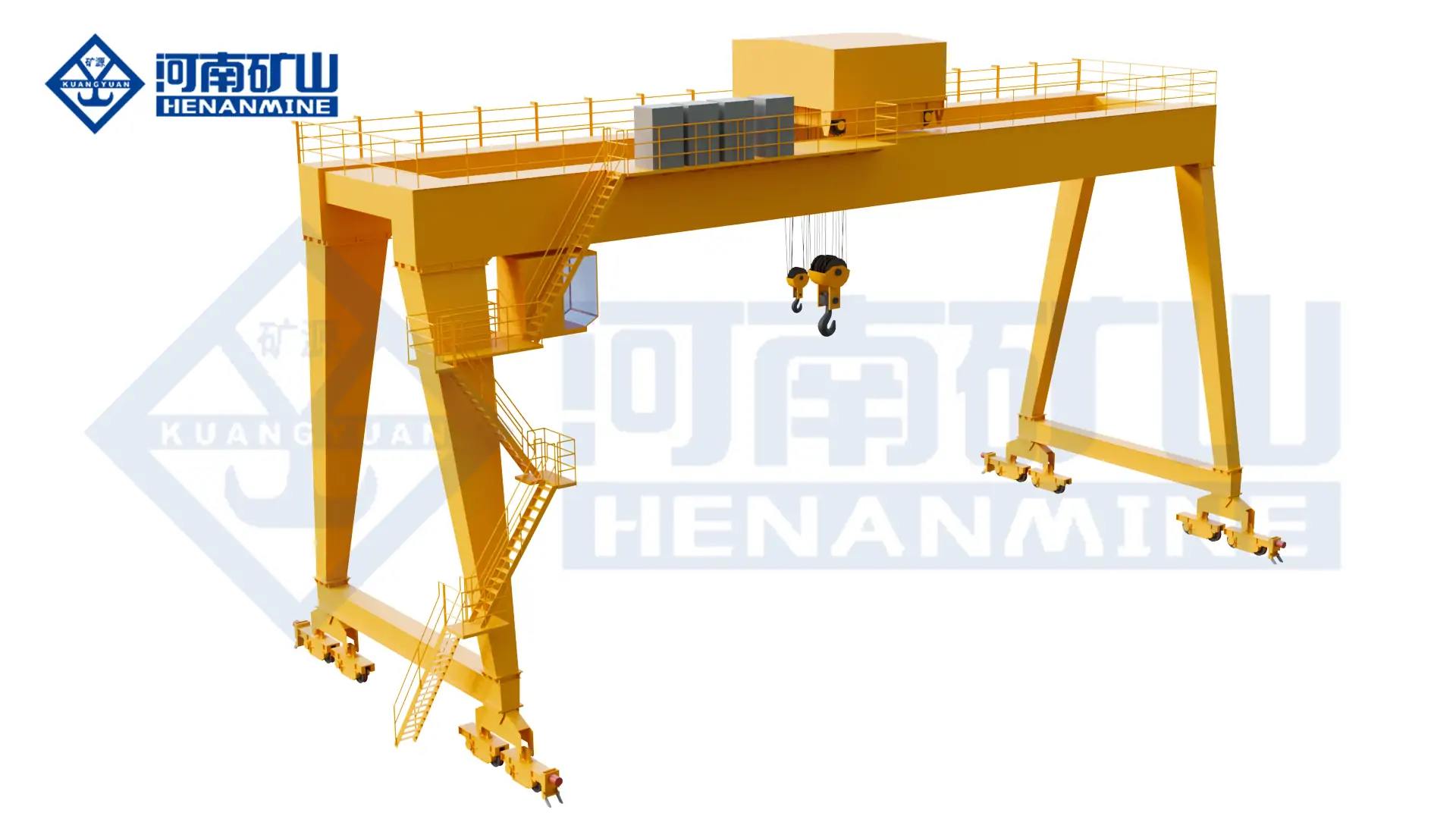
| Double-Girder Electric-Hoist Gantry | Two bridge girders carry an electric-hoist trolley. | Projects needing a different trolley layout or usable hook position. | Confirm the actual crane envelope and service duty; two girders alone do not define duty. |
| MG Double-Girder Gantry | Two girders support a project-selected winch trolley or hook arrangement. | A different mechanism arrangement, process duty or future configuration requirement. | MG double-girder gantries normally start at 5 t. For a 4 t requirement, first compare the single-girder and MHS electric-hoist configurations. |
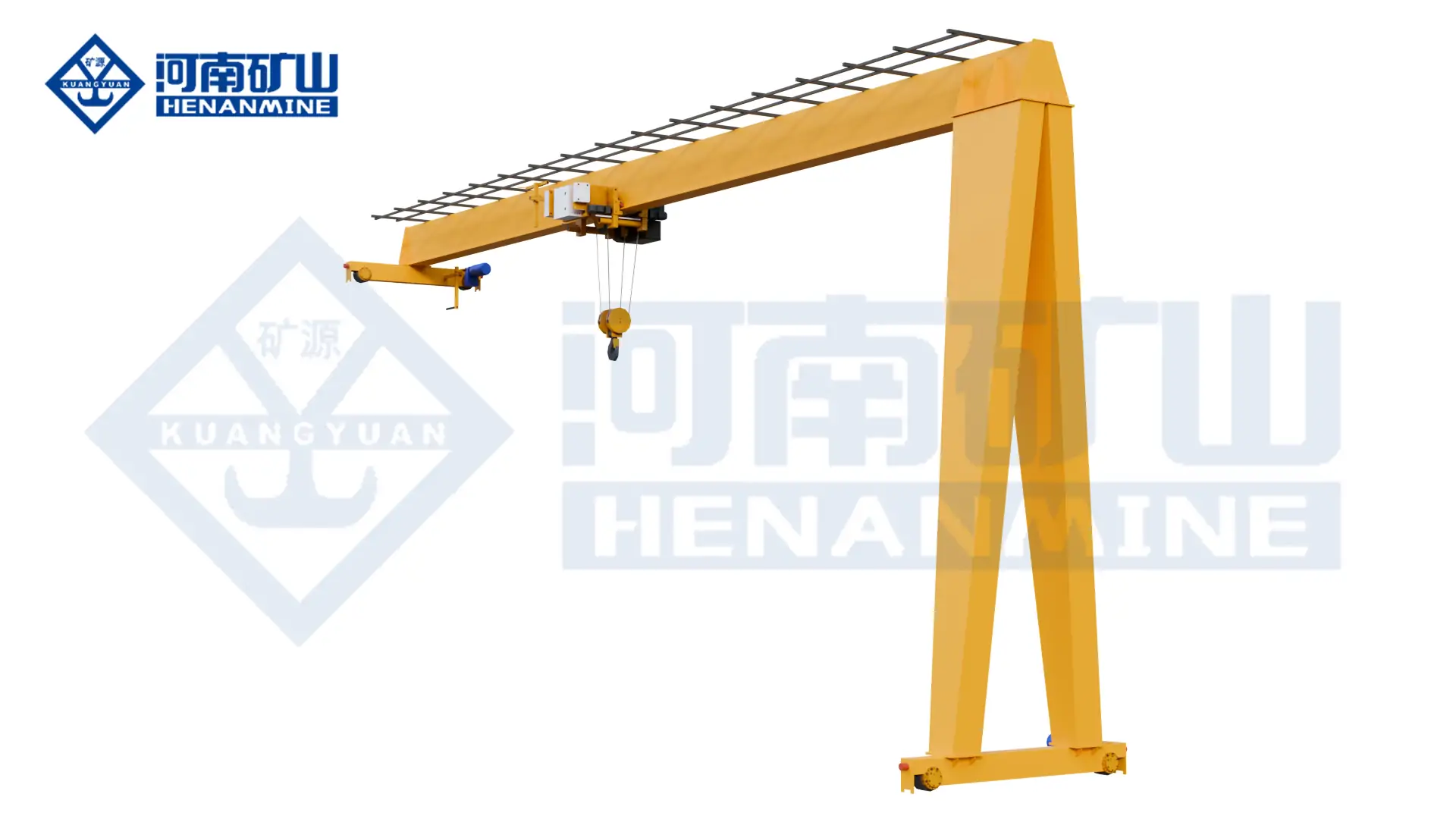
| Single-Girder Semi-Gantry | A ground-travelling leg on one side and an elevated runway on the other. | A working strip beside a suitable building runway or independent elevated support. | Assess both runway systems, their alignment and the moving-leg route. |
| L-Type Gantry Crane | A single girder with offset leg geometry and an electric hoist. | Long materials or layouts needing a different clear passage through the legs. | Check load rotation, leg clearance, cantilever reach and hook approaches. |
| Overhead Bridge Crane | The bridge travels on two elevated runways without gantry legs. | Buildings with suitable elevated supports and busy floor traffic. | Compare building loads, runway cost, headroom and the absence of moving legs. |
| Portable Gantry Crane | A separate model family commonly supported on wheels or castors. | Local lifting tasks where portability is a defined requirement. | An 8,000 lb model is 4 US short tons, not 4,000 kg. Check floor rating, span, height and model-specific permission for loaded travel. |
4 Ton Gantry Crane Specifications
Every 4 ton gantry crane is configured around the required span, lifting height, hook coverage, work cycle and site conditions. Use the following parameters to prepare a complete technical enquiry and receive comparable quotations.
| Parameter | Project Specification |
|---|---|
| Rated lifting capacity | 4 t / 4,000 kg. Confirm how below-the-hook attachments are included in the load calculation. |
| Crane structure | Single girder, double girder, semi-gantry, L-type or another agreed project arrangement. |
| Span and clear leg width | Span is measured between runway centrelines; clear passage through the legs is a separate dimension. |
| Lifting height and hook levels | Define vertical hook travel plus the highest and lowest working hook positions. |
| Runway length and cantilevers | State required longitudinal travel, end approaches and any working area beyond the legs. |
| Crane and mechanism duty | Selected from the load spectrum, operating cycles, travel distances and agreed design requirements. |
| Hoisting and travel speeds | Single-speed, dual-speed or variable-speed functions are selected for throughput and positioning needs. |
| Control method | Pendant, radio remote or cabin control, with priority and process interfaces defined where required. |
| Electrical supply | Confirm destination voltage, frequency, phases, earthing arrangement and incoming power boundary. |
| Operating environment | Indoor or outdoor exposure, temperature, dust, moisture, corrosion and any formal hazardous-area classification. |
| Runway and foundation data | The technical proposal should provide wheel loads, wheel spacing, rail interface and governing reactions. |
Available 4 Ton Gantry Crane Configurations
Henan Mine Crane can configure a 4 t crane within the KSMH single-girder, MHS double-girder electric-hoist, KSMB semi-gantry and MHL L-type families. The MG winch-trolley family begins at 5 t and is normally considered only when a heavier capacity or different mechanism duty is required. Final availability depends on the combined capacity, span, lift, duty and site conditions.
| Product Family | Capacity Range | Span Range | Lifting-Height Range | Duty Range |
|---|---|---|---|---|
| KSMH Single-Girder Gantry | 1–32 t | 6–35 m | 4–20 m | A3–A5 |
| MHS Double-Girder Electric-Hoist Gantry | 3–50 t | 7.5–35 m | 4–30 m | A3–A4 |
| MG Double-Girder Gantry | 5–500 t | 8–40 m | 6–30 m | A3–A8 |
| KSMB Single-Girder Semi-Gantry | 1–32 t | 6–35 m | 4–20 m | A3–A5 |
| MHL L-Type Gantry Crane | 1–32 t | 6–35 m | 4–20 m | A3–A5 |
Request a project-specific 4 t data sheet showing the selected span, lifting height, speeds, duty, control system, crane mass, wheel loads and overall dimensions. Do not combine the maximum values from different product families into one specification.
Leg Clearance, Cantilever Reach and Hook Coverage
The general arrangement drawing should show the 4 t load route, crane envelope and every interface with the site. This is particularly important when long materials rotate or pass between the legs.
| Layout Item | What the Drawing Should Confirm |
|---|---|
| Span and clear passage | Runway centreline spacing does not equal the clear width through the legs. Leg shape and bracing affect the space available for loads, trucks and site equipment. |
| Lifting height and overall height | Include load and rigging dimensions above the placement surface. Overall crane height, rail level and usable hook height are different measurements. |
| Cantilever working area | Define hook outreach beyond each leg and the permitted load at that position. Trolley limits reduce usable reach. |
| Runway length and end approaches | Allow for buffers, stops, parking and maintenance space. Total rail length is longer than usable hook travel in most arrangements. |
Hoist, Travel Drives and Operating Duty
Hoisting and Cross Travel
The hoist or trolley raises the load and moves it across the bridge. Rope travel, hook arrangement, braking and speed control must suit both lifting and final placement.
Gantry Long Travel
The bridge and legs travel together along the ground runways. Wheel geometry, paired drives, frame alignment and rail condition affect tracking and skew behaviour.
Controls and Attachments
Select pendant, radio remote or cabin control around operator access and visibility. A grab, magnet or two-point lifting arrangement requires its own load and control definition.
A 4 ton gantry crane used repeatedly near rated capacity may need different mechanisms from a crane handling occasional lighter loads. Define crane duty and the duty of each mechanism under the agreed standard. For bulk material, review the Grab-and-Hook Gantry Crane configuration and supply material density, grab mass and required throughput.
Runways, Foundations and Power Supply
The crane passes vertical and horizontal loads into the runways and their supports. Ground bearing strength alone is not enough to define the foundation; the civil design needs the selected crane reactions and local site information.
- Rail and foundation interface: confirm rail section, fastenings, wheel loads, wheel spacing, end stops and settlement tolerances for the proposed arrangement.
- Traffic and drainage: coordinate rails with vehicle crossings, walkways and drains. Protect the moving-leg envelope from fixed obstructions and unplanned storage.
- Power distribution: compare cable reel, festoon or conductor arrangements against travel length, electrical demand, weather exposure and site traffic.
- Existing runways: survey geometry, elevation and condition. A previous 4 t crane does not prove compatibility with different wheel loads or spacing.
The quotation should state which party supplies rails, foundations, power conductors, incoming electricity and civil work. These interfaces strongly affect installed cost and schedule.
Outdoor Protection and Safety Configuration
For outdoor operation, define site conditions and distinguish the permitted operating state from the parked, out-of-service state. The selected procedures and limits belong in the crane documentation.
Wind and Parking Provisions
Provide site wind information and required operating limits. Specify monitoring, travel brakes, rail clamps, storm anchors and parking locations as applicable to the design.
Load and Motion Protection
Identify overload protection, hoisting and travel limits, braking, buffers, end stops, emergency stops and relevant electrical protections. Agree how functions are checked at acceptance.
Weather and Corrosion Protection
State rain, temperature, dust, moisture, coastal or chemical exposure. Confirm enclosure protection, coatings, covers, drainage and inspection access in the proposal.
A classified hazardous area or hot-material process requires dedicated equipment selection. Provide the formal site classification or process details during the enquiry instead of treating outdoor protection as equivalent to explosion or heat protection.
Manufacturing and Project Documentation
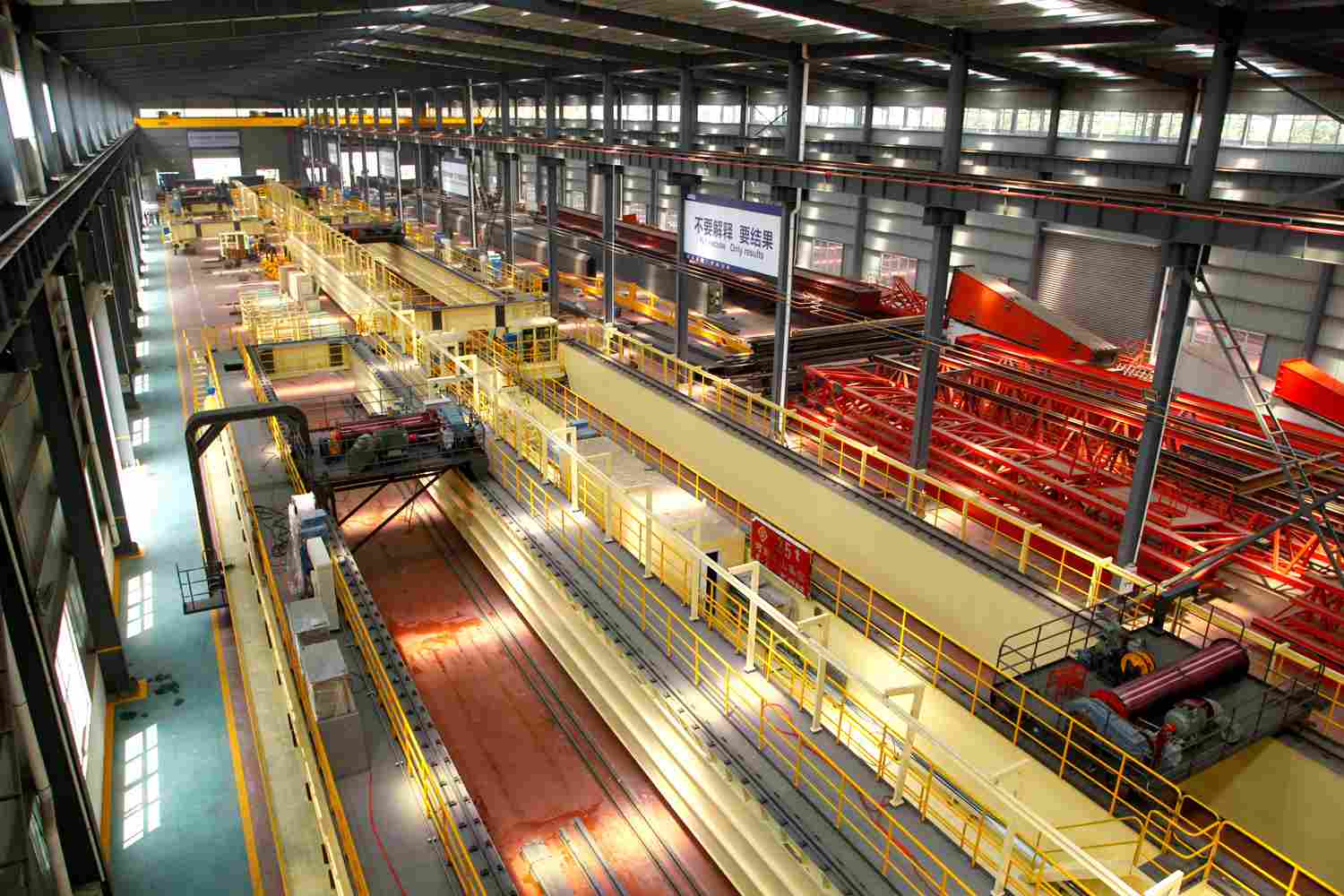
Henan Mine Crane manufactures structural assemblies and integrates the hoisting, travel and electrical systems around the approved project specification. Before production, confirm the drawings, component schedule, inspections and acceptance records required for the 4 t crane. You can also view the manufacturing facilities.
- General arrangement drawing with crane dimensions, clearances and hook coverage.
- Wheel loads, wheel spacing and rail-interface information for foundation design.
- Component schedule, electrical drawings and operating and maintenance manuals.
- Agreed manufacturing inspections plus factory and site test records.
State the destination, applicable standards and required documentation before ordering. The contract should define which records are supplied and the acceptance criteria they support.
Installation, Commissioning and Maintenance
Prepare the Runways
Complete the agreed civil work, rails, end stops, power route and earthing provisions. Verify geometry and installation readiness using the approved drawings.
Plan Assembly and Commissioning
Reserve unloading and assembly areas and suitable installation equipment. Agree inspection, functional checks, applicable load tests, handover and operator familiarisation.
Maintain the Complete System
Provide safe access to the hoist, trolley, wheels, drives and power supply. Set inspection intervals using operating duty, supplied manuals and applicable site requirements.
For an operating yard, coordinate crane installation with production, traffic and shutdown requirements. Confirm replacement access and recommended spare parts during the design review.
4 Ton Gantry Crane Price
A 4 ton gantry crane price changes with the capacity unit, structure, span, lifting height, work duty and supply scope. A portable 8,000 lb frame is less expensive than a powered 4,000 kg rail-mounted crane, but it provides a different capacity, working area and operating method.
Indicative Price Range
| Configuration | Rated Capacity | Planning Budget (USD) | Typical Scope |
|---|---|---|---|
| Portable Steel Gantry Frame | 4 US short tons / 8,000 lb | Approximately $4,000–$9,000 | Usually the steel frame and castors. Hoist, trolley, freight and lifting accessories may be separate. Loaded travel depends on the selected model. |
| Industrial Single-Girder Gantry Crane | 4 metric tonnes / 4,000 kg | Approximately $8,000–$25,000 | Crane structure, electric hoist, powered travel and controls as specified. Rails, foundations, freight and installation may be quoted separately. |
| Complete Installed System | 4 metric tonnes / 4,000 kg | Project quotation required | The agreed crane equipment plus selected rails, power distribution, transport, installation, commissioning and documentation. |
These ranges support preliminary budgeting only. Final pricing depends on the approved technical specification, destination and contractual supply boundary.
For an accurate price, provide the required capacity unit, span, lifting height, runway length, operating cycle, environment, electrical supply and project location. Compare quotations only after the following three cost groups have been aligned.
Crane Equipment
Bridge, legs, travel assemblies, hoist or trolley, controls and specified protection.
Site Interfaces
Rails, foundations, conductor system, incoming power and installation responsibilities.
Project Delivery
Drawing approval, inspection, packing, freight, commissioning, documents and service terms.
Send the same specification to every supplier and request an itemised offer. This prevents an equipment-only price from being compared with a quotation that includes runways, civil work, site power and installation.
4 Ton Gantry Crane FAQ
How much can a 4 ton gantry crane lift?
Four metric tonnes equals 4,000 kg, approximately 8,818 lb. Four US short tons equals 8,000 lb, approximately 3,629 kg. Separately suspended lifting accessories consume part of the crane's rated capacity, so include them in the load calculation.
Should I choose a single-girder or double-girder 4 ton gantry crane?
Compare usable hook height, span, duty, trolley arrangement, runway reactions and total installed scope. A single-girder electric-hoist design can suit general handling, while a double-girder layout may provide a more suitable mechanism or lifting envelope for another project.
Is a 4 ton gantry crane portable?
Industrial 4,000 kg systems normally use powered travel on fixed ground-level runways. Portable 8,000 lb gantries are a separate, lower-capacity product type. For a portable crane, specify the floor, movement route and whether loaded travel is required because some models may only be repositioned without a suspended load.
Can the crane lift 4 tons on a cantilever?
Only if the approved design permits the 4 t load at the stated outreach. Trolley end limits and structural reactions change with position. Specify the required load and hook location outside the legs in the enquiry.
Does a rail-mounted 4 ton gantry crane need foundations?
It needs suitable rails and supporting civil or structural works. Foundation design depends on crane reactions, wheel spacing, ground conditions and local requirements. Request interface data from the selected crane proposal.
Can the same crane work indoors and outdoors?
Only where the design covers both environments and travel zones. Outdoor use requires assessment of wind, rain, temperature, corrosion, drainage and parking provisions, together with clear transitions between areas.
How much does a 4 ton gantry crane cost?
A portable 8,000 lb steel gantry frame may cost approximately $4,000–$9,000, while a customized 4,000 kg rail-mounted single-girder crane may require an equipment budget of approximately $8,000–$25,000. The final price depends on span, lift, duty, controls, rails, foundations, freight and installation scope.
Can an existing 4 ton runway be reused?
Reuse is considered after surveying rail geometry, elevation, condition and support capacity. The proposed crane may have different wheel loads, wheel spacing, end-carriage dimensions or electrical demand from the previous unit.
What information is required for a quotation?
Send the maximum and typical suspended loads, span, lifting height, runway length, cantilever reach, site drawing, work cycle, environment, electrical supply, project location and required delivery and installation scope.
Request A 4 Ton Gantry Crane Quote
Send Henan Mine Crane your load details and site drawing for a project-specific 4 ton gantry crane proposal. Include:
- Maximum and typical loads, lifting attachments and load dimensions.
- Span, lifting height, runway length, cantilever reach and hook positions.
- Ground or runway information, traffic routes and installation space.
- Operating cycle, environment, electrical supply and preferred controls.
- Project location, required documents, delivery terms and installation scope.