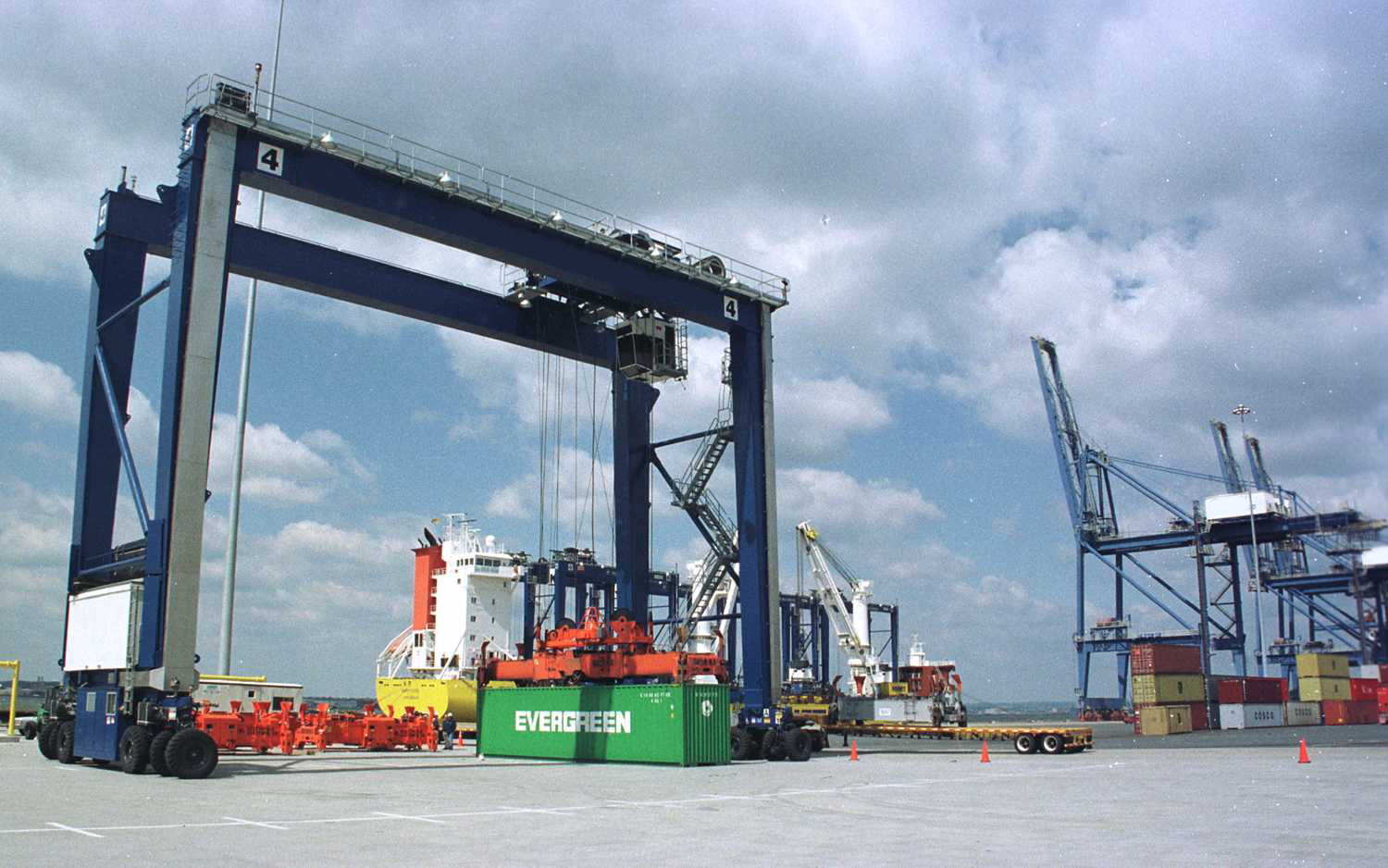

Best Port Crane Designs for High-Wind Coastal Areas
Strong winds are an important safety hazard for container terminals.The shore bridge, RMG, and RTG have a large windward area and high erection. High winds can easily cause the crane to sway, misalignment, and structural fatigue. In severe cases, the crane will slip, derail or even capsize.This article provides practical guidelines for terminal operations, engineering and procurement personnel, explaining the impact of wind load, adaptation models, wind resistance configuration, selection standards, international norms, selection misunderstandings and manufacturer supporting plans.
How High Winds Affect Port Crane Performance and Safety
Wind is not a simple static force. It will produce wind pressure on all exposed structures, form dynamic disturbances to the crane, and accumulate fatigue damage throughout the life cycle of the crane.
The structural effect of wind load
The wind pressure will act on the crane boom, gantry, trolley, engine room, and suspended cargo.The size of the wind and the square of the wind speed are proportional to the windward projection area of the component, and are affected by the shape coefficient and the occlusion coefficient at the same time.The tall shore bridge boom and truss structure are significantly affected by the wind;
Enclosed computer rooms and large containers will further increase the wind area.The transverse wind produces drag force and overturning torque at the same time, while the longitudinal wind mainly increases the operating resistance of the cart, which puts forward higher requirements for the braking system.When evaluating the load, the wind direction and crane attitude must be combined, and the additional wind load caused by the suspended container must be included at the same time.
Crane shaking and lifting instability
The cross wind will cause the container to yaw and twist.Under the same wind conditions, the longer the lifting wire rope, the greater the swing range.The operator can only reduce the trolley and lifting speed, and the operating cycle is lengthened. Even so, the difficulty of container alignment is still greatly increased.
The efficiency of terminal operations has decreased, and at the same time, the risk of containers colliding with ships, adjacent box stacks, and dock walls has increased significantly.The anti-shake system can relieve shaking, but after the wind speed exceeds the standard, the wind-induced swing cannot be completely eliminated.
Structural fatigue and foundation stress
Repeated alternating wind loads will continue to act on steel structures, welds, and connection nodes.Under the action of years and years, fatigue cracks can easily occur in high-stress positions, and the foundation and track will also withstand periodic horizontal and upward forces.Therefore, the basis for fatigue-resistant structure details, qualified welding quality, and sufficient bearing capacity is not an optional configuration, but a hard design requirement.
Extreme risk
Sudden strong gusts of wind, sudden changes in wind direction, and local storms are the most dangerous scenarios.Storms predicted in advance have sufficient time to stop anchoring; sudden local severe weather is often too late to deal with.
Conventional working brakes are not enough to withstand extreme storms, and must be equipped with special storm anchoring devices, including track clamps, storm pins, cables, and boom locks.Because the design wind speed of the shutdown condition (non-working state) is much higher than the upper limit of the wind speed allowed for operation.
Which Port Crane Designs Are Best for High-Wind Coastal Areas
The wind characteristics and anchoring schemes of different models have their own advantages and disadvantages, and they need to be selected in combination with the working conditions of the terminal.
Reinforced shore bridge (STS) container crane
The shore bridge is the model that is most severely affected by the wind: the tall gantry, the large front extension boom, and the high installation height must be specially designed for wind resistance.The plan includes a high-strength steel main structure, optimizing the linear shape of the boom to increase stiffness, reducing the windward area within the feasible range, and equipped with a reliable boom lifting and locking mechanism. After the storm comes, the boom can be retracted to the storm locked position.
Multi-stage braking is standard along the coastal bridge, with track clips and storm pins.The new-generation shore bridge adopts pneumatic shape to optimize the shape of the column and gantry, which can effectively reduce the overall wind load compared to the traditional structure.
Orbital gantry crane (RMG)
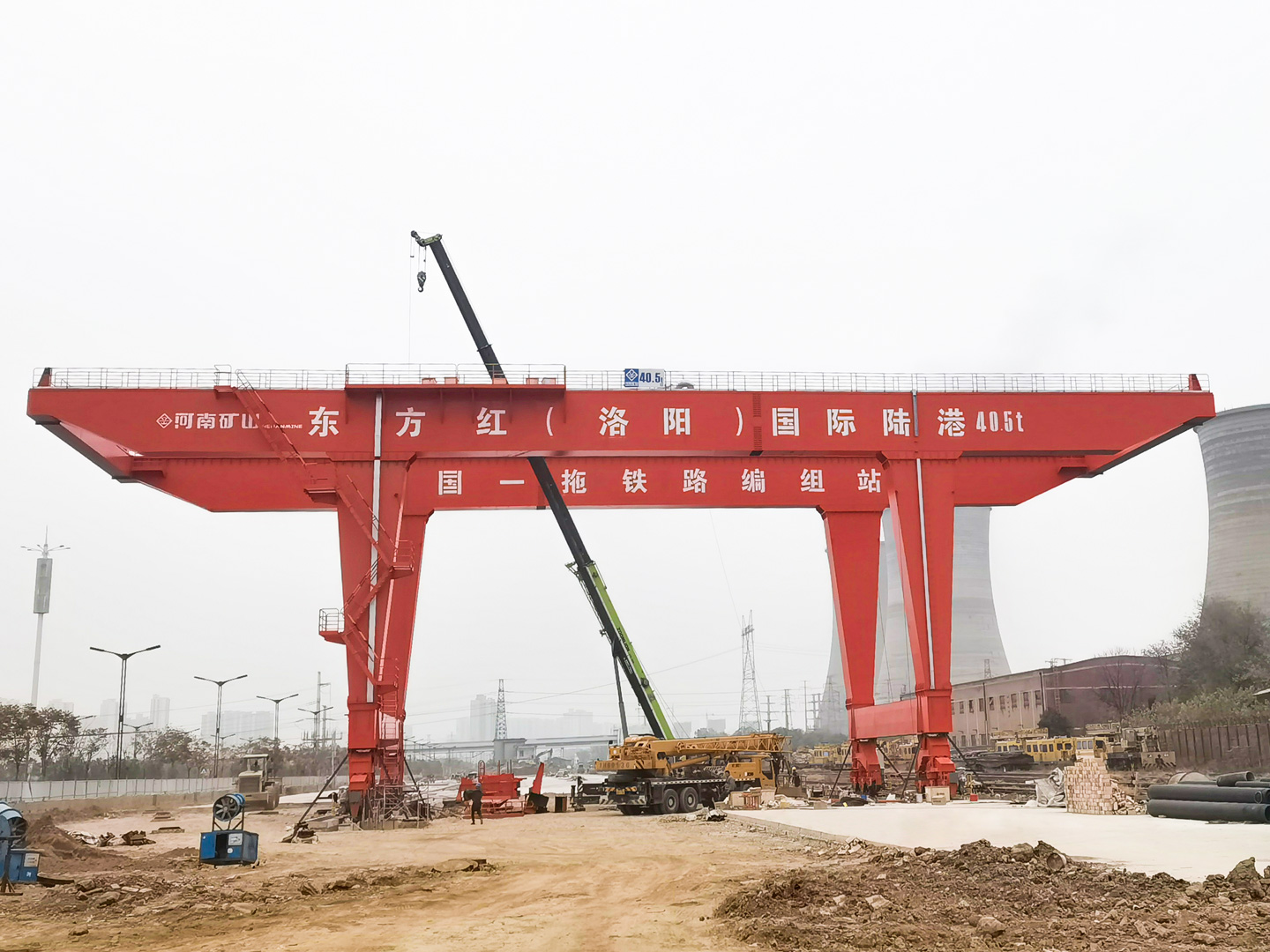
Rail gantry cranes are mostly used in container depots, relying on continuous tracks to obtain stable support, which is very suitable for windy coastal depots.Automatic/manual track clamps, storm pins, and ground anchor devices can be installed to lock the crane mechanically to prevent slippage.Widening the spacing of the outriggers and adopting a high-stiffness structure can improve the anti-overturning ability.Because it is fixed on the track, RMG can set up fixed and standardized storm berths, and the anchoring process is stable and controllable.
Tire gantry crane (RTG)
The advantage of the tire crane is that it is flexible in movement and free in the layout of the stacking box, but it lacks track constraints.The wind-resistant improved version of RTG adopts a reinforced door frame, high-performance tire parking brake, and a dedicated wind-resistant parking space.;
Additional ground anchors and mooring devices can be used in areas with high typhoon incidence.The automatic correction and positioning system can not only maintain stable driving under normal high wind conditions, but also guide the crane into the safe parking area in an orderly manner when the wind is warning.
Gantry crane and shore crane
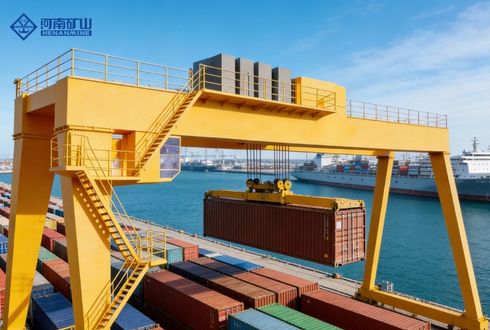
The door-mounted shore cranes used in bulk cargo and grocery terminals can also be adapted to the cross-wind environment: orbital foundations, structural reinforcement, and independent storm anchoring systems are used.Compared with large shore bridges, the overall height of the gantry crane is lower, which is a natural advantage; however, when it is on the open coast, it is still necessary to optimize the outrigger structure, configure the track clamp, and strictly set the operating wind speed threshold.
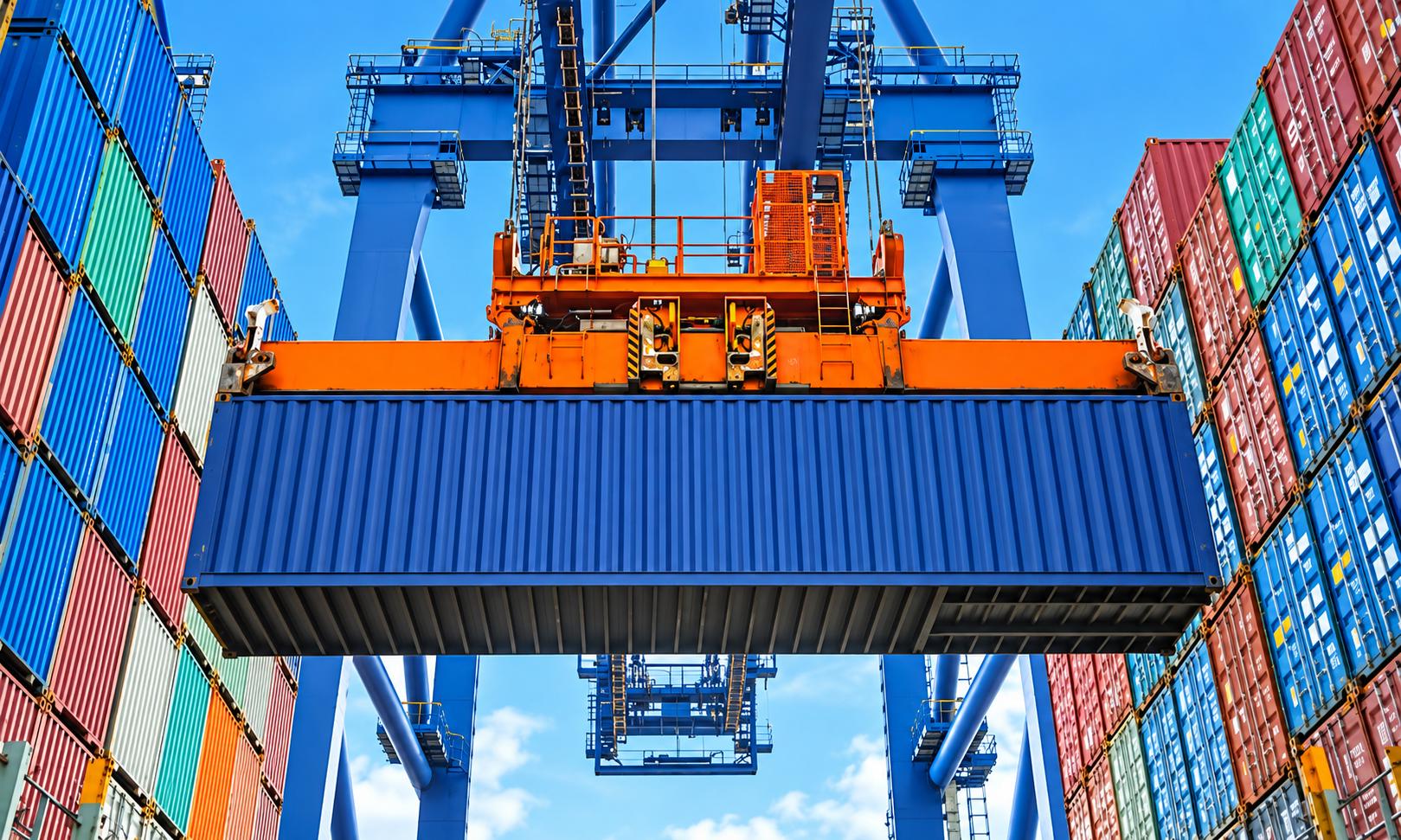
Essential Wind-Resistant Features in Port Crane Engineering
- Reinforced steel structure and pneumatic shape optimization: high-strength structural steel is used to optimize the load-bearing cross-section, strengthen the boom nodes, beams and outriggers, and enhance the fatigue resistance under alternating wind loads; at the same time, optimize the pneumatic shape of the components, reduce the windward area on the basis of ensuring structural strength, and reduce the wind pressure load from the source.
- Storm anchoring and track clamping system: automatic, manual track clamp, storm pin, ground anchor, retaining wheel, mechanical locking device, providing reliable mechanical restraint.At the same time, the carrying capacity of the foundation and track must be verified to ensure that the huge load transmitted by the anchoring device can be safely carried by the foundation and track under storm conditions.
- Wind speed monitoring and automatic safety control system: The anemometer is arranged at the appropriate height of the crane, and the real-time wind speed data is connected to the crane PLC control system.The system classifies sound and light alarms, restricts actions step by step, and triggers an automatic shutdown process after the threshold value is reached to avoid the operator from continuing to operate under the overrun wind.
- Boom lifting and storm mooring mechanism: The core configuration of the shore bridge: the boom can be retracted to the designated storm location and equipped with a mechanical locking device.Different models and different terminal layouts correspond to different mooring schemes. Sufficient time is reserved for the process design to ensure that all anchoring operations are completed before the arrival of bad weather.
- Anti-shake and lifting control technology: active and passive anti-shake systems are linked, and the operating speed of the trolley and lifting is automatically reduced in windy environments. With operation assistance functions, the alignment stability of the container is improved within the allowable wind speed range, and the risk of pendulum collision accidents is reduced.
How to Select the Right Port Crane for Different Coastal Wind Conditions
Local wind conditions and meteorological assessment
Before carrying out the wind resistance design and selection of port cranes, it is necessary to systematically collect basic meteorological data on the site: including multi-year average wind speed, extreme wind gust records, perennial dominant wind direction and wind direction distribution laws, as well as the frequency and impact cycle of typhoons, seasonal storms, and monsoons.At the same time, it is necessary to evaluate the differences in the geographical conditions of the wharf and distinguish between the leeward sheltered harbor pool and the unobstructed open wharf directly facing the sea.
It belongs to the same coast, and the wind conditions of each terminal are significantly different: the wind load in the sheltered port pool is lower, and the wind gusts at the open terminal offshore are strong and the wind direction is changeable.General parameters cannot be directly applied, and wind engineering calculations must be based on project-specific meteorological and topographic conditions.
Choose the model according to the operating conditions
- Shore bridge (STS): Mainly engaged in container loading and unloading operations between ships and shore. It is suitable for specialized container terminals with high throughput and frequent berthing of ships. It can efficiently complete the loading and unloading tasks of large container ships. It is the core main equipment of ocean-going container trunk terminals.
- Rail gantry crane (RMG): Relying on fixed track operation, regular layout, strong automation adaptability, it is mostly used for container yard storage and transit operations, suitable for automated and large-scale rail yard, which is convenient to realize orderly control of yard operations.
- Tire gantry crane (RTG): It uses tires to walk without fixed track constraints, flexible movement, and easy adjustment of the yard layout. It is suitable for container yards that need to flexibly change the storage area and the transshipment route is changeable.
- Gantry crane: suitable for bulk cargo and grocery terminal operation scenarios, it can undertake the loading and unloading of various types of non-containerized cargo such as steel, bagged cargo, sand and gravel. It has strong versatility and is a commonly used model for multi-functional integrated terminals and bulk cargo terminals.
The structure, height, windward area and walking mode of different models are different, and there are obvious differences in wind characteristics. The corresponding windproof anchoring scheme also needs to be designed in a targeted manner.The shore bridge boom is long and high, and the wind load is prominent. It is generally equipped with boom locks, storm pins and track clamps; the track gantry crane travels along a fixed track, and standardized storm berths can be set up, and the anchoring device is simple and reliable.;
The tire crane has no track constraints, and the windproof relies more on ground anchors and mooring devices; the overall height of the door seat crane is low, but the rotary structure is subject to complex wind conditions, and there is a difference between anchoring and locking methods.Therefore, a unified windproof scheme cannot be adopted, and it must be designed separately in combination with the characteristics of the model.
Distinction between operation and storm wind speed
This is the key to selection.The working wind speed limit is used for interlock in daily operations to ensure efficiency and safety; the shutdown (survival) wind speed index determines the structural strength and the carrying capacity of the anchoring system.The emergency plan must reserve sufficient time to complete the shutdown and anchoring.All calculations must comply with crane-related design specifications.
Evaluate site conditions
The bearing capacity of the foundation, the straightness of the track, the layout of the anchoring point, the coastal salt spray corrosion environment, and local regulations are all taken into account.Even if the wind resistance design of the crane body is up to standard, if the foundation and track carrying capacity are insufficient, it will still become a weak link.
International Standards and Wind Load Calculations for Port Cranes
ISO 4302
ISO 4302 specifies the calculation method of wind load in working state and non-working state, considers the wind direction, gust effect, crane attitude, and gives the anchoring trigger conditions to ensure the unified specification of global project structure verification and storm anchoring schemes.
EN 13001
EN 13001 (Part 2 load function) regards wind load as an important environmental load, and requires the calculation of the impact of wind on the main structure and suspended cargo, the analysis of the driving force caused by wind, and the inclusion of wind load in the structural combination verification to ensure the rigor of safety design.
Why do you have to do project-specific wind engineering verification?
The reference wind load value in the specification cannot replace the actual meteorological data measured on the site. It is necessary to carry out special calculations in combination with the crane structure and the on-site wind environment to clearly define the operating wind speed limit and extreme storm design conditions.
Common Mistakes When Choosing Port Cranes for High-Wind Areas
- When selecting many projects, priority is given to production capacity indicators such as rated lifting weight and operating cycle efficiency, and wind resistance is taken as a secondary consideration. Coastal gale and typhoon conditions are not included in the core technical review, resulting in insufficient innate wind resistance reserves of cranes.
- Many programs only account for the wind load under normal operating conditions, underestimate the extreme storm load under shutdown conditions (non-working conditions), and check the bearing capacity of anchoring devices such as track clips and storm pins. Insufficient, and there is a risk of failure of the anchoring system when the storm strikes.
- Only the wind-affected area of the crane body is calculated, and the additional windward surface brought about by the suspended container is not fully considered; at the same time, the dynamic impact load caused by the swing of the crane caused by the cross wind is ignored, amplifying the instantaneous force of the structure and the anchoring system.
- Use cart brakes as the main windproof means.The brake is only suitable for conventional operation braking and cannot withstand the continuous thrust of strong storms; it lacks rigid mechanical anchoring such as track clamps, storm pins, ground anchors, and mooring cables, and the crane has hidden dangers of slippage and derailment.
- Only pay attention to the design of the crane body, ignoring the verification of the bearing capacity of the foundation and the verification of the strength of the track constraints; the coastal environment is severely salt spray. If the anti-corrosion scheme is missing or the standard is low, it will accelerate the corrosion of steel structures and anchoring components, and reduce the wind resistance and safety margin for a long time.
- There is a lack of written and normalized storm shutdown and anchoring operation procedures, and the operation steps after the early warning are not clear; the reserved shutdown and anchoring operation time is insufficient, and it is too late to complete all the fixing processes when encountering rapidly deteriorating weather.
How a Professional Port Crane Manufacturer Supports Coastal Projects
High-quality lifting equipment manufacturers deliver more than just standardized products.Henan Mine Crane can customize the structure plan according to the wind and climate of the project location, carry out special wind load calculation and structural simulation analysis, and match the adapted anchoring, braking, and storm locking systems.;
Supporting integrated wind speed monitoring and safety interlocking electronic control solutions, providing in-plant inspection, load testing, on-site commissioning services, and providing long-term technical support and spare parts guarantee.Customized crane configuration, structural parameters, and safety system based on real working conditions are the most reliable solution to protect terminal assets and stabilize production.
Frequently asked questions
Q: What is the wind speed and does the port crane need to stop operating?
Answer: The working gust limit of mainstream shore bridges, rail cranes, and tire cranes is generally 20m/s (level 6 wind).Many terminals implement more conservative standards, and orderly shutdown and anchoring operations are started in the range of 15–20m/s wind speed.
Question: Why do you need storm pins and track clips in addition to brakes?
Answer: The brake cannot guarantee that a crane with a tall and large windward area will not slip under the design storm wind speed or sudden gusts of wind.Mechanical clamping and pin devices provide reliable and verifiable rigid constraints.
Question: How does ISO 4302 distinguish between work style and non-work style?
Answer: The working wind speed refers to the maximum wind speed allowed by the crane to operate; the non-working (storm) wind speed is the higher extreme wind speed that the structure and anchoring system must withstand after the crane is moored and locked.
Q: Which designs can improve the wind resistance of the shore bridge?
Answer: Strengthen the main frame, optimize the stiffness and shape of the boom, pneumatic drag reduction design, reliable boom lock, multi-stage brake + track clamp/storm pin, integrated wind speed monitoring and safety interlock.
Q: Can the tire crane be used safely in a strong wind coastal yard?
Answer: Yes.The premise is to choose a reinforced structure version, reliable parking braking, supporting ground anchors/mooring devices in typhoon areas, and strictly implement the storm parking management system.
Q: Why does the project have to use local meteorological data?
Answer: The standardized reference value cannot reflect the local wind gust extremes, wind direction characteristics, typhoon frequency, and whether the pier is sheltered from the port or open to the sea.The verification of special wind projects is the basis for operation safety and storm survival.
Conclusion
The risk of strong winds at coastal terminals cannot be ignored.It is necessary to understand the principle of ventilation load, choose the right model, equip with wind-resistant facilities, verify according to regulations, avoid selection traps, and choose a manufacturer that can localize customized solutions.
Shore bridges, RMG, RTG, and door cranes should be equipped with reinforced structures, wind speed monitoring, safety interlocking, and storm anchoring systems according to the wind conditions of the site.The wind-resistant design is not an optional upgrade, but a hard requirement for the long-term safe operation of port cranes.