
What is the Difference Between Electric Winch and Electric Hoist?
Industrial production, construction, warehousing and logistics and other scenes, heavy load handling of the core equipment is an electric winch and electric hoist, but many practitioners in the selection of easy to fall into confusion, choose the wrong equipment will reduce efficiency, increase costs and the existence of safety hazards.
Although both are used for heavy load handling, but there are essential differences, clear differences are the key to protect safety and improve efficiency. This article will dismantle the core differences between the two, applicable scenes and advantages, provide selection guidelines and answer common misconceptions, to help practitioners accurate selection!
Overview of Electric Winches
Electric winches are driven by electric motors, the core structure of the drum or reel winding wire rope, mainly used for heavy load lifting and traction, designed to focus on torque generation, can output a strong traction, is the power and distance have high requirements for the operation of the necessary equipment.
It is compact, lightweight, easy to install and move, suitable for a variety of complex environments, widely used in construction, shipbuilding, manufacturing, off-road and logistics and other fields, especially good at horizontal traction, such as dragging and pulling heavy building materials, towing broken down vehicles.
Overview of Electric Hoists
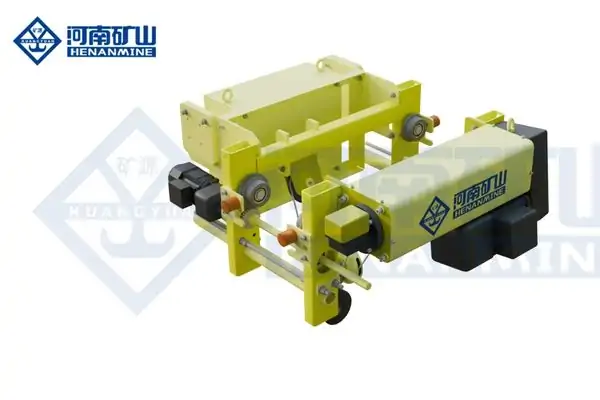
Electric hoist also uses electric motor as the power source, but different from electric winch, it is specially designed for vertical lifting and lowering operations of special equipment, the core advantage lies in the high precision of the operation, strong maneuverability, able to accurately achieve the lifting and lowering of heavy loads, a complete alternative to manual handling, to avoid the inefficiency and safety risks brought about by manual operation.
In the design, the electric hoist integrated perfect braking system and all kinds of safety protection devices, the overall volume is relatively larger, heavier weight, in order to adapt to the heavy vertical lifting operation needs.
Its application scenarios are mainly concentrated in warehouses, factory workshops, garages and assembly lines, etc., the core for vertical load handling, such as warehouse goods on and off the shelves, production line parts lifting, truck loading and unloading.
Key Differences Between Electric Winches and Electric Hoists
Core Functions and Mechanisms
The core function of electric hoist is vertical lifting and lowering, the focus of the operation is on precise control, can efficiently complete the rising and falling operation of heavy loads, without manual power, usually can carry 250 kg to 5000 kg load, widely used in the scenes that require high lifting precision, such as fine stacking of warehouse goods, production line precision lifting and loading and so on.
The core function of electric winches is horizontal traction, which is more suitable for long-distance traction operations, not designed for vertical lifting, and its advantage lies in its ability to output strong traction force, easily dragging and pulling heavy objects to move in the plane or adjusting their position in a narrow space, for example, hauling steel beams into position in construction sites and dragging and pulling goods onto the trucks in logistics scenarios.
Mechanical Design and Safety Devices
The mechanical design of electric hoist is centered on the safety of vertical lifting and lowering, equipped with perfect safety protection devices, including anti-fall braking system, limit switches, overload protection devices, etc. The core purpose is to prevent the load from falling during lifting and lowering, to safeguard the safety of the operators and the equipment, and to ensure the stability of the vertical load retention.
The mechanical design of electric winches focuses on traction lifting, equipped with sealed gearboxes to protect against external impurities and adapt to harsh environments, as well as a built-in braking system to keep the wire ropes taut, and some models are also equipped with safety devices such as load limiters and emergency stop buttons to safeguard operational safety.
Load Handling Capacity
Electric hoist mainly focuses on high vertical load capacity, can be customized explosion-proof, frequency conversion and other functions, can accurately control the load in complex working conditions, suitable for production line batch lifting, daily handling of warehouses and other repetitive vertical lifting and lowering operations, stable and efficient operation within the rated load.
Electric winch has irreplaceable horizontal traction, suitable for indoor and outdoor many kinds of operating environment, can be customized dustproof, rainproof and other protective functions, can be in the long distance, complex terrain, stable traction heavy loads, but does not have the vertical load capacity, can not be used for vertical lifting and lowering operations, otherwise it will lead to serious safety accidents.
Explanation of load limitation: the vertical load capacity of electric hoist is strictly limited, and it needs to operate within the rated range; the core advantage of electric winch is traction force, not vertical load capacity, and the load design logic of the two is completely different.
Equipment Size and Installation Requirements
Electric winches are compact in size and light in weight, with low installation difficulty, easy to install and move in narrow spaces, common installation methods include vehicle mounting (e.g., off-road vehicles, trailers), small bracket mounting, etc., without complex support structures, suitable for small industrial scenarios and mobile operation requirements.
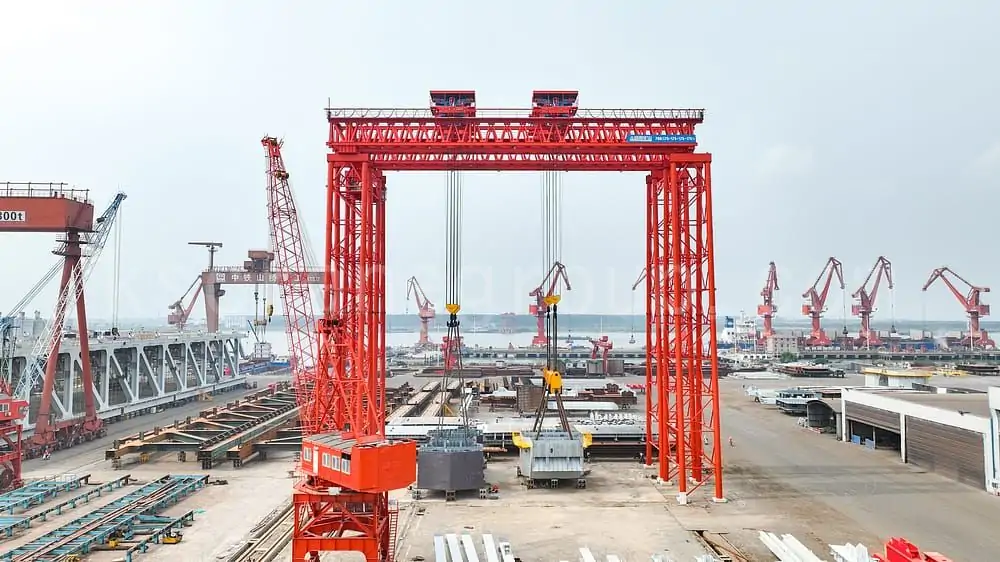
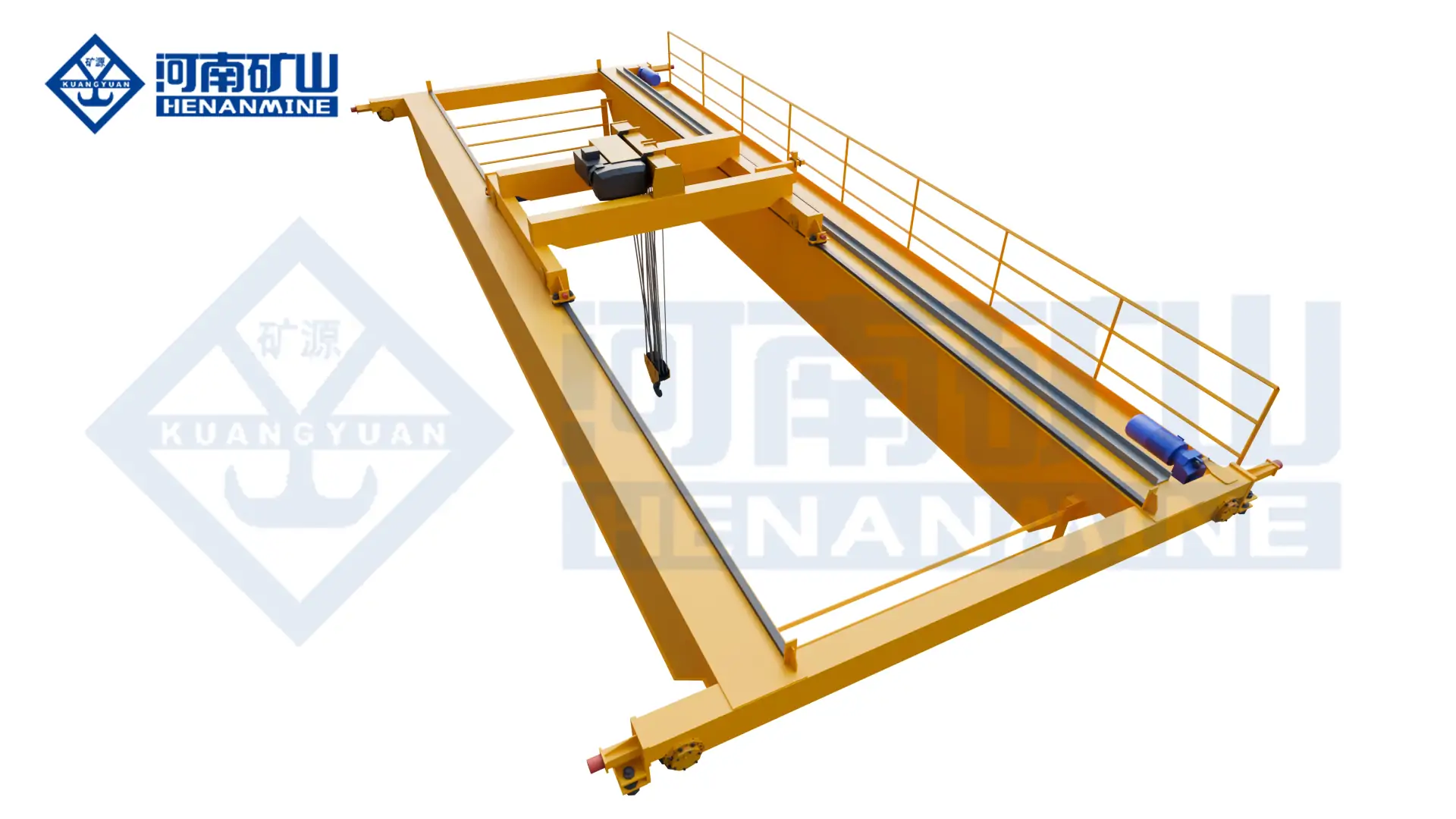
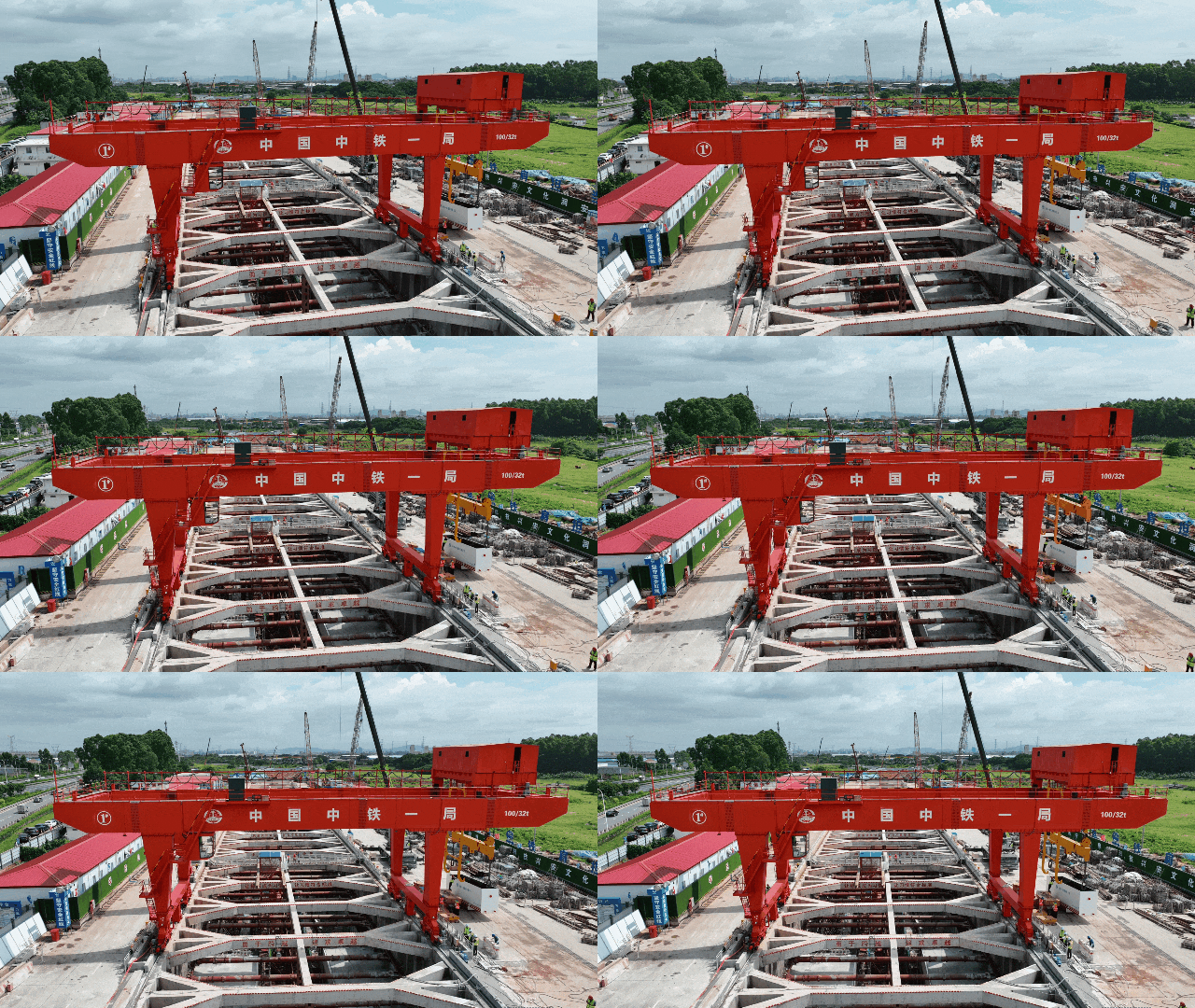
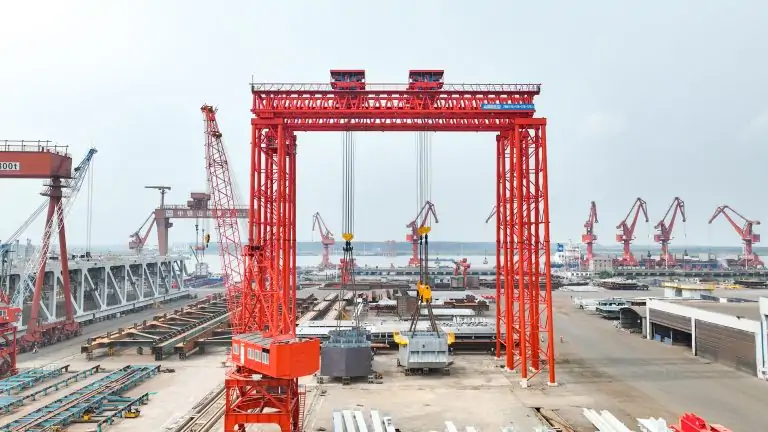
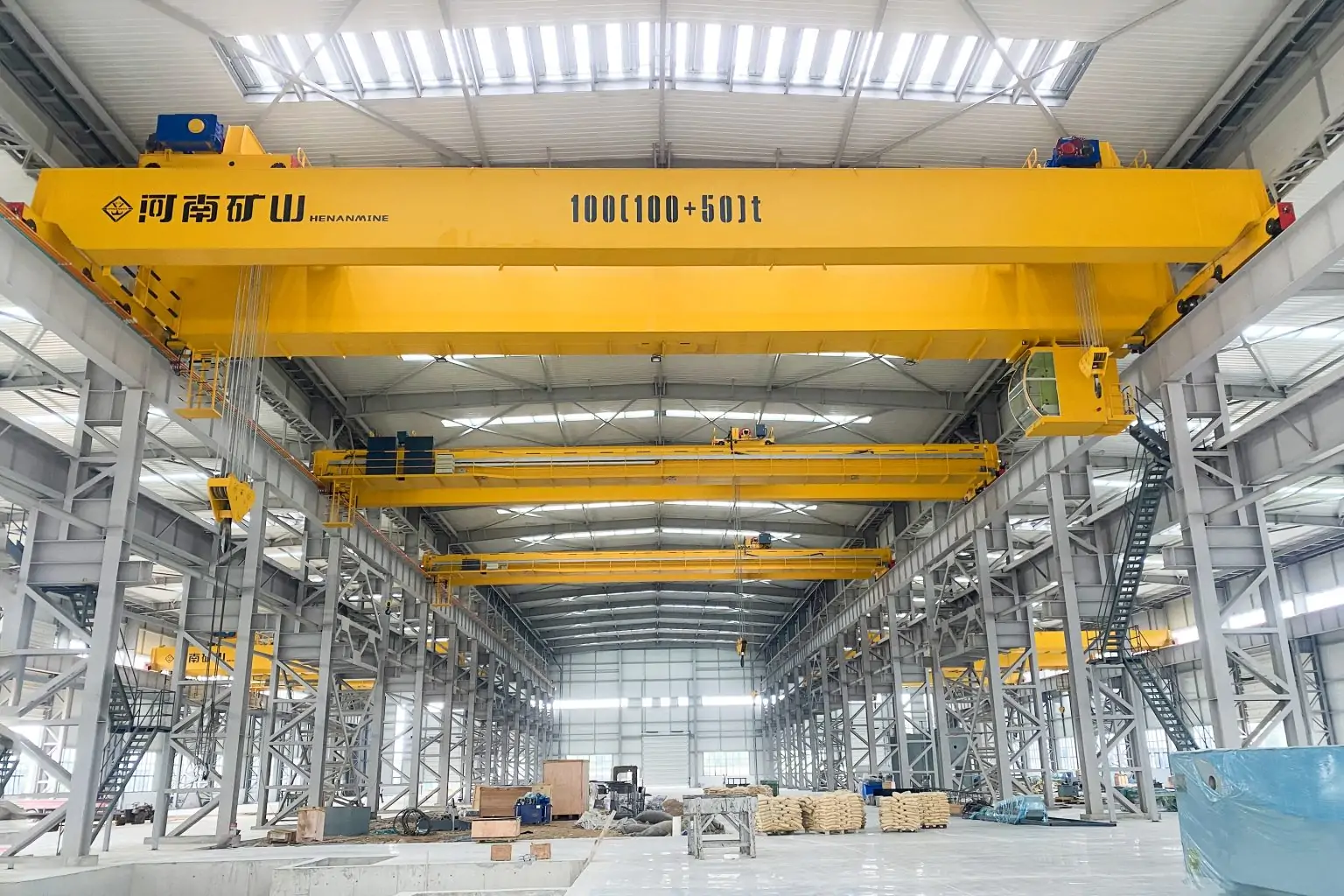
Electric hoist is bigger and heavier, usually used in fixed installation, such as installed in the factory overhead beams, gantry cranes, need to build a strong support structure, the installation process needs to consider the load-bearing capacity and installation accuracy, more suitable for fixed operation scenarios, is not suitable for frequent movement.
Operation Efficiency and Maintenance
Electric hoist operation noise is low, very suitable for indoor operation scenes; plug and play design, easy to understand the operation, without the need for complex debugging process, low daily maintenance needs, only need to regularly check the braking system, wire rope and safety devices, do a good job of basic maintenance to ensure long-term stable operation.
Electric winch operating efficiency, traction speed faster than the traditional manual or hydraulic winch, can effectively reduce the operation downtime; its internal operating components are less, less prone to leakage, pollution and other issues, low maintenance costs, daily only need to check the gear box, wire rope and braking system, the difficulty of maintenance is much lower than hydraulic or pneumatic equipment.
Applications in Industrial Settings
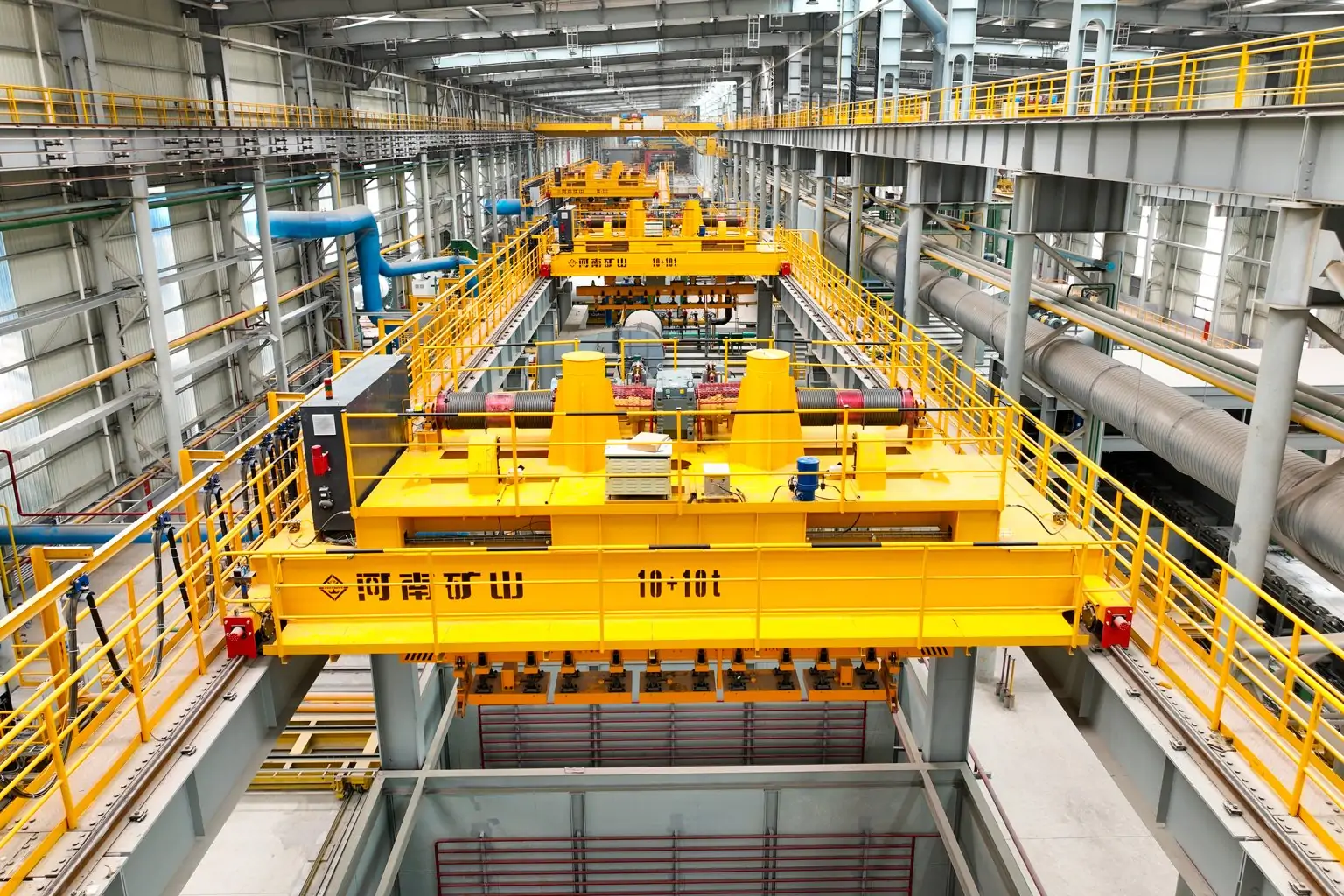
Electric hoist is the core equipment in factories, warehouses and other industrial scenarios, which can realize the rapid transfer of goods and is widely used in truck loading and unloading, stacking of high-level shelves and docking of assembly line parts and other operations. The equipment is divided into wire rope type and chain type, which can be flexibly selected according to different industrial operation requirements.
Electric winches are mostly used for horizontal material handling in construction sites, which can complete the operations of steel beams traction in place in construction, heavy machinery moving in complex terrain, etc.; they are also widely used in the logistics sector to realize the loading of trailers and fixing of goods in the process of transportation.
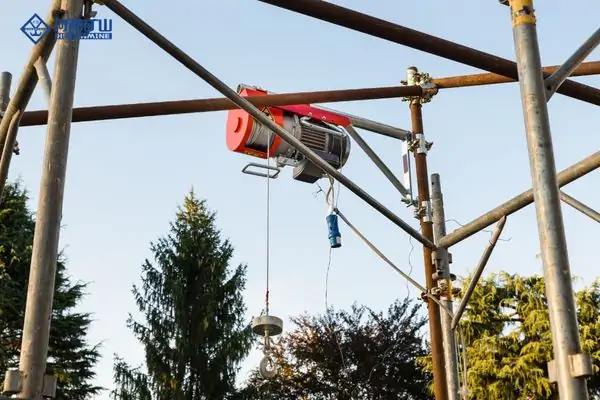
Key Benefits Of Electric Hoists
- High safety: Controllable and predictable traction action during operation can effectively reduce the physical exertion of the operator and the risk of injury, with emergency stop, alarm and other safety devices to further enhance operational safety. Outstanding efficiency: Compared with manual or hydraulic winches, electric winches are more efficient.
- Outstanding efficiency: Compared with manual or hydraulic winches, the traction speed of electric winches is faster, which can effectively reduce the operation downtime, lower labor costs and improve the overall operational efficiency.
- Convenient maintenance: fewer internal operating parts, less prone to leakage, pollution and other faults, small daily maintenance workload, low maintenance costs, can save maintenance expenses for the enterprise.
- Strong versatility: adapt to a variety of harsh indoor and outdoor operating environments, can be customized according to the needs of the protection function, can be installed on the wall, ceiling, floor and other locations, can be used for traction, but also to assist in completing part of the lifting operation (non-vertical lifting), to meet the needs of construction, manufacturing, logistics and other industries.
- Cost-effective: equipment procurement costs lower than hydraulic, pneumatic equipment, combined with its low maintenance costs and high efficiency, long-term use can save a lot of operating costs for the enterprise, is a very cost-effective industrial traction equipment.
Core Advantages of Electric Winch
- High safety: controllable and predictable traction action during operation can effectively reduce the physical exertion of the operator and the risk of injury, with emergency stop, alarm and other safety devices to further enhance operational safety. Outstanding efficiency: compared with manual or hydraulic winches, electric winches have a higher traction speed, which can effectively reduce operational downtime and labor costs.
- Outstanding efficiency: Compared with manual or hydraulic winches, the traction speed of electric winches is faster, which can effectively reduce the operation downtime, lower labor costs and improve the overall operational efficiency.
- Convenient maintenance: fewer internal operating parts, less prone to leakage, pollution and other faults, small daily maintenance workload, low maintenance costs, can save maintenance expenses for the enterprise.
- Strong versatility: adapt to a variety of harsh indoor and outdoor operating environments, can be customized according to the needs of the protection function, can be installed on the wall, ceiling, floor and other locations, can be used for traction, but also to assist in completing part of the lifting operation (non-vertical lifting), to meet the needs of construction, manufacturing, logistics and other industries.
- Cost-effective: equipment procurement costs are lower than hydraulic and pneumatic equipment, combined with its low maintenance costs and high efficiency, long-term use can save a lot of operating costs for the enterprise, is a very high cost-effective industrial traction equipment.
How to Choose between Electric Winch and Electric Hoist
The core of choosing two kinds of equipment is to match their own operational needs, the following five key factors can help you accurately select the type, to avoid the risk of choosing the wrong equipment and losses:
Operation Use
Operational use is the first core factor in the selection, if the core operational needs for vertical lifting (such as warehouse goods on and off the shelves, production line parts lifting, etc.), give priority to the use of electric hoist;
If the core demand for horizontal traction (such as construction sites to haul building materials, logistics scenarios towing goods, etc.), you must use electric winches, electric hoist is strictly prohibited as a substitute for horizontal traction operations, to avoid triggering safety accidents.
Load Capacity
Before selection, the maximum load should be accurately calculated to ensure that the rated load of the equipment completely covers the actual demand, and overloading is strictly prohibited.
Among them, the electric hoist focuses on vertical load capacity, the conventional model load range of 250kg-5000kg, overweight scenarios need to be customized special models; electric winch focuses on horizontal traction capacity, does not have the qualification of vertical load, and is strictly prohibited to be used for vertical lifting and lowering operations.
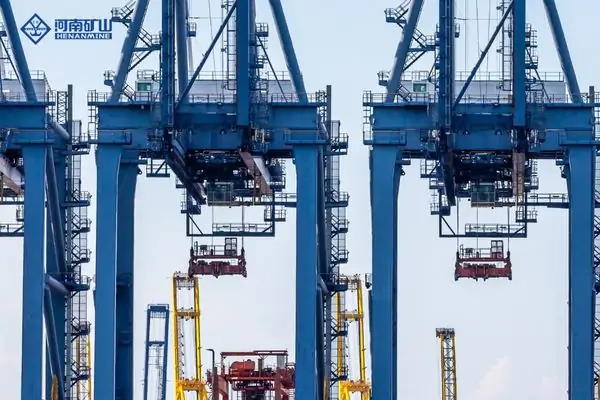
Lifting Height
Lifting height is the exclusive selection consideration for electric hoist, when selecting the model, you need to specify the lifting height required for the actual operation, and reserve a safety margin of 50-100cm; if there are special working conditions in the operation scene (such as high and low drop, obstacles, etc.), you need to calculate in advance the actual height of lifting, and prioritize the choice of adjustable-speed, equipped with limit switches, to further enhance the safety of the operation.
Environmental Conditions
Operating environmental conditions directly determine the adaptability of the equipment, if the operating scene for the outdoor, dusty, humid and other harsh environments, give priority to electric winches (its sealing and protection performance is excellent, can be adapted to the complex working conditions);
If for the warehouse, workshop and other indoor controlled environments, the electric hoist is more advantageous, its running noise is low, without the need for complex outdoor protection, can be better adapted to the indoor operational needs.
Safety Requirements
Selection should strictly follow the industry safety standards to ensure operational compliance. Electric hoists need to focus on whether they are equipped with fall arrest brakes, overload protection, limit switches and other safety devices; electric winches need to focus on the verification of sealing protection, emergency stops, load limiters and other configurations, and at the same time need to be regularly calibrated for various types of safety devices, to ensure the safety of the whole operation.
Common Misconceptions (to answer user confusion)
- Myth 1: electric winches can be used for vertical lifting – Correction: the core of the design of electric winches is horizontal traction, does not have the ability to carry vertical, used for vertical lifting will lead to load falling, equipment damage, there are serious safety hazards, absolutely prohibited for vertical lifting operations.
- Myth 2: electric hoist is suitable for all heavy load operations – Correction: electric hoist is only good at vertical lifting operations, in the horizontal traction scenarios of low efficiency, poor safety; and electric winches in the horizontal traction scenarios have obvious advantages, the two have their respective roles, irreplaceable.
- Myth 3: the larger the size of the equipment, the stronger the load capacity – Correction: electric winches are small in size, but strong traction capacity; electric hoist volume, focusing on the vertical load capacity, equipment size and load capacity is not directly related to the core of the equipment to see the rated design parameters.
Conclusion
In summary, the core difference between electric winches and electric hoists is the direction of operation and functional positioning: electric hoists focus on precise vertical lift, electric winches focus on efficient horizontal traction, the two have no advantages and disadvantages, the key is to match the operational requirements, choose the right equipment to protect safety, improve efficiency and reduce costs.
If you are still not sure how to choose, you can consult industry experts, we will combine your operational needs, load capacity, environmental conditions, etc., to provide personalized selection advice and customized equipment solutions to help operations efficiently and safely.