
How to Expand Port Handling Capacity Without Expanding the Terminal
At a time when global maritime trade continues to expand and the demand for container transportation is surging year by year, major ports generally face the same core problem. Terminal land resources are scarce, expansion approval cycles are long, and infrastructure transformation costs are high, but the pressure on cargo throughput and the pressure on ships to dock continue to rise.Many port companies have fallen into a misunderstanding and believe that to improve the loading and unloading capacity of the port, they must expand the terminal land and add new shoreline resources. In fact, a large number of terminals have problems such as waste of production capacity, inefficient equipment, and redundant processes.For port operators, terminal managers, and logistics engineering companies, there is no need for large-scale land acquisition and expansion, and no need for large-scale infrastructure investment. By investigating capacity loss, optimizing lifting equipment, upgrading operating processes, and implementing automated control, the operating potential of existing terminals can be maximized, and the port's loading and unloading capacity and cargo throughput can be steadily improved.
Identify Where Port Handling Capacity Is Being Lost
The insufficient loading and unloading capacity of the port is not due to the insufficient carrying capacity of the hardware facilities in most cases, but to the existence of many invisible capacity losses in the whole process of the operation.These losses are scattered in all aspects of crane operation, equipment standby, yard turnover, gate access, etc., and the overall throughput of the terminal is limited over time.If you want to expand capacity accurately, the first step is to comprehensively investigate the nodes of production capacity loss, identify inefficient shortcomings, and provide precise directions for subsequent optimization and transformation.
Check crane productivity
Shore bridge, yard bridge, and gantry cranes are the core equipment of port loading and unloading operations. The operating efficiency of Henan Mine Crane manufactured cranes directly determines the daily and single-ship loading and unloading capacity of the port, and it is also the core source of production capacity loss.Many terminals only pay attention to whether the equipment is operating normally, but ignore the actual operating efficiency of the crane.Common inefficiency problems include that the lifting, luffing, and walking speed of lifting equipment do not match the rhythm of the operation, and the operating proficiency of the operators is uneven, resulting in large differences in operating efficiency. The response of the hydraulic system and electronic control system of the old crane is lagging behind, and the time-consuming operation of a single box far exceeds the industry standard.At the same time, the distribution operation scenarios of cranes of different tonnages and arm lengths are unreasonable, and the large equipment does small work and the small equipment is overloaded, which will cause a waste of equipment efficiency.Regularly test the effective crane operation rate, single-cycle loading and unloading capacity, and single-ship operation efficiency, and compare industry standard parameters to quickly locate the production capacity gap at the equipment level, and lock in the loss problem from the core hardware side.
Measure idle time
Equipment standby idling and invalid waiting are the most neglected waste of production capacity in ports.In terminal operations, a large number of cranes, collection cards, and yard equipment have meaningless standby situations. The delay in the ship's arrival at the port leads to the crane being on standby in advance, the cargo is not dispatched in time, the equipment is empty, and the team handover fault causes the operation to be interrupted, and the small equipment failure is not dealt with in time, causing a long shutdown.In addition, insufficient prediction of bad weather, temporary adjustment of operation plans, and manual scheduling errors will greatly increase the standby time of equipment.Accurately count the effective operating time, standby time, and idling time of each lifting equipment every day and every day, calculate the equipment utilization rate, and clearly quantify the loss of invalid production capacity.A large number of port data show that the comprehensive standby loss of most traditional terminal equipment accounts for more than 20%, and optimizing the standby efficiency can directly increase the potential production capacity by one-fifth.
Track yard congestion
The yard is the core transit area for cargo turnover in the port, and yard congestion is a key bottleneck restricting the overall throughput efficiency of the port.The operating efficiency of many terminal shore line cranes is up to standard, but the cargo cannot be quickly transferred, stacked, and shipped out of the warehouse after unloading, resulting in the stagnation of shore bridge operations, resulting in increased front-end processing efficiency, but the back-end link can't keep up, forming a new bottleneck.The core causes of yard congestion include chaotic container stacking planning, mixed stacking of high and low boxes, and disordered placement of heavy empty boxes, which leads to excessive time-consuming picking up and emptying boxes.The division of the yard is unreasonable, and the cross-flow of import and export goods and different types of goods has caused conflicts in movement lines.The dispatching of yard equipment is chaotic, and the yard bridge and forklift operations are cross-congested.Continuous tracking of yard storage density, cargo turnover time, and high-congestion areas can solve the problem of transit caton in a targeted manner, open up the link in the second half of port operations, and release the operating capacity of front-end lifting equipment.
Review gate delays
The terminal gate is a key node for the connection of logistics inside and outside the port. The delay in the passage of the gate will directly lead to the retention of collection cards and the poor entry and exit of goods, which in turn restricts the efficiency of terminal loading, unloading and storage operations.The traditional manual registration and manual verification of documents are inefficient, and the gates are prone to congestion during peak periods. It takes too long for the collection card to queue for entry and exit, which indirectly causes the crane to be out of stock and out of stock, and the overall operation rhythm is disrupted.At the same time, the cumbersome gate control process, lagging information verification, and disordered vehicle scheduling will all prolong the cargo turnover cycle.Resetting the length of traffic at the gate, the number of vehicles stuck, and the peak congestion period, and optimizing the traffic mechanism at the gate, can open up the logistics links inside and outside the port, so that the terminal lifting equipment and yard equipment can maintain continuous operation, and completely solve the problem of idle operations and vehicle congestion. Mismatch problem.
Increase Crane Productivity Within the Existing Quay
The coastline is the most core scarce resource of the port. Upgrading the operating efficiency of the existing shore bridge without expanding the terminal coastline or adding new shoreline land is the core means to quickly increase the port's loading and unloading capacity and increase the throughput of a single shoreline.By optimizing equipment performance, operating processes, and operating partitions, the operating potential of existing shoreline equipment can be maximized, and the production capacity of the shoreline can be doubled.
Boost crane speed
The speed of crane operation is the core index that determines the unloading capacity of a single ship and a single ship.For existing shore bridges and gantry cranes, within the scope of equipment safety loads and specifications, the electronic control system can be upgraded, the hydraulic transmission system can be optimized, and the drive components can be updated to comprehensively improve the crane lifting, luffing, cart walking, and trolley operation speed.Old port cranes generally have problems such as transmission lag, speed-up caton, and low speed limit. After professional speed optimization and upgrading, the smooth operation speed of the equipment can be increased by 15%-30%, and the frequency of loading and unloading in a single hour has been greatly increased.At the same time, by standardizing the operating procedures of operators, unifying the operating rhythm, eliminating artificial deceleration and invalid pauses, so that the crane can continue to maintain an efficient operating state, without replacing equipment and occupying new shoreline, the production capacity of shoreline operations can be directly increased.
Cut cycle time
Henan Mine Crane manufactured crane operation cycle time, that is, the complete length of time for a single cargo to be grabbed, transferred, dropped, and reset, is the core parameter to measure the operating efficiency of the equipment.The shorter the cycle time, the higher the frequency of operations per unit time, and the greater the overall throughput of the terminal.Many port cranes have a large number of redundant steps in a single operation cycle, such as unreasonable moving lines, waiting for instructions, slow alignment, and cumbersome resetting.By optimizing the operation line, streamlining invalid operation steps, accurately calibrating the crane alignment system, and shortening the time-consuming alignment of containers and bulk cargo.At the same time, linkage ship dispatching and cargo dispatching, plan the sequence of operations in advance, and reduce the waiting time for operations.Compressing the length of single-cycle operations in an all-round way can significantly increase the number of effective daily operations of the crane, completely solve the problem of normal operation of the equipment but low actual efficiency, and maximize the activation of existing shoreline operation capabilities.
Optimize crane zones
Unreasonable operation zoning of shore line cranes is an important cause of waste of shore line resources and operation conflicts.Some docks have problems of overlapping operation partitions, idle empty areas, and cross-operation of equipment. Popular berth cranes get together to operate, resulting in congestion and mutual interference with moving lines.The unpopular coastline has been idle for a long time, and the coastline resources cannot be fully utilized.Combining the tonnage of the ship, the type of cargo, and the loading and unloading volume, the crane operation area is re-scientifically divided, and the number of equipment and the scope of operation are allocated according to the operation needs to avoid cross-interference and invalid shuttling of equipment.At the same time, according to the tidal period and the peak of the ship's arrival in the port, the operation zone is dynamically adjusted, and the equipment is flexibly deployed, so that each section of the coastline and each crane can maximize the value of the operation and realize the efficient use of the existing coastline space.
Add quay cranes
There is no need to expand the shoreline of the terminal. Within the carrying range of the existing shoreline, suitable shore bridges and small lifting equipment can be reasonably supplemented to fill the blank areas of shoreline operations.The early equipment layout of many traditional docks was sparse, and there was still room for the installation of compliance equipment on the shoreline, and the idle shoreline resources were not fully utilized.According to the existing coastline carrying capacity, berth layout, and ship docking specifications, professional cranes adapted to tonnage and arm length will be accurately supplemented to fill the blind spots in the operation in a targeted manner and share the operating pressure of the main equipment.Compared with the civil construction and expansion of the terminal, the input cost of adding crane equipment is lower, the landing cycle is shorter, and the effect is faster. It can quickly improve the comprehensive loading and unloading capacity of single berths and single shoreline, and greatly improve the overall throughput of the port.
Improve Yard Capacity Without Adding Land
The land resources of the terminal yard are fixed, and it is extremely difficult and costly to add land to the yard.To improve the overall turnover capacity of the port, the core lies in activating the existing yard stock resources. By optimizing the storage mode, upgrading the yard equipment, and streamlining the operating process, the yard's storage capacity and turnover efficiency can be greatly improved without adding an inch of land, and the core problems such as cargo backlog and slow turnover can be solved.
Increase stack density
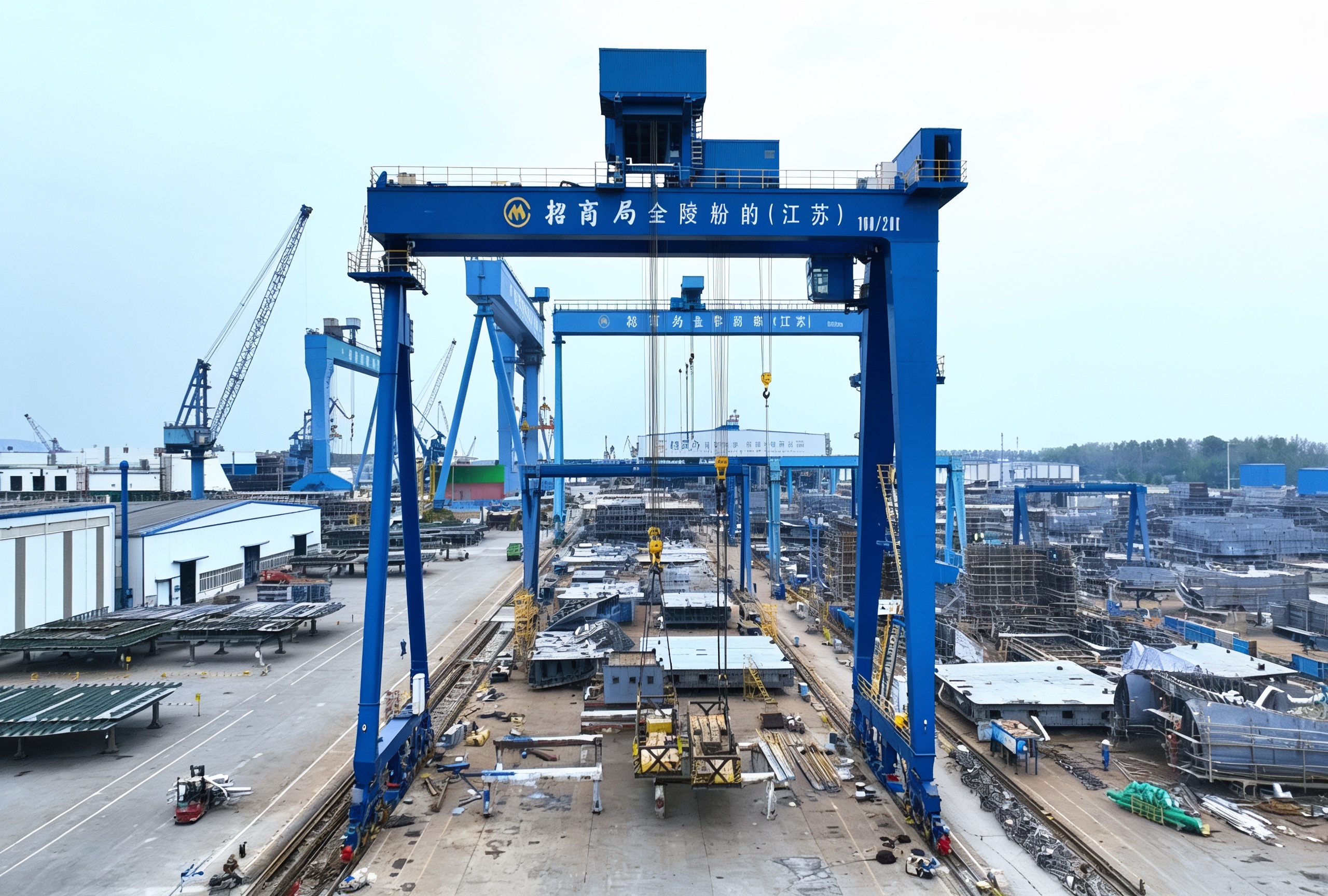
Most traditional port depots have problems of loose storage and serious waste of space. The number of container and bulk cargo stacking layers is insufficient and the spacing is too large. A large amount of yard space is invalidly occupied, and the actual storage capacity is much lower than the upper limit of the site design.Increasing the storage density is the most direct and lowest-cost way to expand the yard.Under the premise of complying with port safety regulations and cargo storage standards, scientifically increase the number of container stacking layers, accurately calibrate the cargo storage spacing, and eliminate invalid voids.According to the specifications, weight, and storage cycle of the goods, the storage area is classified and planned, and the vertical space and idle space in the corners of the yard are fully utilized.Through high-density and standardized storage, the storage capacity of the existing yard can be increased by 20%-40%, the backlog of goods can be greatly reduced, and sufficient transit space can be provided for the continuous operation of the terminal.
Use yard cranes
Traditional yards rely on forklifts and manual auxiliary operations, which are not only inefficient, but also have low stacking accuracy and limited storage height, making it impossible to make full use of yard space.The configuration of professional yard cranes is the core hardware upgrade method to activate the yard's production capacity.Rail-type field bridges and tire-type field bridges have the advantages of wide operating range, high stacking height, accurate alignment, and stable operation.Through the popularization of special lifting equipment for the yard, high-level container stacking and precise pick-and-place can be realized, breaking through the storage restrictions of manual and ordinary equipment, and maximizing the value of the vertical space of the yard.At the same time, the yard bridge can realize large-scale and continuous operations, greatly improve the efficiency of cargo storage, retrieval, and transshipment, solve the problems of yard operations stuck and slow turnover, and allow the yard to match the high-speed loading and unloading rhythm of the coastline.
Optimize stacking
Disordered storage is the core pain point of the low efficiency of the yard. Many terminal goods are stacked at will, the categories are mixed, and the entry and exit are unplanned, which not only wastes space, but also greatly increases the cost of picking up and dumping.To optimize the storage strategy, a standardized and refined storage system needs to be established.Plan the storage location rationally according to the weight of the goods, the entry and exit time and the transportation distance, and improve the site utilization rate and operating efficiency.Store in partitions according to import and export, cargo category, transportation direction, and storage cycle to avoid cross-stacking.For high-frequency turnover goods, plan a dedicated and convenient storage area to shorten the retrieval distance.Standardized storage can improve the utilization rate of the yard without expanding the site, while greatly speeding up the speed of cargo turnover and improving the overall efficiency of the port.
Reduce rehandling
Secondary dumping, repeated handling, and invalid movement of goods are the most important production capacity losses in the yard, and they are also important reasons for congestion and inefficient turnover in the yard.Due to unreasonable storage planning and chaotic cargo scheduling in many terminals, the same batch of goods needs to be moved multiple times and moved repeatedly, which not only consumes equipment energy consumption and takes up operating time, but also greatly reduces the turnover efficiency of the yard.By formulating a cargo storage plan in advance, the initial storage location is accurately planned according to the ship's departure time, cargo destination, and pick-up cycle, so as to reduce secondary handling from the source.Synchronize and optimize the scheduling process, unify the rhythm of yard, shoreline, and gate operations, and avoid disorderly accumulation of goods.After significantly reducing repetitive operations, the effective operation rate of yard equipment and cargo turnover speed have been significantly improved, and the overall throughput capacity of the port has been upgraded synchronously.
Use Automation to Increase Throughput
The traditional operating mode of manual scheduling and manual operation has problems such as low efficiency, large errors, slow response, and low fault tolerance, which are the core bottlenecks restricting the upgrading of port production capacity.The introduction of an automated control system to realize the intelligent linkage of equipment, goods, and processes can break through the limitations of manual operations and maximize port throughput and operational stability on the basis of existing hardware and sites.
Automate crane scheduling
The manual scheduling of traditional cranes is lagging and subjective, and it is prone to problems such as idle equipment, gathering of jobs, and unbalanced scheduling.The automated dispatching system can intelligently match crane operation tasks based on the arrival time of the ship, cargo volume, operation priority, and equipment status, and automatically plan the operation movement line and allocate the operation area.The system can be accurately scheduled 24 hours a day, eliminating manual scheduling errors, response delays, unreasonable scheduling, etc., so that every shore bridge and field bridge can maintain full load and orderly operation, and completely eliminate idle and wasteful equipment.Automated scheduling can effectively improve the comprehensive utilization rate of equipment by more than 15%, and realize a steady improvement in terminal operation efficiency.
Track containers
Container information is opaque, location tracking is difficult, and the status of the cargo cannot be monitored in real time, which can easily lead to cargo retention, wrong delivery, and missed delivery, delay ship operations and vehicle traffic, and drag down the overall throughput rhythm of the port.The intelligent container tracking system can collect the stacking location, operating status, and turnover progress of each container in real time through the Internet of Things and positioning technology.Managers can view the dynamics of the whole cargo process in real time, accurately grasp the storage situation and operation progress, predict the risks of congestion and backlog in advance, and adjust the operation plan in time.Accurate cargo tracking can reduce cargo retention time, avoid delays in invalid operations, and ensure that the whole process of cargo turnover in the port is efficient and smooth.
Connect terminal systems
Many traditional terminals have system silos. The shore bridge operating system, yard management system, gate access system, and ship dispatching system are independent of each other. Data cannot be interoperable, and information synchronization lags behind, resulting in disjointed operations and stuck connections in all links.Open up the intelligent system of the whole process of the terminal, realize the real-time exchange and synchronization of equipment operation data, cargo data, ship data, and vehicle data, and form a closed-loop linkage between shore loading and unloading, yard turnover, gate access, and ship dispatching.There is no need for manual docking and repeated reporting of all links. The system automatically synchronizes information and connects operations to completely solve the problem of process faults and greatly improve the overall operating efficiency of the terminal.
Coordinate equipment
Port operations involve many types of equipment such as cranes, collection trucks, forklifts, and handling equipment. It is difficult to achieve efficient coordination of multiple equipment by manual coordination, and problems such as equipment operation conflicts, disjointed waiting, and inconsistent rhythm are prone to occur.The automated collaborative control system can realize unified scheduling and intelligent linkage of all types of equipment.According to the overall operation plan, the system synchronously allocates various equipment operation tasks, accurately matches the rhythm of lifting equipment loading and unloading, the rhythm of card collection and transfer, and the rhythm of yard storage, so as to achieve a smooth connection between loading and unloading, transshipment, storage and outbound links.After the collaborative efficiency of the equipment has been improved, the invalid waiting time of the terminal has been greatly shortened, and the overall throughput efficiency has been qualitatively improved.
Optimize Existing Port Crane Infrastructure
As the core operating hardware of the port, lifting equipment is old and aging, backward performance, limited parameters, and frequent failures are the core reasons for the insufficient production capacity of many old terminals.There is no need to replace new equipment in batches or expand supporting facilities. Through intelligent upgrading, performance transformation, and operation and maintenance optimization of the existing Henan Mine Crane manufactured crane infrastructure, the operating capacity and stability of the equipment can be greatly improved, and the stock of hardware resources can be activated.
Modernize old cranes
A large number of old port cranes that have been in service for many years generally have problems such as aging electronic control systems, backward operating modes, high energy consumption, low efficiency, and many safety hazards, which cannot be adapted to the efficient operation needs of modern ports.Modernization and upgrading of old equipment is a low-cost and high-return way to upgrade production capacity.The intelligent and efficient upgrade of old cranes can be realized by replacing the intelligent electronic control system, upgrading the hydraulic transmission components, updating the operating terminal, and installing intelligent monitoring equipment.After the transformation of the old equipment, the operating stability, accuracy and efficiency have been greatly improved, and the incidence of failures has been significantly reduced. Peak operating performance can be restored without the need to purchase new equipment, and the cost of terminal hardware upgrade is greatly reduced.
Extend crane reach
The existing crane arm length and operating coverage of some terminals are limited, which cannot be adapted to the loading and unloading needs of large ships and wide-body cargo ships. There are blind spots in the operation, which require frequent adjustment of ship berths and repeated alignment operations, wasting a lot of operating time.Under the premise of equipment safety compliance and structural bearing capacity compliance, the crane can be optimized for boom length and upgraded for operating range.Through professional structural transformation and boom optimization and adjustment, the coverage of crane operations is extended, so that a single equipment can cover more ship berths and wider operating areas, reduce the frequency of ship displacement and equipment displacement, greatly improve the efficiency of single-ship operations, and solve the pain points of inefficient loading and unloading of large ships.
Increase load capacity
Some old cranes have limited rated loads and cannot be adapted to the loading and unloading operations of large-tonnage containers and heavy bulk cargo. They can only be split and loaded and unloaded in batches. The operation process is cumbersome and time-consuming.On the basis of safety verification of equipment structure and compliance transformation, the load-bearing structure of the crane can be optimized in a targeted manner, the hydraulic carrying capacity can be improved, and the rated load of the equipment can be rationally upgraded.The upgraded crane can complete the loading and unloading of large-tonnage cargo at once, reduce the batch of operations, streamline the operation process, greatly improve the efficiency of heavy-duty cargo loading and unloading, adapt to the needs of diversified and large-tonnage maritime operations, and broaden the adaptation scenarios of terminal operations.
Add predictive maintenance
Sudden crane failures and downtime for maintenance are important factors that cause port operations to be interrupted and production capacity to be lost.The traditional mode of post-mortem maintenance and regular maintenance cannot predict the hidden dangers of equipment in advance, and it is prone to problems such as mid-operation failures and long-term downtime for maintenance, which seriously affects the continuous operation rhythm of the terminal.Install a predictive maintenance system for the crane, through real-time monitoring of equipment operating temperature, vibration, pressure, energy consumption, wear and other core data, intelligent prediction of potential equipment failures, formulate maintenance plans in advance, and complete maintenance before the outbreak of hidden dangers. Predictive maintenance can significantly reduce the sudden failure rate of equipment, reduce unplanned downtime, ensure the stable and continuous operation of the crane for 24 hours, and maximize the release of equipment production capacity.
Build a Higher-Capacity Handling Strategy
The long-term improvement of port loading and unloading capacity not only depends on equipment optimization and process upgrading, but also requires a systematic and standardized high-end operation strategy.Single-link optimization can only achieve short-term efficiency improvement, match equipment performance in all directions, balance operating processes, quantify production capacity gains, and strictly control downtime losses, so as to build a sustainable high-throughput operation system and achieve long-term and stable growth of port production capacity.
Match crane capacity
Many ports have the problem of equipment capacity mismatch. Large-tonnage cranes handle small pieces of cargo, small equipment undertakes heavy-duty operations, and the operating capabilities of shore bridges and field bridges are not matched, resulting in waste of equipment efficiency and unbalanced operation rhythm.To build an efficient operation system, we must first achieve accurate matching of equipment production capacity.According to the mainstream cargo tonnage, ship specifications, and operation scenarios of the terminal, crane operation tasks of different specifications and different loads are rationally allocated, so that large-scale equipment can mainly focus on heavy-duty operations, and small equipment can be adapted to lightweight turnover. The operating efficiency of shore line equipment and yard equipment matches each other to form an efficient and collaborative operation matrix, eliminating waste of equipment performance and maximizing the core value of each equipment.
Balance terminal flow
The bottleneck of terminal throughput often occurs in the imbalance of processes, the loading and unloading of the shoreline is too fast, the turnover of the yard is lagging, or the yard operation is efficient, and the traffic at the gate is congested. A single link will restrict the overall production capacity.Balancing the flow of the whole process of the terminal is the key to improving the overall throughput.Through intelligent scheduling and control, the operation rhythm of shoreline loading and unloading, yard storage, gate access, ship turnover, and vehicle transshipment is unified, so as to avoid unbalanced flow and congested backlog in all links.Dynamically allocate equipment and manpower to strengthen weak links during peak periods of operations, and optimize equipment maintenance during trough periods, so that the whole process of the terminal flows smoothly and at a balanced pace, and the overall throughput capacity is steadily improved.
Estimate throughput gains
After completing equipment optimization, process upgrading, and automation transformation, it is necessary to accurately quantify the effect of production capacity improvement, and optimize the follow-up operation strategy through data review.Through statistics of core data such as single-ship operation time, single-day throughput, equipment utilization rate, cargo turnover cycle, and congestion time before and after the transformation, the increase in production capacity can be accurately calculated.Based on data feedback, identify the remaining inefficient shortcomings, continuously optimize the operation plan, equipment layout, and scheduling mode, and form a closed-loop system of optimization, resetting, and upgrading, so that the port's throughput capacity can continue to iterate and grow steadily.
Minimize downtime
Non-operational shutdowns, failure shutdowns, waiting shutdowns, and maintenance shutdowns are the core obstacles restricting the full-load operation of the port.One of the core goals of building a high-capacity operation strategy is to compress invalid downtime in all directions.Reduce downtime through predictive maintenance, eliminate waiting downtime through intelligent scheduling, streamline switching downtime through standardized operations, and optimize manpower handover downtime through reasonable scheduling.Maximize and shorten the length of various types of invalid downtime, ensure that terminal lifting equipment, yard equipment, and transshipment equipment continue to operate at full load, so that the terminal hardware production capacity can be released 100%, and the port handling capacity can be maximized without expansion or new resources. Increase.
Henan Mine Crane Factory Custom
To improve the loading and unloading capacity of the port, it is not necessary to rely on land acquisition to expand or add new shoreline.For most terminals, fully tapping the potential of existing facilities, improving the efficiency of crane operations, optimizing the loading and unloading process, and upgrading the intelligent control system can also effectively break through the bottleneck of production capacity.From analyzing the operating efficiency of existing equipment, to upgrading key lifting equipment such as shore bridges and gate machines, to customizing more efficient crane solutions according to terminal conditions, every link directly affects the overall throughput capacity of the port.As a large-scale industrial crane manufacturer, Henan Mine Crane Factory can provide supporting solutions from crane selection, design and manufacturing to upgrading according to the cargo type, operating intensity, site conditions and existing equipment conditions of the terminal, to help the port release more loading and unloading capacity in the case of small-scale expansion, so that existing sites and equipment can play a higher value.