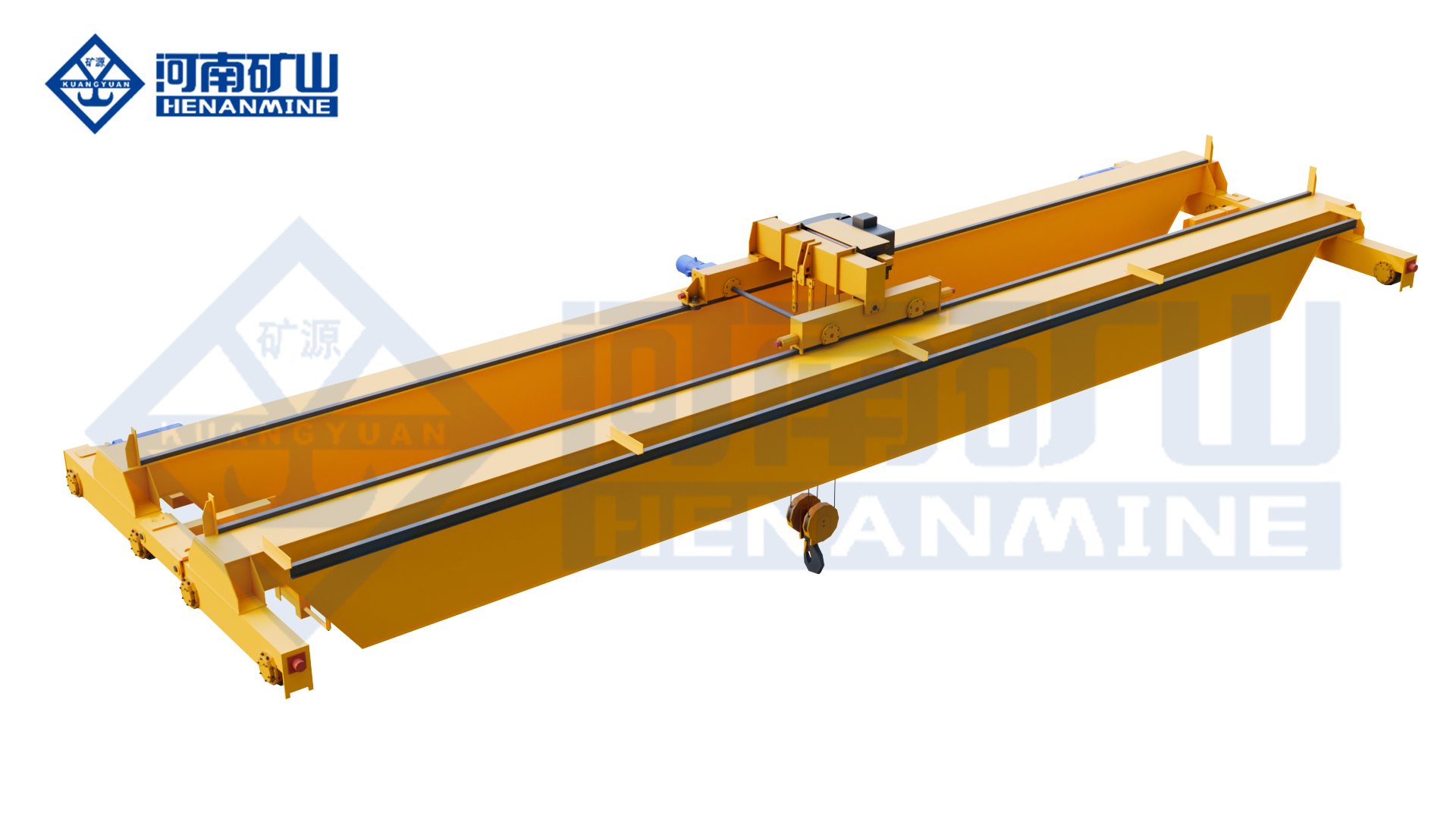

How to Choose a Suitable Grab Bridge Crane for a Waste Treatment Plant
Grab bridge cranes are not simple handling tools in a waste treatment plant. Whether it is feeding and sorting in a domestic waste incineration plant, or transferring and stockpiling at a waste transfer station, it is indispensable in every core process.
Especially in the waste incineration power generation project, the crane is responsible for the rubbish accurately into the incinerator, but also with the completion of the rubbish mixing and stirring, and its operating status directly affects the efficiency of incineration – if the feed is not uniform, there will be insufficient combustion, furnace temperature fluctuations, which affects the efficiency of power generation and environmental emissions.
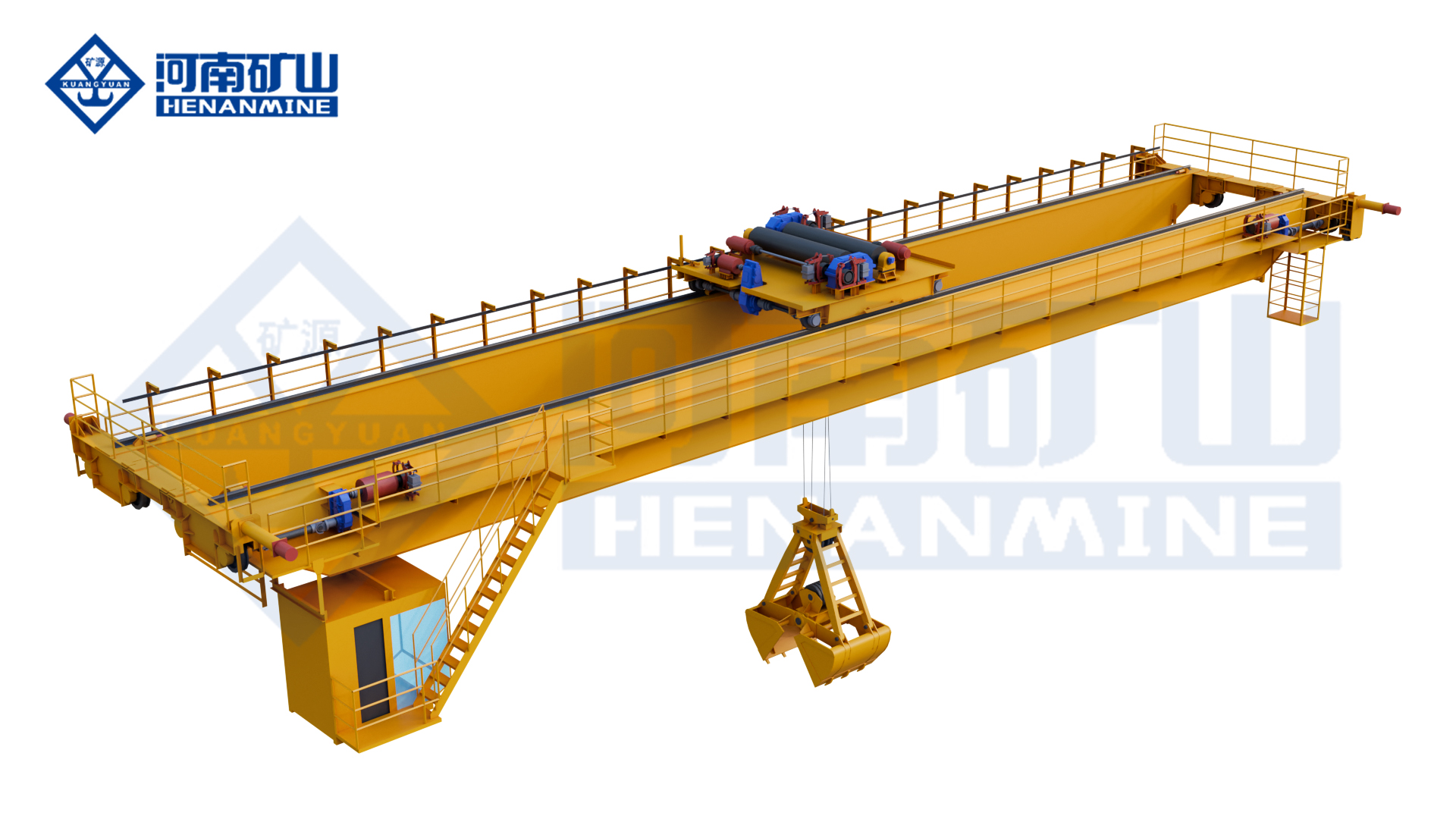
Grab Type Bridge Crane
More critically, once the crane selection is not appropriate, the subsequent trouble will continue to flow: frequent breakdowns and shutdowns, resulting in the accumulation of rubbish, interruption of the production line; maintenance costs remain high, and a year of maintenance costs can even catch up with the difference in the price of the equipment itself;
Serious cases will also affect the incineration stability, today combined with years of experience in the industry, to talk to you about how to choose to avoid these pits, selected to fit and durable equipment.
First understand the operating conditions of the waste treatment plant
Let’s choose the type, do not rush to see the parameters of the equipment, you have to first feel through the operating environment of their own plant – waste treatment plant conditions and ordinary factories are not the same, continuous operation, harsh environments, variable loads, these characteristics directly determines the configuration of the crane requirements.
Continuous operation of the mandatory requirements
Many waste treatment plants, especially waste incineration power generation projects, are running 24 hours a day, cranes must also follow the continuous rotation, can not have a long time downtime.
This requires that the equipment must reach the heavy-duty operation level, that is, the industry said FEM A7/A8 level, or CMAA E/F level, in short, can withstand high-frequency start and stop, continuous heavy-duty operation, will not fail because of long-time operation.
We can understand this way, ordinary factory cranes may only run for a few hours a day, while the cranes in rubbish factories, 24 hours a day, there may be 20 hours in the repeated grabbing, transferring rubbish, the motor, transmission, brake loss is extremely large, light load level of equipment can not carry.
Harsh operating environment
How harsh the environment of the rubbish treatment plant, have done the operation and maintenance of friends are clear, this is also easy to wear and tear of the crane core reasons.
First of all, high humidity, rubbish pit, sorting workshop is always in a humid state, especially in summer, the water vapour in the air mixed with the steam from the rubbish leachate, it is easy to erode the metal parts of the equipment; secondly, corrosive gases, fermentation of rubbish will produce hydrogen sulphide, ammonia and other corrosive gases, these gases will slowly corrode the main beams, electrical cabinets and cables, and after a long time, there will be rusty parts, electrical short-circuit problems.
Coupled with the high dust and odour in the workshop, the dust will drill into the cracks of the motor and gearbox, wear the internal parts, and will also block the electrical interface, further increasing the probability of failure. So when we select, anti-corrosion, dust and moisture-proof configuration, absolutely can not be saved.
Irregular and variable load conditions
Rubbish and ordinary materials are not the same, its density is not uniform, some places loose, some places lumps, and even mixed with stones, metal and other hard objects, it is difficult to control the load when grabbing.
Sometimes it looks like there is not much rubbish in the grab, but because of the high density, the actual weight may be far more than expected; there are also some rubbish with high viscosity, which will stick to the grab, not only increasing the load, but also affecting the efficiency of grabbing!
In addition, the impact load when the grab falls will also cause additional wear and tear on the structure and components of the crane. These uncertainties have to be taken into account in advance when selecting the type, to avoid equipment in a long-term unstable load state.
Determine the required lifting capacity and grab volume
Figure out the working conditions, the next step is to combine the daily handling capacity of the plant, determine the crane’s lifting capacity and grab volume – these two parameters directly determine the equipment can keep up with the pace of production, can not choose a small enough to use, can not choose a large waste of cost.
Combined with the daily handling capacity (TPD) accounting needs
First of all, we should clarify the daily processing capacity of the plant (unit: t per day, TPD), which is the core basis for calculating the lifting capacity and grab volume. For example, a waste incineration plant with a daily processing capacity of 800t and a small transfer station with a daily processing capacity of 200 t have completely different equipment requirements.
We can simply calculate: assuming that the plant operates for 20 hours a day, the number of cycles that the crane needs to complete per hour (grasping, transferring, unloading) is about 15-20 times, combined with the average density of the rubbish, you can calculate the weight of the rubbish that needs to be grasped for each time, and then determine the rated lifting capacity of the crane.
For example, 800TPD incineration plant, 40t of rubbish per hour, according to 16 cycles per hour, each time you need to grab about 2.5t, and then reserve a certain safety margin, choose 3-5 t of lifting capacity is more appropriate.
If the daily handling capacity reaches more than 1,000t, the lifting capacity should be more than 10 t to meet the production demand.
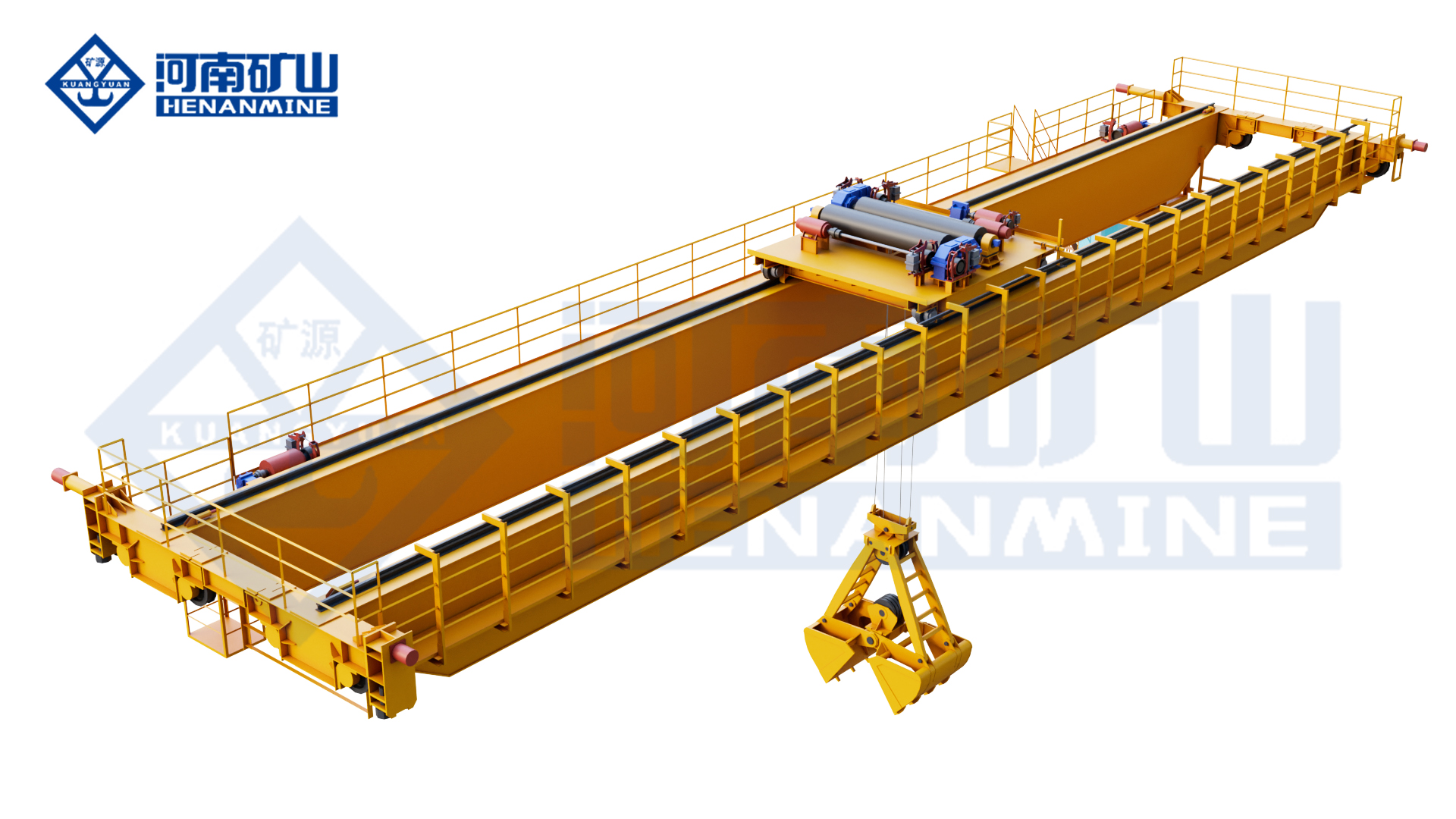
Grab Cranes
The key to the selection of grab is to adapt to the characteristics of the rubbish.
Grab is the crane’s gripper, selection is not right, and then the good use of the crane can not play a role. The commonly used grabs on the market are mainly divided into two types, hydraulic and electro-hydraulic, and orange flap grabs and shell-shaped grabs, we have to choose according to the type of rubbish.
Hydraulic grabs have large gripping force and tight closure, suitable for viscous, uneven density of domestic rubbish, and are not prone to leakage and jamming problems; electro-hydraulic grabs are relatively simple in structure, easier to maintain, and are suitable for loose rubbish, such as crushed industrial rubbish.
From the shape point of view, the orange petal grab is suitable for blocky and granular rubbish, with large grabbing volume and high efficiency, such as the crushed rubbish in waste incineration plants; the shell-shaped grab has a small closing gap and is suitable for loose and finely crushed domestic rubbish, which can effectively prevent leakage of materials and reduce the workload of on-site cleaning.
In addition, the volume of the grab should be matched with the lifting capacity and the density of the rubbish – for dense rubbish, choose a small volume grab; for loose rubbish with low density, choose a large volume grab, so as to ensure that the weight of each grab is up to the standard and to enhance the operational efficiency.
Sufficient safety margin must be reserved
The load of the waste treatment plant is unstable, so the lifting capacity must be reserved for safety margin, not just stuck to the actual demand to choose.
Generally speaking, the dynamic load factor should be considered – when the crane is gripping, lifting and running, the load will produce a certain impact force, and this impact force is the dynamic load. It is generally recommended to reserve a safety margin of 10%-20%, for example, if you actually need to grab 3t of rubbish, choose a lifting capacity of 3.5-4t to avoid overloading operations.
At the same time, the equipment must be equipped with a reliable overload protection system, which can automatically stop the crane once the load exceeds the rated value, preventing equipment damage, falling rubbish and other safety accidents, which is also the basic requirement for safe operation of rubbish plants.
Choose the right crane structure
The structure of the crane directly determines its stability, lifting height and operating range. Combined with the size of the rubbish pit of the rubbish plant and the operational requirements, the selection of single girder and double girder, as well as the matching of span and coverage, are the key considerations.
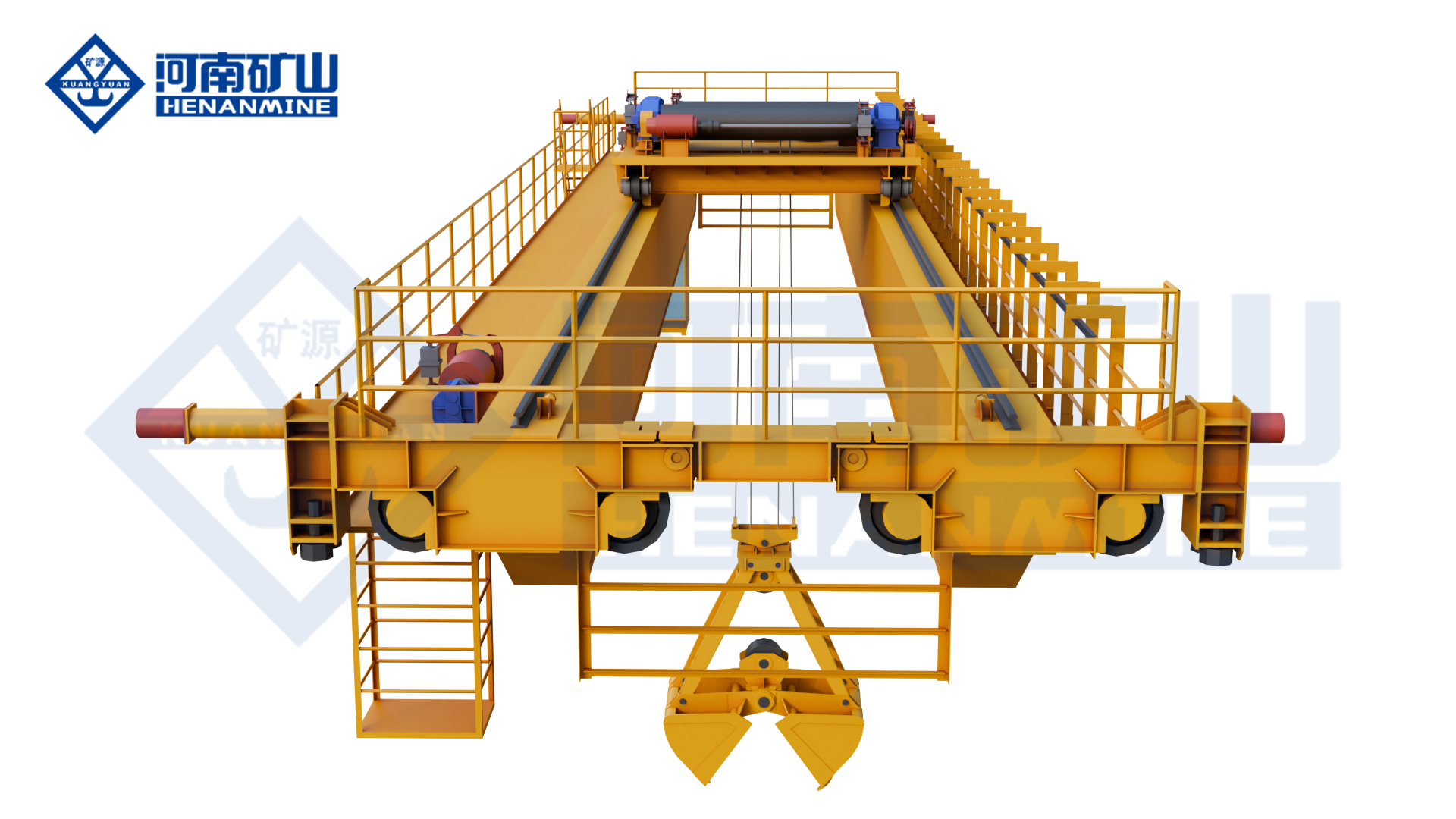
Bridge cranes for waste treatment plants
Priority to double girder structure for rubbish plant
Many purchasing friends will consider choosing single girder grab type overhead travelling crane in order to save the upfront cost, but combined with the working condition of rubbish plant, I recommend giving priority to double girder structure – not that single girder is bad, but double girder is more suitable for the heavy load and high frequency operation demand of rubbish plant.
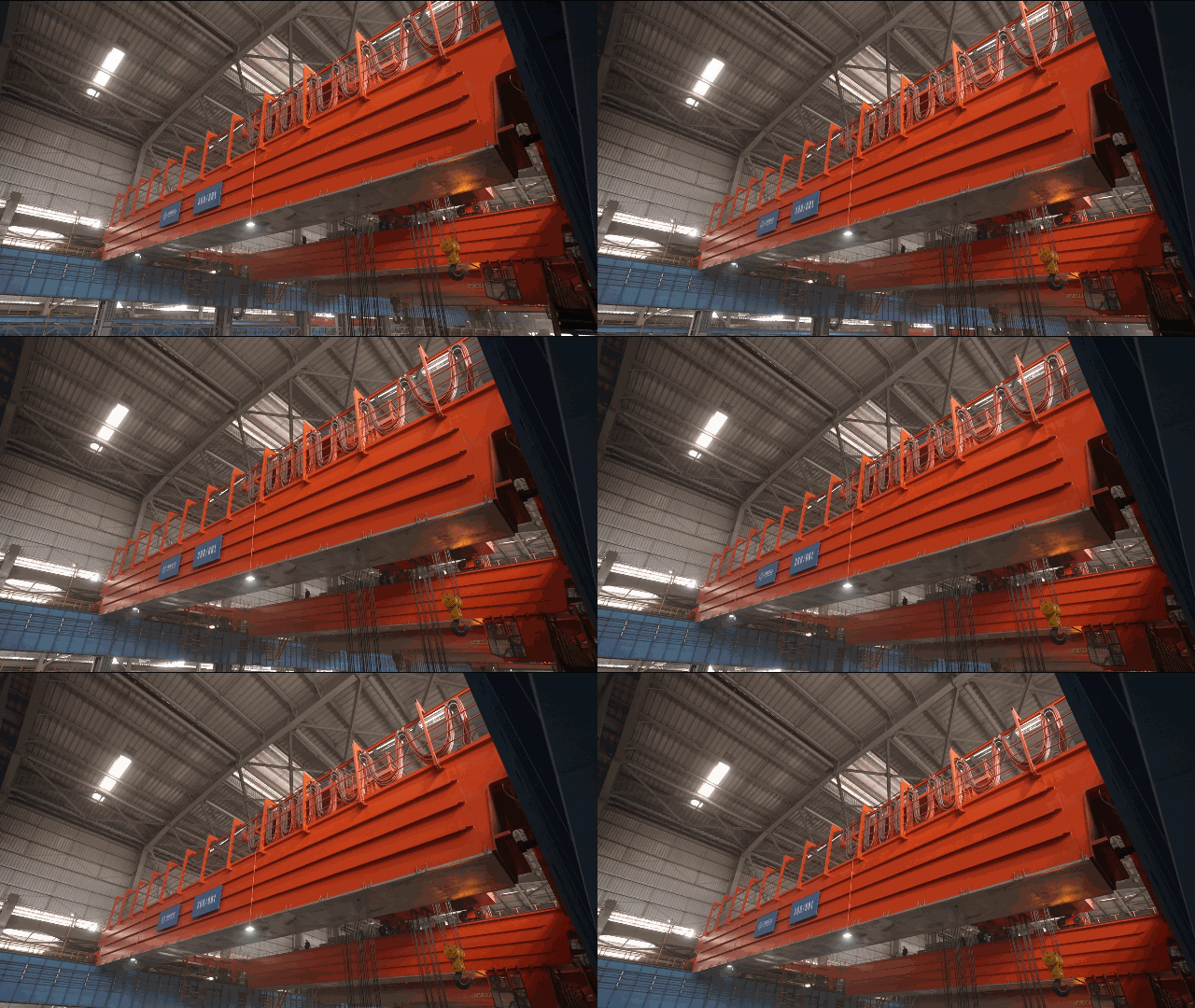
The main girder of double girder crane is more rigid and stable, and it is not easy to deform the main girder when grabbing heavy loads of rubbish and frequently starting and stopping.
Moreover, the lifting height of double girder is higher, which can make full use of the vertical space of the rubbish pit and increase the rubbish storage capacity.
In addition, double girder cranes have a larger operating range and can be paired with larger grabs to enhance operational efficiency.
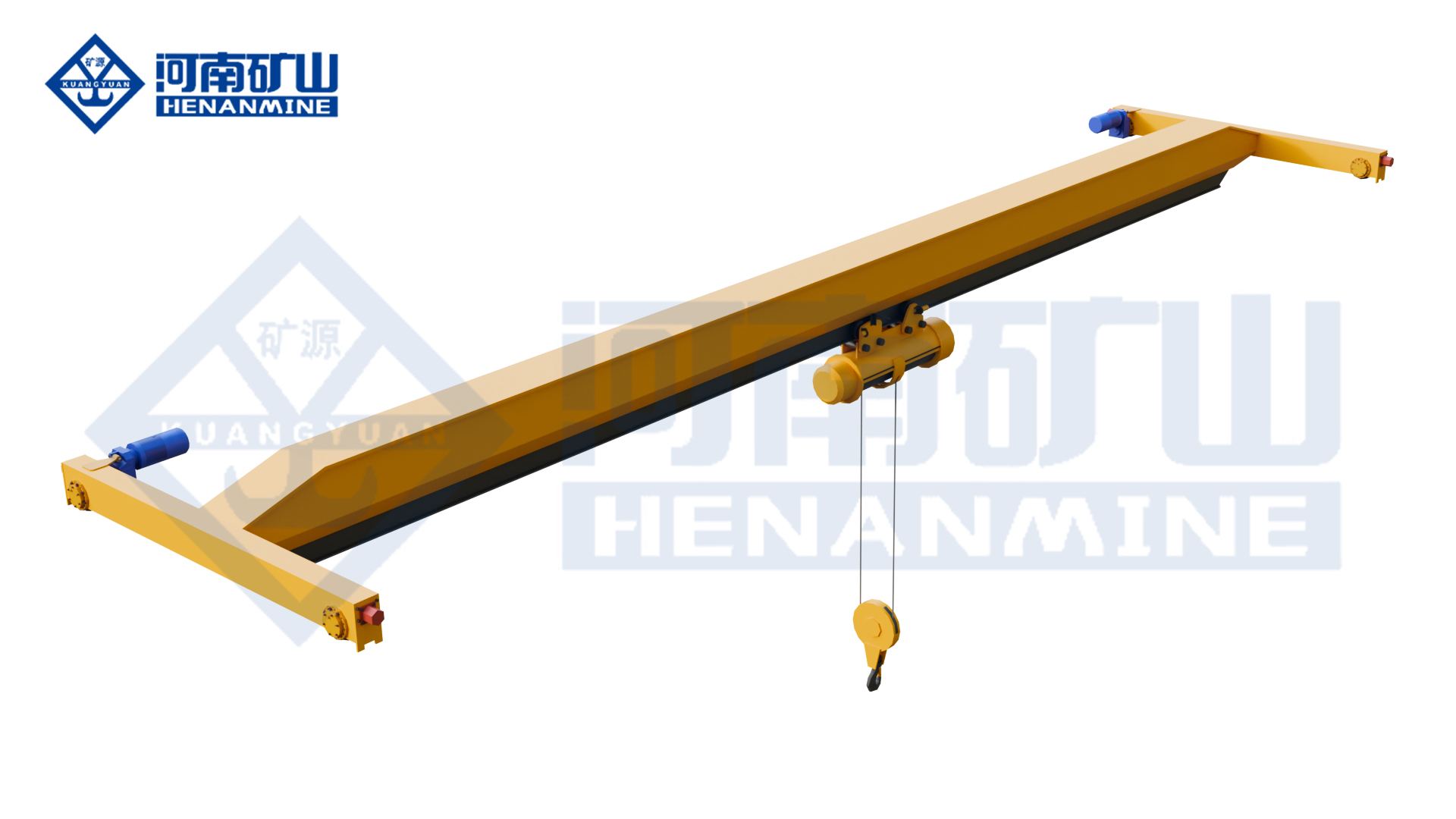
On the contrary, single girder cranes, rigidity and stability is relatively weak, long-term heavy-duty operation is prone to failure, and the lifting height and operating range is limited, suitable for small daily handling capacity, light load of small waste transfer stations, such as daily handling of 500t or less of the plant, if a large incineration plant, choose a single girder later will certainly be a problem.
Span and coverage to match the size of the rubbish pit
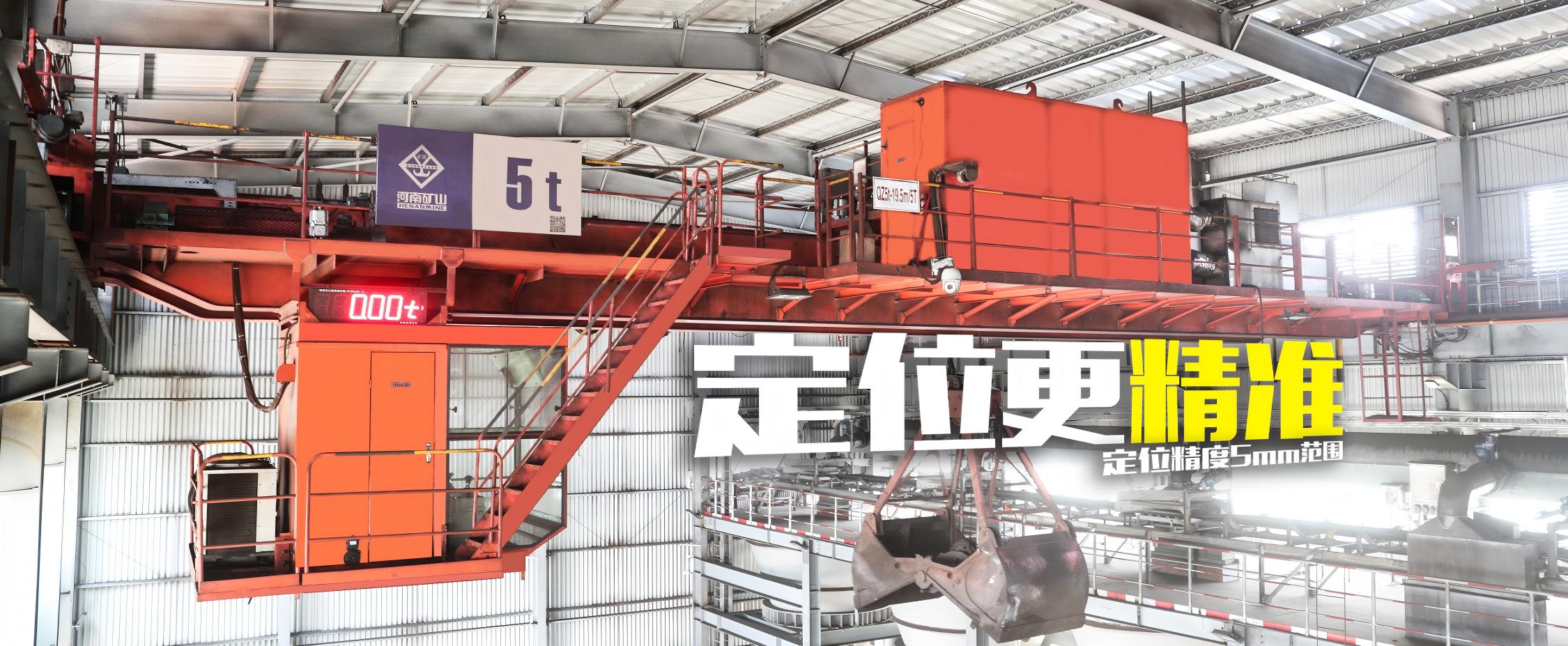
Crane span, to strictly match the width of the rubbish pit, the core requirement is ‘full coverage, no dead ends’ – that is to say, when the crane is running, the grab can cover the entire area of the rubbish pit, there will not be a corner of the rubbish can not catch the situation.
For example, if the width of the pit is 20m, the span of the crane can be chosen to be about 22m, leaving 1-2m of safe running space to avoid collision with the edge of the pit and the columns of the plant when the crane is running. If the rubbish pit is longer, you can match multiple cranes, or choose a large span double girder crane to ensure that the entire rubbish pit can be covered.
Grab Type Bridge Crane
In addition, the need for precise positioning should also be considered – the position of the inlet of the waste incineration plant is fixed, and the crane is required to feed the waste into the inlet accurately, which requires the crane’s operation and positioning accuracy to be high enough to avoid feeding deviation, which will affect the incineration efficiency.
Selection of operating level and core components
Cranes in waste treatment plants need to withstand high-frequency, heavy-duty operations for a long time, so the operating level and the selection of core components must be durable and reliable.
Operating level must meet the heavy-duty standard
As we mentioned earlier, the cranes in the waste plant need to reach FEM A7/A8 class or CMAA E/F class, which corresponds to the requirements of heavy-duty and continuous operation, and can withstand frequent starts and stops and heavy-duty loads, and won’t wear out the components too quickly because of long-time operation.
The choice of operating level directly determines the configuration of core components such as motors, gearboxes, brakes, etc. – heavy-duty level cranes will be paired with more durable motors and gearboxes, which can withstand high-frequency start-stop wear and tear; the braking performance of the brakes is also stronger, and can be used to stop the machine quickly and smoothly under heavy loads to ensure operational safety.
Core components to adapt to high-frequency operation
Motor, gearbox, brake, is the crane’s ‘three core components’, their quality directly determines the service life and operational stability of the equipment, selection must focus on.
Motor, we should use heavy-duty motors suitable for high-frequency starting and stopping, the power should be matched with the lifting capacity and the frequency of operation, to avoid motor overloading and burning problems.
Gearboxes should use wear-resistant, strong load-bearing capacity models, to adapt to frequent variable-speed operation, reduce gear wear
Brake to choose redundant braking system, that is, double braking, even if one set of braking system failure, the other set can work normally, to avoid the safety hazards of stopping failure.
In addition, cables and electrical interfaces should also be well protected, using wear-resistant, corrosion-resistant cables, electrical interfaces to do sealing to avoid dust, moisture intrusion, resulting in electrical short circuits.
Selection of automation and intelligent control system
Now more and more waste treatment plants, especially large-scale incineration power generation projects, will consider the automation function of the crane – automation not only reduces the workload of the operator, but also improves the operational precision and efficiency, and safeguards the incineration stability.
Semi-automatic operation
For small and medium-sized waste treatment plants with small daily handling capacity and relatively simple operating procedures, semi-automatic operation is sufficient.
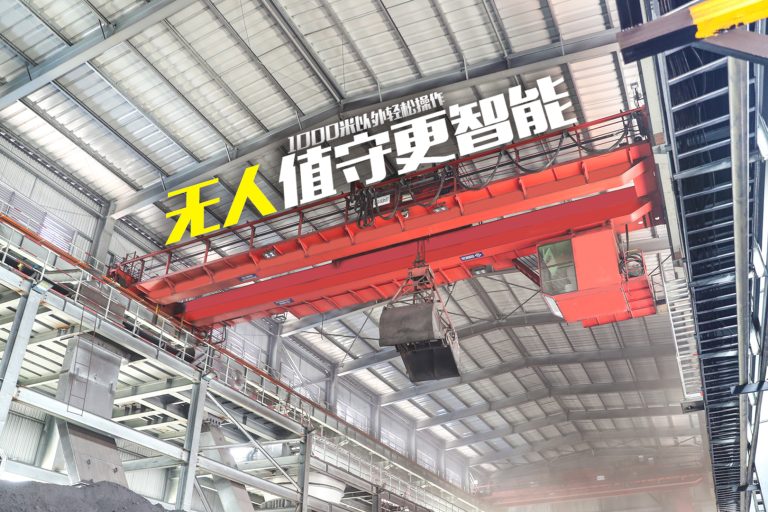
Semi-automatic operation is mainly controlled by remote control, the operator can be in the driver’s cab, or in the safe area around the rubbish pit, through the remote control to control the operation of the crane, the grabbing and unloading, without close contact with the rubbish, not only to improve the working environment of the operator, but also to enhance the safety of the operation.
Grab Type Bridge Crane
It should be noted that the semi-automatic operation of the crane, to ensure that the vision of the cab is good enough, the operator can clearly see the situation of the grapple and the rubbish pit, to avoid operational deviation; at the same time, it should be equipped with a simple positioning system, to facilitate the accurate delivery of the rubbish into the feeding port or the designated area.
Fully automatic operation
For large-scale waste incineration plants with a daily handling capacity of more than 1,000 tonnes, it is recommended to use a fully-automatic grab type overhead travelling crane, which can significantly improve operational efficiency and stability.
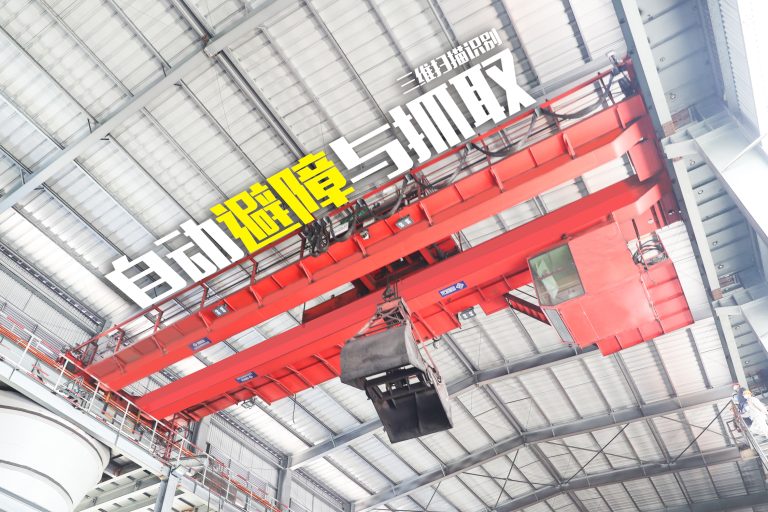
The fully-automatic system mainly relies on PLC control and 3D rubbish pit scanning technology, which can scan the distribution of rubbish in the rubbish pit in real time and automatically plan the grabbing route to complete the grabbing, mixing, transferring and feeding of rubbish without manual intervention.
Moreover, the fully-automatic system can achieve even mixing of waste, avoiding the accumulation of single waste, allowing fuller combustion in the incinerator, enhancing power generation efficiency and reducing environmental emissions.
In addition, the fully-automatic crane can also be paired with a data monitoring system to provide real-time feedback on the operating status of the equipment, the amount of rubbish grabbed and the amount of material fed, which facilitates scheduling and management by the management personnel and realises the automated linkage of the entire production line.
Anti-swaying and accurate positioning are essential features
Regardless of whether it is a semi-automatic or fully-automatic crane, anti-swaying and precise positioning functions are indispensable – the operating space of the waste treatment plant is limited, and it is necessary to accurately feed the rubbish into the feeding port, once the grab swings, it will not only affect the operating efficiency, but also may collide with the plant equipment or the edge of the rubbish pit, which will lead to a safety accident.
The anti-sway function is mainly controlled by a frequency converter (VFD), which can regulate the running speed of the crane, reduce the swaying amplitude of the grab, and allow the grab to run smoothly.
Precise positioning function can be achieved through the encoder and positioning sensors to achieve precise start and stop of the crane and precise placement of the grab, ensuring that the rubbish can be accurately fed into the feed opening to avoid deviation.
Corrosion protection and durability
The high corrosion, dust and humidity environment of waste treatment plants is the main reason for the wear and tear of grab cranes, so anti-corrosion protection and durability configuration must be done sufficiently – this part of the investment can significantly extend the service life of the equipment, reduce the maintenance costs in the later stage, seemingly increasing the budget in the early stage, but in fact, it can save long-term operation and maintenance expenses. .
Anti-corrosion paint to reach C4/C5 standards
The main beams, end beams, trolleys and other main structures of the grab cranes in the waste treatment plant must be professionally anticorrosive, and the anticorrosive paint should be up to the C4/C5 standard – this standard corresponds to a highly corrosive environment, which can effectively resist the erosion of corrosive gases, such as hydrogen sulphide, ammonia, etc., and prevent the main structure from rusting and corroding.Specifically, the main structure should first do a thorough descaling treatment to remove the oxide skin and rust on the surface, and then apply primer and topcoat, the primer mainly plays the role of rust prevention, while the topcoat plays the role of corrosion and wear-resistant, and the thickness of the coating should reach the prescribed standard to ensure the anti-corrosion effect. In addition, the welded parts of the main structure, to do additional anti-corrosion treatment to avoid corrosion of the welded seams.
Selection of closed trolley and stainless steel parts
Crane trolley is the core running parts, easy to dust and corrosive gas erosion, so it is recommended to use closed trolley design – closed trolley can be motor, gearbox, electrical system and other core components sealed inside, to avoid dust and corrosive gas intrusion, reduce component wear and failure probability.
At the same time, the trolley guide rail, wheels, hooks and other wear parts, it is recommended to use stainless steel or special treatment of wear-resistant and corrosion-resistant materials, these materials can resist corrosion and wear and prolong the service life of the components, reduce the frequency of replacement. In addition, the bucket body and chain of the grapple should be made of wear-resistant and corrosion-resistant manganese steel to cope with the wear and corrosion of the rubbish.
Cable and electrical system protection
Cable and electrical system is the nerve of the crane, once corroded or blocked, it will lead to equipment shutdown, so the protection must be in place.
Cables should be selected wear-resistant, corrosion-resistant, waterproof special cable, the outer layer of the cable should be done to protect the casing, to avoid wear and tear or corrosion of the cable; electrical cabinets should be made fully sealed, the electrical interface should be selected waterproof and dustproof joints, to avoid the intrusion of dust and water vapour, resulting in an electrical short-circuit; at the same time, the electrical system should be made corrosion-resistant treatment, the selection of corrosion-resistant electrical components, to ensure that the electrical system operates stably.
In addition, the cable wiring should be reasonable, to avoid the cable being squeezed or worn by the crane operation, but also to do a good job of fixing the cable to prevent the cable from loosening and falling off, triggering safety accidents.
Essential safety features of waste treatment plant
The operating conditions of waste treatment plants are complex and the safety risk is high, so the safety features of cranes, should never be omitted – every safety configuration is an important barrier to ensure the safety of personnel and equipment, and is also the basis for meeting the compliance requirements of the regulatory authorities.
Redundant braking system
As we mentioned earlier, cranes in waste plants need to start and stop frequently, and the load is unstable, so they must be equipped with a redundant braking system, that is, double braking – a set of main braking system, a set of backup braking system, even if the main braking system fails, the backup braking system can also work normally, to avoid cranes from stopping and failing to work, load falling and other safety accidents.
At the same time, the braking performance of the brake to meet the requirements of heavy-duty operations, can be fast and smooth stopping under heavy loads, the braking distance should be controlled within the specified range to ensure operational safety.
Basic safety devices should not be missing
In addition to redundant braking system, there are several basic safety devices are necessary: overload protection system, real-time detection of the load weight, once more than the rated value, automatic shutdown and alarm to prevent overloading operations;
Lifting height limiter, can limit the maximum lifting height of the grab, to avoid the grab lifting too high to crash the main beam; running stroke limiter, can limit the running range of the crane, to avoid the crane overrun to crash the plant columns;
Emergency stop button, distributed in the driver’s cab, the ground operating station and the key parts of the equipment, in case of an emergency, can immediately cut off the power shutdown, to avoid the expansion of the accident.
Fire cables and monitoring and alarm systems
For waste incineration plant, but also equipped with fireproof cable – incinerator around the high temperature, and there are fire hazards, fireproof cable can be maintained in the high temperature environment, even if a fire, but also can slow down the burning speed of the cable, for the evacuation of personnel and equipment downtime to buy time.
At the same time, the crane should be paired with a monitoring and alarm system, real-time monitoring of the operating status of the equipment, including motor temperature, gearbox oil temperature, braking system status, load weight, etc., once the anomaly occurs, an alarm signal can be immediately issued to remind the management staff to deal with timely!
Special Requirements for Electrical System
Waste treatment plant electrical system, especially incineration plant, need to deal with high temperature, high corrosion, frequent start and stop conditions, so the electrical system selection, to meet the special requirements to ensure stable operation.
Heat resistance to adapt to the incineration plant’s high-temperature environment
Incineration plant feeding area and incinerator surrounding, high temperature, so the components of the electrical system, to choose heat-resistant type, can maintain normal operation in a high temperature environment, to avoid the problem of component aging, burning. For example, motors, frequency converters, electrical cabinets, etc., should be selected high temperature models, electrical cabinets should also be done to dissipate heat treatment, to avoid the internal temperature is too high, affecting the operation of electrical components.
Backup power supply and remote diagnostic function
Most of the waste treatment plants are in continuous operation, once the power failure, crane shutdown will lead to rubbish accumulation, affecting the production, so the electrical system should be equipped with standby power supply – standby power supply can be used to provide temporary power for the crane in case of a power failure to ensure that the crane can complete the remaining rubbish transfer and shutdown operations, avoiding rubbish accumulation and equipment Damage.In addition, the electrical system should be equipped with remote diagnostic function, so that the management personnel can check the operating status of the electrical system of the equipment in real time through the remote terminal, find out the hidden dangers of the electrical faults in time, and arrange for the maintenance in advance to avoid the expansion of the faults; at the same time, the remote diagnostic function can also realise the remote troubleshooting and the maintenance guidance to reduce the on-site workload of the maintenance personnel and improve the maintenance efficiency.
Docking to plant DCS system
Large waste treatment plants, especially incineration power generation projects, will have their own DCS (Distributed Control System), so the crane’s electrical system, to be able to dock the plant’s DCS system, to achieve data interoperability and linkage control.
By docking the DCS system, the crane’s operating data, the amount of rubbish grabbed and the amount of feed can be uploaded in real time to the central control room of the plant, where the management staff can unify the scheduling and management, and realise the linkage of the crane and other production line equipment such as incinerator and sorting equipment, so as to improve the operating efficiency of the whole plant.
At the same time, the DCS system can also monitor the operating status of the crane in real time, and once abnormalities occur, it can immediately send out an alarm signal, which is convenient for timely treatment.
Maintenance and after-sales support
Waste treatment plant crane is the core equipment, once the failure, it will affect the operation of the entire production line, so the maintenance and after-sales support, but also the selection of the type must focus on the factors to consider – choose a reliable after-sales manufacturers, can reduce the later operation and maintenance trouble, to ensure that the equipment for long-term stable operation.
Predictive maintenance system
It is recommended to use cranes equipped with predictive maintenance system – predictive maintenance system can monitor the operating status of the equipment through sensors in real time, including motor temperature, gearbox oil temperature, bearing wear, cable insulation, etc., to detect potential equipment failures in a timely manner, and send out early warning signals to remind the management personnel to arrange for maintenance in advance. This way of maintenance can avoid sudden breakdowns.
This kind of maintenance can avoid downtime caused by sudden failure and reduce production loss, and also prolong the service life of parts, reduce maintenance cost and realise the fine management of equipment.
Spare parts supply and after-sales response time
When selecting the model, we should ask the manufacturer’s spare parts supply and after-sales response time, to avoid the shortage of spare parts resulting in prolonged down time. At the same time, the manufacturer’s after-sales response time should be controlled within 24 hours, it is best to have a local service network, once the equipment failure, the manufacturer can quickly go to the door to deal with the problem, solve the problem in time and restore the equipment to run.
In addition, it is also necessary to ask about the qualifications of the manufacturer’s after-sales team to ensure that the after-sales personnel have professional maintenance technology and can quickly troubleshoot and solve the problem .FAT and SAT tests must be in place Before the equipment leaves the factory and after installation and commissioning,
FAT (Factory Acceptance Test) and SAT (Site Acceptance Test) must be in place – these two tests are the key to ensuring the quality and performance of the equipment, and can avoid unqualified equipment from being put into use.
FAT test is mainly carried out in the factory of the manufacturer, focusing on testing the performance of the equipment, safety configuration, operational stability, etc., to ensure that the equipment meets the design requirements and relevant standards; SAT test is carried out at the site of the waste treatment plant, focusing on testing the equipment’s installation accuracy, operational status, docking compatibility, etc., to ensure that the equipment can be adapted to the plant’s working conditions and normal operation.
Procurement personnel to participate in the two tests, the test results to confirm, once the problem is found, and timely request the manufacturer to rectify, to ensure that the equipment meets the requirements, and then acceptance.
Remote-Controlled Grab Crane for Dust Environments
Selection of common misconceptions
Many purchasing friends in the selection, easy to be biased by some of the wrong ideas, resulting in improper selection, and a variety of problems later. These common misunderstandings, must be avoided in advance.
The first misunderstanding, in order to save upfront costs, choose a light load level crane. It is not worth the loss.
The second misunderstanding, ignore the anti-corrosion protection configuration. The corrosive environment of the rubbish plant, the crane’s loss is great, if the anti-corrosion protection is not in place, the equipment can not be used for 1-2 years on the main structure of the corrosion, damage to the components of the problem!
The third misunderstanding, underestimation of the frequency of operation cycle, resulting in the equipment can not keep up with the rhythm of production. Many purchasing in the calculation of the lifting capacity and grab volume, only considered the daily handling capacity, but underestimated the hourly frequency of the operating cycle, affecting the operation of the production line.
The fourth misunderstanding, do not consider the automation upgrade needs, only choose the basic model equipment.
Nowadays, the automation level of the waste disposal industry is getting higher and higher, and many plants will be upgraded to automation in the later stage. If the crane selected in the early stage does not support automation upgrading, it will need to invest extra money in transformation in the later stage, and even need to replace the equipment, which will increase the unnecessary expenses.
The fifth misunderstanding, ignore the after-sales support, only look at the price of the equipment.
Many purchasing feel that the quality of the equipment is the most important, after-sales is not important, but once the equipment of the rubbish plant fails, it will affect the production, if the after-sales response is not timely, the supply of spare parts is not in place, the downtime will be greatly extended, resulting in huge production losses – choose a reliable after-sales manufacturers, more important than choosing a low-priced equipment.
Case reference
In order to let you understand the selection process more intuitively, we share with you a selection case of 800TPD domestic waste incineration plant for your reference.
The core requirements of this plant: 800 tonnes of domestic waste treatment per day, 24-hour continuous operation, the size of the rubbish pit is 40 m long, 20 m wide and 8 m deep, the rubbish needs to be accurately fed into the feed port of the two incinerators, and the equipment is required to have semi-automatic operation, anti-swinging and accurate positioning, and anti-corrosion protection should be adapted to the highly corrosive environment.
The final selection plan: choose two sets of 10t double girder grab type overhead travelling crane, with a span of 22m, a lifting height of 16m, and an operating level of FEM A8, to meet the requirements of heavy-duty and high-frequency operations;
The grapple is a hydraulic shell-shaped grapple with a volume of 5 cubic m, which is suitable for the characteristics of domestic rubbish and avoids leakage and jamming; it is equipped with a semi-automatic remote control system, which allows the operator to operate it in a safe area, and it is equipped with an anti-swinging and precise positioning function, which ensures that the rubbish is accurately fed into the feeding opening.
Purchasing Selection Checklist
In order to facilitate quick checking when selecting models, a procurement selection checklist has been compiled, against which you can check one by one to avoid missing key points:
- Daily handling capacity (TPD): clarify the daily handling capacity of the plant, and account for the crane’s lifting capacity and grab volume;
- Waste pit dimensions: confirm the length, width and depth of the waste pit, matching the span and lifting height of the crane;
- Operating level: ensure that the equipment reaches FEM A7/A8 class or CMAA E/F class to meet the requirements of heavy-duty and high-frequency operations;
- Crane structure: according to the working conditions, give priority to the double girder structure to ensure the span can cover the rubbish pit without dead angle;
- Grab selection: according to the type of rubbish, select hydraulic/electro-hydraulic grab, orange flap/bay grab to match the density of rubbish;
- Automation level: according to the scale of the plant, choose semi-automatic or fully automatic operation, equipped with anti-swing and precise positioning function;
- Anti-corrosion protection: confirm that the anti-corrosion paint reaches C4/C5 level, choose closed trolley and stainless steel parts, and provide good cable and electrical protection;
- Safety Configuration: Ensure that it is equipped with safety devices such as redundant braking, overload protection, emergency stop, etc., and meets the safety compliance requirements;
- Electrical system: select heat-resistant and corrosion-resistant electrical components, equipped with backup power supply and remote diagnostic function, which can be docked to the DCS system of the plant;
- After-sales support: confirm that the manufacturer has mature waste treatment plant cases, can provide 24-hour after-sales response, local service outlets, and timely supply of spare parts;
- Acceptance test: Confirm that the manufacturer can provide FAT and SAT tests to ensure that the quality and performance of the equipment meet the requirements;
- Relevant certificates: to confirm that the equipment has the production licence of lifting machinery, ISO9001 quality certification and other relevant qualifications, in line with industry standards.
High Frequency FAQ
Why do waste treatment plants give priority to double girder grab type overhead travelling crane?
A: Mainly because the rubbish plant needs heavy load, high frequency, continuous operation, the main girder of double girder crane is more rigid, better stability, can withstand heavy loads and frequent starting and stopping, not easy to deformation.
How long is the service life of grab type overhead travelling crane for rubbish treatment plant in general?
A: Under normal circumstances, good anti-corrosion protection and routine maintenance, the service life of the equipment can reach 15-20 years. The specific service life mainly depends on the anticorrosion protection configuration, the quality of core components and routine maintenance – if the anticorrosion protection is in place, the core components are of high quality, and regular maintenance, the service life can be longer; on the contrary, if the anticorrosion protection is not in place, or the maintenance is not timely, the service life may be only 5-10 years.
Can grab cranes in waste treatment plants be operated fully automatically?
Yes. Nowadays, most of the large-scale waste incineration plants use fully-automatic grab type overhead cranes, which can realise automatic grabbing, transferring, mixing and feeding of waste through PLC control and 3D waste pit scanning technology, without manual intervention. Moreover, the fully automated system can enhance operational efficiency and feeding uniformity, improve incineration effect, and can be paired with a data monitoring system to realise the fine management of the equipment, which is suitable for the automation development trend of the waste treatment industry.
How to calculate the size (volume) of the grab?
A: The volume of the grab is mainly calculated according to the daily processing capacity, the number of operating cycles and the density of rubbish, the core formula is: Grab volume (cubic m) = Hourly processing capacity (t) ÷ Number of cycles per hour ÷ Density of rubbish (t/cubic m). For example, 800t of rubbish per day, 40t per hour, 16 cycles per hour, rubbish density of 0.8 t / cubic m, then the grab volume is 40 ÷ 16 ÷ 0.8 ≈ 3.125 cubic m, the actual selection of the type of grab can be selected 3-4 cubic m, to reserve a certain amount of margin.
Waste incineration power generation project grab crane, what are the relevant certifications required?
A: There are three main types of core certificates: one is the production licen for lifting machinery, the second is the ISO9001 quality system certification, and the third is the safety certification, including the certification of overload protection, braking system and other safety devices, to ensure that the equipment is in line with the ‘Safety Regulations for Lifting Machinery’.
Conclusion
Grab type overhead travelling crane is the core equipment of waste treatment plant, for waste treatment plant, the core of selection is not to choose the cheapest, not to choose the most advanced, but to choose the most suitable – suitable for the plant’s daily capacity, waste characteristics, operating conditions, taking into account the heavy-duty, anticorrosion, safety and automation requirements, in order to achieve the stable long-term operation of equipment, and enhance the whole plant. Long-term stable operation, enhance the operational efficiency of the entire plant, and obtain a higher long-term ROI.
Henan Mine Crane, as a deep-rooted lifting machinery field of strength manufacturers, in the design and production of waste treatment plant grab type overhead travelling crane, just fit this ‘fit first’ selection concept, it is worth focusing on.
Waste disposal industry working conditions are special, the needs of different plants vary greatly, there is no uniform selection standard, if you are not sure how to select their own plant conditions, or do not know how to match the parameters of the equipment, you may wish to contact us, we are relying on its many years of production and manufacturing of grab cranes.
We rely on its many years of manufacturing experience and perfect technical system, combined with our industry selection experience, according to your plant’s daily handling capacity, rubbish pit size, operational needs, free of charge to issue an exclusive selection program me, to help you avoid the selection of misunderstandings, to select the appropriate, durable, cost-effective Henan Mine Crane equipment.
Submit your rubbish pit layout and daily handling capacity requirements, to provide you with detailed technical proposals, including crane equipment configuration, parameter details, anti-corrosion solutions and after-sales protection, to help your rubbish treatment plant to achieve efficient, stable and safe operation.