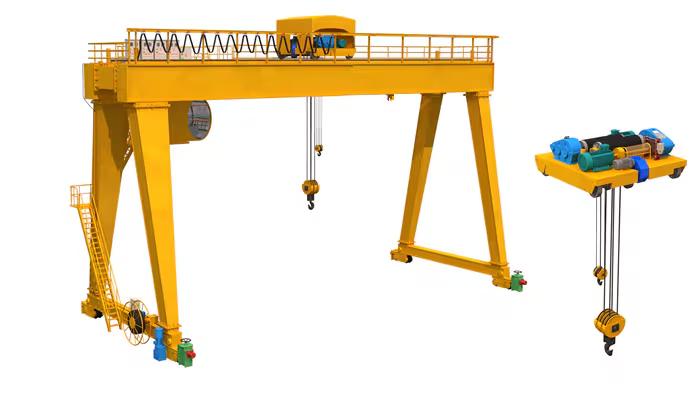

How to choose a bridge double girder crane for steel plants?
The operating environment in a steel plant is far harsher than that of an ordinary workshop – high temperatures, dusty conditions, mostly 24-hour continuous operation, and frequent lifting of heavy loads such as billets, coils, scrap, etc. The choice of a bridge double girder crane is crucial to the smoothness of production. Selecting the right overhead double girder crane is crucial to the smoothness of production
Many buyers are prone to fall into a misunderstanding, think that the selection of cranes only look at the rated lifting capacity is enough. In fact, not, steel plant crane selection, the core is to match the production process, to adapt to the harsh working conditions, but also take into account the reliability and full life cycle cost, so as to really help the production.
Next, I will combine many years of experience in steel plant crane selection, step by step to make it clear to you, how to choose the right bridge double girder crane for your factory.
First clear crane application scenarios in the steel plant
The operational needs of different regions vary greatly, the first application scenarios down, the selection will not be biased. The most common scenarios are mainly in these categories:
Scrap charging and raw material field processing, which is the starting point of steel production, the need for cranes to frequently lift scrap, with the hopper to the blast furnace charging, the crane’s lifting speed and durability requirements are high, but also often need to be used with grapples.
Billets, ingots, slabs processing, this type of load is regular shape but large weight, mostly in the rolling shop, continuous casting workshop, the crane needs to be accurately positioned to avoid collision, and sometimes use special spreader to ensure the stability of lifting.
Steel coil handling, whether it is semi-finished or finished steel coils, need special spreader, such as C-shaped hook, not only to ensure that the coil does not slip, but also to avoid damage to the surface of the coil, mostly used in cold rolling, hot rolling workshop and finished product warehouse.
Workshop equipment maintenance and installation, this type of operation is infrequent, but the load is uncertain, sometimes need to lift heavy equipment parts, the flexibility and versatility of the crane requires a high degree of flexibility and versatility, generally with a common hook can be.
Finished product warehouse loading and unloading, mainly responsible for the finished steel coils, steel plates, etc. lifting to the transport vehicle, need to take into account the efficiency and accuracy, to avoid damage to the finished product, often with a special spreader and remote control operation.
There are also steel-related areas (such as steel ladle lifting), this type of scene is a high-risk operation, the requirements of the crane is much higher than the ordinary workshop, need to be designed in accordance with the special standards of metallurgical cranes, additional safety protection measures.
Why do we need to clarify the application scenarios first?
Differences in working conditions in different application areas directly determine the core requirements of the crane, which may affect the use of a little worse. For example, high-temperature areas and ordinary workshops, the heat resistance requirements for cranes are completely different.
Temperature, near the steel package, hot rolling workshop temperature is very high, there will be radiant heat, crane cables, motors, brakes need special heat-resistant design, otherwise it is easy to age and damage; and raw materials field, finished goods warehouse temperature is relatively mild, conventional configuration can be.
Speed and positioning accuracy, billet, steel coil transfer needs accurate positioning, speed can not be too fast, but also has a smooth acceleration and deceleration function; and scrap steel charging is more important to the lifting and running speed, improve operational efficiency.
The choice of spreader is also directly related to the application scenario, the grab is suitable for scrap, C-hook is suitable for steel coils, billet needs to use the lifting tongs or lifting beams, choose the right spreader in order to ensure the safety and efficiency of the operation.
Here is a special reminder: steel ladle and other molten metal lifting crane, does not belong to the conventional bridge double girder crane, must comply with the special standards of metallurgical cranes, but also equipped with redundant braking, emergency descent and other additional safety devices, can not be replaced by ordinary workshop cranes.
Before selecting the type, first collect the site and process data
Many purchasers only give a rated lifting capacity and span when selecting a model, which can easily lead to the crane does not meet the actual use of demand, and even rework and return.
Load Characteristics: Define what to lift and how much to lift
First of all, to determine the rated load and maximum load, here is an easy to ignore the point: the rated lifting capacity of the crane, need to include the weight of the spreader.
Also pay attention to the size and centre of gravity of the load, such as the inner diameter, outer diameter, width of the steel coil, the length of the steel billet and the cross-section size, which will affect the choice of spreader and the positioning accuracy of the crane.
In addition, whether hot or ambient material is being lifted makes a big difference.
The lifting method is also very critical, whether it is a single point lifting or with special lifting tools (such as C-hooks, lifting tongs, electromagnetic suction cups, grabs, lifting beams), different lifting methods, the crane lifting mechanism, wire rope configuration have different requirements.
Work cycle and mode of operation
Most of the iron and steel mills are multi-shift continuous production, the crane’s operating intensity is very high, which requires a clear understanding of its work cycle parameters, to avoid the selection of ‘underestimation’ of the intensity of the operation, resulting in early wear and tear of the crane.
For example, how many shifts per day, how long each shift runs, how many times per hour, these data directly determine the crane’s work level (-duty class). The more frequent the operation and the higher the load, the higher the duty class needs to be.
Also pay attention to the intensity of the peak production period, such as the peak of steelmaking, the crane may need to run continuously at full load, this time if the crane’s working level is not enough, it is easy to motor overheating, brake wear and tear too fast and other problems, which will lead to downtime.
Factory environment: the test of cranes in harsh environments
The environment of the steel plant has a great impact on the durability of the crane, especially the three factors of high temperature, dust and corrosiveness, which must be focused on.
High-temperature environment is mainly concentrated in the hot rolling shop, steel ladle lifting area, in addition to ambient temperature is high, there is also radiant heat, the need to equip the crane’s motor, brake, electrical control cabinets with heat dissipation devices, cables should be selected to resist high temperature models, and, if necessary, to be added to the heat shield.
Dust and oxidised skin are common problems in steel mills. Dust can get into the bearings, gears and electrical parts of cranes, leading to wear and tear and failure.
Corrosive environments are mainly found in pickling lines, chemical treatment areas, and steel mills in coastal areas, where corrosive gases or seawater can corrode the metal structure and electrical components of cranes.
It is also important to clarify whether the crane is installed indoors, semi-outdoors or outdoors. Outdoor installation requires consideration of rain and wind protection measures to avoid bad weather affecting crane operation.
Installation constraints: plant conditions determine the size limit of the crane
Many steel mills are retrofit projects, the original plant structure of the limitations, will directly affect the selection of the crane, confirm these parameters in advance, to avoid the crane transported to the site can not be installed.
Firstly, the plant span and track length, the crane span must match the plant span, the track length should be determined according to the scope of the operation area, but also reserve a certain safety margin.
Clearance height is another key parameter, the height of the beam bottom of the plant, pipelines, platforms, lighting equipment, etc., will affect the lifting height of the crane and the range of hook activity, you need to measure the exact clearance height to avoid the crane installation can not reach the required lifting height.
If it is a retrofit project, it is also necessary to check the condition of the original track beams, such as the carrying capacity of the track beams, alignment, if the track beams are not sufficiently load-bearing, they may need to be reinforced, otherwise there will be potential safety hazards
In addition, it is also necessary to confirm the power supply capacity and stability of the plant, the crane’s motor and control system need stable power supply, voltage fluctuation is too big to affect the normal operation of the crane, or even damage the electrical components.
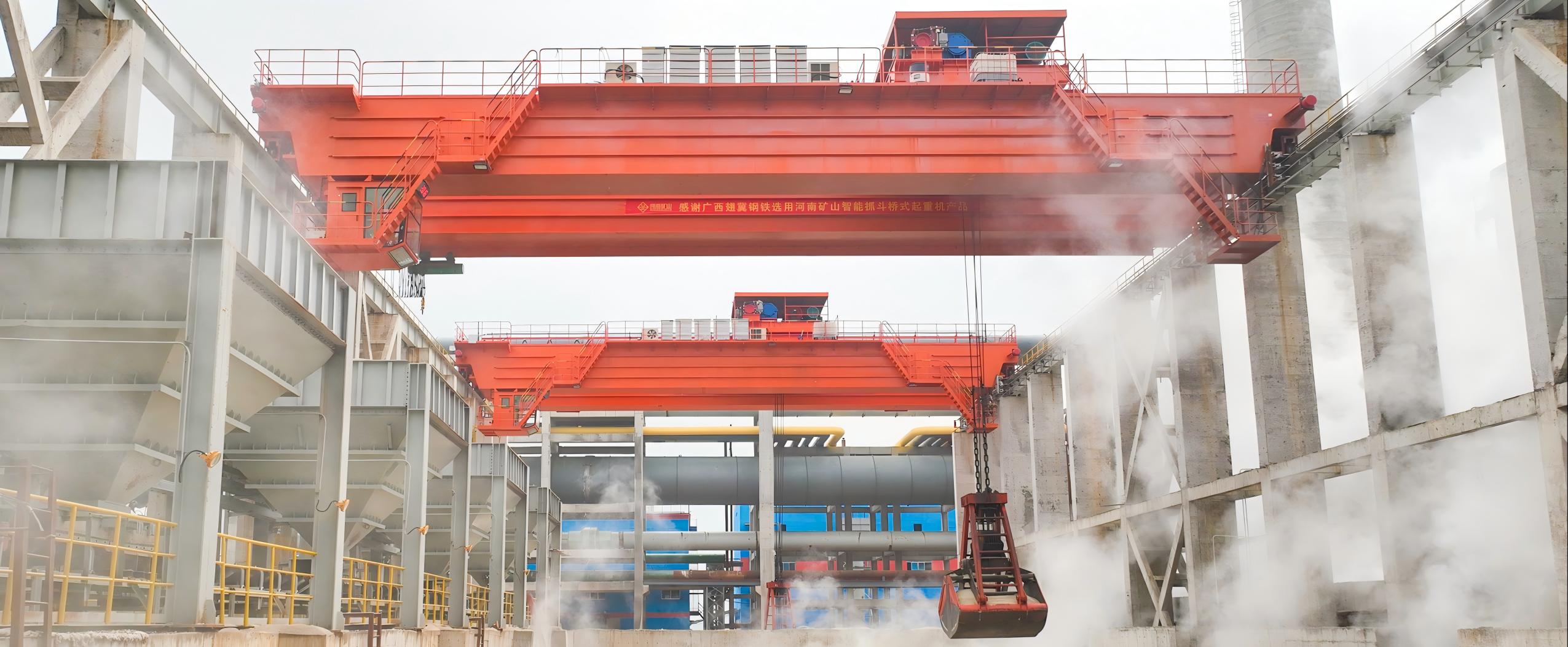
Why steel mills prefer overhead double girder cranes
In the heavy-duty operation of steel mills, the usage rate of overhead double girder cranes is much higher than that of single girder cranes, not because it is more ‘advanced’, but because it is better suited to the harsh working conditions of steel mills.
Structural and operational advantages
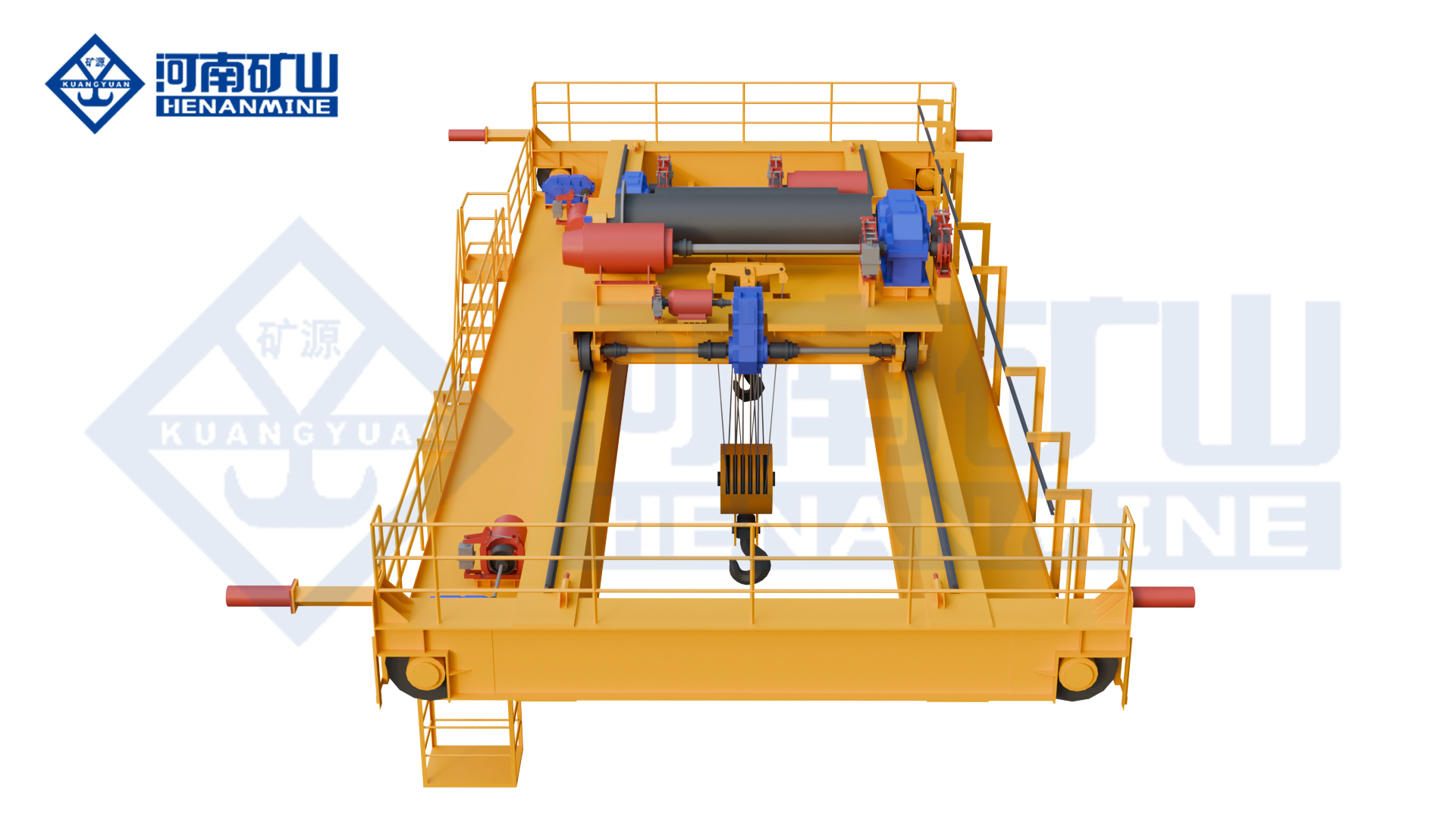
Firstly, the double girder structure has a stronger load carrying capacity, which is more suitable for the high load and large span requirements of steel mills. For example, when lifting heavy billets and coils, or large tonnage scrap grabs, double girder cranes have a stronger metal structure with better rigidity, which can withstand greater impacts and be more stable during operation.
Secondly, double girder cranes are easier to integrate maintenance platforms and walkways. Cranes in steel mills require regular maintenance, and maintenance platforms allow staff to more safely and conveniently inspect and repair the crane’s hoisting mechanism and electrical components, reducing maintenance difficulties and safety risks.
Double girder cranes also have advantages in terms of hook travel and space utilisation. Many double girder cranes have hooks that can be closer to plant columns and higher lifting heights, making full use of plant space, especially suitable for retrofit of old plants with limited space.
In addition, double girder cranes have better operational stability and can reduce shaking, position accurately and avoid load collision during continuous high load operation, which is crucial for precision operations in steel plants.
When is a single girder crane not enough
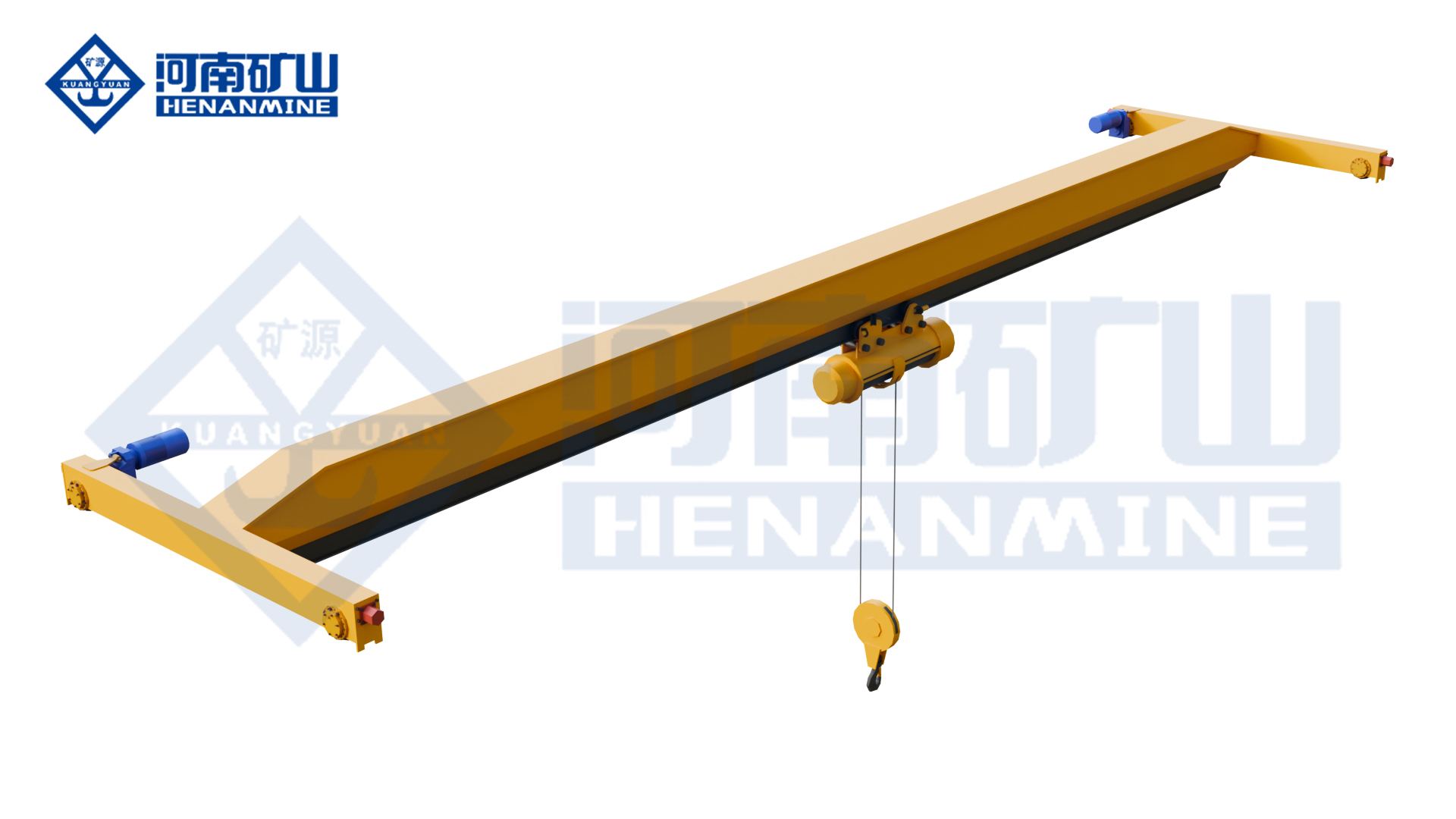
Although single girder cranes are cheaper and simpler to install, there are many scenarios in steel mills where the performance of single girder cranes cannot meet the demand.
If the intensity of the operation is high and multiple shifts are run continuously every day, the structure and mechanism of the single girder crane are prone to early wear and tear and failure; if the load to be lifted is heavy or needs to be paired with a large lifting device (such as a large tonnage grab or electromagnetic suction cup), the load carrying capacity and stability of the single girder crane will be insufficient.
There are also some scenarios that require precise positioning, such as the stacking of steel coils, billet rolling assistance, single girder cranes do not have enough operational precision and stability, which can easily lead to load offset, collision, affecting production efficiency and product quality.
Simply put, in steel mills, as long as it involves high loads, high operating intensity and precise positioning scenes, double girder cranes are preferred in order to ensure long-term stable operation.
Core technical parameters must be correctly defined
Technical parameters are the core of crane selection, each parameter directly affects the performance of the crane and the use of the effect, can not be estimated empirically, must be combined with the actual needs of the site to determine.
Lifting capacity (SWL)
Lifting capacity is the most basic parameter, but can not only look at the rated load, but also consider the actual operation of various situations. For example, in addition to the weight of the material to be lifted, the weight of the spreader must also be added, which is easily ignored.
The load situation of different processes is also different, such as lifting steel coils and lifting steel billets, the load is stressed in different ways; lifting bundles of steel billets and single billets, the weight distribution is also different, you need to determine the rated lifting capacity of the crane according to the actual load situation.
Also consider the dynamic load, crane lifting, running, braking, the load will produce inertia force, resulting in the actual force is greater than the static load, the selection needs to be reserved for a certain margin of safety.
Span
The span of the crane, that is, the distance between the two rails, must be matched with the span of the plant, can not be arbitrarily determined. Firstly, the actual span size of the plant should be checked, and then the span of the crane should be determined according to the scope of the operation area.
Attention should also be paid to the safety gap when the crane is in operation, for example, between the end beams of the crane and the columns of the plant, and between the crane and other equipment, it is necessary to reserve a certain gap to avoid collision during operation.
If it is a retrofit project, the span of the original track must be checked to ensure that the span of the crane is the same as the span of the track, otherwise it cannot be installed and used. The best way is to provide the actual drawing of the plant and let the supplier help to confirm.
Lifting height/hook travel
Lifting height refers to the distance from the lowest position to the highest position of the hook, which needs to be determined according to the operational requirements, such as the stacking height of the materials and the installation height of the equipment, all need to be taken into account.
Also pay attention to the headroom of the plant, the highest position of the hook should not exceed the bottom of the beam of the plant, and at the same time, a certain safety distance should be reserved to avoid the hook colliding with the structure of the plant or other equipment.
In addition, it is also necessary to consider the future process changes or equipment replacement needs, if the future may need to lift a higher load, the selection can be appropriate to increase the lifting height, to avoid the later transformation.
Lifting, traversing and longitudinal speed
Many buyers will blindly pursue the ‘high speed’, think the faster the efficiency is higher, but in fact, the speed of the crane needs to match the rhythm of the production process, not the faster the better.
For example, in the scrap charging scene, the lifting and longitudinal speed can be faster, to improve operational efficiency; but in the steel coil stacking, billet positioning scene, the speed can not be too fast, otherwise it will lead to load shaking, affecting the positioning accuracy, there may also be safety hazards.
In addition to the maximum speed, but also pay attention to acceleration and deceleration performance, smooth acceleration and deceleration can reduce mechanical impact, extend the service life of the crane, but also to avoid load collision. For scenes that require precise positioning, there should also be fine-tuning (inching) function, which is convenient for operators to control accurately.
Work Class (Duty Class)
Duty class is a key parameter in the selection of cranes for steel mills, which directly determines the service life and reliability of cranes and should never be underestimated.
Duty class is determined according to the crane’s operating frequency, load status, operating time and other factors, the higher the level, the stronger the crane’s structure and mechanism, the greater the intensity of the work it can withstand.
Cranes in steel mills, most of which require continuous high-load operation, the working level is generally not less than A6, some high-intensity operating scenarios (such as steel ladle lifting, continuous charging of scrap), you need to choose A7, A8 level, otherwise it will lead to early wear and tear of the crane, overheating of the motor, brake failure, and frequent shutdowns and failures.
Here is a reminder: do not choose a working level lower than the actual demand in order to save costs, the later maintenance costs and downtime losses, will be much higher than the initial savings in procurement costs.
Crane track and wheel load
Wheel load refers to the pressure of the wheels on the track and track beam when the crane is running, this parameter is easily ignored, but it directly affects the structural safety of the plant.
When selecting the model, the wheel load of the crane must be calculated and then checked with the bearing capacity of the track beam of the plant to ensure that the wheel load does not exceed the bearing limit of the track beam. If it is a retrofit project, the original track beam’s bearing capacity is insufficient, it is necessary to reinforce it in advance, otherwise there will be serious safety hazards.
Wheel load also affects the wear and tear of wheels and rails. Excessive or uneven distribution of load will lead to rapid wear and tear of wheels and rails, increasing maintenance costs and even affecting the operational stability of the crane.
Select the right hoisting mechanism and spreader
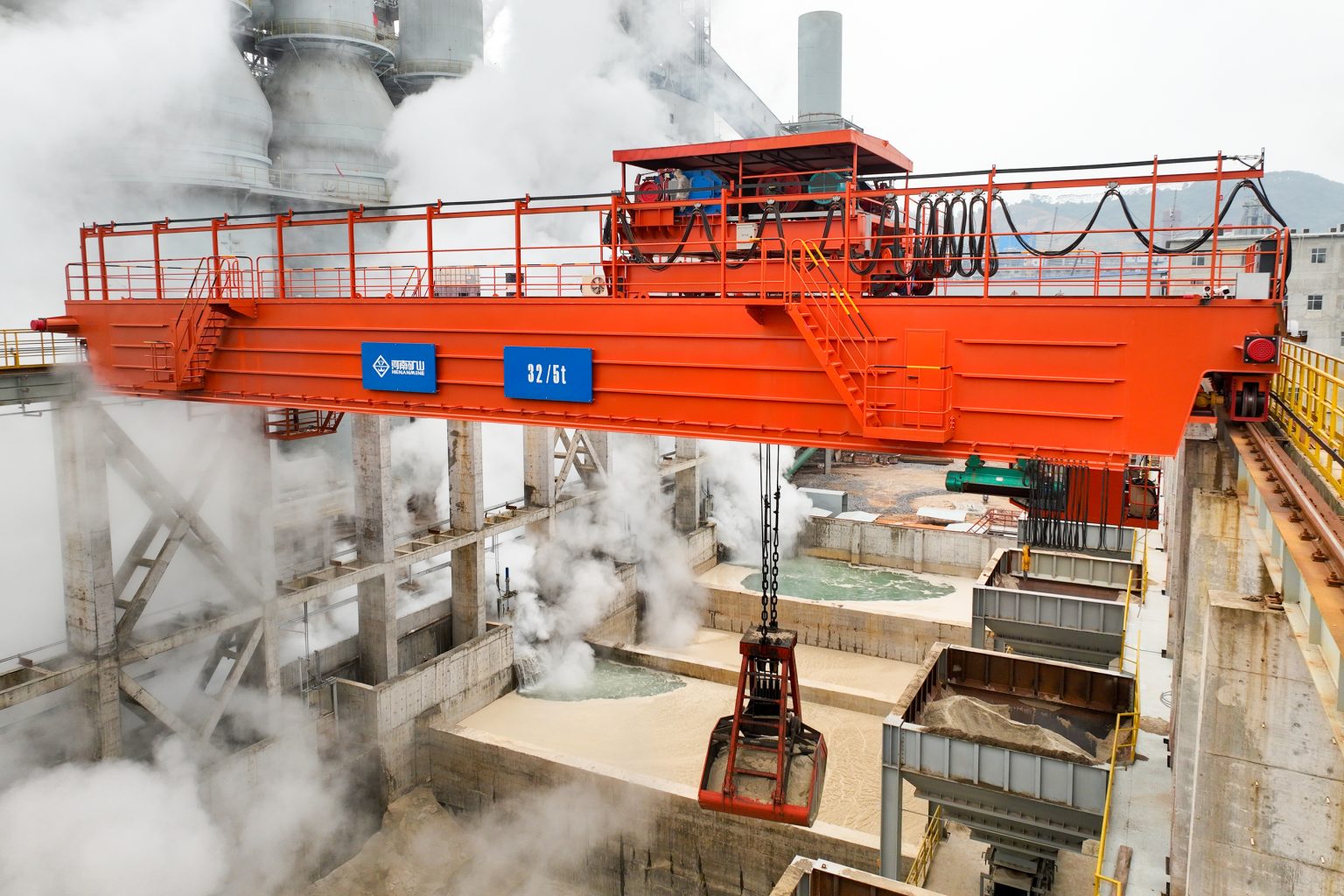
Crane lifting mechanism and spreader, directly determines the safety and efficiency of lifting, different types of materials, need to match different lifting mechanism and spreader, can not be generalised. Many purchasers only focus on the crane itself, ignoring the choice of spreader, resulting in the later can not work properly.
Hook: suitable for general maintenance and equipment lifting
Hook is the most versatile spreader, suitable for workshop maintenance, equipment installation, general cargo lifting and other scenarios, such as lifting crane parts, small equipment, scattered materials.
The advantage of this kind of spreader is flexible, can adapt to a variety of loads, but for the repetitive material lifting in steel mills (such as steel coils, billets), the efficiency is not high, and is not safe enough, it is not recommended as the main spreader.
C-hook: the first choice for steel coil lifting
C-hooks are the most commonly used and practical spreader for lifting steel coils, both cold rolled and hot rolled coils. It can directly hook the inner diameter of the steel coil, stable during the lifting process, not easy to slip, but also to avoid damage to the surface of the steel coil.
When choosing C-hooks, you need to determine the size and load capacity of C-hooks according to the inner diameter, outer diameter, width and weight of the steel coils to ensure that it matches the steel coils. For example, different sizes of steel coils with different inner diameters require different types of C-hooks, which cannot be used universally.
Clamps, clamps, lifting beams: special lifting tools for billets and slabs
When lifting billets, ingots, slabs and other long, lumpy materials, it is suitable to use lifting tongs, jigs or beams. This kind of spreader can firmly clamp or hold the material to avoid the material slipping off during the lifting process, and at the same time, it can ensure the uniform force of the material and reduce the damage.
For example, a single billet can be lifted with a lifting tongs, lifting a number of billets or slabs, you can use a lifting beam with a number of lifting tongs, to improve operational efficiency. When choosing this kind of spreader, according to the size, weight and shape of the material, determine the type and quantity of spreader to ensure the safety of lifting.
Electromagnetic suction cups: suitable for lifting scrap steel and steel plates
Electromagnetic suction cup is suitable for lifting scrap steel, steel plate, small billet and other materials, the advantage of high efficiency, can quickly adsorb and release the material, do not need artificial hook.
But the use of electromagnetic suction cups have a few precautions: firstly, need a stable power supply, once the power failure, the material will fall, there is a safety hazard, so must be equipped with a backup power supply or emergency device; Secondly, the electromagnetic suction cup adsorption force and the weight of the material to match, to avoid adsorption of the material is not firmly caused by the material slipping; Finally, the high temperature of the material will affect the adsorption performance of electromagnetic suction cups, is not suitable for lifting the hot material.
Grab: special spreader for scrap charging
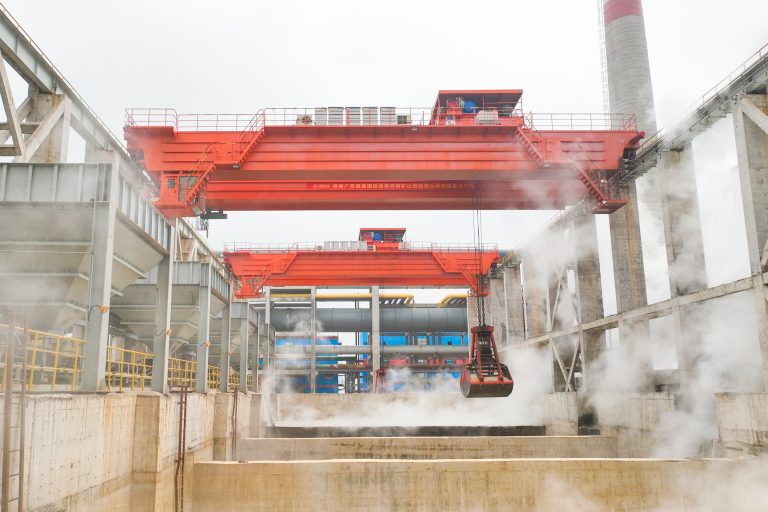
In the scrap yard and blast furnace charging area, grab is an essential spreader, which can quickly grab the scrap and improve the charging efficiency. There are many types of grabs, such as single-rope grabs and double-rope grabs, which need to be selected according to the type of scrap and operational requirements.
The work intensity of the grab is very high, need to match the high strength lifting mechanism, at the same time, we should do a good job of maintenance of the grab, regularly check the wear and tear of the grab, to avoid damage to the grab resulting in the scattering of scrap steel.
Here to give you a practical advice: crane and spreader selection should be synchronised, do not buy a crane first, and then select a separate spreader. The weight of the spreader, the installation method, will affect the crane lifting mechanism and carrying capacity, synchronised selection can avoid mismatch problems later.
Steel plant environment on the special requirements of the crane
The harsh environment of steel mills is one of the main causes of crane failure. Many cranes can run stably for many years in ordinary workshops, but frequent failures in steel mills, just because they do not consider the impact of the environment and do not do a good job of targeted protection.
High temperature and radiant heat
Cranes in high-temperature areas should first do a good job of heat-resistant protection of electrical components. Motors, brakes, electrical control cabinets and other components, to choose high-temperature resistant models, while equipped with heat dissipation devices, such as forced ventilation fans, cooling water pipes, to avoid parts due to high-temperature aging, damage.
Cables should also use high-temperature resistant cables, and should be well protected to avoid being scalded by high-temperature oxidised skin or accelerated aging by high-temperature environment. In the area near the steel package and other strong radiant heat, but also to the crane’s metal structure and electrical components to add a heat shield to reduce the impact of radiant heat.
In addition, high temperature environment, the viscosity of the lubricant will be reduced, the lubrication effect will be reduced, the need to use high temperature resistant lubricants, and shorten the lubrication cycle, to ensure that the moving parts of the crane is well lubricated.
Dust, oxide skin and pollution
Dust and oxidised skin from the steel mill will enter the bearings, gears, wire ropes and electrical parts of the crane, leading to wear and tear of the parts, jamming and short-circuiting and affecting the normal operation of the crane.
Therefore, the key components of the crane need to be well sealed and protected, such as the electrical control cabinet to choose IP54 and above grade sealing, to avoid dust entry; bearings, gears and other moving parts, to be installed with a sealing cover, to prevent dust and oxidised skin from entering; wire ropes should be cleaned and lubricated on a regular basis, to avoid dust abrasion of the wire ropes.
Cranes should also be cleaned regularly to remove dust and oxidised skin on the surface, especially electrical parts and moving parts, to avoid excessive accumulation of dust leading to failure.
Corrosion protection
First of all, the metal structure should be anti-corrosion treatment, such as sandblasting rust removal, painting corrosion-resistant coatings, paint layers and thickness should be determined according to the degree of corrosion and sealing to prevent corrosive gases from entering.
Power supply quality and electrical stability
The normal operation of the crane requires a stable power supply, more production equipment in steel mills, prone to voltage fluctuations, which will affect the electrical system of the crane, resulting in motor burnout, control system failure.
When selecting the type, we should consider the impact of voltage fluctuations, choose motors and control systems that can adapt to a certain voltage fluctuations, and at the same time, equipped with voltage protection devices, such as voltage regulators, over-voltage protectors, to avoid voltage fluctuations on the crane damage.
Drive and control system
Drive and control system, determines the crane’s operating performance and ease of operation, selection should not only consider the process requirements, but also combined with the factory’s maintenance capabilities, to avoid choosing too complex, difficult to maintain the system.
Variable frequency (VFD) control vs conventional control
At present, most of the cranes in steel mills use variable frequency control (VFD), which has obvious advantages over conventional control.
Secondly, VFD control can achieve stepless speed regulation, adjusting the speed according to the operational requirements, which not only improves the efficiency, but also ensures accurate positioning.
In addition, frequency control saves energy, especially in the crane frequent start and stop, load changes in the scene, energy saving effect is more obvious.
Conventional control is low-cost and simple to maintain, suitable for low intensity operations, low requirements for speed and positioning accuracy of the scene, such as small maintenance cranes.
Selection of speed control strategy according to application scenarios
Different application scenarios require different speed control strategies and cannot be generalised. For example, scrap charging, finished product loading and unloading and other scenes, the need for rapid transit, lifting and running speed can be faster; while billet positioning, equipment installation and other scenes, the need for precise control, the speed should be slower, but also fine-tuning function.
For scenes that require frequent starting and stopping, choose a control system with good acceleration and deceleration performance to reduce mechanical impact; for scenes of continuous operation, ensure the stability of the control system to avoid failure.
Operation mode
There are three main crane operation modes: pendant control (handle control), radio remote control, and cab operation, which need to be selected according to the operational scenarios.
Handle control is simple, low-cost, suitable for small cranes or close-range operations, such as workshop maintenance cranes, but the operation is less flexible, the operator needs to follow the crane to move, and safety is not high.
Radio remote control is the most commonly used mode of operation in steel mills, the operator can control the crane remotely in a safe area, with a wide field of vision and flexible operation, which can effectively avoid operational risks, especially suitable for scrap charging, steel coil lifting and transporting and other scenarios.
The cab operation is suitable for complex, high-risk, large tonnage operation scenarios, such as steel ladle lifting, heavy equipment installation, the operator in the cab, a good field of vision, can accurately control the crane, and at the same time, higher safety.
Many steel mills will choose multiple operation modes, such as remote control + cab operation, to ensure operational flexibility and to cope with complex scenarios, but also as a back-up to avoid downtime due to failure of one operation mode.
Monitoring and Diagnostics: Easy Maintenance and Troubleshooting
Once a crane in a steel plant breaks down, it will affect production. Therefore, the monitoring and diagnostic functions of the control system are important to help the staff find faults and troubleshooting in time to reduce downtime.
For example, the fault alarm and history log function can record the fault information of the crane, which is convenient for the staff to trace the cause of the fault; the motor temperature and brake wear monitoring function can provide early warning of component wear and tear and preventive maintenance; the remote diagnostic function (if any) allows the supplier to remotely assist in troubleshooting to improve the maintenance efficiency.
When selecting a system, you can choose a control system with appropriate monitoring and diagnostic functions according to the plant’s maintenance needs, and avoid choosing a system that is too simple and has no monitoring functions, otherwise troubleshooting will be very difficult in the later stages.
Compliance and Redundancy
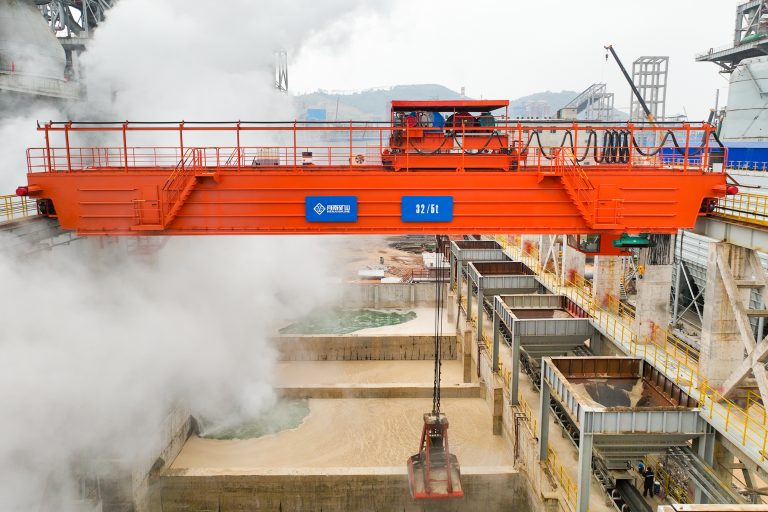
Crane operations in steel mills are high-risk, and safety is the top priority. When selecting a crane, you should not only consider the performance of the crane, but also ensure that the crane complies with safety standards and has sufficient safety protection measures to avoid safety accidents.
Necessary safety devices
Regardless of the scenario of the crane, the following safety devices are necessary and indispensable:
Overload protection device, which can prevent the crane from overload operation, avoiding structural damage and safety accidents
Upper and lower limit switches to limit the lifting and lowering range of the hook, preventing the hook from colliding with the crane structure or the ground.
Emergency stop system, which can quickly stop the crane operation in case of emergency to avoid the accident from expanding.
Running limit switches and buffers, which can limit the running range of the crane and prevent the crane from colliding with the ends of the track or other equipment
Anti-collision protection device, if there are more than one crane on the same track, must be equipped with anti-collision device to prevent collision between cranes.
Load display and warning system, which can display the weight of the lifting load in real time, and issue an early warning when the load is close to the rated value to remind the operator to pay attention
Brake monitoring device, which is recommended for high work intensity scenarios, can monitor brake wear and warn of failures in advance.
Additional safety requirements for high-risk, high-temperature areas
For high-risk scenarios such as ladle lifting and high-temperature areas, in addition to the necessary safety devices, additional safety measures need to be added to improve safety.
For example, equip redundant brakes or safety brakes, so that even if the main brake fails, the back-up brake can act as a brake to prevent the load from falling down
Adding thermal protection to electrical components to prevent damage from high temperatures, and equipping emergency lowering devices that can manually lower the load safely in the event of a power failure or malfunction to avoid accidents.
Also set up interlocking devices with plant equipment and area entrances, such as steel ladle lifting area, the crane can only operate when no one is in the area and the equipment is in a safe condition, to avoid personnel accidentally entering the dangerous area.
Standards and Compliance
The selection and installation of cranes must comply with local regulations and standards, and also meet the internal technical standards of the plant to avoid non-compliance.
Metallurgical cranes, for example, must comply with special standards for metallurgical cranes and cannot be replaced by ordinary cranes;
The manufacture, installation and commissioning of cranes must be completed by enterprises with appropriate qualifications to ensure quality and safety.
Also pay attention to the inspection, commissioning and documentation requirements, the crane installation is completed, you need to pass the inspection by a professional organisation before it can be put into use
Suppliers need to provide complete technical documentation, inspection reports, operating manuals, etc., to facilitate late maintenance and inspection.
Track, structure and installation
Many purchasers in the selection, only focus on the purchase price of the crane, ignoring the track, structure and installation links, resulting in hidden costs in the later stage, such as track reinforcement, installation stoppages, rework, etc., but increased the total expenditure.
Carrying capacity and alignment of track beams
The track beam is the foundation of the crane, and its carrying capacity and alignment directly affect the operational safety and service life of the crane. If it is a retrofit project, the condition of the original track beam must be checked in advance, such as whether the load carrying capacity meets the wheel load of the crane and whether the track alignment meets the requirements.
If the track beam has insufficient bearing capacity, reinforcement is required, and the reinforcement cost is often not low; if the track alignment is insufficient, it will lead to deflection when the crane is running, and the wheels will wear out too fast, which will increase the maintenance cost and even affect the normal operation of the crane.
It is recommended that at the early stage of selection, structural engineers should be asked to account for the track beams to determine whether reinforcement or adjustment is required, to avoid reworking when problems are found at a later stage.
Headroom height and plant interference
The headroom height of the plant, pipelines, platforms, lighting equipment, etc., will affect the installation and use of the crane, verify these parameters in advance, can avoid the crane can not be installed after delivery to the site.
Also consider the maintenance space of the crane, such as the top and side of the crane, you need to reserve enough space to facilitate the staff to carry out maintenance and overhaul, otherwise the maintenance will be very difficult later.
Installation and shutdown planning
The production continuity of the steel plant is very strong, the installation and commissioning of the crane, it is easy to affect the production, therefore, it is necessary to do a good job in advance of the installation and shutdown planning to reduce the production interruption time.
If it is a new plant, crane installation can be synchronised with the construction of the plant to avoid later installation affecting production;
If it is a retrofit project, it is necessary to choose a suitable downtime window, such as the production off-season, maintenance period, to minimise the installation and commissioning time.
Detailed installation and lifting programmes also need to be developed to ensure that the installation process is safe and efficient, and to avoid accidents during installation, which can further extend downtime.
Total Life Cycle Cost (TCO)
Many purchasers only compare the purchase price of cranes when selecting a model, thinking that the lower the price, the more cost-effective. However, in steel mills, cranes have a long service life, and later maintenance costs, energy consumption, downtime losses, etc., are much higher than the purchase price of the first stage, so the total life cycle cost (TCO) is a more important selection index.
Capital expenditure (CAPEX)
CAPEX includes not only the price of the crane itself, but also the following aspects, the selection needs to be a comprehensive comparison, not just a single crane price:
The price of the crane body and lifting, trolley system; the price of the spreader (e.g., C-hooks, grabs, electromagnetic suction cups, etc.);
The price of the electrical and control system, such as frequency control is more expensive than conventional control, but it can save energy consumption in the later stage; the installation and commissioning costs, including the cost of crane installation, track reinforcement, commissioning and so on.
There are also track modification, structural reinforcement costs (retrofit project); operators and maintenance personnel training costs; technical documentation, inspection reports and other costs. These costs add up to the total capital expenditure of the crane.
Operating Expenditure (OPEX)
Operating expenditure refers to the annual costs incurred after the crane is put into use, this part of the cost will be accompanied by the entire service life of the crane, need to focus on:
Energy consumption costs, the crane’s motor power, running time, control mode, will affect the energy consumption, frequency control of the crane, energy consumption is lower than the conventional control of 10-30%, the long-term can save a lot of money; wear parts replacement costs, such as wire rope, wheels, brakes, contactors, etc., these parts need to be replaced regularly, the better the quality of the parts, the longer the replacement cycle, the lower the expenditure in the later stage.
Preventive maintenance costs, including lubricants, maintenance labour and other costs, regular maintenance can extend the service life of the crane and reduce the breakdown downtime; spare parts consumption and procurement cycle, the longer the procurement cycle of spare parts, the more likely to lead to prolongation of downtime, therefore, you need to choose the supplier with sufficient supply of spare parts and short procurement cycle.
Downtime loss, this is the most easily ignored cost, once the crane fails, it will lead to the interruption of the production line, the downtime loss per hour may be up to tens of thousands of yuan, therefore, the higher the reliability of the crane, the less downtime loss.
Life cycle reliability
Crane reliability, directly affecting the full life cycle costs, the higher the reliability, the later the maintenance costs and downtime losses the less.
For example: two cranes, A crane procurement price is low, but the work level is not enough, the quality of the core components is average, frequent failures in the late stage, the annual maintenance costs and downtime losses are very high; B crane procurement price is slightly higher, but the work level matches, the quality of the core components is good, few failures, maintenance costs and downtime losses are low, in the long run, the full life cycle cost of the B crane instead of lower.
Supplier Evaluation
Cranes in steel mills not only require reliable quality, but also need perfect after-sales service, therefore, when selecting the type, you can not only look at the supplier’s offer, but also a comprehensive assessment of the supplier’s strength, to avoid choosing a supplier with insufficient strength, and later problems can not be solved.
Iron and steel industry project experience
Iron and steel mills have special working conditions, the design and manufacture of cranes need to be combined with the characteristics of iron and steel production, so it is crucial for the supplier to have project experience in the iron and steel industry.
You can ask the supplier to provide relevant cases, such as projects with other steel mills, especially those with similar processes to your own plant, such as the same cold rolling plant, billet handling, scrap charging and other scenarios.
Suppliers with experience in the steel industry have a better understanding of the harsh environment and operational needs of steel mills, and can design more suitable cranes, and at the same time, are more experienced in installation, commissioning, maintenance, etc., and can better solve the problems that arise later.
Engineering Design Capability: Ensure Cranes are Adapted to Site Requirements
Many cranes in steel mills need to be customised according to on-site working conditions, so the engineering design capability of the supplier is very important. The supplier needs to be able to design a crane that meets the needs based on the factory drawings and site data, including structural design, spreader matching, control system selection, etc. The supplier can be asked to provide a detailed design plan.
Suppliers can be asked to provide detailed design plans, assembly drawings, load tables and other technical documents to assess the supplier’s design capabilities
At the same time, the supplier needs to be able to assist in checking the load capacity of the track beam, headroom height, etc., and give reasonable suggestions to avoid selection errors.
If the crane needs to be integrated with the factory’s control system, the supplier also needs to have the appropriate integration capabilities to ensure that the crane can be linked with the factory’s production system to improve operational efficiency.
Manufacturing and quality assurance
The quality of the crane directly affects its reliability and service life, so it is necessary to assess the supplier’s manufacturing capacity and quality assurance system.
You can learn about the supplier’s production scale, production equipment, welding process, etc. Welding quality is the key to the safety of the crane structure, which requires the supplier to have a perfect welding quality control system and provide welding quality records.
Factory acceptance test (FAT) is also very important, before the crane leaves the factory, it is necessary to carry out factory acceptance test, check the performance of the crane, safety devices, control systems, etc., to ensure that the crane meets the design requirements, the supplier needs to co-operate with the completion of the FAT test, and to provide test reports.
In addition, suppliers need to provide traceability records of key components and materials to ensure the quality of components and materials and avoid using inferior components.
Installation and after-sales service
Installation and after-sales service is the guarantee of later use, the supplier needs to have a professional installation team, can complete the installation and commissioning of the crane according to the plan, to ensure that the crane is normally put into use.
After-sales service, the supplier needs to provide operators and maintenance personnel training to ensure that the staff can operate and maintain the crane correctly.
Need to provide sufficient spare parts to ensure that spare parts can be supplied in a timely manner; need to have a perfect service response mechanism, commitment to respond to faults within the specified time, send technicians to solve the problem on-site.
If the supplier can provide remote diagnostic services, it is even more advantageous to remotely assist in troubleshooting and reduce downtime.
A few questions you must ask the supplier before purchasing
1. what is the working level of the crane you choose for us?
2. Do you include the weight of the spreader when calculating the lifting capacity of the crane?
3. what is the wheel load of the crane?
4. what is included in the quotation?
5. what is the lead time for delivery?
6. what is the lead time and price for spare parts?
7. how long does it take to install and commission the crane?
8. how long is the response time for after-sales service?
10 common misunderstandings in the procurement of double girder cranes for steel mills
1. Only look at the procurement price, ignoring the full life cycle cost. Many purchasers choose low-priced, poor-quality cranes in order to save up-front costs, and the later maintenance costs and downtime losses are much higher than the up-front savings.
2. Use the specifications of ordinary workshop cranes for high load operations in steel mills. Ordinary workshop cranes, working level, heat resistance, protection level do not meet the needs of steel mills, and are prone to failure.
3. ignoring the weight of the spreader when calculating the lifting capacity. The actual lifting capacity is not enough to lift the material properly, and even there is a potential safety hazard.
4. Underestimate the impact of high temperature and dust on crane components, without proper targeted protection. Resulting in rapid aging, damage to crane components, frequent failures.
5. do not check the bearing capacity and alignment of the track beam at the early stage of selection, and later found that the track beam can not withstand the load of the crane, need to be reinforced, increasing the hidden costs.
6. Excessive attention to the maximum speed of the crane, ignoring the actual process rhythm and positioning accuracy. Resulting in unstable crane operation, load collision, affecting productivity and product quality.
7. According to the ‘normal’ intensity of work to choose the level of work, ignoring the peak production period of the intensity of work. Lead to the crane in the peak period of full-load operation, early wear and tear, failure. 8.
8. Choose too complex control system, beyond the factory’s maintenance capacity. In case of failure at a later stage, it is impossible to troubleshoot and repair in time, prolonging the downtime.
9. There is no clear requirement for spare parts supply and after-sales service. When the crane breaks down at a later stage, the spare parts cannot be supplied in time, and the supplier does not respond in time, resulting in prolonged downtime.
10. Cranes and spreaders are purchased separately without synchronised selection.
As a result, the spreader is not matched with the crane and cannot operate normally, and even need to re-procure the spreader.
Simple and practical selection process
First determine in which area the crane is to be installed and what materials are to be lifted.
Collect process, load and environmental data
Collect detailed site data, including the weight, size and centre of gravity of the load, the number of operating shifts, the lifting frequency, the temperature, dust and corrosion of the plant, the carrying capacity of the track beams, the headroom height, etc., to ensure that the data is accurate.
Determine the lifting method and spreader type
According to the type of material to be lifted, determine the type of spreader, and at the same time determine the lifting method, and simultaneously consider the weight of the spreader.
Determine core technical parameters
According to the collected data and lifting requirements, determine the core parameters of the crane such as rated lifting capacity, span, lifting height, operating speed, working level, etc., to ensure that the parameters match the actual requirements.
Check the track and plant constraints
Check the carrying capacity and alignment of the track beams, the headroom height of the plant, and the layout of the equipment, etc., to ensure that the crane can be properly installed and operated, and carry out track reinforcement or adjustment if necessary.
Compare controls, safety options and total life cycle costs
According to the process requirements, select the appropriate control system (variable frequency or conventional) and operation mode, and determine the configuration of the safety devices; compare the whole life cycle costs of different options and select the most cost-effective option, do not just look at the purchase price.
Evaluate the strength of suppliers
Screen suppliers with experience in the steel industry, strong engineering design capability, guaranteed quality and perfect after-sales service; compare suppliers’ offers and solutions, and conduct on-site inspections.
Clarify the technical scope and implementation plan
And the supplier to clarify the technical specifications of the crane, implementation details and service commitments, Henan Mine Crane manufactured many years of deep ploughing into the steel industry crane R & D, with excellent quality, customised solutions and perfect after-sales service, to match the iron and steel plant high temperature, high load demanding conditions, we invite you to join hands with Henan Mine, choose the right double girder crane, build the foundation of the production, and jointly promote the high-quality development of the iron and steel industry!