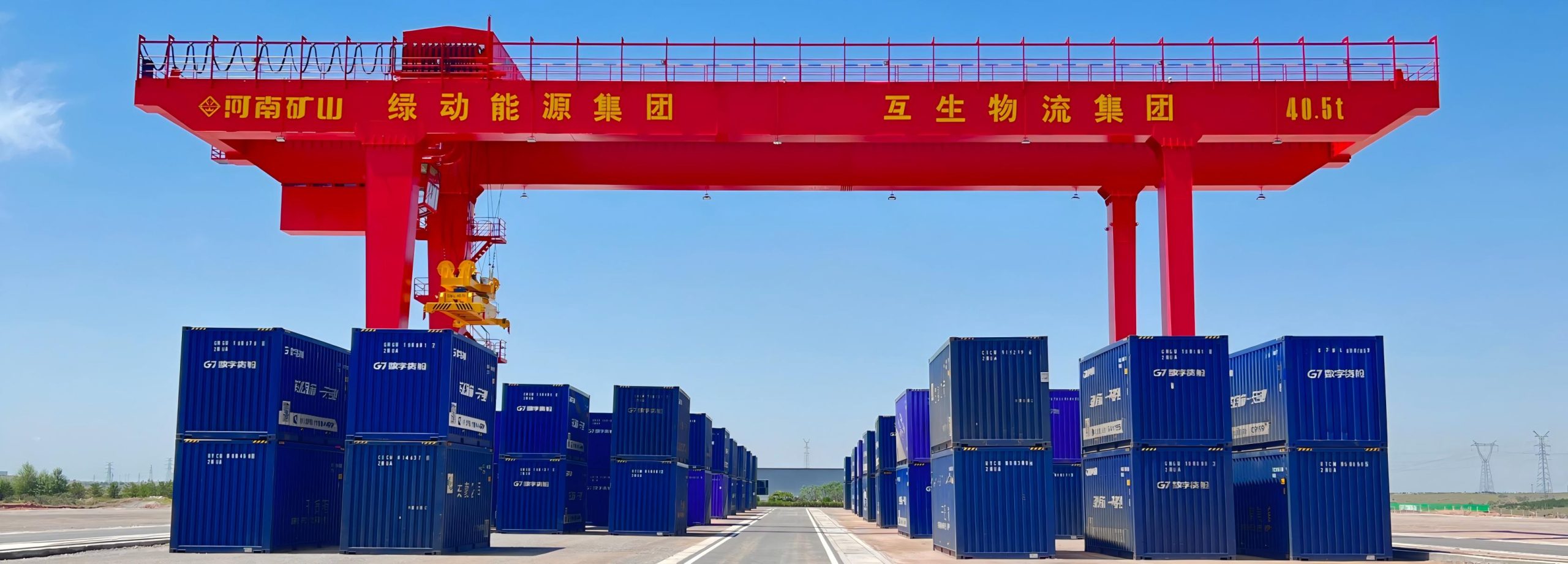

Getting to Know Shipbuilding Gantry Cranes: Types, Uses, and Buying Guide
Shipbuilding heavy components require specialised equipment, and ordinary lifting equipment is unable to meet their load and precise positioning requirements.
Shipbuilding gantry cranes (shipbuilding gantry crane) as the core heavy shipyard lifting equipment (shipyard lifting equipment), through the whole process of shipbuilding, assembly and maintenance.
This article will combine with case studies to explain its definition, structure, application, selection and supplier selection.
What Is a Shipbuilding Gantry Crane?Definition
Shipbuilding Gantry Crane is a large outdoor gantry crane specially designed for shipyards, the core role is to lift and carry all kinds of heavy parts in the ship manufacturing process.
It is completely different from the small gantry cranes we see in the workshop, with a larger size, stronger load, and most of them adopting the rail-type mobile design, running along the tracks laid on the ground of the shipyard, which can cover the whole hull assembly area.
Whether it is prefabricated hull segments, heavy steel plates, or large marine equipment, can rely on it accurately lifted to the designated location, is an indispensable core equipment for modern shipyards, but also a large shipyard gantry crane (large gantry crane for shipyard) core type.
Why It Is Different from Standard Gantry Cranes
Many people will confuse shipbuilding gantry cranes and ordinary gantry cranes, in fact, the two are very different, the core differences are centred around the special lifting needs of shipyards.
The first is the span and lifting capacity, shipbuilding gantry cranes can usually reach dozens of metres in span, lifting capacity from dozens of tonnes to hundreds of tonnes, while the span and lifting capacity of the ordinary gantry cranes are far from this standard – after all, shipyards want to lift the hull segments, which can easily be hundreds of tonnes of weight.
Second is the lifting height, in order to meet the assembly needs of the hull segments, it has a higher lifting height, can lift heavy parts to a sufficient height to complete the upper and lower docking, assembly operations.
What’s more, it requires high precision of synchronous lifting, for example, when lifting large hull segments, it needs synchronous action of lifting mechanism on both sides, and a slight deviation may lead to deformation of segments and misalignment of docking.
In addition, it is designed for large-scale, continuous operation of shipyards, durability and stability requirements are higher, and can adapt to the intensity of long hours of outdoor operation in shipyards. Henan Mine crane in the design of shipbuilding gantry cranes, take these differences into full account, targeted optimisation of the structure and performance, so that the equipment is more suitable for the actual working conditions of the shipyard.
Main Applications of Shipbuilding Gantry Cranes in a Shipyard
Shipbuilding gantry cranes application scenarios, almost covering the core production of the shipyard, each link is inseparable from its support, the lifting needs of different scenarios, but also determines the difference in the configuration of the equipment.
Hull Block Assembly and Positioning
This is the most core application scenario of shipbuilding gantry cranes, most modern shipyards use modular shipbuilding mode, prefabricated hull segments in the workshop, and then transported to the assembly area for splicing.
These hull segments are heavy, large and irregular in shape, and need to be accurately lifted to the assembly station by shipbuilding gantry cranes, and then adjust the angle and align the interface to complete the splicing.
This process requires extremely high lifting precision, and once the positioning deviation is too large, it will affect the sealing and structural strength of the hull. Henan Mine’s shipbuilding gantry cranes are equipped with an accurate synchronisation control system, which can effectively reduce positioning deviation, ensure accurate segment docking and improve assembly efficiency.
Steel Plate and Structural Component Handling
The first step in shipbuilding is the handling of steel plates and various structural components. Most of the steel plates in shipyards are thick and slender, with a length of more than ten metres and a weight of tens of tonnes, which cannot be handled by manual labour or ordinary equipment.
Shipbuilding gantry cranes can easily complete this work, lifting the steel plate from the raw material area to the cutting and processing station, and then lifting the structural parts to the segment prefabrication area after processing is completed, the whole process is efficient and safe.
As a heavy duty gantry crane for ship blocks, it can be adapted to the lifting needs of various types of steel, avoiding deformation and damage of steel plates in the process of handling, and reducing material loss. Henan Mine has optimised the spreader design for this scenario, which can better fix the steel plates and structural components and improve the stability of lifting.
Ship Segment/Module Turning and Transfer (if applicable)
In the modular shipbuilding process, some hull segments need to be turned over to adjust the assembly angle, which is one of the important uses of shipbuilding gantry cranes.
It can be used with special spreader to turn the hull segments smoothly and then transfer them to the designated assembly stations, the whole process requires precise control of speed and strength to avoid collision and deformation of the segments.
At the same time, it can also work with other equipment in the shipyard, such as transfer trolleys, flatbed trucks, etc., to form a complete material transfer process and support the efficient advancement of modular shipbuilding. Henan Mine’s shipbuilding gantry cranes can be customised to work together according to the shipyard’s process requirements, and adapt to different transfer rhythms.
Maintenance and Retrofit Projects
In addition to new shipbuilding, shipbuilding gantry cranes can also play an important role in ship maintenance and retrofit projects.
When a ship enters a dry dock for overhaul, large equipment on board, such as engines, propellers, etc., need to be dismantled for repair, and these equipments are heavy in weight and need to be lifted and transported to the repair area by shipbuilding gantry cranes.
In the process of ship modification, it is also necessary to lift the additional structural parts and equipment to complete the modification and assembly. Its flexibility can be well adapted to the dry dock, assembly area and other different areas of maintenance operations, Henan Mine’s Shipbuilding Gantry Crane can be customised according to the size of the dry dock span and lifting height, to adapt to the special needs of the maintenance scene.
How a Shipbuilding Gantry Crane Works (Basic Working Principle)
The working principle of a shipbuilding gantry crane is not complicated, but the cooperation of each mechanism is very critical, after all, to lift hundreds of tonnes of heavy components, any one of the links out of order, may lead to safety accidents. Here’s how it works in layman’s terms.
Travelling Mechanism
Shipbuilding gantry cranes are mostly rail-based, with travelling trolleys and wheelsets on the bottom, which can move along special tracks laid on the shipyard floor.
The track usually runs through the whole assembly area, and some of them also extend to the raw material area and processing area, so that the crane can cover the main working area of the shipyard and realise the long-distance transfer of materials.
Hoisting Mechanism
Hoisting mechanism is the core of shipbuilding gantry crane, responsible for material lifting and lowering, mainly divided into the main hoisting and vice hoisting two parts.
The main hoisting mechanism is used to lift heavy loads, such as hull segments and large equipment, with a large lifting capacity and relatively smooth lifting speed; the secondary hoisting mechanism is used to lift lighter parts, or to cooperate with the main hoisting mechanism for precise positioning to enhance operational flexibility.
The two work together to meet the demand for heavy-duty lifting, but also to ensure the positioning accuracy, to avoid shaking and tilting of materials in the lifting process.
Trolley Mechanism
The trolley mechanism is mounted on the main beam and can move laterally along the main beam, driving the lifting mechanism and materials to achieve lateral transfer.
For example, after the crane moves longitudinally along the track to the designated area, the trolley drives the materials to move transversely, positioning them accurately to the assembly station and completing the lifting operation.
Its running accuracy directly affects the accuracy of lifting and positioning. Henan Mine has optimised the transmission structure of the trolley to improve the smoothness and accuracy of lateral movement and reduce positioning deviation.
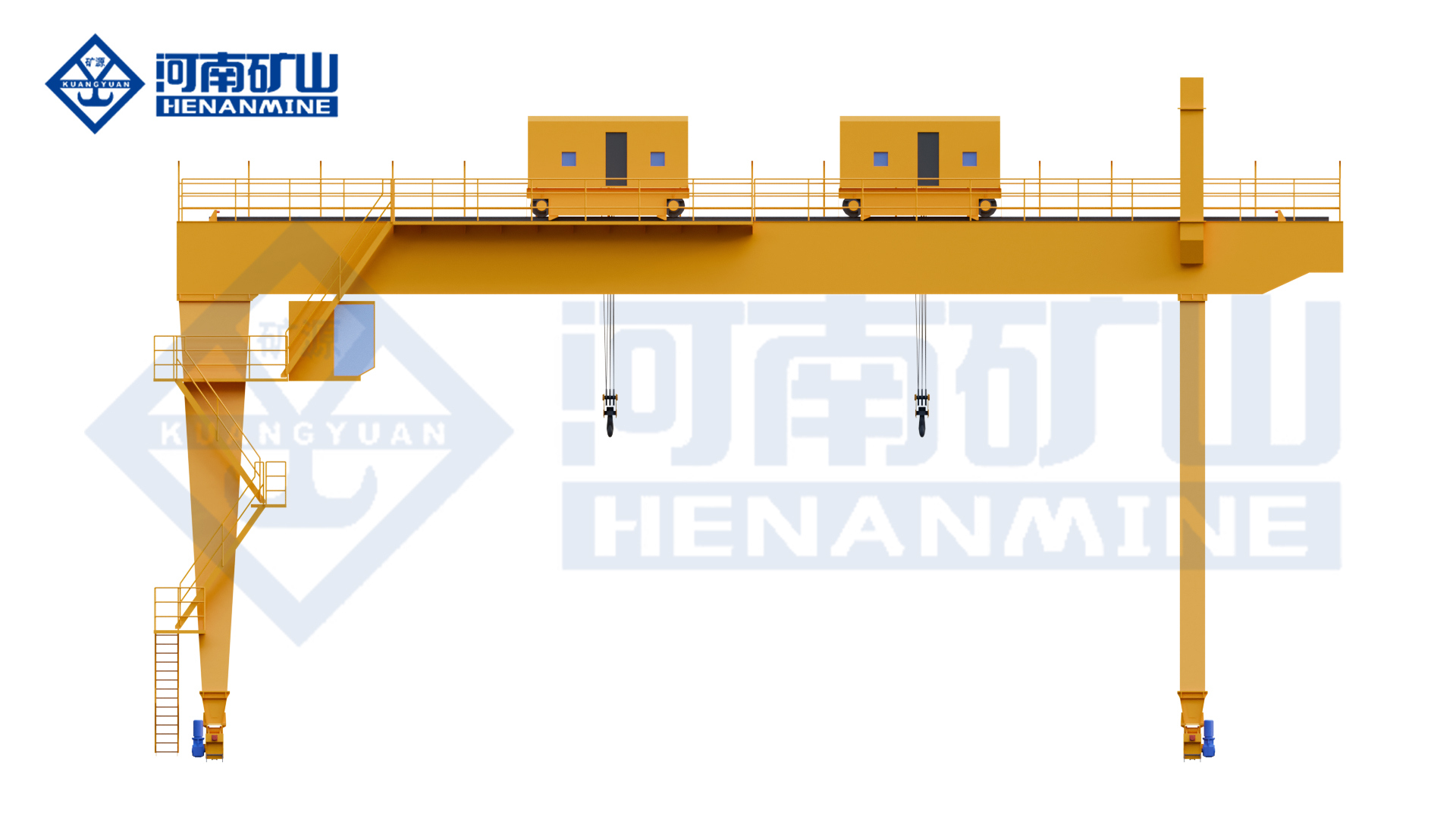
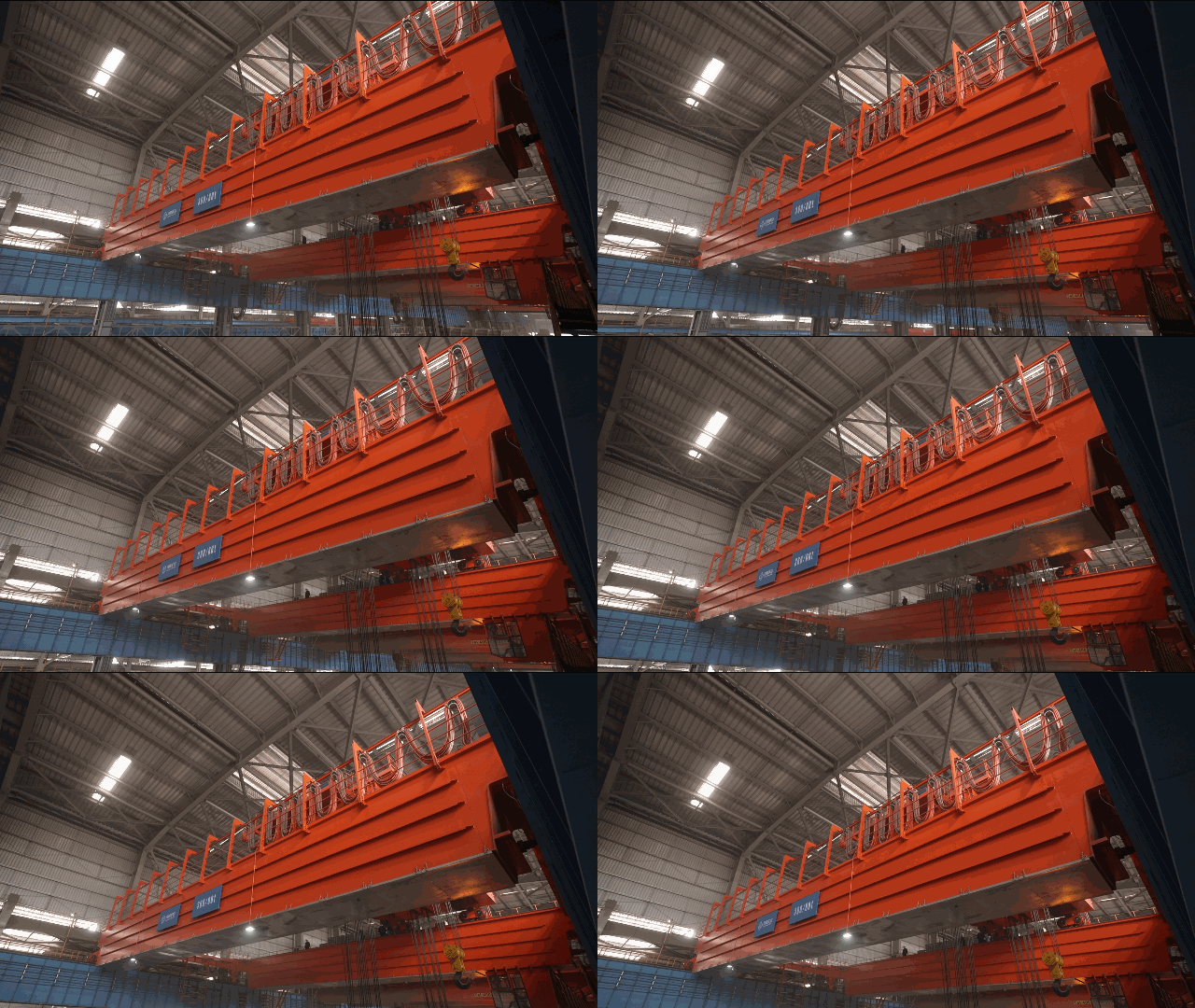
Henan Mine Crane manufactured Shipbuilding Gantry Crane
Control System
The control system of shipbuilding gantry cranes mainly has two ways: cab control and remote control, and some large-scale equipment will also adopt integrated control system to realise multi-agency cooperative control.
The cab is usually installed under the main beam or on the outrigger side, with a wide field of vision, the operator can intuitively observe the lifting situation, and accurately control the action of each mechanism; remote control is suitable for some poor vision scenarios, the operator can be remotely controlled from the ground, to enhance the safety of the operation.
For the lifting of large hull segments, co-ordinated action and speed control are particularly important, and the control system needs to accurately co-ordinate the actions of the three mechanisms of lifting, travelling, and trolley, to ensure that the materials move smoothly and avoid shaking.
Safety and Load Monitoring
Shipyard lifting operations are high-risk, so the safety system of shipbuilding gantry cranes is crucial, and every safety device should not be sloppy.
Overload protection is the foundation, when the lifting load exceeds the rated lifting capacity, the equipment will automatically shut down to avoid structural damage and material falling due to overload; limit switches can limit the lifting height, travelling distance and trolley movement range to prevent the equipment from operating beyond the safety range.
In addition, according to the shipyard’s outdoor working conditions, some of the equipment will also be equipped with anti-collision, anti-running, wind protection system – for example, when the windy weather, the windproof device can fix the equipment to avoid being blown by the wind, to protect the equipment and personnel safety. Henan Mine’s shipbuilding gantry cranes are fully equipped with these safety devices, and can also be customised with additional safety protection solutions according to the risk level of the shipyard.
Key Structural Components of a Shipbuilding Gantry Crane
The structure of a shipbuilding gantry crane is complex, and each component plays an important role, especially for heavy load lifting, which requires high strength and stability of each component. Here is a breakdown of its core structural components.
Main Girder (or Double Girders)
The main girder is the ‘backbone’ of the shipbuilding gantry crane, the main role is to load-bearing, all the lifting mechanism, trolley mechanism are installed on the main girder, the heavy load lifted through the main girder to the outriggers and ground track.
The structural rigidity of the main beam is crucial as it needs to carry hundreds of tonnes of load – if it is not rigid enough, deformation will occur when lifting heavy loads, which not only affects the positioning accuracy, but may also lead to structural damage.
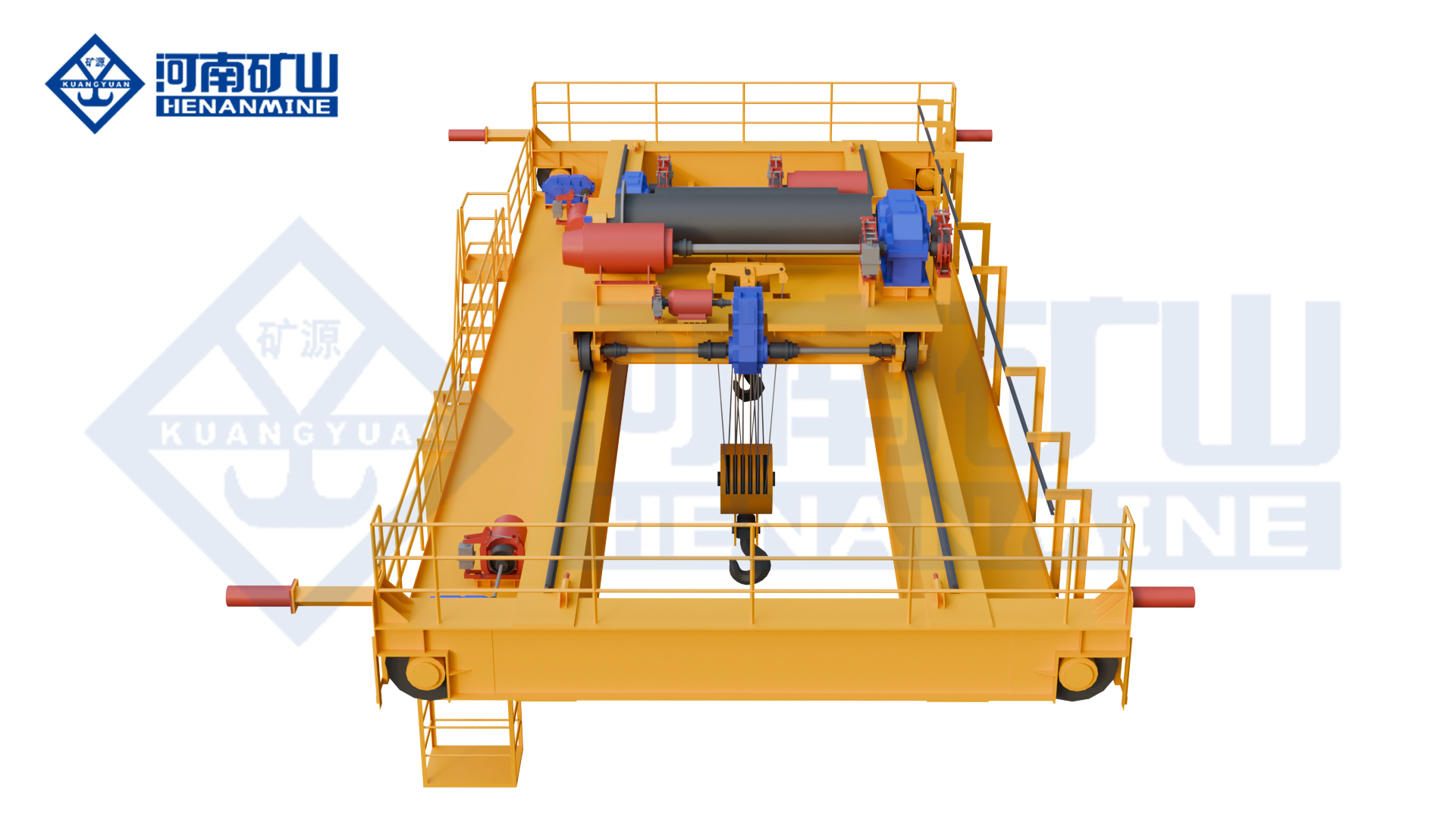
The shipbuilding sector mostly adopts the double girder shipbuilding gantry crane design, which is more rigid and has a better load-bearing capacity, and is better adapted to heavy lifting needs. Henan Mine Crane manufactured shipbuilding gantry cranes, the main girder is made of high-strength steel, through the precision welding process, to ensure the structural rigidity and load-bearing capacity, to meet the needs of heavy-duty operations in shipyards.
Legs and Saddle Structures
Legs and Saddle Structures are the ‘supporting feet’ of the crane, responsible for transferring the load of the main girder to the travelling trolley and the ground track, supporting the stable operation of the whole equipment.
The design of the outriggers will be adjusted according to the layout requirements of the shipyard, some use straight outriggers, some use inclined outriggers, the main purpose is to avoid obstacles in the assembly area, while ensuring the stability of support.
The saddle structure connects the outriggers and travelling trolley, plays the role of cushioning and load transfer, reduces the vibration of the equipment when running, and protects the outriggers and the track. Henan Mine will customise the design of the outriggers according to the layout of the shipyard to ensure that the equipment can be adapted to the actual space requirements of the shipyard.
Trolley and Hoist Assembly
The trolley and hoist assembly is a whole unit, which includes spreader, hook, wire rope and other components in addition to the main hoisting and sub hoisting mechanism mentioned earlier.
The type of spreader will be adjusted according to the different materials to be lifted, e.g. suction cup spreader for lifting steel plates, and special lifting beams and frames for lifting hull segments, to ensure that the materials can be stably fixed to avoid slipping during the lifting process.
Hooks and wire ropes are the direct load-bearing parts, which need to have extremely high strength and wear resistance. Henan Mine selects high-quality hooks and wire ropes, and conducts regular testing and replacement to ensure the safety of lifting.
Travelling Bogies and Wheel Sets
Travelling Bogies and Wheel Sets are the ‘moving parts’ of the crane, responsible for driving the whole equipment to move along the track, and the number and specification of the wheel sets will be adjusted according to the lifting capacity and span of the crane.
Wheel sets need to be accurately matched with the track to ensure smooth operation, and at the same time, they have to bear the weight of the whole equipment and lifting materials, so wear resistance and load-bearing capacity is crucial.
Henan Mine Crane manufactured the travelling dollies and wheelsets with wear-resistant materials, which have undergone rigorous strength tests to adapt to the long-time and heavy-duty operation of the shipyard, reduce the wear and tear of the wheelsets, and lower the maintenance cost.
Electrical System and Power Supply
The electrical system is the ‘brain’ of the crane, which is responsible for controlling the action of each organisation, including the drive, control panel, motor, braking system, etc. The power supply is usually supplied by cable reel.
The power supply method usually has cable reel, slip line, etc., according to the running length of the crane and the site conditions to choose, to ensure stable power supply, to avoid equipment downtime due to power outages, affecting the work schedule.
The braking system can firmly fix the equipment and materials to prevent sliding when the equipment stops and materials are lifted. Henan Mine’s electrical system adopts reliable driving and braking components to ensure stable and safe operation of the equipment.
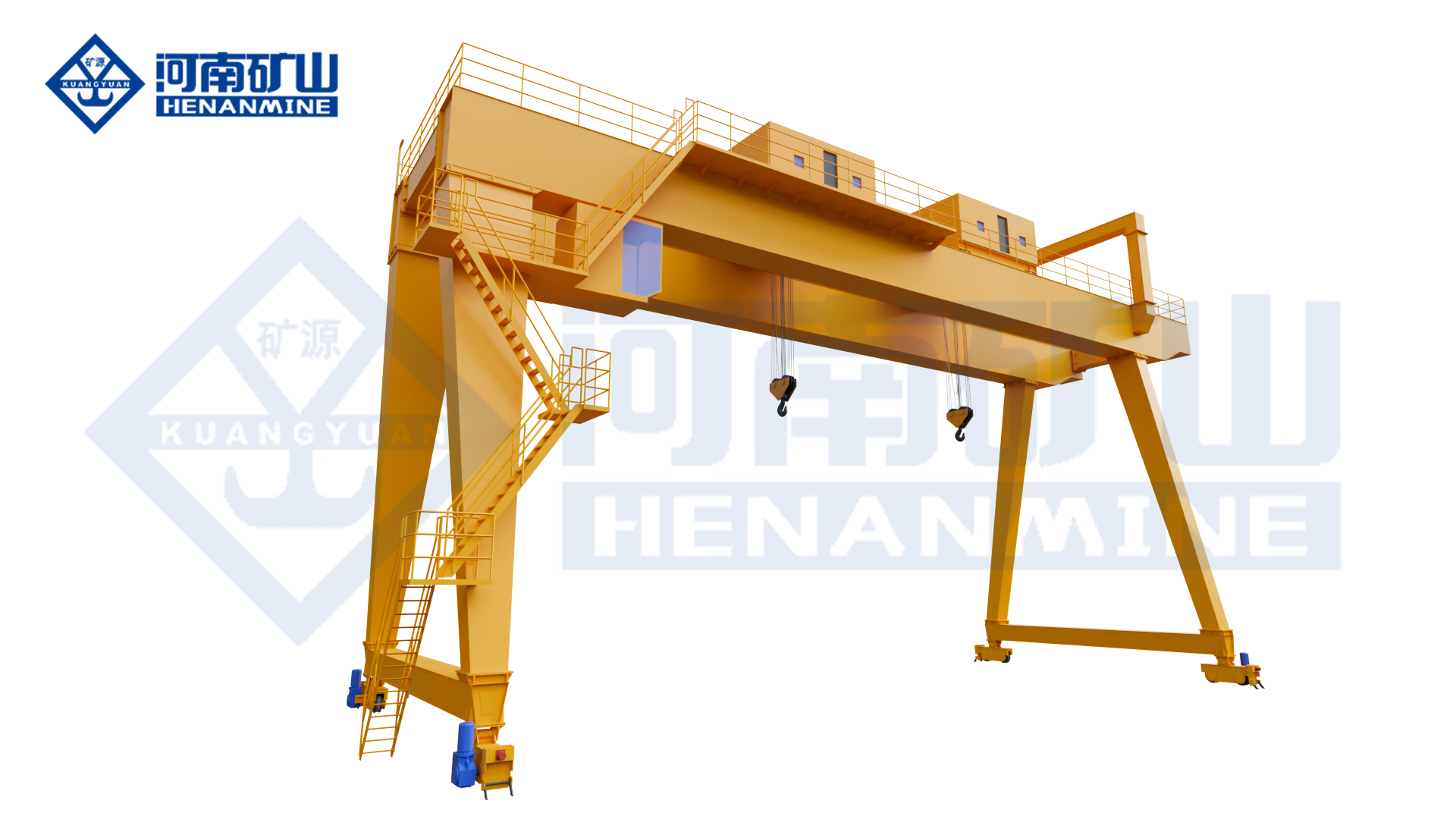
Henan Mine Crane manufactured Shipbuilding Gantry Crane
Operator Cabin and Monitoring Devices
The design of the operator cabin mainly considers the field of vision and operational convenience – the cabin needs to have a wide field of vision, so that the operator can clearly observe the lifting area, materials and the surrounding environment, avoiding safety accidents caused by blind spots.
At the same time, the cab will be equipped with all kinds of monitoring equipment, such as cameras, sensors, real-time monitoring of the operating status of the equipment, the load situation, once there is an abnormality, it will send out an alarm in time to remind the operator to deal with it.
Types of Shipbuilding Gantry Cranes
There are many types of shipbuilding gantry cranes, mainly based on the structure, spreader, layout and other divisions, different types of cranes, adapted to different scenarios and needs, the choice should be combined with the actual working conditions of the shipyard to determine.
Single-Girder vs Double-Girder (brief comparison)
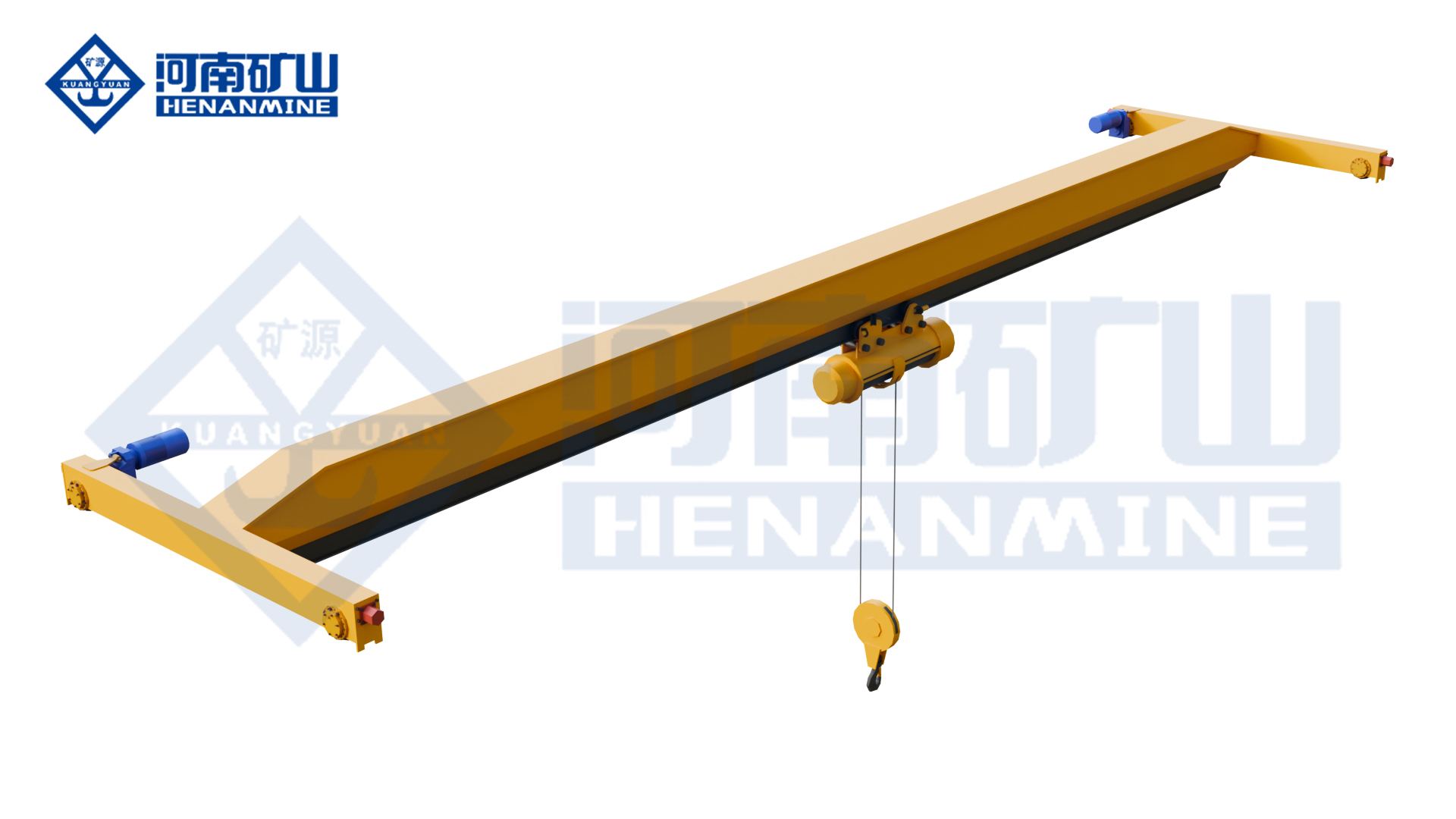
Single-girder and double-girder are the two main types of shipbuilding gantry cranes, the difference between the two is mainly in the load-bearing capacity and rigidity.
Single Girder Shipbuilding Gantry Cranes have relatively small lifting capacity and narrow span, which are mainly suitable for small shipyards, light hull manufacturing, or used for auxiliary lifting operations; Double Girder Shipbuilding Gantry Cranes are the mainstream of the shipbuilding field, with a large lifting capacity, wide span, and strong rigidity, which can satisfy the needs of large hull segments and heavy equipment lifting.
Single Trolley vs Double Trolley / Multiple Hoists
According to the number of trolley and hoisting mechanism, it can be divided into three types: single trolley, double trolley and multiple hoists.
Single trolley crane has only one trolley and one set of hoisting mechanism, which is simple in structure and suitable for lifting a single load, such as steel plate and small segment handling; double trolley or multiple hoisting mechanism is suitable for lifting large and irregular loads, such as large hull segments, and it is possible to better control the balance and positioning of the load through the co-operation of two trolleys.
Henan Mine can customise the single trolley or double trolley configuration according to the lifting task of the shipyard to meet different productivity requirements.
Hook-Type vs Specialised Lifting Attachments
Hook-Type is the most basic configuration, which is suitable for lifting most general materials, such as small structural parts, equipment, etc.; while for the special materials in the shipyard, it needs to be equipped with specialised lifting attachments.
For example, vacuum suction cup spreader for lifting steel plates, lifting beam and frame for lifting hull segments, and special fixture for lifting long and thin profiles, these special spreaders can better fix the materials and improve the safety and stability of lifting.
Henan Mine can provide specialised spreaders according to the type of materials to be lifted by the shipyard, avoiding additional purchasing by the user and ensuring the suitability of the spreaders and cranes.
Semi-Goliath / Full Goliath Configurations (if relevant to article angle)
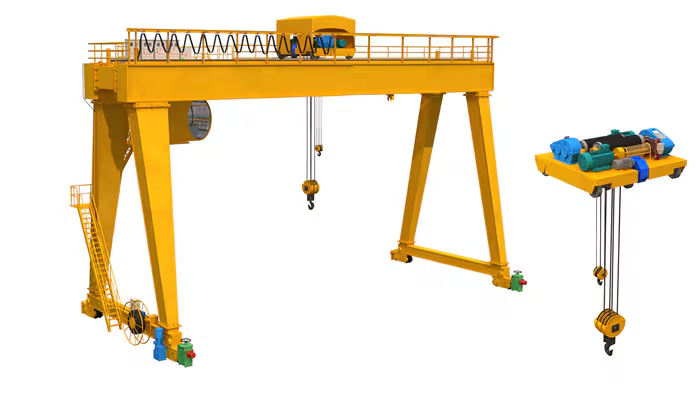
Full Goliath and Semi-Goliath cranes are classified according to the outrigger structure and are mainly adapted to different shipyard layouts.
Full gantry cranes have outriggers on both sides and run along the track, covering a wide range of areas, suitable for large assembly areas; Semi-gantry cranes have outriggers on one side only, and the other side relies on the walls or other structures of the shipyard, which is suitable for areas with limited space, such as the edges of the drydock and small assembly areas.
Henan Mine’s shipbuilding gantry cranes can be customised with full-gantry or half-gantry configurations according to the shipyard’s site layout, making full use of the shipyard’s space and enhancing operational flexibility.
Custom Configurations for Block Construction Yards
The needs of block construction yards vary greatly, for example, some yards focus on the manufacture of small segments, some focus on the assembly of large hulls, general-purpose cranes are difficult to fully adapt.
At this time, customised configuration is particularly important, according to the actual needs of the shipyard, customised span, lifting capacity, operating speed, working level and control mode, so that the crane is fully adapted to the shipyard’s production process.
Henan Mine Crane manufactured in the customisation of a wealth of experience, in-depth understanding of the production conditions and needs of shipyards, to provide exclusive custom solutions, from design, manufacturing to installation, to provide technical support to ensure that the equipment can be quickly put into use.
Key Specifications to Understand Before Selection
Selection is a key step in the procurement of shipbuilding gantry cranes, many shipyards do not understand the core specifications, resulting in the selection of equipment does not fit, and later either can not meet the lifting requirements, or cause cost waste. Below we will talk about the core specifications that must be understood before selection.
Lifting Capacity
Lifting capacity is the most basic specification, mainly divided into the main lifting capacity and secondary lifting capacity, when selecting the type should be combined with the shipyard’s maximum lifting load to determine, can not only look at the main lifting capacity, but also consider the secondary lifting auxiliary needs.
At the same time, we have to consider the demand of single crane and synchronous crane – if we need to lift large hull segments, we may need two cranes to work synchronously, then we have to make sure that the lifting capacity and synchronous accuracy of the two devices are matched.
Henan Mine’s engineers will recommend the appropriate lifting capacity configuration according to the maximum load and type of lifting in the shipyard, so as to avoid selecting too large or too small.
Span
Span refers to the length of the main beam of the crane, which directly determines the coverage of the equipment, and the selection should be combined with the width of the assembly area of the shipyard and the layout of the track.
For example, if the width of the assembly area is 50 metres, you need to choose a crane with a span of not less than 50 metres to ensure that it can cover the entire assembly area and avoid blind spots.
Lifting Height
Lifting height refers to the maximum height that can be lifted by the hook, which is mainly determined according to the stacking height and assembly height of the hull segments.
If the segments need to be stacked and stored or assembled at a high level, a higher lifting height is needed to avoid insufficient lifting height, which may affect the operation.
When selecting the model, the height of hooks and spreaders should also be considered to ensure that the actual lifting height can meet the assembly requirements. Henan Mine will accurately calculate the required lifting height by combining with the assembly process of the shipyard.
Working Duty / Classification
Working Duty / Classification is mainly classified according to the frequency of operation, load spectrum and production intensity, and the working intensity of shipyards is different, so is the required working duty.
For example, large shipyards with continuous production, high operating frequency and stable loads need to choose high working class cranes; small shipyards with low operating frequency can choose medium working class equipment to avoid cost waste.
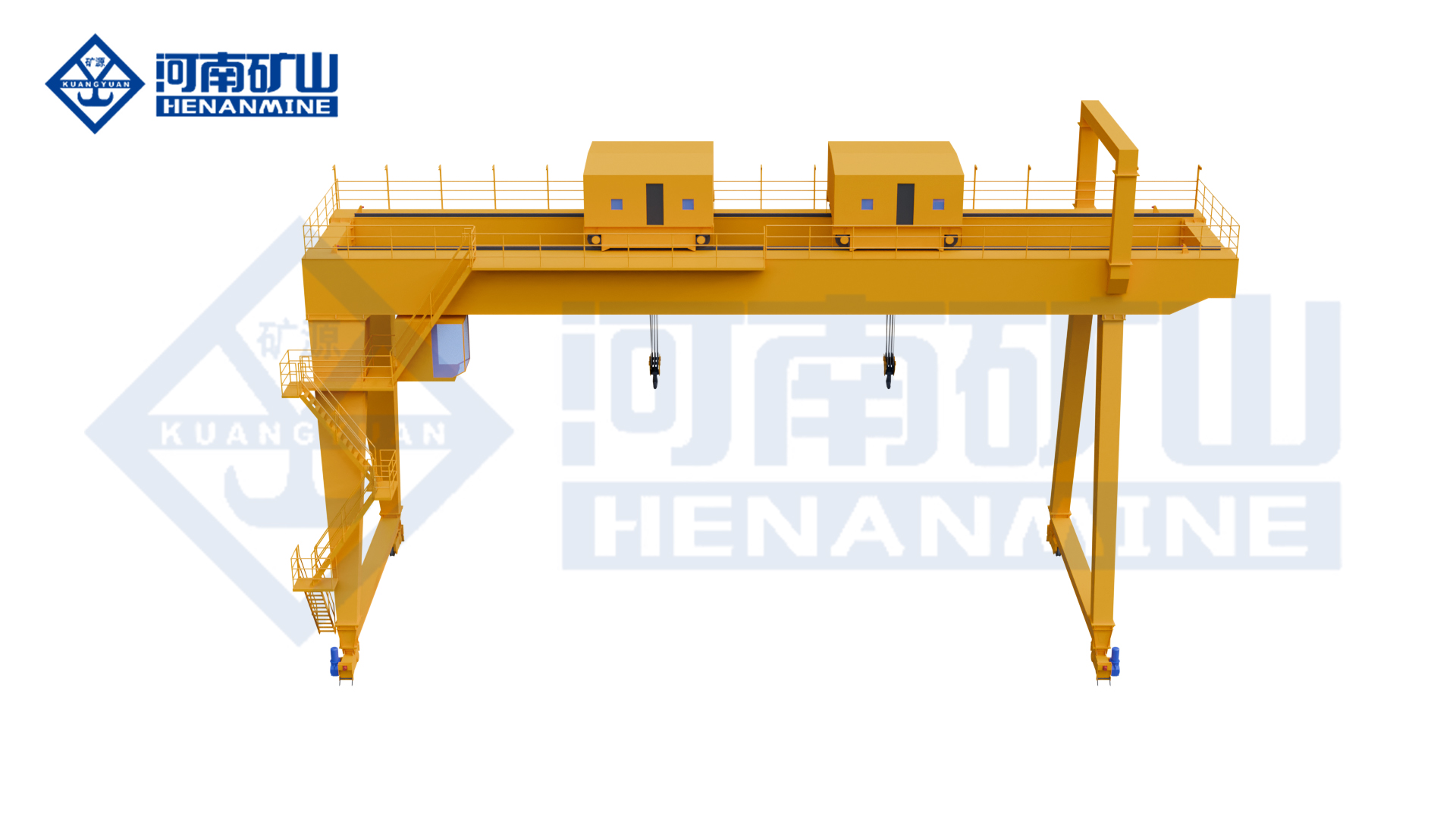
Henan Mine Crane manufactured Shipbuilding Gantry Crane
Speeds
Crane speed mainly includes hoisting speed, trolley moving speed, crane travelling speed, different operational scenarios, the speed requirements are different.
When lifting heavy loads, the lifting speed should be slow to ensure smoothness; when lifting light loads, the speed can be appropriately accelerated to enhance efficiency; trolley movement and crane travelling speed should be combined with the operating distance and positioning accuracy to determine.
Power Supply and Site Conditions
Power supply specifications should be combined with the actual power supply conditions of the shipyard, such as voltage and frequency, to ensure that the equipment can be properly powered; at the same time, the outdoor environment of the shipyard should be taken into account, such as temperature, humidity, wind speed, corrosion conditions.
Shipyards are mostly close to the sea, high salt, humid environment is easy to corrode equipment, selection should be selected with anti-corrosion ability of the equipment; outdoor operation should also consider the wind speed, to avoid windy weather affects the operation of the equipment.
Henan Mine’s shipbuilding gantry cranes, for the corrosive environment of seaside shipyards, using special anti-corrosion coating and sealing design, can effectively resist corrosion and extend the service life of the equipment.
Rail and Foundation Requirements
Rail and foundation is the basis of stable operation of the crane, the selection of the type of track, alignment requirements, and wheel pressure distribution, to ensure that the track can withstand the weight of the equipment and load.
The bearing capacity of the foundation should also meet the requirements to avoid foundation settlement, affecting the operation of the equipment; at the same time, the installation accuracy of the track should be considered to avoid excessive deviation of the track, resulting in equipment deflection, wheel set wear too fast.
Benefits of Using Shipbuilding Gantry Cranes
For shipyards, the use of appropriate shipbuilding gantry cranes can not only enhance productivity, but also ensure operational safety and reduce long-term operating costs, specific advantages are reflected in these areas.
Higher Lifting Capacity for Large Ship Components
Shipbuilding process, all kinds of heavy components lifting is the core of the problem, ordinary lifting equipment is not competent, shipbuilding gantry cranes with high lifting capacity, can easily lift dozens of tonnes to hundreds of tonnes of hull segments, large equipment.
It can support the promotion of modular shipbuilding mode, so that the prefabrication and assembly of hull segments are more efficient, shorten the shipbuilding cycle, which is also an important guarantee for the large-scale production of modern shipyards.
Improved Yard Productivity
Shipbuilding gantry cranes have a wide operating range and flexible operation, which can quickly complete the transfer and positioning of materials, reduce manual intervention and improve operational efficiency.
For example, a shipbuilding gantry crane can complete the lifting of segments that originally required multiple equipment, which not only saves equipment investment, but also reduces the operational links and improves the production rhythm. Henan Mine’s shipbuilding gantry cranes, which run smoothly and are accurately positioned, can further enhance the operational efficiency of shipyards.
Better Space Utilization in Outdoor Yards
Outdoor working areas in shipyards are limited. The shipbuilding gantry crane adopts a rail-type design and runs along the rail without occupying the working space on the ground, which can effectively utilise the vertical and horizontal space in the shipyard.
Its wide span design can cover the entire assembly area, avoiding blind spots, making the layout of the shipyard more reasonable and improving the utilisation of space.
Safer Handling of Heavy and Oversized Loads
The lifting of heavy components is high-risk, and in the event of a fall or collision, not only will the materials be damaged, but also may cause casualties. Shipbuilding gantry cranes are equipped with comprehensive safety systems to achieve precise control and stable lifting of loads.
Long-Term Reliability in Harsh Industrial Environments
The harsh outdoor environment of shipyards, with high salt, humidity and high winds, requires high durability of the equipment. Shipbuilding gantry cranes adopt heavy-duty design, with high strength and wear-resistant parts, which can adapt to the intensity of long-time outdoor operation.
High-quality materials and perfect anti-corrosion design can extend the service life of the equipment, reduce maintenance costs, ensure long-term stable operation of the equipment, and provide protection for the continuous production of the shipyard.
Challenges and Common Problems in Shipyard Gantry Crane Operations
Although the advantages of shipbuilding gantry cranes are obvious, but in actual operation, by the shipyard environment and the impact of the intensity of the operation, will also encounter some problems, in advance to understand these problems, can be better prepared to deal with measures to reduce equipment failure and downtime.
Wind Load and Outdoor Safety
Most shipbuilding gantry cranes operate outdoors, and windy weather is a common safety hazard – when the wind speed is too high, the equipment will be blown by the wind, resulting in shaking, deflection, and even causing safety accidents.
The main countermeasure is to equip perfect windproof devices, such as windproof rail clamps and anchoring devices, to fix the equipment on the track to avoid moving in windy weather; at the same time, install wind speed alarms to stop the machine in time when the wind speed exceeds the safety range to avoid operation.
Rail Alignment and Travel Accuracy
The alignment accuracy of the rail directly affects the running stability and positioning accuracy of the crane. If the rail deviation is too large, it will lead to equipment deflection, rapid wear and tear of the wheelset, and even affect the structural safety.
Long-term operation, the track may also appear settlement, deformation, need to be regularly tested and adjusted to ensure the track alignment accuracy; at the same time, we should regularly check the wear and tear of the wheelset, and timely replacement of badly worn wheelset.
Load Sway and Positioning Precision
When lifting heavy and large loads, the materials are prone to shaking, which not only affects the positioning precision, but also may collide with the surrounding equipment and materials, causing damage.
This requires skilled operators to control the speed and movement of the equipment; at the same time, the equipment’s synchronised control and frequency conversion function can also effectively reduce material swaying and improve positioning precision.
Corrosion and Harsh Environment
The shipyard is close to the seashore, and the high salt and humid environment will easily corrode the metal parts and electrical system of the equipment, which will lead to equipment failure and shorten the service life.
The main countermeasures are to do a good job of anti-corrosion maintenance, regular descaling of equipment, painting, checking the sealing of the electrical system to avoid corrosion; at the same time, the use of anti-corrosion components to improve the corrosion-resistant ability of the equipment.
Downtime Risk in Continuous Production
Shipyards have a fast production rhythm and high requirements for continuous operation, so if the crane fails, it will lead to schedule delays and economic losses.
It is necessary to do a good job of preventive maintenance, regular inspection of various parts of the equipment, lubrication, replacement, timely detection and treatment of potential malfunctions; at the same time, reserve the necessary spare parts to ensure that when the equipment fails, you can quickly replace the spare parts to reduce downtime.
How to Choose the Right Shipbuilding Gantry Crane (Buyer’s Guide)
Selection is a complex process, not just look at the price, but also with the actual needs of the shipyard, working conditions, comprehensive consideration of various factors, in order to choose the right equipment. The following is a set of practical selection guide to avoid selection errors.
Start with the Lifting Task, Not Just Capacity
Many buyers come up to ask ‘what is the maximum lifting capacity’, but ignore the core lifting task – what exactly to lift? Is it a hull segment, a steel plate, or a large piece of equipment?
The maximum weight, size, centre of gravity and lifting point of the material should be clearly defined, and this information directly determines the lifting capacity, span and spreader configuration of the crane. For example, lifting irregular hull segments requires consideration of the centre of gravity offset, which may require double trolley operation.
Review Yard Layout and Process Flow
The layout and production process of the shipyard directly affects the selection and configuration of the crane, such as the length of the track, the distribution of assembly stations, the location of obstacles, will affect the crane span, running length and outrigger design.
Before selecting the model, it is necessary to sort out the layout of the shipyard in detail, clarify the direction and length of the track, the location and size of the assembly stations, avoid collision with obstacles when the crane is running, and ensure that the equipment can cover all the operating areas.
Define Duty Cycle and Productivity Targets
The frequency of operation, the number of lifts per day, the peak load, the required duty cycle, which determines the crane’s working level and speed configuration, should be clearly defined.
For example, large shipyards with a high number of lifts per day and large peak loads need to choose a high working level and high speed equipment; small shipyards with a low operating frequency can choose a medium working level and moderate speed equipment to avoid cost waste.
Confirm Safety and Compliance Requirements
Shipyard lifting operation is high risk, must comply with local safety standards and industry norms, selection to confirm the safety configuration of the equipment, such as overload protection, limit switches, windproof device, etc., whether to meet the safety requirements.
At the same time, it is necessary to consider the protection level and anti-corrosion requirements of the electrical system to ensure that the equipment can operate safely in the harsh environment of the shipyard, so as to avoid non-compliance with the specifications, resulting in the equipment can not be put into use.
Evaluate Supplier Engineering Capability
Shipbuilding gantry cranes belong to customised heavy equipment, the supplier’s engineering capability is crucial, to choose a supplier with rich experience in customisation, can provide professional technical support.
For example, can the supplier according to the needs of the shipyard, structural design, finite element analysis, to provide detailed technical documents; whether there are shipyard project cases, can provide reference.
Compare Total Cost of Ownership (TCO), Not Only Purchase Price
Many buyers tend to fall into the misunderstanding of ‘Only Purchase Price’, ignoring the long-term operating costs – energy consumption, maintenance costs, spare parts supply, downtime losses, which will affect the long-term investment.
For example, a lower-priced equipment may have high energy consumption, frequent maintenance, and difficulty in purchasing spare parts, resulting in higher operating costs in the long run; whereas a reliable piece of equipment, although slightly higher in purchase price, has low energy consumption, low maintenance costs, and fewer downtime, resulting in a more cost-effective solution in the long run.
Ask for the Right Technical Documents Before Ordering
Ask for the right technical documents before ordering, including assembly drawings, load charts, wheel pressure data, power supply requirements, foundation and rail interface requirements, and operation and maintenance manuals.
These documents can help the shipyard to do a good job of foundation construction, track installation, and later operation and maintenance, to avoid the lack of documents, resulting in equipment installation and use of problems.
Shipbuilding Gantry Crane vs Other Cranes Used in Shipyards
In addition to shipbuilding gantry cranes, shipyards will also use bridge cranes, mobile cranes, gantry cranes and other equipment, the use of different equipment and adapt to different scenarios, to understand the difference between them, you can better choose the right equipment.
vs Overhead Bridge Cranes
Overhead bridge cranes are mainly used for indoor work, such as steel plate processing and prefabrication of small parts in workshops, with relatively small lifting capacity and span, and limited coverage.
On the other hand, shipbuilding gantry cranes are mainly used for outdoor work, with large lifting capacity and wide span, covering a wide range of areas, and can be adapted to the lifting needs of large hull segments, the application scenarios of the two are very different.
Shipyards usually combine the advantages of both, indoor bridge cranes, outdoor shipbuilding gantry cranes, forming a complete lifting system.
vs Mobile Cranes
The advantage of mobile cranes is that they are flexible and can move freely within the shipyard, which is suitable for temporary lifting and maintenance work, such as lifting equipment during ship overhaul.
However, its lifting capacity is relatively limited, and its working efficiency is not as good as shipbuilding gantry cranes, which is not suitable for continuous and large-scale lifting operations. Although shipbuilding gantry cranes are not flexible enough, they have high working efficiency and precise positioning, which is suitable for long-term and continuous lifting tasks.
vs Portal Cranes / Jib Cranes (brief)
Portal cranes are mainly used for loading and unloading ships in harbours and wharves, with large lifting capacity, but lack of flexibility and are not suitable for assembly work in shipyards; jib cranes are mainly used for lifting small parts, with small lifting capacity and limited coverage.
In contrast, shipbuilding gantry cranes are more adaptable and can cover most of the lifting needs of shipyards, and are the core lifting equipment of shipyards.
Maintenance Tips for Long Service Life
Shipbuilding gantry cranes are a big investment, and good maintenance can extend the service life of the equipment, reduce failures and downtime, and reduce long-term operating costs. Here are some practical maintenance tips for you.
Daily / Weekly Inspection Priorities
Daily and weekly inspections are the basis for checking hooks, ropes, brakes, limit switches, tracks, wheelsets and lubrication points.
Check hooks for cracks and wear, wire ropes for broken wires and corrosion, brakes for sensitivity, limit switches for proper functioning, rails for deviation and wear, wheelsets for flexibility, and lubrication points for adequate lubrication.
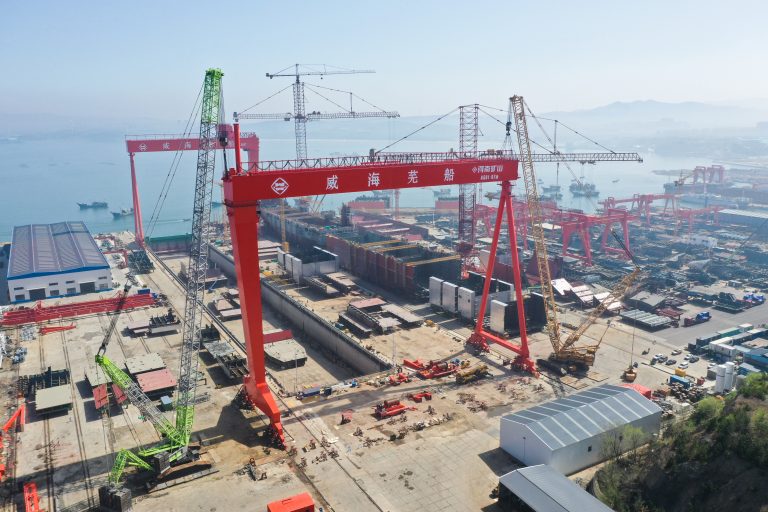
Henan Mine Crane manufactured Shipbuilding Gantry Crane
Periodic Mechanical and Electrical Maintenance
Periodic mechanical and electrical maintenance, such as checking the operation of the drive system, adjusting the brake clearance, checking whether the fasteners are loosened, cleaning the dust of the control cabinet, checking the operation status of the motor and cable.
Regularly replace the wearing parts, such as wire rope, bearings, seals, to ensure that all parts of the equipment can operate normally. Henan Mine will provide regular maintenance guidance to help shipyards do a good job of maintenance.
Corrosion Protection and Paint Maintenance
For the high salt and humid environment of the shipyard, it is necessary to carry out regular corrosion protection and maintenance, such as removing rust and spraying paint on the metal parts of the equipment, and checking the sealing condition of the electrical system to avoid corrosion.
Detailed coating maintenance plan is formulated, the integrity of the coating is regularly checked, and timely repainting is carried out to ensure the corrosion resistance of the equipment.
Predictive Maintenance Opportunities
For large, high-value shipbuilding gantry cranes, predictive maintenance can be used, through sensors, monitoring equipment, real-time monitoring of motor, brake, gearbox and other components of the operating state, in advance to find potential failures.
This can take countermeasures in advance to avoid sudden failures, reduce downtime, and improve the operational reliability of the equipment. Henan Mine can equip large equipment with predictive maintenance systems to help shipyards achieve intelligent maintenance.
Common Questions Buyers Ask Before Purchasing (pre-FAQ bridge)
In the process of purchasing shipbuilding gantry cranes, many buyers will have some questions, the following is combined with my daily contact with the case, to answer some of the most common questions, to help you clear your mind.
Many shipyards will ask, a crane can not take into account both heavy-duty segment lifting and general material transfer? In fact, this depends on the configuration of the equipment, if equipped with a dual-lift mechanism, the main lift is responsible for heavy lifting, the secondary lift is responsible for light transfer, it can be taken into account, but to clarify the needs in advance, so that the supplier to do a good job of configuration design.
Another question is whether a single or double lift is required. This depends on the lifting task. If you mainly lift heavy and irregular segments, a double lift is more suitable to improve positioning accuracy and stability; if you mainly lift ordinary materials, a single lift is sufficient and can save costs.
Regarding what data need to be prepared before enquiry, it is actually very simple, as long as the load weight and size, span, lifting height, running length, operating frequency, as well as the power supply and site conditions of the shipyard, the supplier will be able to give accurate quotations and solutions.
The design and manufacturing lead time usually depends on the specification and degree of customisation of the equipment. For common specifications, the manufacturing lead time is 3-6 months; for highly customised equipment, the lead time may be 6-12 months.
In terms of installation support, most suppliers will provide installation guidance and on-site commissioning services, Henan Mine not only provides installation guidance, but also arranges professional team on-site commissioning, to ensure that the equipment can be put into use normally, and also provide operator training.
FAQ
What is the difference between a shipbuilding gantry crane and a container gantry crane?
The core difference between a shipbuilding gantry crane and a container gantry crane is in the application, type of load, spreader and operating environment. Shipbuilding gantry cranes are mainly used in shipyards, lifting hull segments, steel plates and other heavy, irregular materials, spreaders are mostly special lifting beams, lifting frames, the operating environment is outdoor in shipyards, high requirements for corrosion and wind protection.
Container gantry cranes are mainly used in ports, lifting standard containers, spreader is a special container spreader, the operating environment is the port terminal, focusing on high-efficiency loading and unloading, the lifting speed and running speed is faster, the two designs and configurations are very different.
What lifting capacity is typical for shipbuilding gantry cranes?
There is no set standard, it depends on the size of the shipyard and the lifting task. The lifting capacity of shipbuilding gantry cranes for small shipyards is usually 50-100 tonnes; for medium-sized shipyards, it is 100-300 tonnes; for large shipyards, the lifting capacity of heavy shipbuilding gantry cranes can be up to 300-1000 tonnes or even higher.
Henan Mine can provide shipbuilding gantry cranes with lifting capacity of 50-4000 tonnes, and customise the appropriate lifting capacity according to the actual needs of shipyards.
Are shipbuilding gantry cranes always rail-mounted?
Most of the time they are rail-mounted, because the operation area of shipyards is fixed, and the rail-mounted design can ensure the stability and coverage of the equipment, which is suitable for continuous operation.
But there are also a few special scenarios, such as small shipyards, temporary operating areas, will be used without rail-mounted design, but the lifting capacity and span of this design is limited, as opposed to rail-mounted wide range of applications. Henan Mine mainly focuses on the rail type, but also can be customised according to the special needs of the trackless configuration.
What information should I prepare before requesting a quote?
The core information includes: the maximum weight, size and centre of gravity of the material to be lifted; the span, lifting height and running length of the crane; the number of lifts per day, peak load and other operating frequency information; the shipyard’s power supply specifications (voltage and frequency); the site environment (temperature, humidity, wind speed, corrosion).
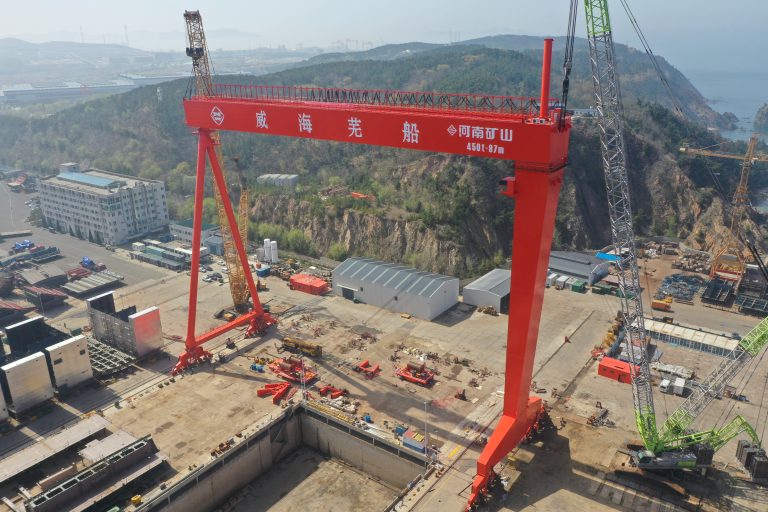
Henan Mine Crane manufactured Shipbuilding Gantry Crane
Conclusion
If your shipyard has large-scale segment lifting, heavy equipment handling and other needs, Henan Mine Crane can be customised according to your site layout, operating conditions, and provide technical support and after-sales protection, so that heavy lifting is safer, more efficient, more worry-free!