

MACHINE LOADING · FABRICATION · ASSEMBLY · MAINTENANCE
How to Choose a Better Overhead Crane for a Manufacturing Workshop
Choose a crane that reaches the working positions, clears the machinery and keeps up with production.
The right workshop overhead crane matches the complete suspended load, hook coverage, available headroom, operating duty and handling process. Rated tonnage is the starting point; the workshop layout determines whether the crane can do the job.
Henan Mine Crane supplies overhead cranes for machining, fabrication, assembly and plant maintenance. Receive a crane selection, working-area layout, equipment specification and itemized quotation for your workshop.

What Henan Mine Crane Supplies
A crane arrangement for the production route
Single-girder, double-girder, underhung and double-trolley options are compared around the loading points and movement of the workpiece. The proposal identifies which stations the crane will serve.
Drawings for the workshop and supporting works
The layout defines span, hook approaches, working hook levels and maintenance access. Crane reactions and agreed electrical interfaces help coordinate the runway, building and power supply.
Lifting and motion matched to the workload
The hoist, travel drives and controls are selected for the load pattern, handling frequency and placement task. Multiple lifting points and coordinated motions are engineered for the defined operation.
An equipment offer with a clear delivery scope
Receive an itemized quotation identifying crane equipment, options, documents and contracted services. Installation support, commissioning, training and spare-parts supply can be included in the order.
Crane Coverage for Your Manufacturing Process
A workshop crane works between specific pickup and placement positions. The equipment layout follows that route, including machines, fixtures, columns and areas needed for maintenance.
| Workshop task | Handling requirement | Crane and layout supplied |
|---|---|---|
| Machining and machine loading | Lift stock, fixtures and components into machines without losing access at the loading position. | Hook approaches, lifting height and controlled placement coordinated with the machine enclosure and workholding. |
| Fabrication and welding | Transfer plates, frames and assemblies between workstations. | Bay coverage and attachment interfaces arranged around component size, lifting points and center of gravity. |
| Equipment assembly | Position parts, change tooling and handle large or long assemblies. | Hoist and trolley arrangement with speeds and lifting positions selected for the assembly sequence. |
| Plant maintenance | Remove motors, gearboxes, rolls and other service components. | A lifting route from the installed position to the maintenance or laydown area, with service access considered. |
Technical Specification for Your Workshop Crane
The layout drawing and technical schedule define the crane being offered. They connect lifting performance with the workshop dimensions, supporting structure and operating conditions.
| Parameter | Definition in your crane proposal |
|---|---|
| Rated capacity, t | Complete suspended load, including the component and carried lifting accessories; individual hook limits where more than one lifting point is used. |
| Crane span, m | Distance between runway rail centers for the proposed bridge arrangement. |
| Travel coverage, m | Runway length, end approaches and the working positions reached along the bay. |
| Hook levels and lifting travel, m | Highest and lowest required hook positions, with rigging height and clearance above machines accounted for. |
| Working duty | The selected classification standard, load spectrum and operating cycle used for the crane and mechanisms. |
| Hoisting and travel speeds, m/min | Transfer speeds, low-speed positioning and any specified coordinated motion. |
| Building and runway interfaces | Crane reactions, wheel loads and agreed rail and support data for the structural review. |
| Power supply and environment | Site voltage, frequency, phase arrangement, temperature, dust, humidity and required protection. |
Select the Crane by Load, Coverage, Headroom and Duty
1. Use the complete suspended load
Add the workpiece, lifting beam, slings, clamps and other carried accessories. For long or uneven components, the lifting points and center of gravity determine the load at each hook. Two hooks do not automatically share a load equally.
2. Check every pickup and placement position
Mark the machine-loading points, assembly stations and laydown areas on the workshop drawing. The proposed layout shows side and end approaches, travel over equipment and room to orient the load.
3. Preserve usable lifting height
Rail elevation, roof bracing, the hoist arrangement and rigging all affect usable lifting space. Compare the highest hook position with the complete suspended load above the machine; building height alone does not establish the available lift.
4. Describe the real production workload
A crane making repeated near-rated lifts receives a different duty assessment from an occasional maintenance crane. Load distribution, cycles, operating hours and travel distances guide the selection of the structure, hoist and drives.
5. Compare the complete installed arrangement
Align crane equipment, runway steelwork, power supply, shipping, erection and commissioning across quotations. Henan Mine Crane identifies the equipment boundary and contracted services so the purchasing team can compare the same scope.
Compare Workshop Overhead Crane Configurations
| Configuration | Practical workshop application | Design interface |
|---|---|---|
| Single-Girder Overhead Crane | A straightforward lifting arrangement for suitable machine-loading, transfer and maintenance duties. | Hoist geometry, usable hook height, side approaches and runway loads. |
| Double-Girder Overhead Crane | Bridge and trolley arrangements for different loads, lifting envelopes and operating duties. | Trolley position, roof clearance, maintenance access and supporting reactions. |
| Underhung Overhead Crane | A suspended bridge arrangement where the supporting runway fits the building and handling route. | The runway and roof or separate supporting structure must be engineered for the crane loads. |
| Double-Trolley Overhead Crane | Two lifting positions for long components or a defined coordinated handling sequence. | Individual hook loads, lifting-point spacing, unequal load sharing and permitted combined operation. |
A double-girder crane does not automatically provide more usable hook height in every building. Compare actual crane drawings for the same load and workshop; a compact single-girder arrangement may also fit a restricted space.
Load and Headroom: An 8 t Assembly Example
For an illustrative lift of an 8 t assembly, the lifting beam and rigging are part of the suspended load:
| Suspended item | Mass |
|---|---|
| Workpiece | 8.0 t |
| Lifting beam | 0.6 t |
| Slings and other carried rigging | 0.2 t |
| Total static suspended load | 8.8 t |
A 10 t crane can enter the shortlist for this lift. Final selection also checks duty, load geometry, individual lifting-point reactions and the supporting structure. The mass calculation does not establish a universal capacity margin.
The layout then accounts for the height of the component, rigging and lifting beam while the load clears the machine. This check can change the hoist arrangement even when the rated capacity remains the same.
Duty, Motion Control and Safe Operation
A production plan of 12 completed handling cycles per hour × 8 hours per day × 250 days per year gives 24,000 cycles per year. This describes workload; duty classification also considers the load spectrum and operating conditions.
| Operating requirement | Equipment and control provision |
|---|---|
| Approach and placement | Hoisting and travel speeds selected for the transfer route and low-speed placement near fixtures or machines. |
| Operator visibility | Pendant, radio or cabin control selected for the working area and handling sequence. |
| Multiple lifting positions | Defined independent and coordinated modes, individual and combined load limits, and the required control logic. |
| Load and motion protection | Specified overload protection, limits, braking and emergency-stop functions; travel zoning or anti-collision functions where included. |
| Acceptance and operation | Agreed factory checks, site functional verification, specified load testing and operating instructions. |
Manufacturing Crane Project: XCMG
Henan Mine Crane’s cooperation with XCMG includes orders for more than 300 intelligent cranes of different types across successive supply stages, supporting construction-machinery structure production and assembly.

For a plant with several production areas, crane capacity and geometry follow the work at each station. Controls, component families and spare parts can be coordinated across the equipment package while each crane retains its own load and duty specification.
What Your Workshop Crane Order Includes
Henan Mine Crane brings together crane selection, manufacturing and the agreed project services. The quotation records the equipment, documentation and site responsibilities included in the order.
| Delivery stage | Equipment, documents and support |
|---|---|
| Engineering and approval | Crane arrangement, hook coverage, technical schedule, reactions and agreed building and electrical interface data. |
| Manufacturing and inspection | Production against the approved specification, with agreed assembly, electrical, functional and inspection records. View our manufacturing equipment. |
| Shipping and installation | Packing and shipping scope, delivery access, assembly space and the contracted erection or installation-support responsibilities. |
| Commissioning and handover | Agreed site checks and load tests, operating and maintenance manuals, electrical drawings and training. |
| Maintenance and spare parts | Service access, component identification and a recommended spare-parts package where included in the order. |
| Commercial and service terms | Delivery milestones, payment terms, warranty coverage and its starting point, remote support and any contracted on-site assistance. |
For an existing workshop, installation planning addresses runway condition, delivery openings, assembly space and production downtime. The schedule distinguishes drawing approval, manufacturing completion, shipment readiness and site handover.
Manufacturing Workshop Overhead Crane Prices
For the listed 5–20 t configurations, allow an approximate equipment budget of US$12,000–60,000 per set. The span and lifting height below define the reference arrangement.
| Reference configuration | Span | Lifting height | Equipment budget / set |
|---|---|---|---|
| 5 t single-girder crane | 16 m | 6 m | US$12,000–20,000 |
| 10 t single-girder crane | 20 m | 6 m | US$20,000–30,000 |
| 10 t double-girder crane | 20 m | 6 m | US$25,000–40,000 |
| 20 t double-girder crane | 24 m | 6 m | US$40,000–60,000 |
Final pricing follows the selected duty, components, controls and lifting attachments. These are budget references; the itemized quotation establishes the contract price.
Runway steelwork, rails, conductor systems, building reinforcement, freight, import charges, erection and commissioning are separate budget items unless included in the quotation. Compare the total installed scope alongside the crane price.
Workshop Overhead Crane FAQs
Which overhead crane is suitable for a manufacturing workshop?
Select around the complete suspended load, hook coverage, headroom, duty and handling process. Compare single-girder, double-girder and underhung arrangements using the same workshop drawing and operating cycle.
How do I calculate the required lifting capacity?
Add the workpiece and all carried lifting accessories, then assess lifting-point loads and operating conditions. In the example, an 8.0 t component, a 0.6 t beam and 0.2 t of rigging give an 8.8 t static suspended load.
Can a crane be installed in an existing workshop?
An arrangement can be developed around the building and available installation space. Crane reactions, runway condition, structural capacity, delivery access and erection space guide the engineering and installation review.
Does a double-girder crane always provide more hook height?
Usable lifting height depends on the hoist, trolley, bridge connections and roof clearances. Compare the proposed drawings and complete suspended arrangement for the same workshop.
How is the crane working duty selected?
The assessment uses load spectrum, handling cycles, operating hours and stated operating conditions under the selected classification standard. Hours alone do not define the crane or hoist duty.
How much does a workshop overhead crane cost?
The listed 5–20 t reference configurations have approximate equipment budgets of US$12,000–60,000 per set. Span, lift, duty, components, controls and supply scope determine the project quotation.
Does the quoted crane price include installation?
The quotation identifies the inclusions. Runway steelwork, electrification, shipping, unloading, erection, commissioning and local testing are separate items unless expressly included.
What will Henan Mine Crane provide with the proposal?
Receive a recommended crane configuration, layout for review, equipment specification, agreed building-interface data and an itemized commercial offer. Documentation, spare parts and site services are identified in the agreed scope.
Overhead Crane Equipment for Manufacturing Workshops
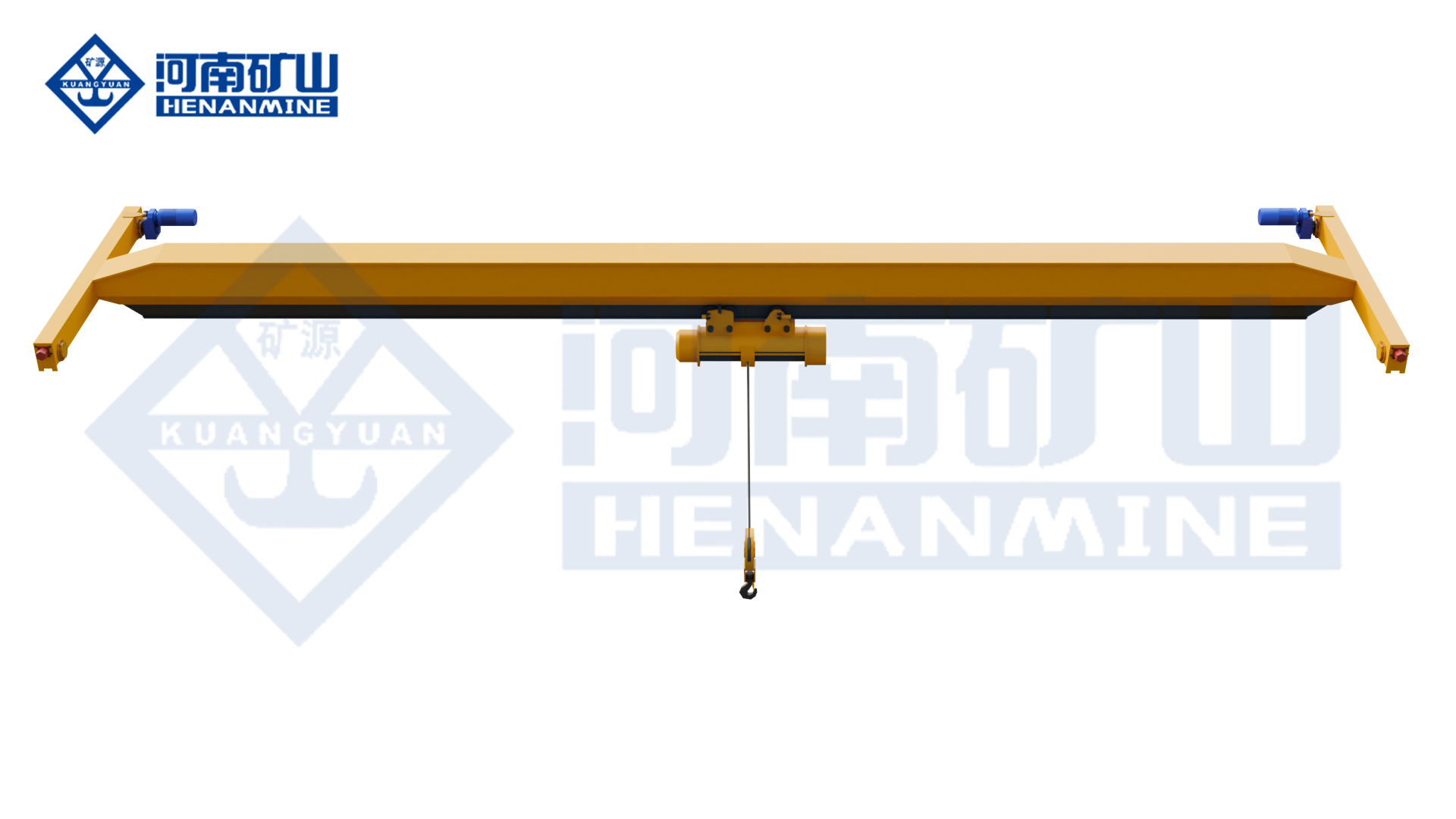
Single-Girder Overhead Crane
General workshop material transfer, machine loading and equipment handling.

European-Style Single-Girder Crane
An electric-hoist configuration to compare for production and assembly layouts.
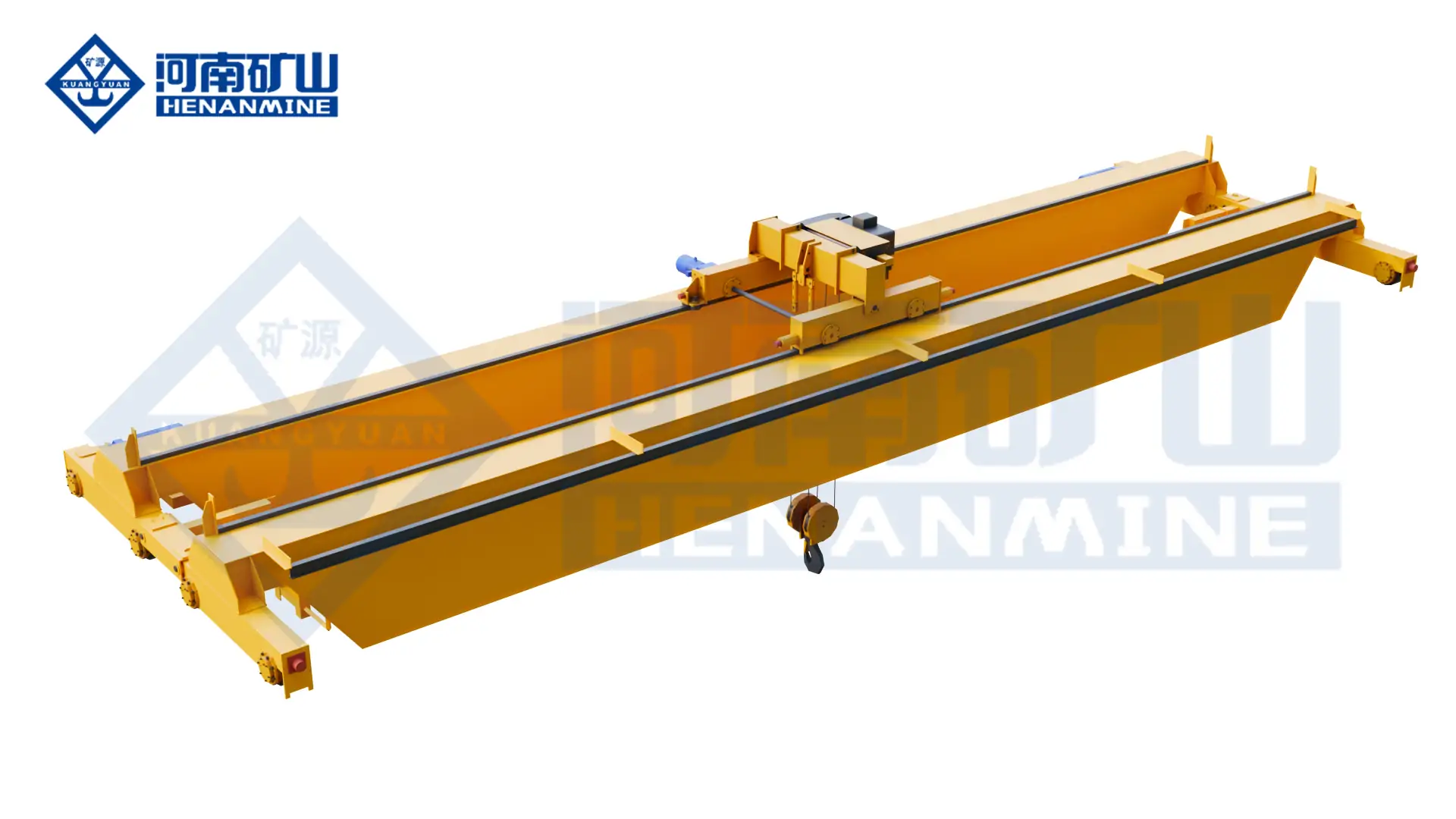
Double-Girder Overhead Crane
Bridge and trolley arrangements for different load, hook-height and duty requirements.

Double-Trolley Overhead Crane
Two lifting positions for long components and engineered coordinated handling.

Underhung Overhead Crane
A suspended bridge arrangement with supporting runways designed for crane loads.
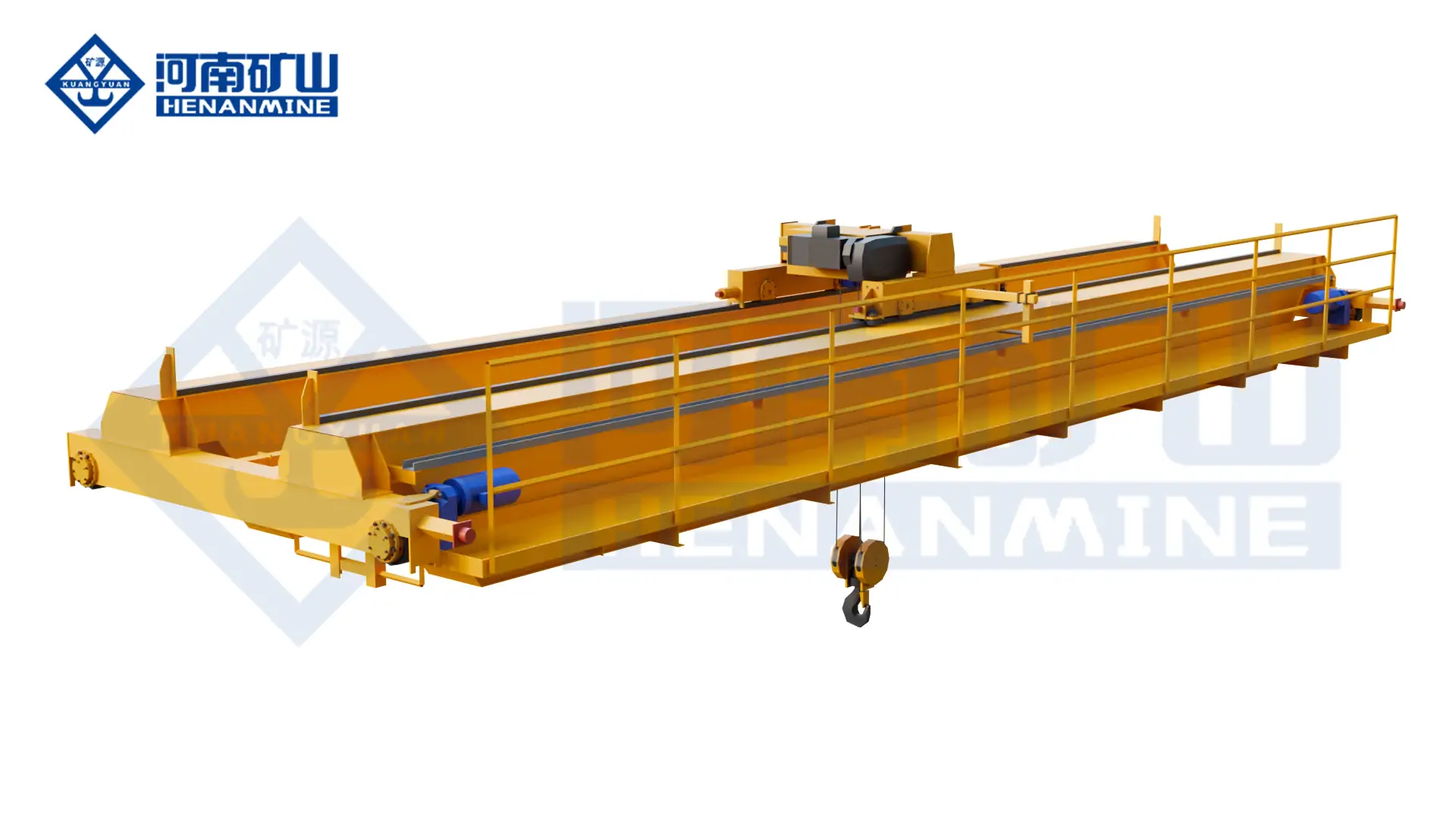
Frequency-Controlled Electric-Hoist Crane
Configured travel and lifting controls for repeated handling and placement.
Request a Workshop Overhead Crane Layout and Quote
Plan machine loading, fabrication, assembly and maintenance with an equipment package from Henan Mine Crane.
Receive a crane selection, working-area layout, technical specification and itemized quotation. The offer sets out crane equipment, lifting-device interfaces, structural reactions and agreed delivery and site-support scope.
Start with the heaviest load and a workshop drawing or photographs. Include the lifting attachment, working positions, handling frequency, power supply and installation destination where available.
Email: info@hnksglobal.com | WhatsApp: +86 188 3620 7779