

|
Henan Mine Crane · Sludge And Waste Handling Sludge Handling Cranes for Waste ProcessesMove dewatered sludge and sticky process residues from reception bunkers to storage areas and feed hoppers. Henan Mine Crane supplies grab overhead cranes with matched clamshell grabs, motion controls and process interfaces for wastewater treatment and waste processing plants. |
 |
Sludge Storage, Transfer And Process Feeding
A sludge handling crane transfers grab-compatible material above the bunker, keeping floor space available for plant equipment and access. The grab must retain the wet load and release it into the receiving hopper.
| Process Area | Crane Function |
|---|---|
| Reception and storage | Clear the tipping area, redistribute stored sludge and load transfer containers. |
| Drying and thermal treatment | Fill the receiving hopper serving a dryer or incineration feed system. |
| Industrial wastewater residues | Transfer dewatered cake, settled residues or grit using a material-specific grab. |
Pumpable slurry may be better served by pumping; the handling method follows the material’s consistency and the plant layout.
What Henan Mine Crane Supplies
One Package For Crane, Grab And Controls
We match lifting capacity, grab weight, closing action and travel speeds in one proposal. This avoids a large bucket that exceeds the available payload or a hoist that cannot support the production cycle.
A Grab Selected For Sticky Material
Shell profile, closing force, sealing edges and opening clearance are selected around sludge consistency. The design considers retained material, cleaning access and wear parts, rather than relying on bucket volume alone.
Controls That Fit The Plant
Manual, radio and programmed-cycle options are available. The control package can include position feedback, anti-sway, load monitoring, restricted travel zones and hopper-ready interlocks, with functions identified in the offer.
Technical Configuration
| Item | Configuration Basis |
|---|---|
| Crane platform | QZ double-girder grab bridge crane; catalogue capacity range 5–20 t. Net sludge payload is specified separately from grab weight. |
| Span and lifting height | Set from bunker coverage, lowest pickup level, hopper lip and fully opened grab clearance. |
| Grab drive | Four-rope mechanical or electro-hydraulic clamshell, matched to the crane and material. |
| Duty and throughput | Selected from load spectrum, cycles per hour and daily operating hours. |
| Environment and power | Coating, enclosure protection, temperature range, plant voltage and frequency specified for the site. |
| Engineering documents | Arrangement drawing, wheel reactions, electrical interfaces and agreed inspection and test plan. |
Choose The Crane Around The Handling Route
For wet, cohesive sludge, a purpose-selected clamshell is the starting point. A general waste orange-peel grab should not be assumed to retain the same material. For immersed pickup, the grab and its drive require a specific submerged-service design.
| Configuration | Application | Design Priority |
|---|---|---|
| Double-girder grab bridge crane | Repeated bunker transfer and hopper filling | Duty, usable coverage and complete cycle time |
| Grab-and-hook bridge crane | Bulk handling plus planned equipment lifts | Separate ratings, attachment changes and service access |
| Grab gantry crane | Yards or bays without elevated runway support | Ground rails, drainage, foundations and outdoor exposure |
Specify Tonnes Per Hour, Not Just Bucket Volume
Effective payload depends on sludge bulk density, fill factor and how completely the grab empties. Crane selection includes the grab’s own weight; adhesion and breakout resistance also enter the load assessment.
Sizing example: delivering 2 t of sludge per complete 180-second cycle at 75% productive time gives approximately 30 t/h. This is an illustrative calculation, not a rated output. The working cycle includes grabbing, travel, discharge and return, with allowance for delays and cleaning.
The crane batch-fills a receiving hopper; the downstream feeder controls process dosing. Where feed continuity is critical, hopper buffer capacity and a standby handling arrangement are planned together.
Protection For Humid And Corrosive Areas
The protection package addresses steelwork preparation and coating, exposed fasteners, cable systems, electrical enclosures and condensation control. Grab seals and hydraulic components are selected for the actual chemical exposure and cleaning method.
An IP rating alone does not establish corrosion resistance or suitability for pressure washing. Where the plant classifies a hazardous area, electrical equipment is selected for its classification, gas or dust group and temperature limits; explosion protection is a separate specification.
Sludge Handling Crane Price
The following equipment budgets are estimates based on comparable industrial grab cranes. The sludge-specific quotation covers the selected grab, duty, protection and controls.
| Equipment Scope | Indicative Budget, USD |
|---|---|
| Industrial double-girder grab crane | Approximately US$40,000–100,000 per set |
| Higher-duty waste-process grab crane | Around US$190,000 per set; complex packages can cost more |
Final price depends on span, lift, grab design, duty, corrosion protection and automation. Runways, support structures, civil works, freight, taxes and site installation are additional unless included in the offer.
Project Reference: Automatic Grab Crane In Waste Treatment
Henan Mine Crane’s December 2025 manufacturer report records an automatic grab crane entering service at a waste-incineration power project. Reported features include PLC and variable-frequency control, anti-sway, fixed-point grabbing, constant-weight cyclic operation, wireless control and fixed-point discharge.
This is a waste-incineration reference. A sludge application requires its own grab, material assessment and duty selection; a reserved automation interface does not by itself establish fully unattended operation.
Testing, Delivery And Maintenance Support
The supply offer defines factory inspection, functional testing and documentation. Site services can include installation guidance, commissioning, operator training and agreed load testing. Material-handling trials, where specified, verify filling and discharge with representative sludge.
We identify service access and recommended wear parts for the grab, ropes, brakes and electrical equipment. The commercial package states the delivery schedule, warranty, installation responsibilities and spare-parts scope.
Frequently Asked Questions
Does crane capacity include the grab weight?
Crane selection must account for the complete suspended load, including the grab and carried sludge. The offer should identify both the crane rating and the usable sludge payload.
Which grab is suitable for sticky sludge?
A sludge-specific clamshell is generally the starting point. Shell shape, closing force, sealing and opening geometry are selected for consistency, inclusions and discharge behaviour.
Can a sludge handling crane work automatically?
Yes, a project-specific package can provide programmed transfer and hopper-filling cycles. Automatic operation also depends on position feedback, process interlocks, defined operating zones and an agreed acceptance test.
Can the crane provide continuous process dosing?
A grab crane transfers material in batches. A receiving hopper provides buffer storage, while a suitable feeder controls the continuous flow to the downstream process.
Related Sludge And Waste Handling Solutions
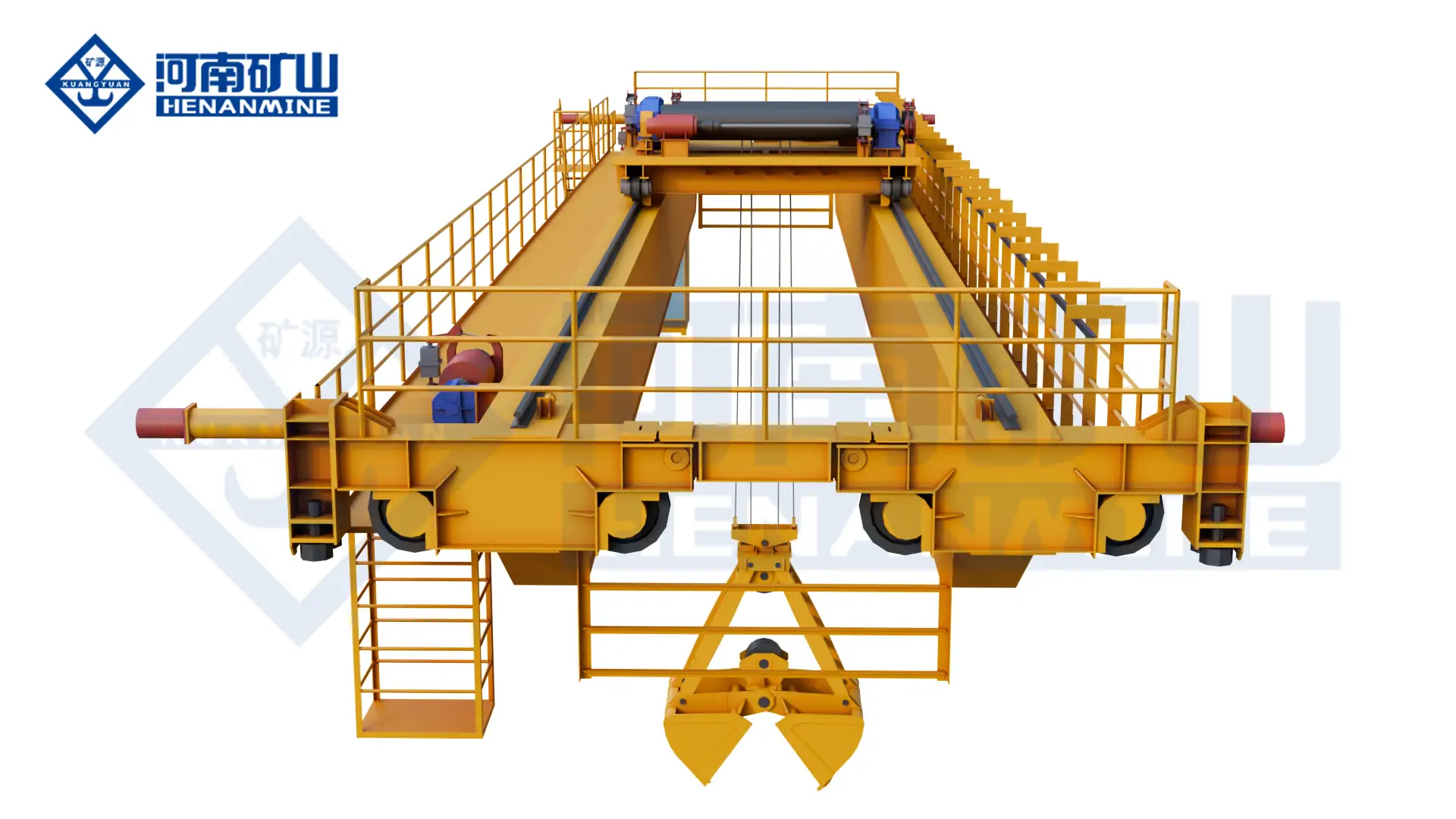
Grab Overhead CraneDouble-girder platform for repeated bunker transfer and hopper filling. |
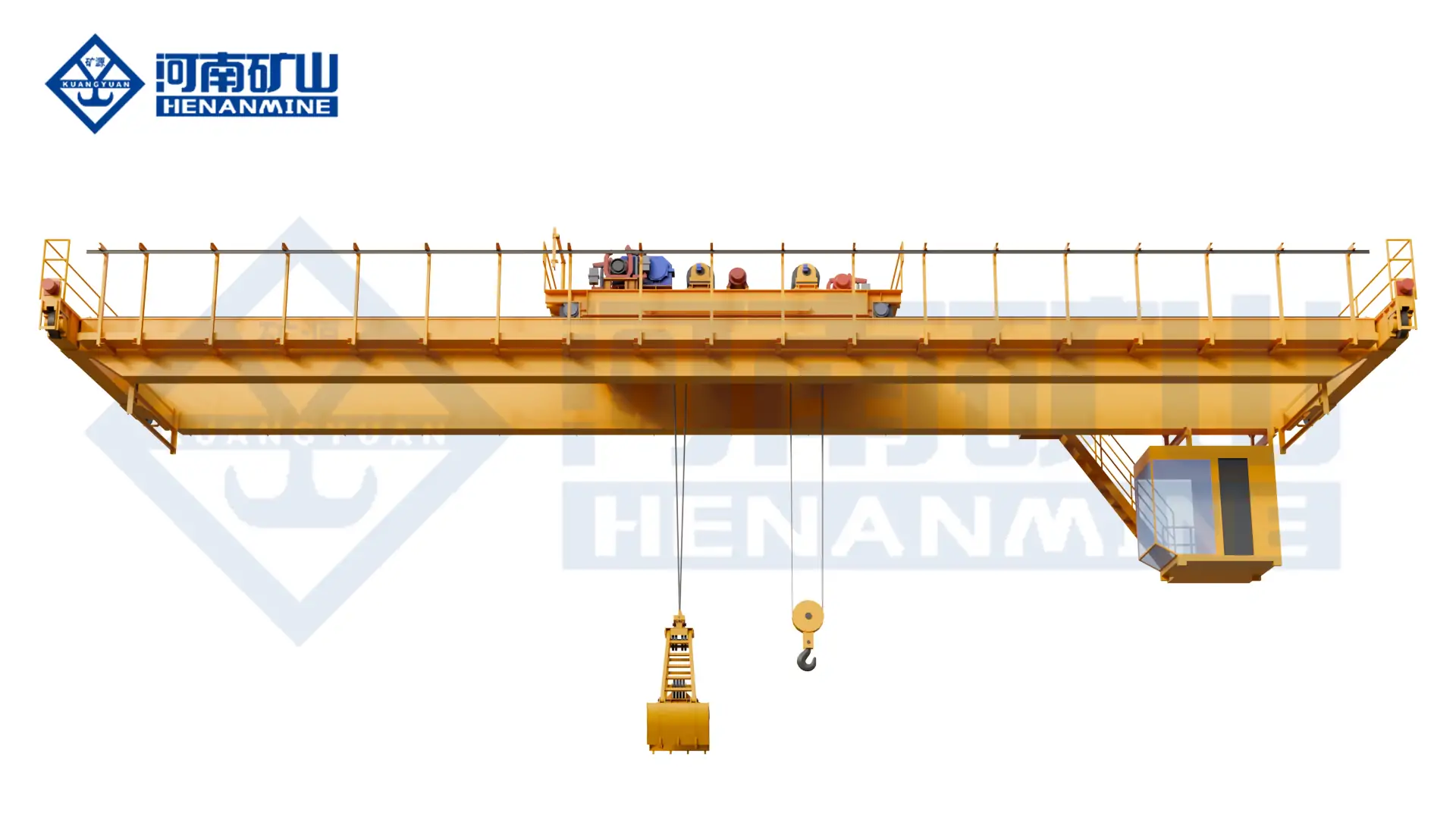
Grab-And-Hook CraneSeparate handling modes for bulk material and planned equipment lifts. |
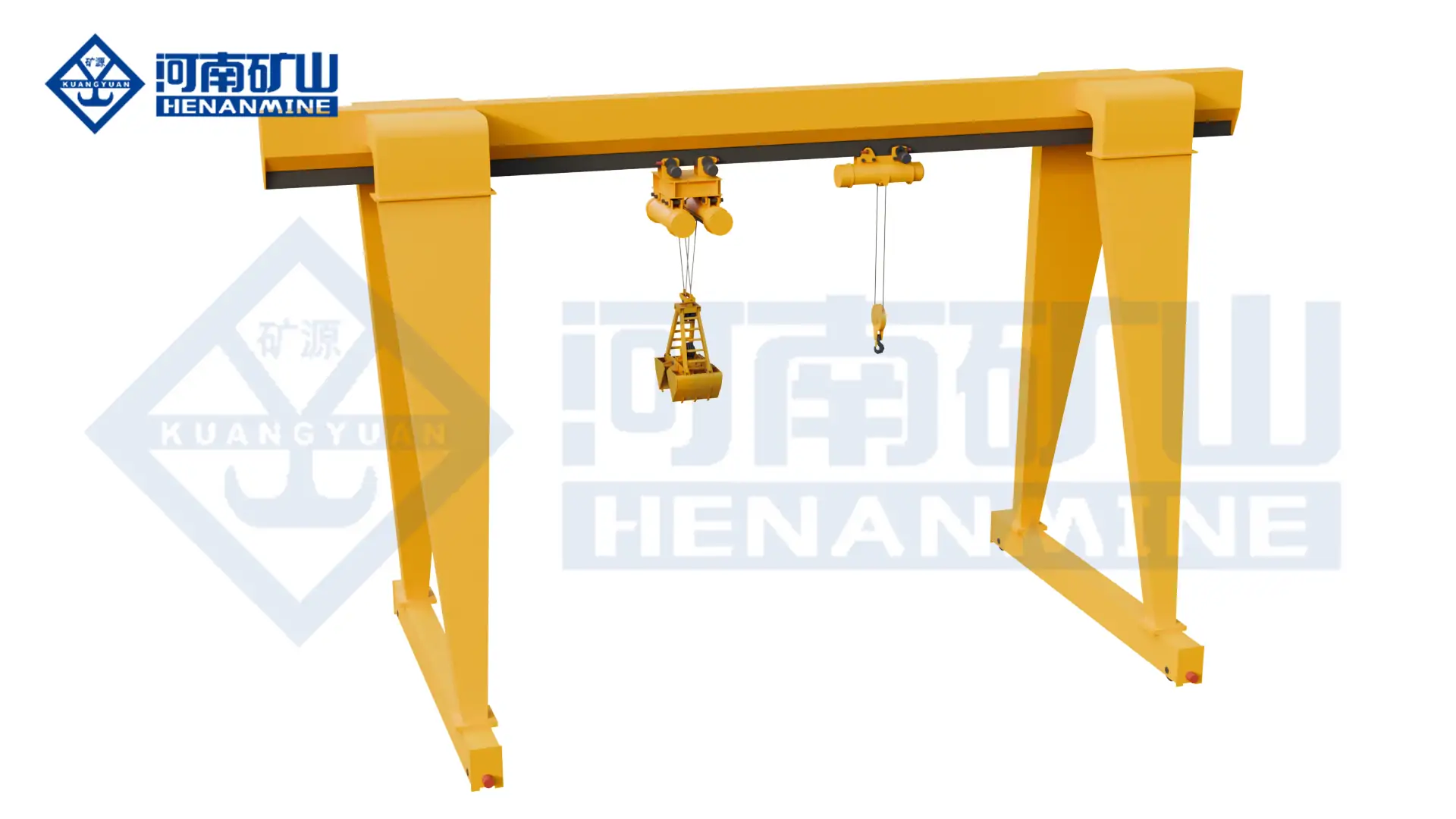
Grab Gantry CraneGround-supported handling for yards and bays with suitable rail foundations. |