

REFINERY MAINTENANCE · ROTATING EQUIPMENT · HAZARDOUS-AREA LIFTING
Overhead Cranes for Oil Refineries
Lift compressor rotors, pump assemblies and maintenance components with crane coverage built around the removal route.
An oil refinery overhead crane provides vertical lifting and horizontal transfer within a defined process building or maintenance bay. Selection combines the complete suspended load, available headroom, operating duty and the hazardous-area classification at the crane’s location.
Henan Mine Crane supplies overhead cranes, explosion-proof hoisting arrangements and project documentation for refinery maintenance applications. Receive a crane layout, equipment specification and itemized offer covering the agreed equipment, inspection and site services.
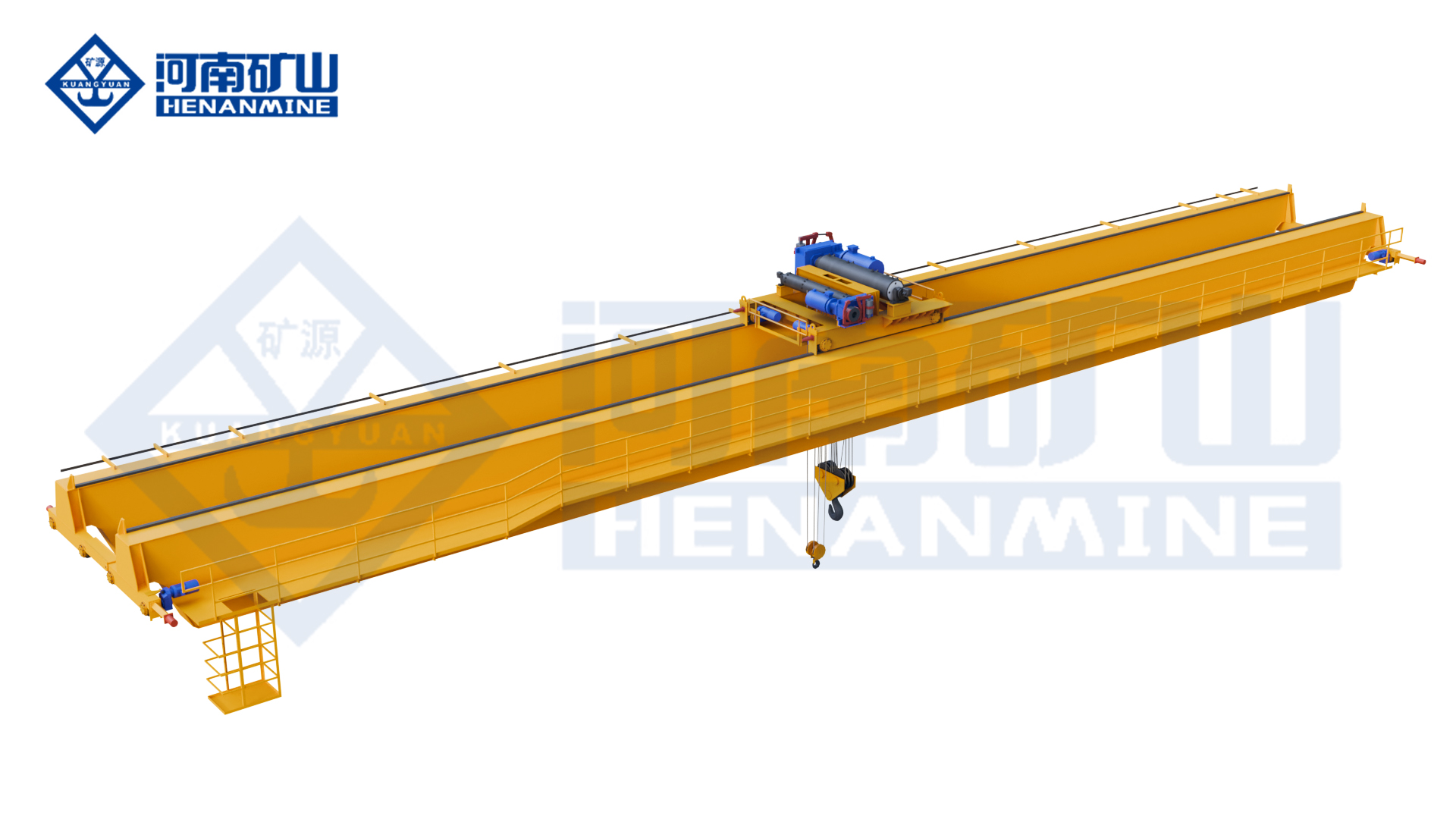
What Henan Mine Crane Supplies
Coverage from machine to laydown area
We develop the hook path around the installed equipment, removal clearance and receiving stand. The proposal shows span, lifting height and hook approaches so that the crane can reach both ends of the maintenance operation.
A defined hazardous-area equipment package
The technical offer identifies the proposed Ex protection, equipment markings and certification scope against the plant classification. Motors, controls, cables and mechanical ignition risks are reviewed as parts of the selected crane arrangement.
Controlled handling of expensive components
Hoist speeds, travel controls and lifting interfaces are selected around the component and its installation clearances. Dual-speed or variable-frequency options are specified where suitable, with their integration into the hazardous-area equipment package addressed.
Drawings, inspection and handover support
Receive approval drawings, agreed factory inspection records, manuals and a recommended spare-parts list. Installation supervision, commissioning and operator training can be included, with responsibilities and service scope stated in the quotation.
Refinery Equipment and Maintenance Duties
| Work area | Typical lifts | Crane selection focus |
|---|---|---|
| Compressor and turbine buildings | Rotors, casings, motors and associated maintenance components. | OEM lifting points, component balance, controlled approach and coverage to the transport or laydown position. |
| Pump houses | Pump assemblies, motors, valves and service parts. | Hook access between installed equipment, lifting clearance and the local hazardous-area classification. |
| Heat-exchanger maintenance bays | Bundle or component lifting during an approved maintenance operation. | Verified component mass, beam and sling arrangement, receiving supports and a separate extraction method where required. |
| Central maintenance workshops | Dismantling, repair and reassembly of refinery equipment. | Workstation coverage, repair duty and an ordinary or Ex crane selected from the workshop’s documented classification. |
| Covered turnaround laydown areas | Transfer of removed equipment between stands and transport positions. | Runway support, vehicle clearance, environmental exposure and any hazardous-area boundaries along the travel route. |
Select for the Complete Maintenance Lift
Size the crane for everything below the hook
The suspended load includes the component, lifting beam, slings, shackles and other below-hook equipment. We assess the heaviest intended assembly, its centre of gravity and the OEM lifting arrangement before selecting capacity. The lifting accessories retain their own ratings and operating limits.
Follow the component beyond its installed position
A rotor may clear its casing yet still be unable to pass a pipe rack or reach the maintenance stand. Our arrangement checks the load envelope, rigging height, hook approaches and the full transfer path. Runway reactions are issued for the selected crane and agreed design load cases.
Account for concentrated shutdown use
A crane used occasionally through the year can face repeated lifts during a turnaround. The duty selection considers this operating pattern, load distribution and travel distances. The offer states the proposed working class, speeds and control arrangement.
Compare Refinery Overhead Crane Configurations
| Configuration | Where it fits | What the offer defines |
|---|---|---|
| QB explosion-proof double-girder crane | Equipment maintenance in a classified area, where the selected crane meets the specified hazardous-area requirements. | Capacity, trolley arrangement, duty, access, Ex markings and the applicable certification scope. |
| Explosion-proof electric-hoist bridge crane | Maintenance bays where an electric-hoist arrangement suits the load, geometry and operating duty. | Hoist installation, available headroom, controls and the protection of the complete selected arrangement. |
| Conventional single-girder overhead crane | A documented unclassified workshop with suitable loads and building clearance. | Crane capacity, hoist duty, hook coverage, runway interfaces and environmental protection. |
| Conventional double-girder overhead crane | An unclassified repair bay needing a suitable double-girder or trolley arrangement. | Component weight, lifting geometry, duty, service access and building reactions. |
Explosion-Proof Selection for Refinery Service
The hazardous-area classification determines the protection package. The plant name alone does not establish the zone, gas group or temperature class. Our proposal links the crane arrangement to the conditions at its operating and parking positions.
| Selection item | What is defined for the crane |
|---|---|
| Zone and protection level | The documented area classification, applicable equipment protection level or category, and the required protection concepts. |
| Gas group and temperature class | Selection for the actual gas or vapour hazard. IIB and IIC designations are not treated as interchangeable; the temperature class is assessed separately from ambient temperature. |
| Operating environment | Ambient range, local radiant heat, corrosion exposure and enclosure protection. An IP rating addresses ingress protection and does not establish explosion protection. |
| Certificate coverage | A schedule identifying equipment models, markings, certificates and any conditions of use. ATEX, IECEx or another project route is addressed within the agreed supply scope. |
| Electrical and mechanical integration | Motors, brakes, controls, junction boxes, cable entries and moving assemblies reviewed within the selected protection concept, including earthing and relevant ignition risks. |
An IECEx component certificate covers a component; it does not by itself certify the complete crane. The quotation identifies the certification boundary and supporting evidence for the offered equipment. CE marking or an ISO management-system certificate also does not establish hazardous-area suitability.
Controls and access included in the review
Pendant controls, radio equipment, sensors and variable-frequency drives are selected with their installation location and protection requirements in view. Where plant alarm or shutdown interfaces are requested, the scope defines the signals, cause-and-effect requirements and verification responsibilities.
Plant isolation, gas testing, permits and exclusion zones remain part of the operating procedure. Crane selection is coordinated with these controls and with safe maintenance access.
10 t QB Crane: A Defined Catalog Reference
This configuration comes from the Henan Mine Crane Product Selection Guide, QB technical table, page 60. It provides a specific reference for comparing equipment; the project offer states the final duty, dimensions, protection and certification scope.
| Parameter | Catalog value |
|---|---|
| Rated lifting capacity | 10 t |
| Crane span | 19.5 m |
| Maximum catalog lifting height | 16 m |
| Working class shown in the catalog | A3–A4 |
| Hoisting speed | 3.3 m/min |
| Trolley travel speed | 10.3 m/min |
| Bridge travel speed at this span | 12 m/min |
| Maximum catalog wheel load | 123 kN |
| Recommended rail | P43 |
| Electrical supply | 380 V, 50 Hz, three-phase AC |
The catalog lists IIB T4 and IIC T4 protection variants. The delivered marking, ambient rating and certificate coverage are established for the ordered configuration. Different power supplies, finer motion control or higher duty receive a separate engineering selection. Final runway design uses approved project reactions and load cases.
Selection Example: Removing a Compressor Rotor
For an illustrative maintenance lift, assume an 8,000 kg rotor and 1,200 kg of lifting beam, slings and shackles. The total static suspended mass is 9,200 kg. These assumptions show the selection method and are not an installed-project record.
A 10 t crane can be evaluated as a starting capacity. The assessment also covers the OEM lifting points, rigging forces, duty and movement of the complete assembly. Required headroom includes the rotor, sling geometry, lifting beam and clearance above the casing.
The proposed drawing traces the lift from the machine to a maintenance stand and transport position. For a classified area, the protection review follows the same route. This catches a common purchasing problem: adequate rated capacity with insufficient working coverage.
Overhead Crane Prices for Refinery Maintenance
Published budget references for 5–10 t explosion-proof overhead cranes are approximately US$7,000–25,000 per crane for the configurations below. Use these figures for equipment budgeting; they are not firm Henan Mine Crane quotations or prices for a complete installed refinery system.
| Published equipment configuration | Span and lifting height | Budget range, USD |
|---|---|---|
| 5 t explosion-proof overhead crane | 3–12 m span; 3–8 m lifting height | US$7,000–15,000 |
| 10 t explosion-proof overhead crane | 3–12 m span; 3–8 m lifting height | US$10,000–18,000 |
| 10 t explosion-proof overhead crane, broader-span reference | 10–22.5 m span; lifting height priced to the specification | US$12,000–25,000 |
| Higher-capacity or special refinery lifting system | Project-specific span, duty, controls and protection | Itemized project quotation |
Budget basis: public equipment listings reviewed in November 2026. Spans and configurations differ between the listed ranges. Required ATEX, IECEx or other certification coverage is established in the project offer.
The installed budget also accounts for runway beams and rails, foundations, lifting accessories, the agreed certification route, freight, duties, site erection, testing and training. Henan Mine Crane separates these items in the offer so equipment prices can be compared on the same supply basis.
Documents and Inspection Included in the Supply Plan
A refinery crane purchase needs a traceable equipment package as well as a machine. The agreed inspection and test plan identifies review points, witness requirements and the records supplied at handover.
| Project stage | Deliverables defined in the order |
|---|---|
| Engineering approval | General arrangement, hook coverage, clearances, wheel reactions, power requirements and equipment specification. |
| Protection review | Equipment and certificate schedule, proposed markings, protection concepts and documented conditions of use. |
| Manufacturing inspection | Agreed material, fabrication, dimensional, coating and assembly inspection records; scope and traceability stated in the inspection plan. |
| Factory acceptance | Agreed functional checks of motions, brakes, limits, emergency stops and specified interlocks. The FAT plan states the test loads, extent of assembly and witness arrangements. |
| Handover | Operating and maintenance manuals, electrical drawings, agreed test records, component identification and recommended spares. |
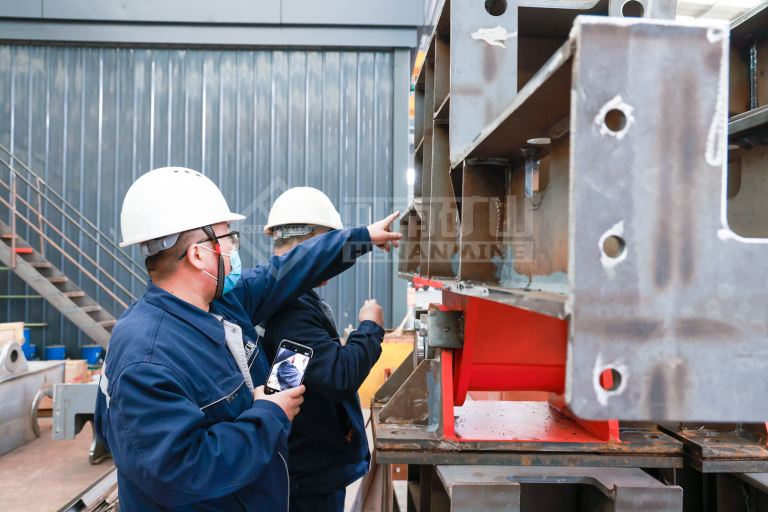
View Henan Mine Crane manufacturing and quality-control practices.
Relevant Experience in Explosion-Proof Process Lifting
Jiangsu: automated crane handling for polysilicon production
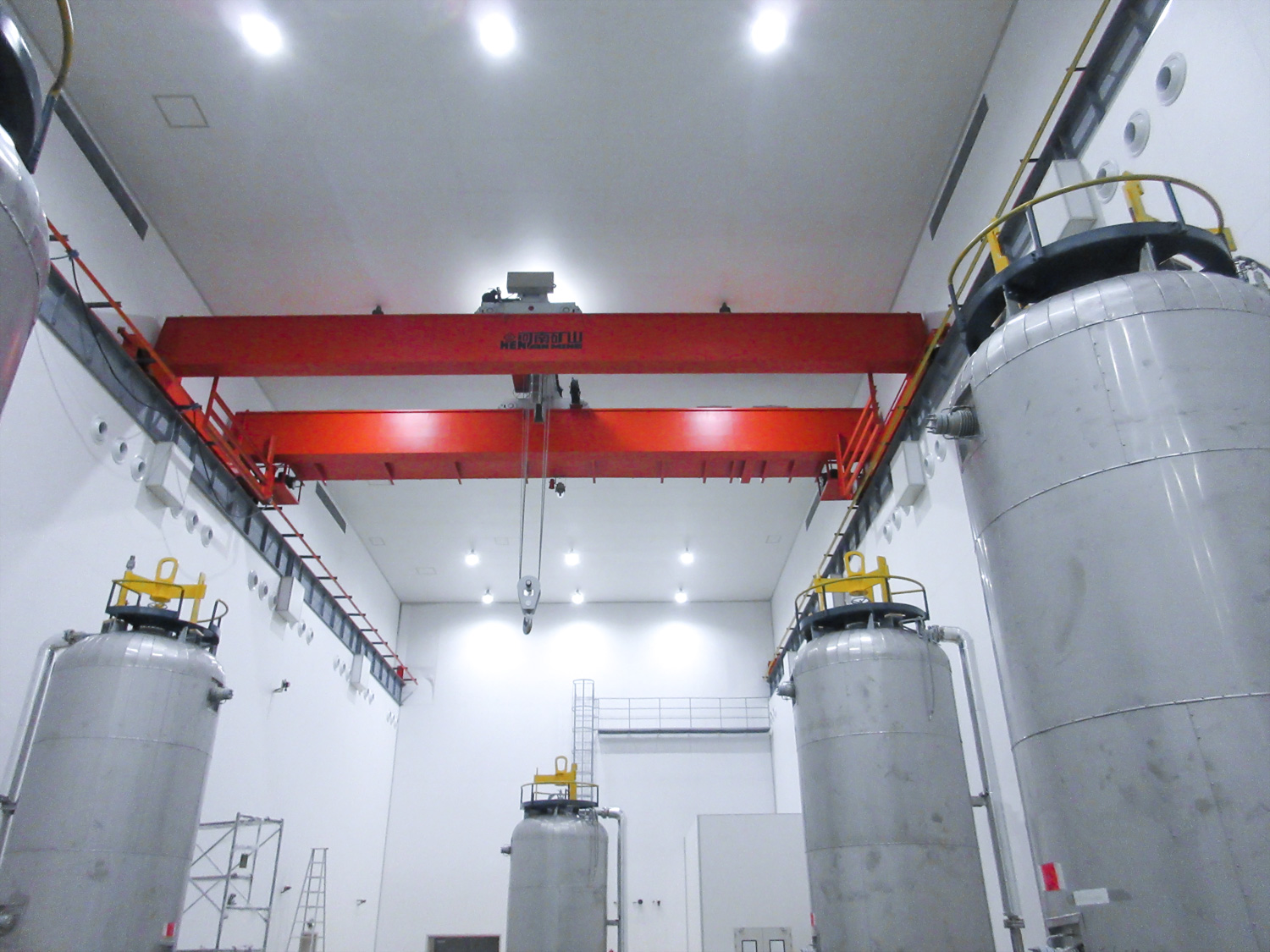
Henan Mine Crane documents a clean, explosion-proof automatic crane application at a semiconductor-grade polysilicon facility in Jiangsu. The system transfers reduction-furnace components and silicon rods along preset routes, combining process-equipment handling with motion control.
For refinery buyers, the relevant engineering work is the coordination of lifting equipment, process interfaces and operating conditions. Each refinery proposal uses its own load schedule and hazardous-area classification.
Installation, Shutdown Planning and Spare Parts
- Installation planning: The service proposal defines delivery sections, assembly access, lifting responsibilities, runway acceptance and available power. Site work is scheduled around the agreed installation and approval milestones.
- Commissioning: The contracted plan covers alignment and functional verification, specified load tests, protection-document checks and operator familiarization. Local inspection or registration responsibilities are stated in the supply scope.
- Turnaround readiness: The quotation sets out drawing approval, certification, fabrication, FAT, shipping and site-service milestones. Lead time, warranty terms and engineer availability are confirmed for the actual order.
- Maintenance and spares: Receive a parts list for the supplied equipment and recommendations for brakes, limits, drive parts and selected electrical items. Ex replacements and repairs must preserve the approved protection arrangement and certificate conditions.
Heat-exchanger handling: separate extraction from lifting
A bridge crane can lift a released bundle using an approved lifting arrangement. Pulling a stuck bundle requires a purpose-designed extractor or another engineered pulling system. Ordinary vertical hoisting is not a substitute for that operation; the handling package defines the interface between extraction, lifting and laydown.
Oil Refinery Overhead Crane FAQs
Do all overhead cranes in an oil refinery need explosion protection?
The documented hazardous-area classification determines the requirement. A classified process building and an unclassified repair workshop may need different crane arrangements. Selection covers the crane’s operating and parking positions.
How is refinery crane capacity selected?
Use the heaviest intended component plus the lifting beam, rigging and other below-hook equipment. Selection also covers balance, OEM lifting points, headroom, working duty and the complete transfer route.
Can a crane be specified for ATEX or IECEx requirements?
The project offer must identify the required route and the certificate coverage of the proposed equipment. A component certificate alone does not certify the complete crane. The supplied model, marking and conditions of use must match the agreed scope.
Does IP65 mean a crane is explosion-proof?
No. An IP rating concerns ingress of solids and water. Hazardous-area suitability also depends on the selected protection concepts, gas group, temperature class, protection level, ambient conditions and applicable certification.
How much does a refinery overhead crane cost?
Published 5–10 t explosion-proof equipment references are approximately US$7,000–25,000 per crane for the listed configurations. Project-specific certification, runway structures, lifting accessories, delivery and installation are additional unless included in the offer.
Can an overhead crane extract a heat-exchanger bundle?
A crane can lift a released bundle with an approved lifting arrangement. Extraction forces require a purpose-designed extractor or another engineered system. Standard vertical hoisting must not be used for an unapproved side pull.
Can a new crane use an existing refinery runway?
An existing runway can be assessed against the proposed crane’s wheel reactions, rail geometry, clearances, condition and design load cases. Reuse follows the structural assessment and approved interfaces.
What comes with a Henan Mine Crane refinery crane quotation?
The offer identifies the crane configuration, protection and certificate scope, approval drawings, inspection plan, supply boundaries and commercial terms. Site services, training, lifting accessories and spare parts are itemized when included.
Explore Refinery Crane Equipment
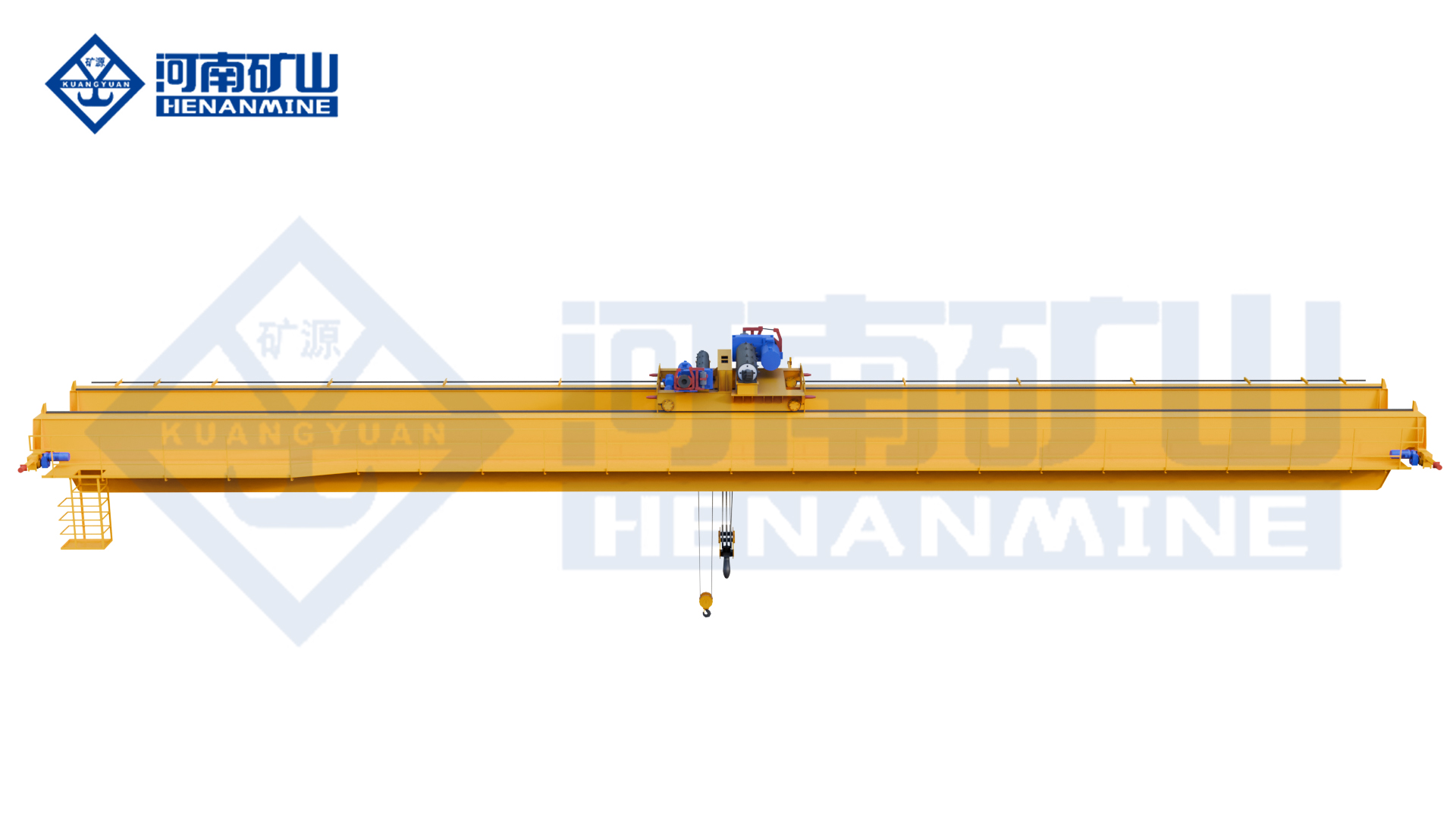
QB Explosion-Proof Overhead Crane
Double-girder platform for a specified hazardous-area lifting duty.
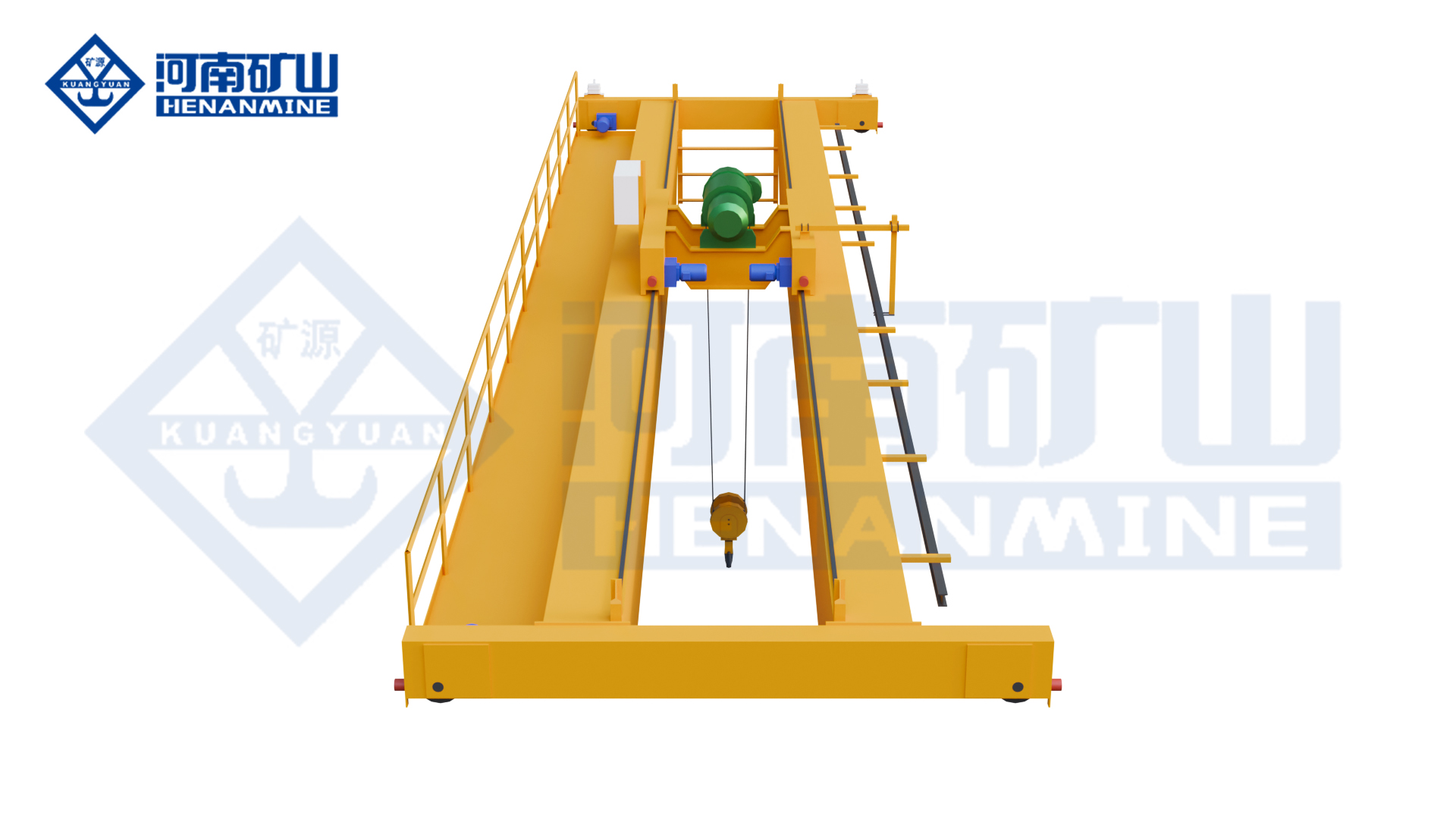
Explosion-Proof Electric-Hoist Bridge Crane
Compare hoist layout, headroom and maintenance-bay coverage.
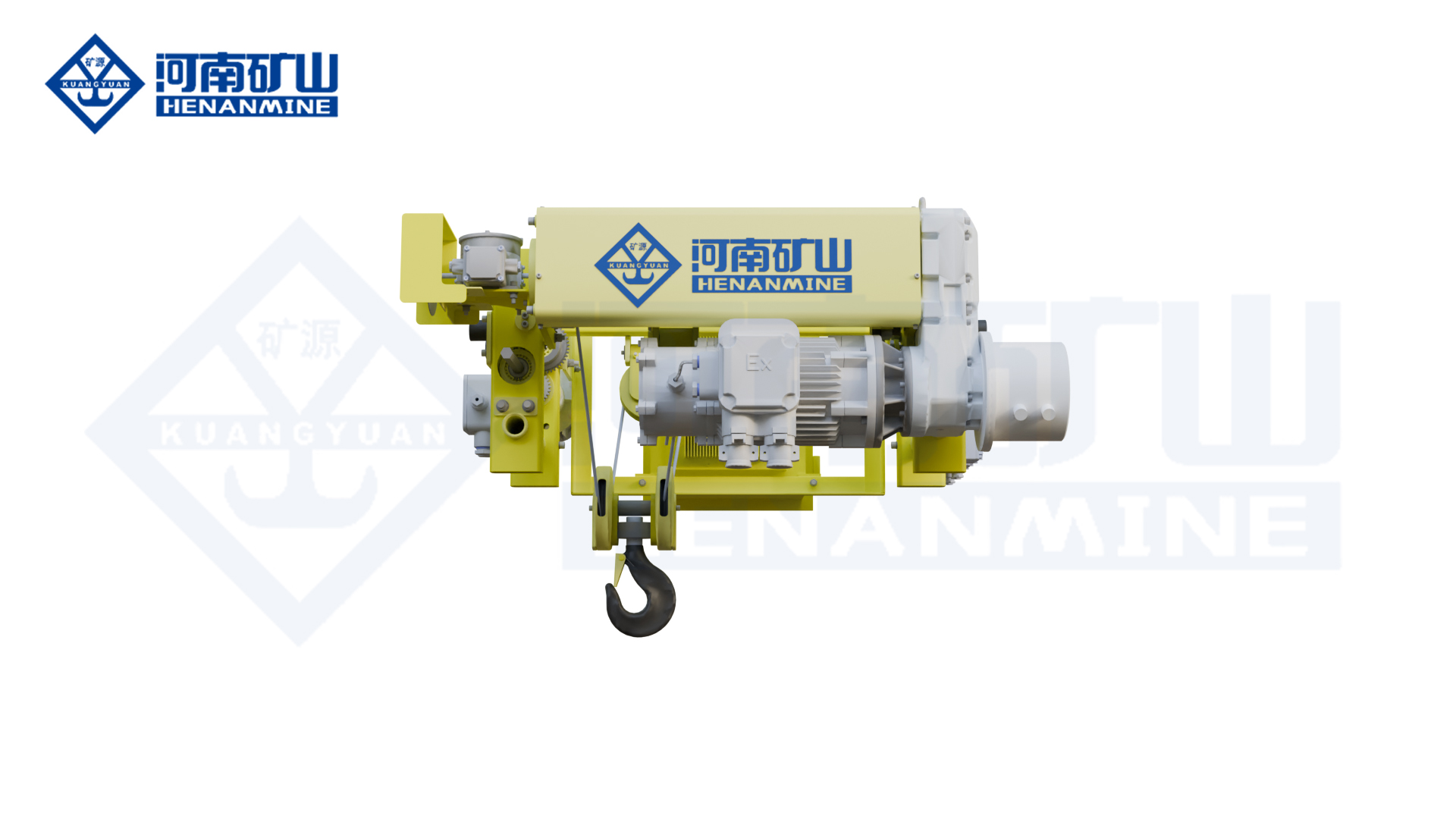
Explosion-Proof Electric Hoist
Hoisting equipment selected within a defined crane and protection package.
Get a Crane Proposal for Your Refinery Maintenance Area
Send the heaviest component and rigging weights, a building or runway sketch, the required hook travel and the hazardous-area data sheet. Include the site power supply, destination and planned installation window when available.
Henan Mine Crane returns a proposed crane arrangement, technical specification and itemized supply offer. The proposal identifies equipment coverage, protection and documentation scope, inspection, delivery terms and requested site support.
Email: info@hnksglobal.com | WhatsApp: +86 188 3620 7779