
|
Henan Mine Crane · Recycling Plant Lifting Material Recovery Facility CranesGrab cranes for bunker transfer and feed-hopper loading, with hook cranes for sorting-line maintenance. Henan Mine Crane supplies overhead crane packages for MRFs and recycling plants, combining the bridge, hoist or grab, controls and plant interfaces in one proposal. |
 |
Crane Applications Inside An MRF
A material recovery facility (MRF), also called a materials recovery facility, separates recyclables for reuse. Its cranes handle bulk transfer or equipment maintenance.
| Operating Area | Lifting Task |
|---|---|
| Receiving and storage bunkers | Redistribute loose recyclables and clear defined reception zones where the layout suits overhead handling. |
| Rejects and recovered-fuel buffers | Transfer residual material and replenish receiving hoppers. |
| Segregated material bays | Handle compatible glass fractions or ferrous materials with a separately selected bucket or magnet. |
| Sorting and baling equipment | Lift approved motors, drives, screen assemblies and other components to a maintenance landing area. |
What Henan Mine Crane Supplies
Crane And Attachment Selected Together
We match the grab or hook arrangement to the material, available payload and operating cycle. Grab self-weight, headroom and hopper clearance enter the design together, so the lifting package fits the actual route.
Controls For Hopper Feeding
Available options include variable-frequency motion control, radio operation, position feedback, anti-sway and programmed transfer cycles. Hopper-ready signals and restricted zones can link crane movements with the plant’s operating sequence.
Engineering And Site Support
Supply options cover arrangement drawings, wheel reactions, electrical interfaces, factory testing, installation guidance, commissioning and training. The offer identifies the included equipment, site services and recommended spares.
Technical Configuration
| Item | Available Basis |
|---|---|
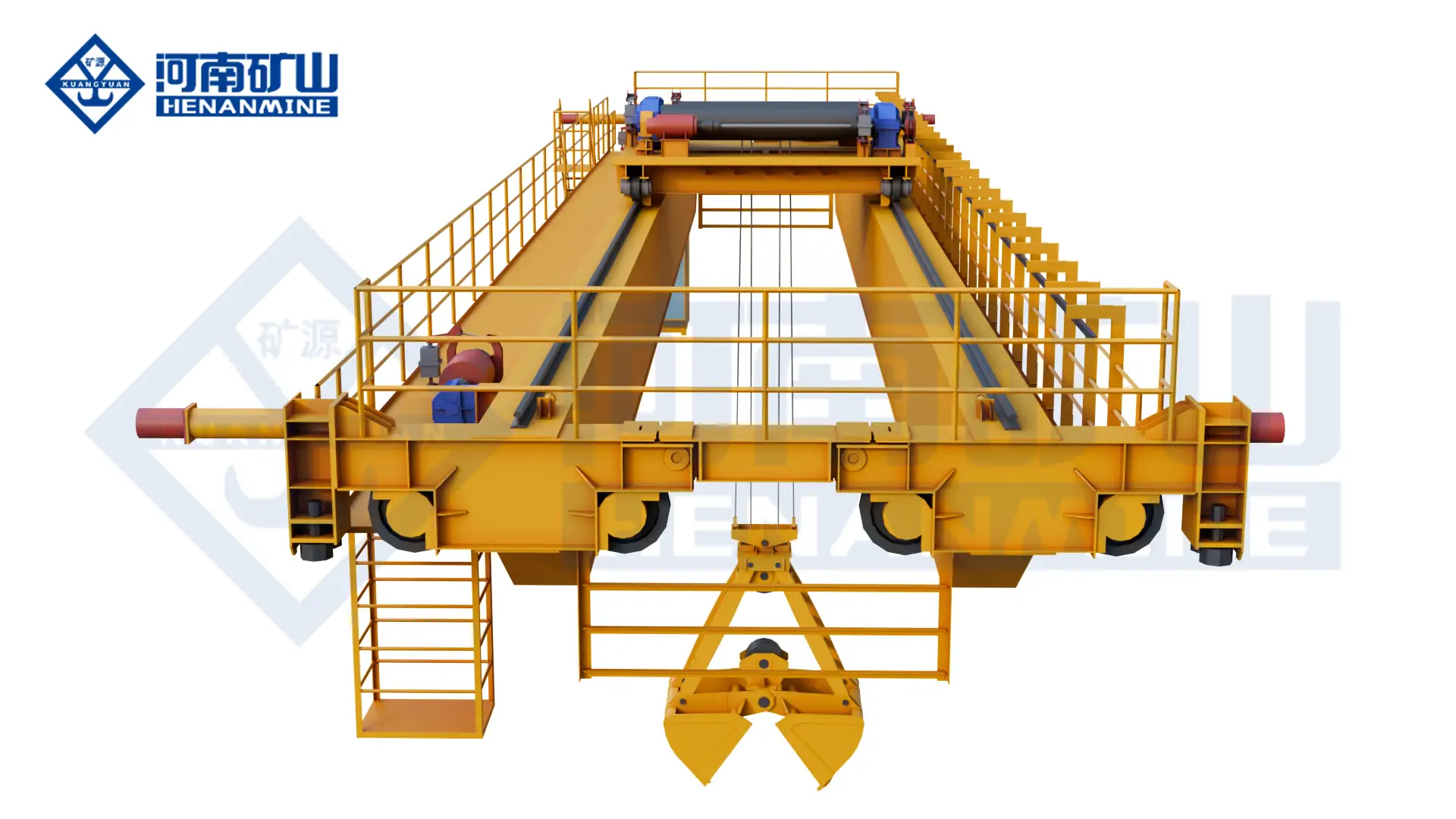
| Process grab platform | QZ double-girder grab crane; catalogue capacity range 5–20 t. Usable material payload is specified separately from grab weight. |
| Grab-crane span | 10.5–31.5 m published platform reference; final span follows the runway layout. |
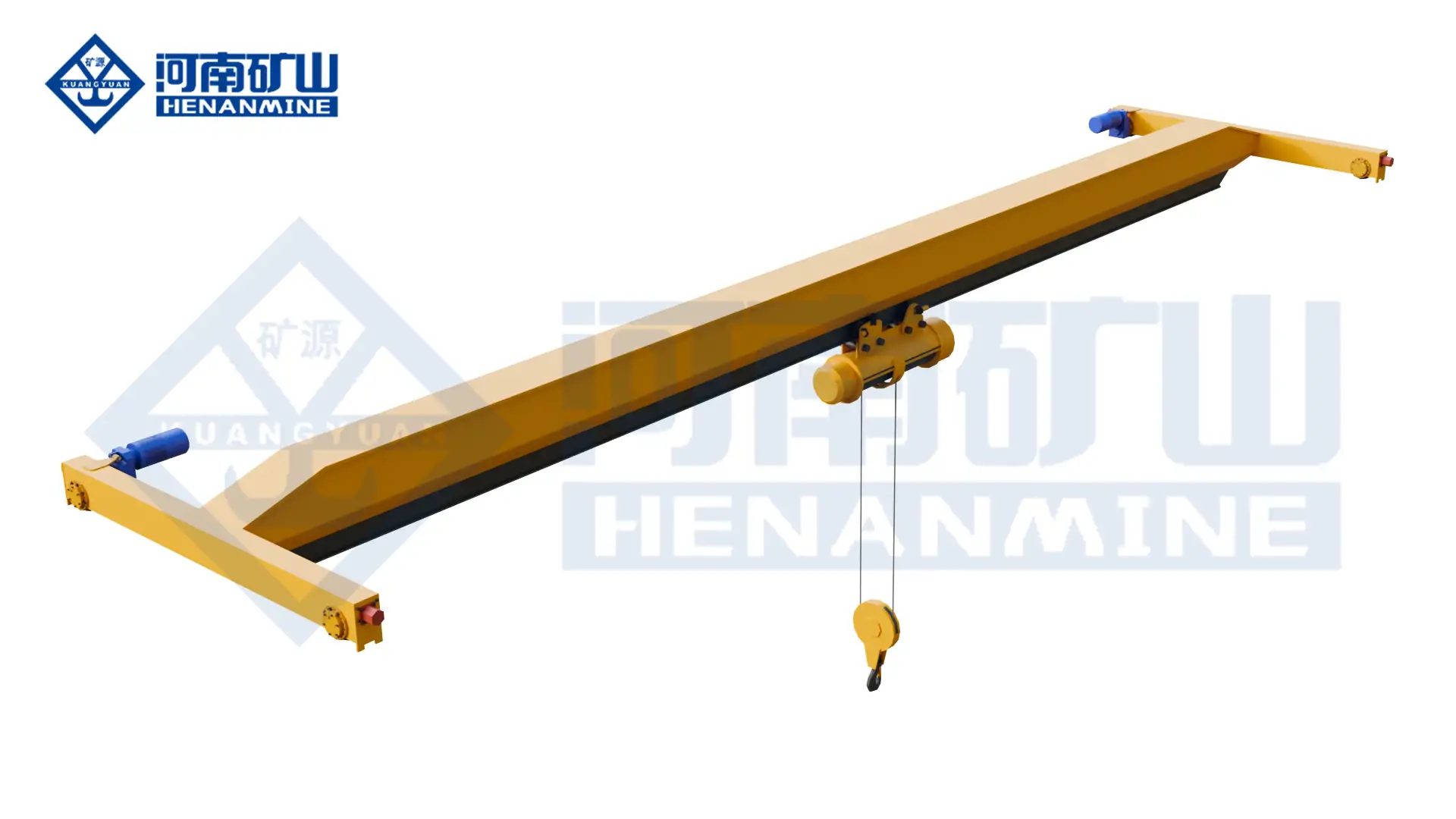
| Maintenance platform | LDA electric single-girder crane; catalogue capacity range 1–20 t. |
| Grab and lifting height | Selected for material retention, opening envelope, bunker depth and discharge clearance. |
| Working duty | Specified from operating hours, load spectrum, feed cycles and rehandling workload. |
| Electrical supply | Configured for the destination voltage, frequency, control arrangement and environmental exposure. |
Selection Considerations
A process crane is selected for the required tonnes per hour and coverage. A maintenance crane is selected for component weight, lifting points and the removal route. For frequently changing tipping-floor piles, compare overhead coverage with a mobile material handler before fixing the building arrangement.
Grab Crane vs Hook And Dual-Purpose Configurations
| Configuration | Suitable Work | Main Difference |
|---|---|---|
| Grab overhead crane | Repeated bunker transfer and hopper loading | Grab retention, process duty and usable coverage govern selection. |
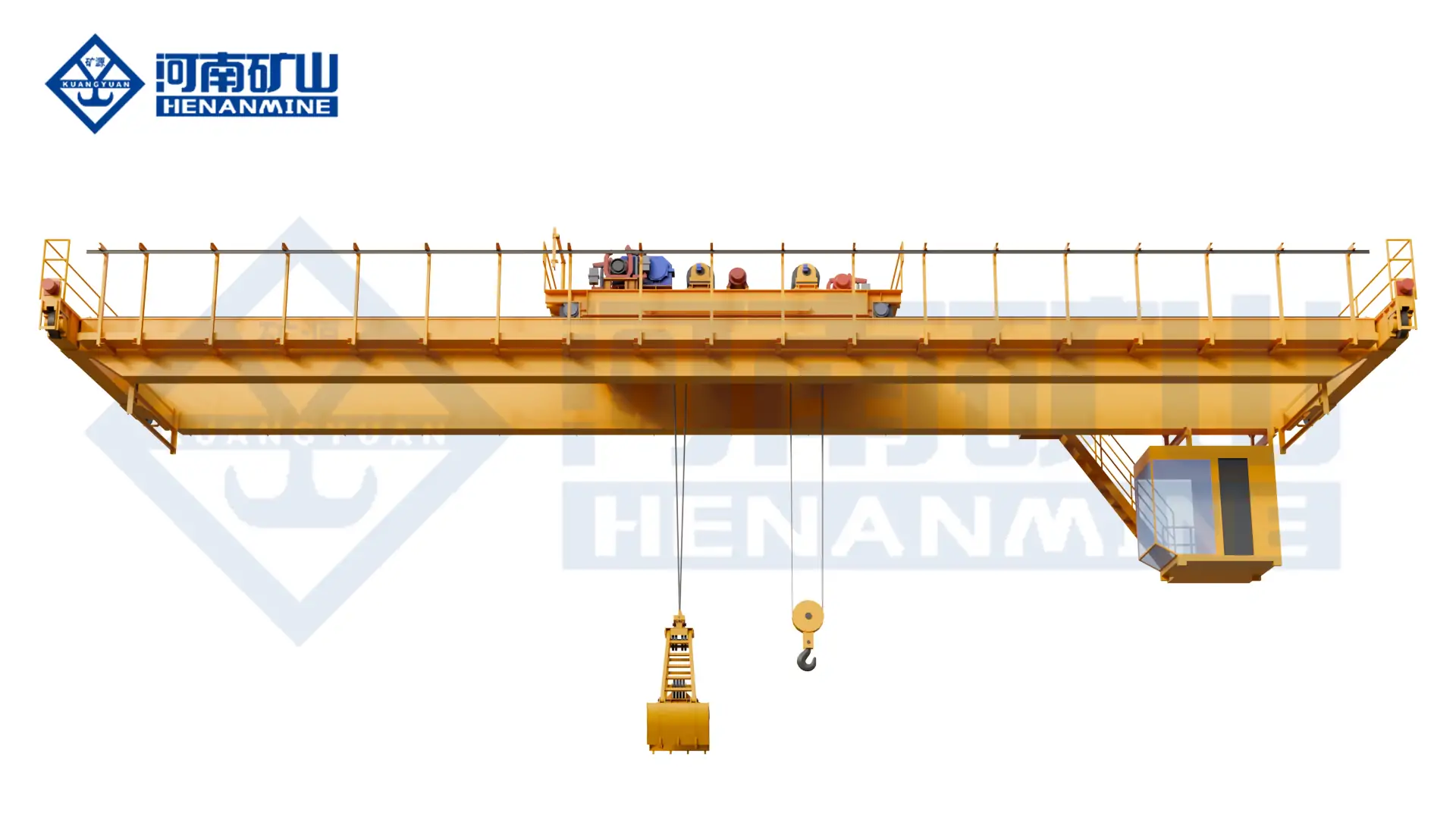
| Grab-and-hook crane | Bulk transfer plus occasional equipment lifts | Each mode has its own rating; maintenance occupies the shared crane. |
| Hook overhead crane | Sorting-line and baler maintenance | Uses approved lifting points and rigging; follows the component removal path. |
Match The Attachment To The Material
Mixed paper, plastics and loose recyclables: select a waste grab around shape, compressibility, film entanglement and spillage. A bucket proven on dense bulk material may not retain the same volume of light recyclables.
Glass and granular fractions: a clamshell arrangement can be considered, with suitable closing edges, wear protection and controlled discharge. A magnet handles compatible ferrous material; it does not handle aluminium or plastics.
Finished bales: use a suitable bale clamp, sling arrangement or other approved attachment. Bale ties are not assumed to be lifting points.
Size The Crane For The Complete Shift
Throughput uses bulk density, effective fill, retention and the complete grab–travel–discharge–return cycle. Rehandling and reception clearance consume the same available crane time.
Illustrative duty: 1 t delivered per 150-second cycle at 75% productive time gives approximately 18 t/h. This is a sizing calculation; output acceptance uses agreed material and site conditions.
The crane delivers batches to a buffer hopper. The downstream feeder or conveyor controls the flow to the sorting process.
Safety, Protection And Maintenance Access
The package can include overload protection, travel and hoisting limits, emergency stops and collision protection for shared runways. Programmed operation coordinates movements with defined exclusion zones and plant interlocks.
Dust, moisture and corrosive residues influence enclosures, coatings, cables and cleaning access. Hazardous-area equipment is specified separately where the plant’s assessment identifies combustible dust or gas.
A maintenance landing area and an accessible crane service position allow work on the grab, ropes and drives away from the active feed zone.
Material Recovery Facility Crane Price
Plan separate budgets for production handling and maintenance lifting. These preliminary equipment allowances are based on comparable industrial crane configurations.
| Equipment Configuration | Indicative Budget, USD |
|---|---|
| Standard 5 t single-girder hook crane | Approximately US$5,000–12,000 per set |
| Industrial double-girder grab crane | Approximately US$40,000–100,000 per set |
| Intensive waste-process grab configuration | Around US$190,000 per set; complex packages can cost more |
Span, lift, duty, grab design and automation change the price. Runways, support steelwork, civil works, freight, taxes and site installation are additional unless included in the offer. These figures cover crane equipment, not a complete MRF sorting line.
Project Experience: Automatic Waste Grab Handling
Henan Mine Crane supplied an automatic grab crane for a waste-incineration power project, with its entry into service reported in December 2025. The installed functions included PLC and variable-frequency control, anti-sway, fixed-point grabbing, constant-weight cyclic operation and wireless control.
The installed reference was waste incineration. MRF packages use separately selected attachments, feed duty and interfaces.
Testing, Installation And Spare Parts
Factory tests follow the agreed inspection plan. Commissioning checks cover travel, limits, interlocks, attachments and the operating route. A specified material trial verifies handling output.
Installation guidance, training and spare-parts packages are available. Recommended parts cover grab edges, pins, ropes, brakes, seals and electrical components. The offer states delivery, warranty and site responsibilities.
Frequently Asked Questions
What type of crane does a material recovery facility need?
A grab crane serves bulk transfer where the bunker layout suits overhead handling. A hook crane serves maintenance. Separate cranes can keep feeding available during equipment lifts.
Can one crane handle both material transfer and maintenance?
A grab-and-hook configuration can provide both functions with separate ratings and suitable attachments. Maintenance lifts occupy the shared crane, so the feeding plan must allow for that interruption.
Can an MRF crane feed the sorting line automatically?
A configured system can transfer batches to a receiving hopper using position feedback and process interlocks. The hopper and downstream feeder or conveyor regulate the flow into the sorting line.
How is the required lifting capacity calculated?
Selection accounts for the complete suspended load, including the attachment, rigging and carried material. Usable payload, operating duty and handling performance are specified separately from the nominal crane rating.