

Henan Mine Crane · Engineered Molten-Metal Handling Systems
Ladle Handling Crane
Heavy-duty metallurgical bridge cranes engineered for lifting, transporting and controlled pouring of molten-metal ladles in steelmaking, foundry and non-ferrous smelting plants.
Henan Mine Crane configures each ladle crane around the maximum suspended mass, ladle geometry, transfer route, pouring method, furnace and casting-machine interfaces, thermal exposure, operating cycle, runway capacity and destination compliance requirements.
PROCESS AREAS
Converter, EAF, Refining, Casting & Smelting
CRANE CONFIGURATIONS
Double Girder or Four Girder, Main & Auxiliary Trolley
OPERATING DUTY
Project-Specific Metallurgical Duty, A7–A8 Available
PRICE BASIS
Engineered Project Quotation
What Is a Ladle Handling Crane?
A ladle handling crane is a metallurgical overhead crane designed to lift a full ladle, move it between ironmaking, steelmaking, refining and casting stations, and support controlled pouring when the process requires it. It is also described as a ladle crane, casting crane, foundry crane or molten-metal handling crane. Unlike a general-purpose bridge crane, the machine is part of the steelmaking process and must remain controllable under heavy cyclic loading, radiant heat, dust and the consequences of a suspended molten-metal load.
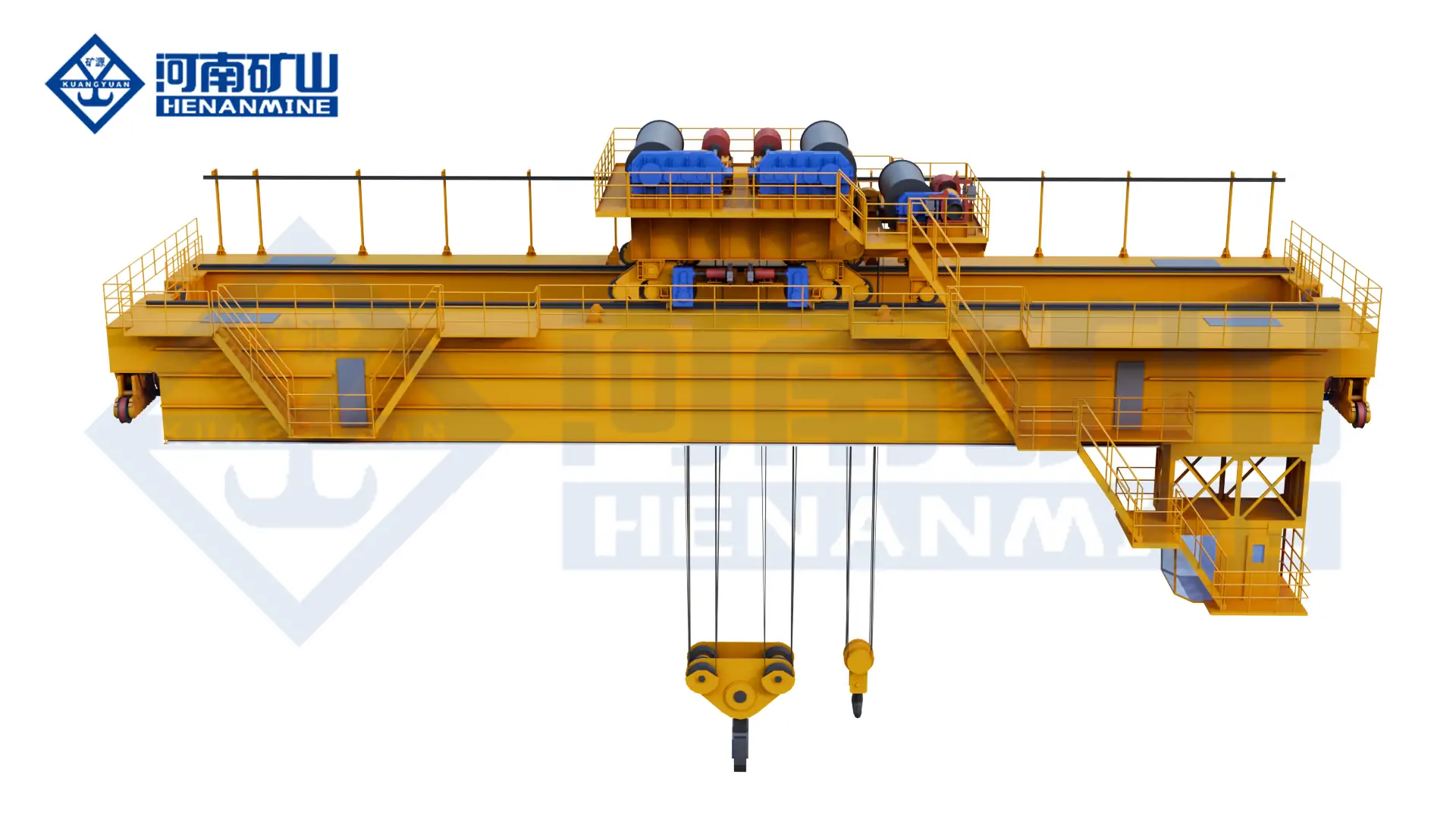
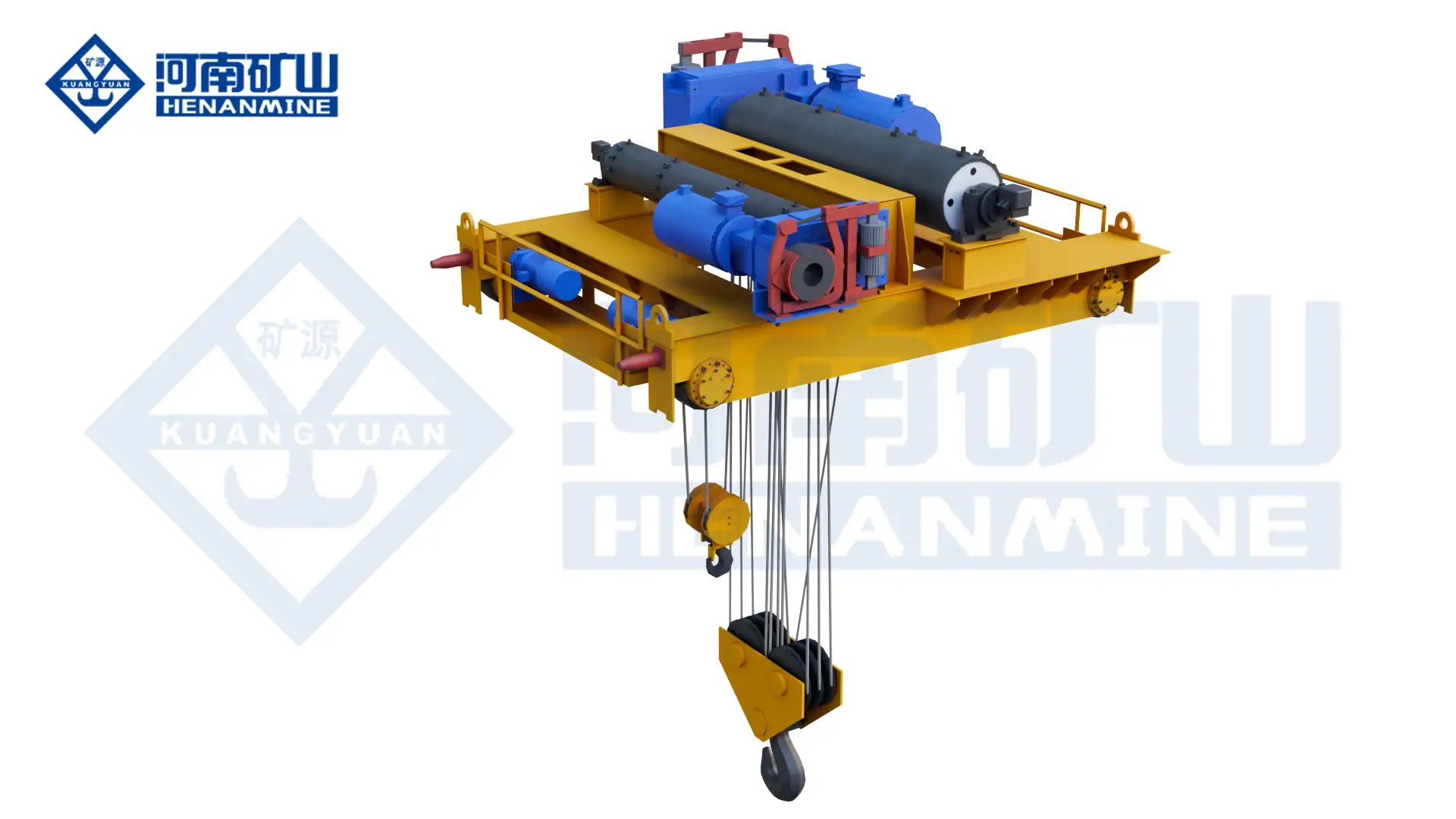
The main lifting device commonly uses a gantry-type ladle beam with two plate hooks engaging the ladle trunnions. This arrangement distributes the load through two lifting points and stabilizes the vessel during transfer. A separate auxiliary hook may be used to tilt the ladle for pouring, handle covers or support maintenance duties. The precise hook arrangement, trolley layout and permitted operating combinations are defined from the ladle design and process route.
Crane capacity is based on the maximum gross suspended load—not only the mass of liquid metal. The calculation includes the full ladle shell and refractory lining, molten metal, residual slag, gantry lifting attachment, plate hooks, ropes, blocks and any process tooling carried below the trolley. The purchaser must also define ladle dimensions, trunnion spacing, center of gravity, filling level, pickup elevations and the maximum permissible tilt.
Ladle Handling Crane Types
01 · Double-Girder Ladle Crane
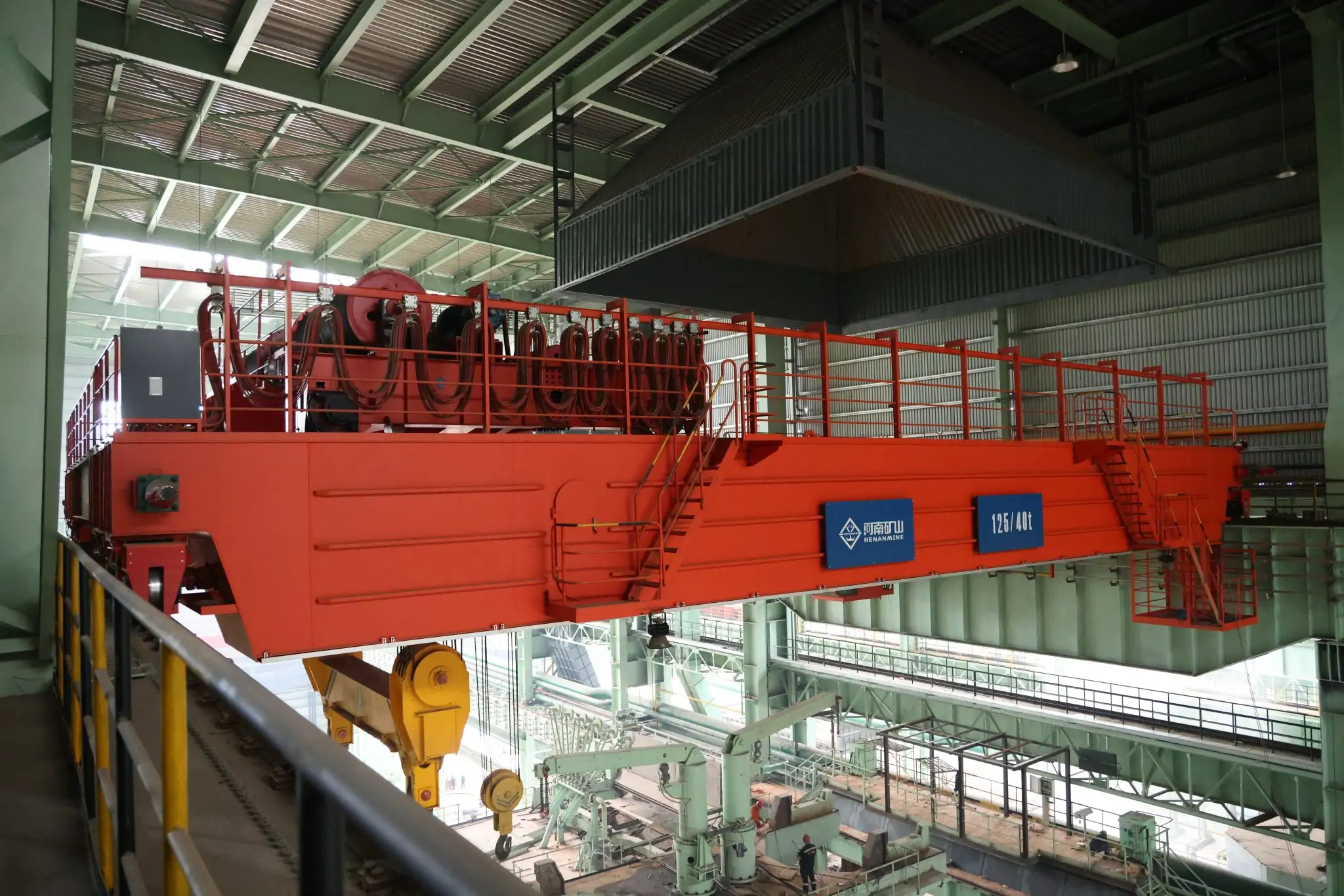
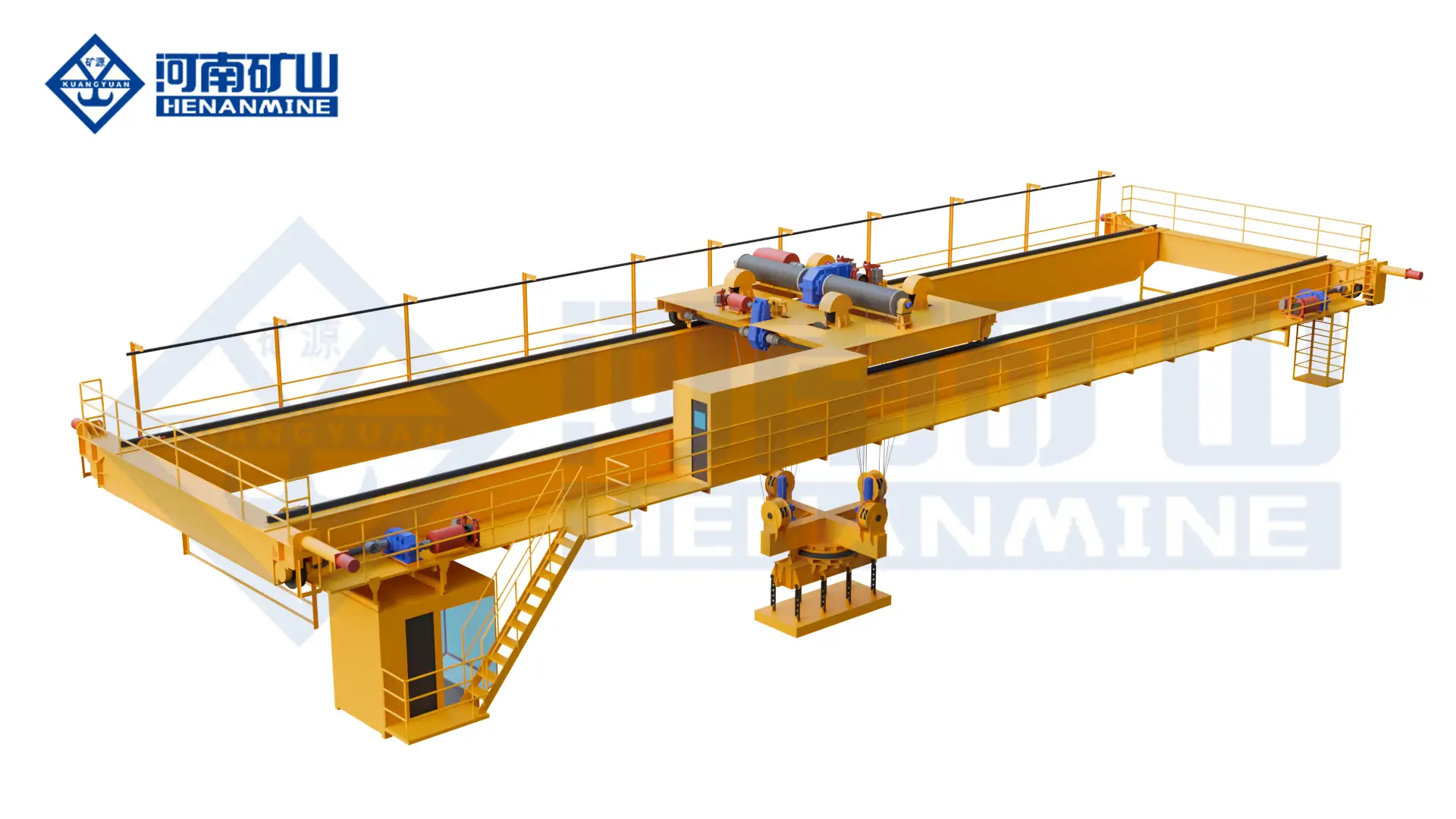
A heavy-duty bridge with a metallurgical trolley and gantry-type ladle attachment for direct molten-metal transfer. Henan Mine Crane offers double-girder casting-crane configurations in the 50–150 t range, with project-specific capacity, span, lift and A7–A8 duty selection.
02 · Four-Girder Ladle Crane
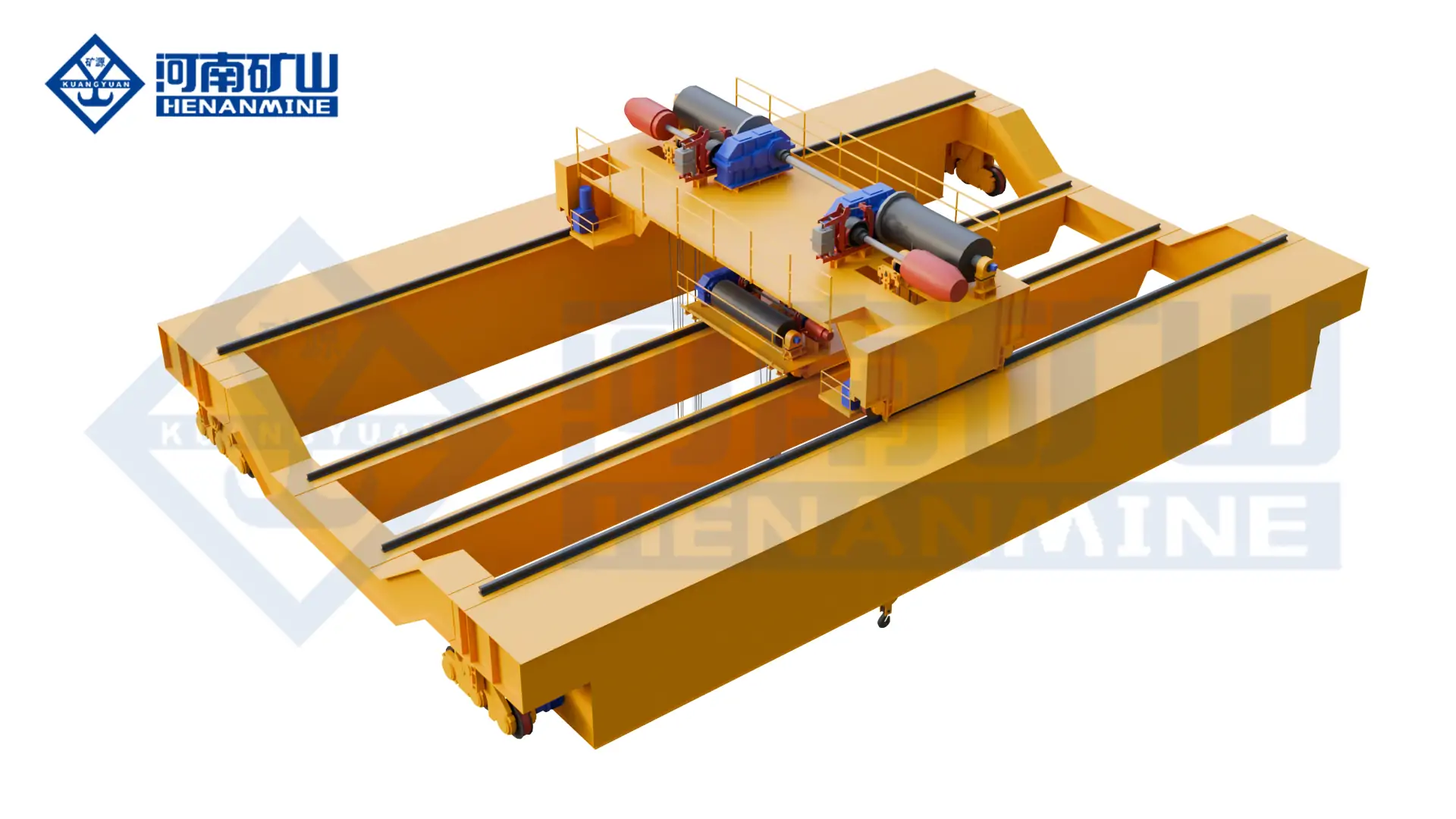
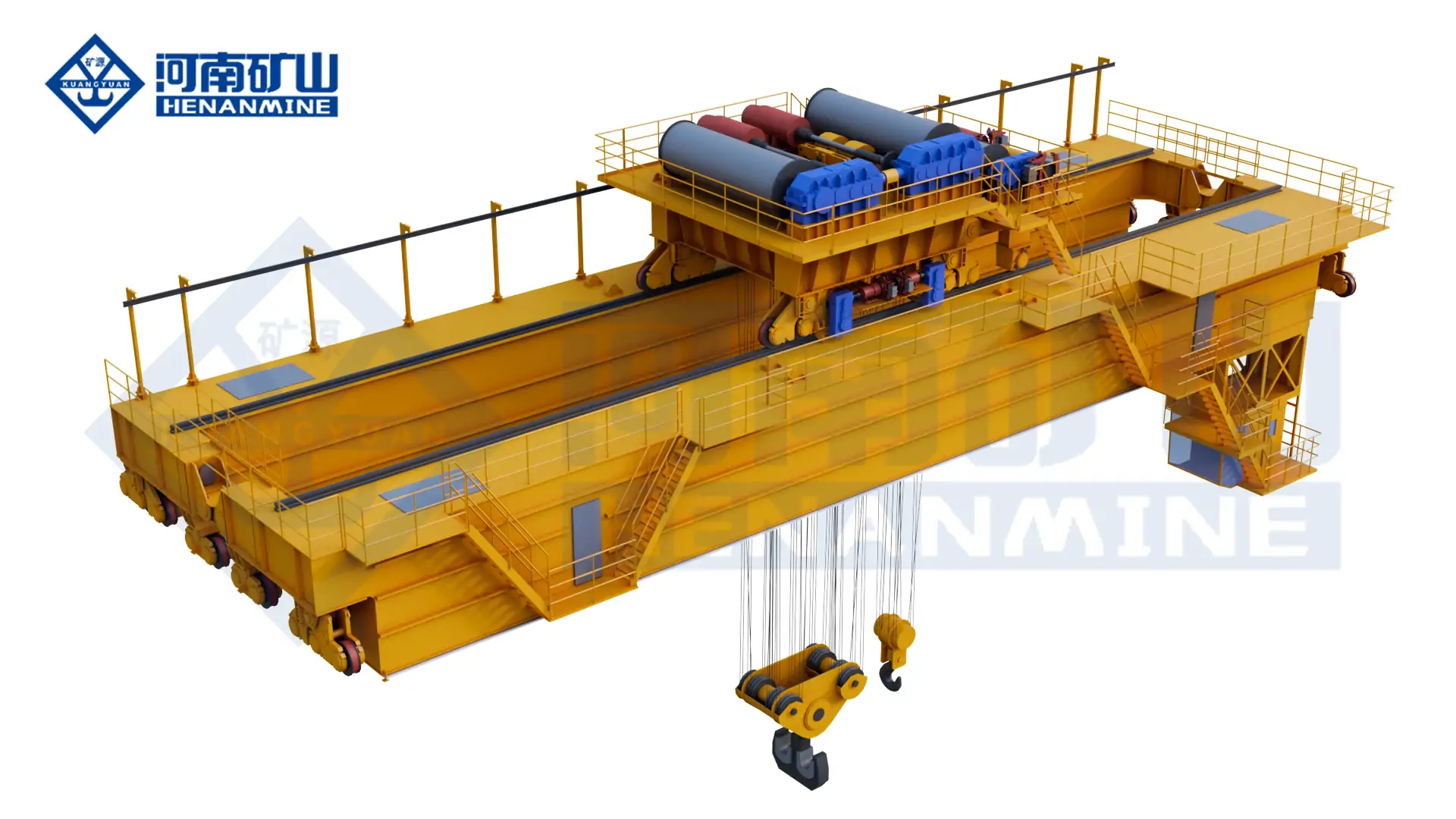
A four-girder, four- or six-rail structure with separate main and auxiliary trolleys for ultra-heavy ladles, frequent production cycles and controlled pouring. Available Henan Mine Crane configurations extend from 200/50 t to 500/200 t, subject to final engineering.
03 · Main-and-Auxiliary Trolley Crane
The main trolley lifts and transports the full ladle through the gantry beam and plate hooks. The auxiliary trolley provides a separate hook for tilting, pouring, ladle-cover handling or maintenance. Controls restrict unsafe combinations and define coordinated motion.
04 · Metallurgical Bridge Crane
A project-configured metallurgical crane for molten metal, hot components or furnace-area materials. The exact lifting device, braking architecture and protection level determine whether it is suitable for direct ladle service; the product name alone is not sufficient.
05 · Automated Ladle Transfer Crane
Position feedback, variable-frequency drives, anti-sway functions, route permissions and process handshakes support repeatable transfers between furnace, refining and casting stations. Automation scope is defined with the plant control and safety systems.
06 · Auxiliary and Maintenance Crane
A separate crane can handle ladle covers, refractory equipment, furnace components and maintenance loads. Unless it is specifically engineered and accepted for molten-metal service, it must not be treated as a substitute for the production ladle crane.
Compare Ladle Handling Crane Configurations
The correct crane structure follows gross suspended mass, process duty, ladle geometry, pouring method, availability requirement and runway limitations. Two cranes with the same nominal capacity can have substantially different load paths, redundancy, trolley arrangements and lifecycle performance.
| Configuration | Typical Application | Lifting Arrangement | Principal Selection Basis | Important Limitation |
|---|---|---|---|---|
| Double-Girder Ladle Crane | Medium- to heavy-capacity ladle transfer and pouring | Single metallurgical trolley or main/auxiliary hoist arrangement | Gross load, cycle histogram, span, heat exposure, hook approach and runway reactions | Not automatically suitable for ultra-heavy or high-availability duties without full risk review |
| Four-Girder Ladle Crane | Ultra-heavy ladles, intensive steelmaking and critical production bays | Independent main and auxiliary trolleys on dedicated rails | Main/auxiliary capacities, rail layout, structural stiffness, maintainability and fault tolerance | Higher self-weight, wheel loads, building demand and capital scope |
| Automated Ladle Transfer Crane | Repeatable furnace-to-refining-to-casting routes | Process trolley with feedback, zoning and plant handshakes | Positioning, route logic, safe states, redundancy, recovery and system integration | Requires a defined control boundary and validated manual recovery mode |
| General Metallurgical Crane | Hot materials, furnace components and auxiliary production handling | Forged hook, beam or process attachment selected for the load | Temperature, dust, duty, load type and operating method | Cannot be assumed suitable for a suspended full ladle |
| Maintenance or Service Crane | Ladle covers, refractory equipment and shutdown maintenance | General hook or maintenance attachment | Maximum component mass, outage plan, access and infrequent duty | Must not carry molten metal unless designed and accepted for that service |
Selection principle: a general bridge crane does not become a ladle crane by adding heat shields. Molten-metal service requires a coordinated structural, mechanical, electrical, control, inspection and emergency-response design.
Match the Ladle Crane to the Metallurgical Process Area
The handling route should be mapped from pickup to set-down before the bridge, trolley and hoist arrangement is selected. Furnace structures, fume-extraction ducts, ladle cars, transfer aisles, refining stations, casting-machine turrets, emergency set-down positions and maintenance access can all control the crane envelope.
Each station requires verified coordinates, approach clearances and permitted motions. A workable general arrangement also considers where a loaded crane may wait, how another crane passes or shares a bay, and where a full ladle can be safely placed after a drive, brake, power or process interruption.
Production and maintenance duties should be separated where heat exposure, working envelope, attachment requirements or availability targets make one shared crane unsuitable. This avoids using the primary ladle crane for tasks that interfere with the steelmaking sequence.
| Process Area | Primary Lift | Crane Function | Critical Interfaces | Design Emphasis |
|---|---|---|---|---|
| Blast-furnace or hot-metal bay | Full hot-metal ladle or transfer vessel | Pickup, transport and controlled placement | Tapping area, ladle car, transfer aisle and downstream steelmaking bay | Heat exposure, route clearance, stable transfer and emergency set-down |
| Converter or electric-arc-furnace bay | Steel ladle, hot-metal ladle or charging vessel | Furnace approach, pickup, transfer and controlled process positioning | Furnace shell, hood, ducts, platforms, charging route and exclusion zones | Heavy duty, radiant heat, precise approach and availability |
| Secondary refining station | Full steel ladle | Transfer to and from LF, RH, VD or treatment station | Electrode or vacuum equipment, covers, platforms and ladle car | Accurate positioning, process interlocks and restricted motion zones |
| Continuous-casting bay | Full steel ladle | Delivery to turret or casting position and removal of empty ladle | Turret coordinates, casting platform, tundish route and emergency bay | Repeatability, anti-sway, queue management and safe recovery |
| Foundry pouring aisle | Foundry ladle and controlled pour | Transport from furnace and tilt above molds or pouring stations | Mold line, pouring platform, aisle access and auxiliary-hook geometry | Low-speed control, visibility, tilt management and splash exposure |
| Non-ferrous smelting and casting | Molten aluminum, copper or alloy ladle | Transfer and controlled placement or pouring | Furnace, holding station, casting machine and ventilation system | Material-specific heat, corrosion, fumes and attachment design |
Technical Selection and Specification Framework
A procurement specification should define the production duty and acceptance criteria before requesting a price. Values shown below are engineering inputs, not a universal standard configuration. Final selections depend on the governing standard, plant risk assessment and approved crane duty.
| Specification Item | Information to Provide | Engineering Decision | Why It Changes the Crane |
|---|---|---|---|
| Rated capacity | Full ladle, molten metal, slag, lining, beam, plate hooks, blocks and tooling | Main and auxiliary capacities, overload basis and load combinations | Controls hoist, ropes, drums, trolley, bridge, wheels and runway reactions |
| Ladle and trunnion data | Overall dimensions, trunnion diameter/spacing, center of gravity and allowable tilt | Gantry beam, plate-hook profile, headroom, reeving and pickup geometry | Determines secure engagement, clearance and load stability |
| Span and runway | Rail span, runway length/elevation, rail section and allowable wheel loads | Girder form, end carriage, wheel quantity, rail gauge and structural reactions | Directly affects self-weight, stiffness, building demand and price |
| Lift and approaches | Lowest pickup, highest hook/beam elevation, end approaches and obstructions | Hoisting range, drum capacity, rope arrangement and limiting dimensions | Ensures every ladle station can be reached without interference |
| Duty and cycle histogram | Lifts per hour, load spectrum, travel distances, shifts, annual hours and availability | Mechanism classification, motor/brake thermal rating and structural fatigue basis | A production ladle crane is selected by repeated duty, not capacity alone |
| Speeds and control | Production transfer speed, creep speed, positioning tolerance and acceleration limits | Motor power, VFD control, feedback, anti-sway and braking performance | Balances cycle time with stable, accurate molten-metal handling |
| Environment | Ambient and radiant temperature, dust, fumes, splash exposure and altitude | Heat shielding, component location, cooling, enclosure and cable specification | Protects mechanisms and electrical equipment in the verified zone |
| Compliance and acceptance | Destination, applicable standards, inspection authority and witness plan | Design code matrix, documentation, tests and certification boundary | Prevents late redesign and supports statutory commissioning |
Molten-Metal Safety, Controls and Protection
Main-Hoist Braking Architecture
Service and emergency braking functions are selected from the governing standard and project risk review. Brake torque, application sequence, monitoring and safe response to drive or power failure are documented and tested.
Independent Limits and Overspeed Protection
Operating limits, final limits, overspeed detection, drum and rope supervision, load monitoring and permissive logic prevent unintended overtravel. Critical channels are arranged to avoid a single undetected failure.
Verified Load Path and Ladle Engagement
The gantry beam, plate hooks, trunnion interface, sheaves, ropes, equalization and trolley frame are engineered as one load path. Hook engagement, wear limits and inspection access are included in operating procedures.
Thermal and Splash Protection
Heat shields, protected equipment locations, suitable insulation systems, heat-resistant cables, ventilation or cooling and guarded walkways are selected from measured radiant and ambient conditions.
Controlled Motion and Collision Management
Variable-frequency drives, creep speeds, acceleration control, position feedback, anti-sway functions, inter-crane spacing and restricted zones support stable travel through congested production bays.
Emergency Set-Down and Recovery
Approved set-down positions, backup or emergency functions, manual recovery boundaries, communications and rescue access are agreed with plant operations. The response must protect personnel, the ladle and downstream production equipment.
Ladle Transfer, Tilting and Controlled Pouring
During transfer, the main trolley carries the loaded ladle through the gantry beam and paired plate hooks. Bridge and trolley motions use controlled acceleration and deceleration to limit load swing and molten-metal movement. Slow approach speeds are available at furnace, refining and casting positions where clearances are restricted.
For pouring, the main hoist supports the ladle while the auxiliary hook engages the designated tilting point. The control philosophy defines which motions are permitted, the maximum allowable tilt, communication between operator positions and the conditions that stop or inhibit a pour. Independent movement remains available only within the approved operating envelope.
Automation may include station coordinates, travel zoning, positioning feedback, anti-sway control, electronic weighing, condition monitoring and handshakes with ladle cars, furnace systems or casting equipment. Every automatic sequence requires a validated safe state and a practical recovery method for interrupted transfers.
Documented Metallurgical Project
Ladle Handling Cranes for a 3.2-Million-Ton Special Steel Base
Henan Mine Crane supplied more than 30 core lifting units in one project shipment for Baowu Maanshan Iron & Steel’s 3.2-million-ton premium special-steel base. The equipment package supported steelmaking, refining and rolling operations rather than treating each crane as an isolated machine.
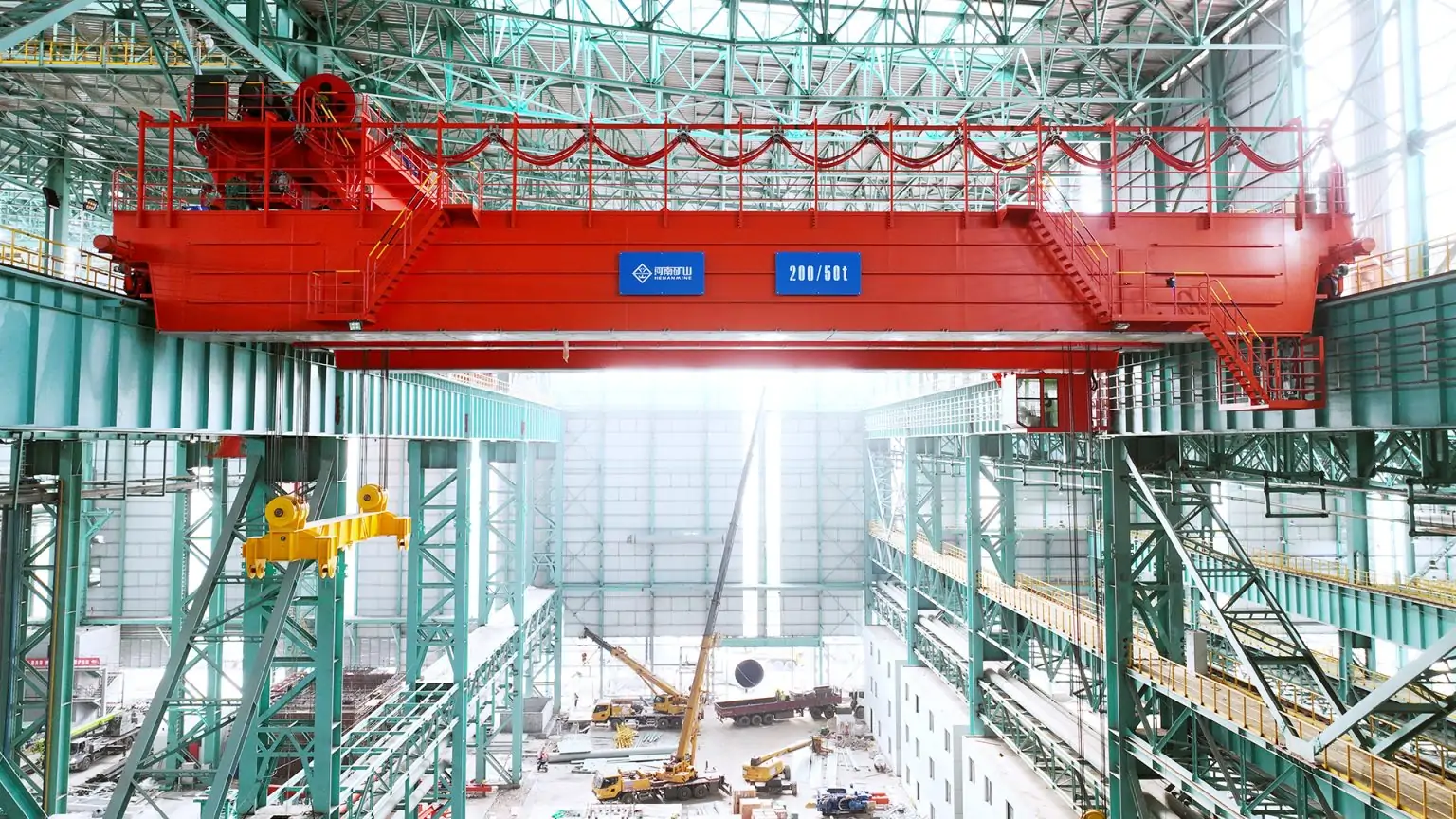
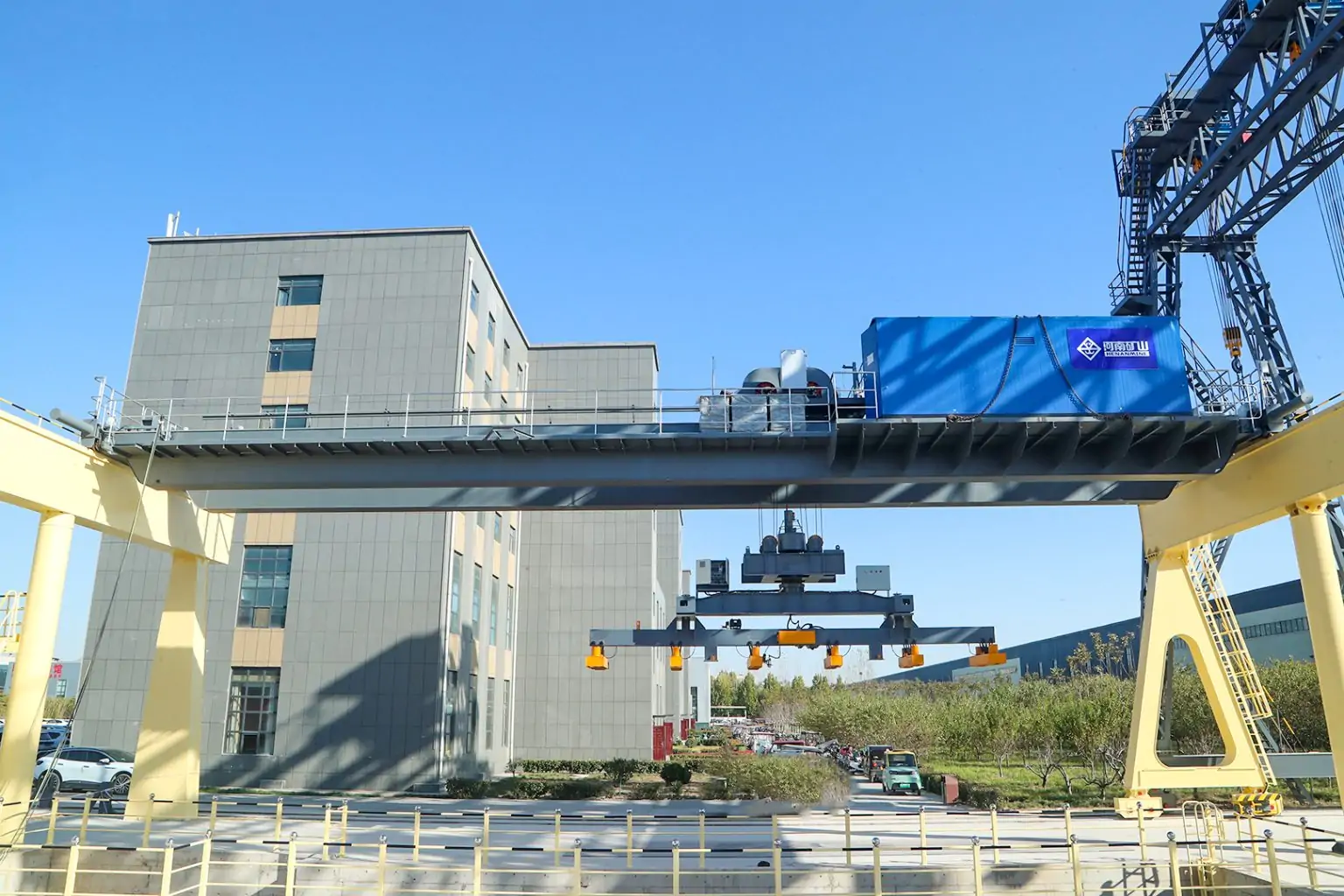
The documented equipment included 200 t foundry cranes, 200/50 t four-girder foundry cranes, 160/63 t cranes, 40+40 t cranes and rotating electromagnetic-beam cranes. The 200 t and 200/50 t casting cranes were configured for ladle handling and refining duties, while the other crane types covered material transfer across the wider production route.
For a new steelmaking project, this multi-crane approach is important: ladle transfer, refining, slab handling, maintenance and finished-steel logistics have different attachments, cycles, temperatures and safety requirements. Equipment responsibilities, shared runway zones and production recovery plans should therefore be engineered as one plant handling system.
Engineering Deliverables and Quality Records
A procurement-ready proposal defines the design basis, safety functions, plant interfaces, verification plan and site responsibilities. Traceable documents support technical review, manufacturing control, factory acceptance and statutory commissioning.
Design Basis Package
Approved load schedule, ladle and trunnion drawings, cycle histogram, general arrangement, clearance study, duty calculations, wheel loads, runway reactions, heat zones and compliance matrix.
Safety and Control Documents
Functional description, operating modes, brake philosophy, limit and interlock matrix, PLC and network architecture, safe states, emergency set-down logic, alarm list and recovery procedures.
Manufacturing Quality Records
Material traceability, welding procedures, welder qualifications, dimensional inspection, NDT, heat treatment or stress relief records, machining checks, assembly records and coating reports as contracted.
Factory and Site Acceptance
No-load and functional tests, brake and limit verification, overload functions, trolley and bridge motion, communications, fault simulation, proof-load plan, site commissioning and operator-maintenance training.
Review Henan Mine Crane manufacturing and quality capabilities →
Installation, Commissioning and Lifecycle Planning
Runway and Site Readiness
Survey rail span, elevation, alignment and runway capacity; confirm building clearances, erection route, crane access, furnace and casting coordinates, electrification, control networks and shutdown windows.
Installation and Assembly
Bridge girders, end carriages, trolley, reeving, gantry beam, plate hooks, heat shields, electrification and control cabinets are assembled under approved lifting, alignment and torque procedures.
Commissioning and Process Trials
Testing progresses from no-load motion and safety functions to proof-load testing, brake verification, positioning, main/auxiliary operation, interlocks, communications, dry-route simulation and controlled production trials.
Inspection and Maintenance Strategy
Inspection intervals follow duty, environment, regulation and manufacturer instructions. The program covers ropes, drums, sheaves, brakes, hooks, ladle beam, trunnion interface, structures, wheels, heat shields, cables, sensors and controls.
Ladle Handling Crane Price and Supply Scope
Ladle crane prices are project-specific because a commercially complete system may include the bridge and trolley, metallurgical lifting attachment, redundant safety functions, thermal protection, runway electrification, controls, documentation, shipping, installation and process commissioning. Capacity alone is not a reliable price basis.
| Quotation Level | Typical Included Scope | Principal Cost Drivers |
|---|---|---|
| Double-Girder Ladle Crane | Bridge, metallurgical trolley, ladle beam or gantry attachment, controls and defined safety package | Gross capacity, span, lift, duty, heat zone, brake architecture and runway reactions |
| Four-Girder Ladle Crane | Four-girder multi-rail bridge, main and auxiliary trolleys, heavy-duty hoists, service access and monitoring | Main/auxiliary ratings, wheel quantity, steel weight, machining, redundancy and erection method |
| Automated Transfer System | Positioning, anti-sway, zoning, plant handshakes, condition monitoring, process sequences and communications | Station count, accuracy, signal boundary, software validation, redundancy and trial scope |
| Turnkey Installed Project | Engineering, runway interface, electrification, packing, freight, erection, commissioning, load test, training and spares | Destination, trade term, local labor, access, shutdown schedule, statutory inspection and site services |
Public equipment advertisements frequently exclude the ladle attachment, process controls, runway, delivery, installation and statutory acceptance. A valid commercial comparison requires the same approved data sheet, safety-function schedule, documentation list, delivery term and site-service boundary.
Crane Equipment
Bridge, trolley, hoists, ropes, drums, brakes, wheels, platforms, access and electrification.
Ladle Handling System
Gantry beam, plate hooks, auxiliary hook, engagement geometry and inspection provisions.
Safety and Controls
Brake system, limits, monitoring, VFDs, PLC, positioning, zoning and process interfaces.
Project Services
Engineering, FAT, packing, freight, installation, commissioning, proof testing, trials and training.
Information Required for a Ladle Handling Crane Quote
A complete inquiry allows the crane structure, ladle interface, safety functions, plant integration and commercial boundary to be evaluated together. Preliminary drawings can be used during concept design when assumptions and unresolved values are clearly identified.
01 · Process and crane duty
Steelmaking, ironmaking, refining, continuous casting, foundry or non-ferrous service; production route, throughput, shifts, annual hours and required availability.
02 · Gross suspended loads
Maximum molten-metal charge, ladle shell and lining, slag, lifting beam, plate hooks, blocks, rigging and all abnormal but permitted load cases.
03 · Ladle and trunnion drawings
Ladle diameter and height, trunnion size and spacing, center of gravity, filling level, tilt point, cover, pickup tolerance and interface restrictions.
04 · Building and runway
Plan, sections, rail span, runway length/elevation, rail type, end approaches, headroom, building reserve, allowable wheel loads and access.
05 · Stations and transfer route
Furnace, ladle car, refining, casting, set-down and maintenance coordinates; ducts, platforms, obstacles, shared crane zones and exclusion areas.
06 · Motion and performance
Main and auxiliary speeds, creep speed, travel speeds, positioning tolerance, maximum acceleration, cycle times, load-sway limits and pour sequence.
07 · Thermal and environmental data
Ambient and radiant temperatures by zone, exposure duration, dust, fumes, molten splash, corrosion, altitude, indoor ventilation and operator environment.
08 · Controls and plant interfaces
Cabin, radio or remote station; manual, assisted or automatic modes; PLC, network protocol, ladle car, furnace, refining and casting handshakes.
09 · Standards and acceptance
Destination, governing crane/electrical standards, inspection authority, document language, witness points, FAT, proof-load test and process trials.
10 · Commercial and site scope
Delivery location and trade term, packing, freight, runway/electrification boundary, erection, commissioning, local labor, training, spares and schedule.
Ladle Handling Crane FAQ
How is ladle crane capacity calculated?
Use the maximum combined mass of the filled ladle, refractory lining, molten metal, slag, gantry beam, plate hooks, blocks and all suspended tooling. Apply the design and regulatory factors required by the governing engineering basis.
When is a four-girder ladle crane required?
Four-girder multi-rail designs are considered for ultra-heavy capacities, intensive duty, separate main and auxiliary trolleys, high structural stiffness and critical availability. Runway capacity, maintenance access and lifecycle cost must also support the choice.
Can a standard double-girder overhead crane carry a steel ladle?
Not by default. Direct molten-metal service requires a suitable load path, ladle attachment, braking and limit architecture, thermal protection, operating duty, controls, inspection plan and acceptance procedure.
What is the function of the auxiliary hook?
The auxiliary hook may tilt the ladle for pouring, handle covers or support maintenance. Its capacity, position, reeving and permissible simultaneous operation with the main hoist are defined from the process and ladle geometry.
Is A7 or A8 duty always necessary?
The required duty follows the actual cycle and load spectrum. Henan Mine Crane offers A7–A8 casting-crane configurations, but final classification must be calculated from lifts per hour, operating hours, load distribution and production criticality.
What safety functions are required for molten-metal handling?
The final set depends on the governing standard and risk assessment. Typical subjects include braking, independent limits, overload and overspeed monitoring, emergency response, secure ladle engagement, heat protection, collision control and safe set-down.
Can ladle transfer be automated?
Yes. Position feedback, VFD motion, anti-sway, route zoning and plant handshakes can support assisted or automatic transfer. Safe states, manual recovery, communications and process ownership must be agreed before software development.
What determines ladle handling crane price?
Gross load, span, lift, duty, bridge and trolley structure, ladle attachment, brake and safety architecture, thermal protection, controls, runway interface, documentation, shipping and site services are the main cost drivers.
Can an existing crane or runway be reused?
Reuse is possible only after structural, mechanical, electrical and fatigue assessment. The review must confirm runway reactions, rail condition, clearances, load path, duty, heat exposure, compliance and the practical modernization boundary.
What should be demonstrated before acceptance?
Verify documentation, safety functions, brakes, limits, load performance, main and auxiliary motion, position control, plant interlocks, alarms, emergency response, proof testing, dry process routes, operator training and agreed production trials.
Related Metallurgical Crane Products
A steelmaking facility normally combines the production ladle crane with additional equipment for hot materials, slab handling, quenching, maintenance and steel logistics.

Request a Ladle Handling Crane Proposal
Submit the ladle and trunnion drawings, maximum gross suspended load, process route, crane span, lifting height, cycle data, thermal conditions, control interfaces, destination standards and delivery location. Henan Mine Crane will prepare a project-specific technical and commercial proposal.