

FLAT GLASS · STORAGE AND DISPATCH · PLANT MAINTENANCE
Glass Manufacturing Industry Cranes for Handling and Maintenance
Lift a single sheet, transfer a loaded rack or remove equipment for repair—with the right crane for each job.
Glass manufacturing industry cranes include overhead, suspension and gantry systems used to move glass sheets, packaged loads and production equipment. The complete selection covers the glass, lifting attachment, operating cycle and route through the factory.
Henan Mine Crane supplies the crane structure, hoist, travel drives and controls, with engineering for the building and attachment interfaces. Receive a proposed arrangement, technical specification and itemized offer that separates the crane, glass-handling attachments and site services.
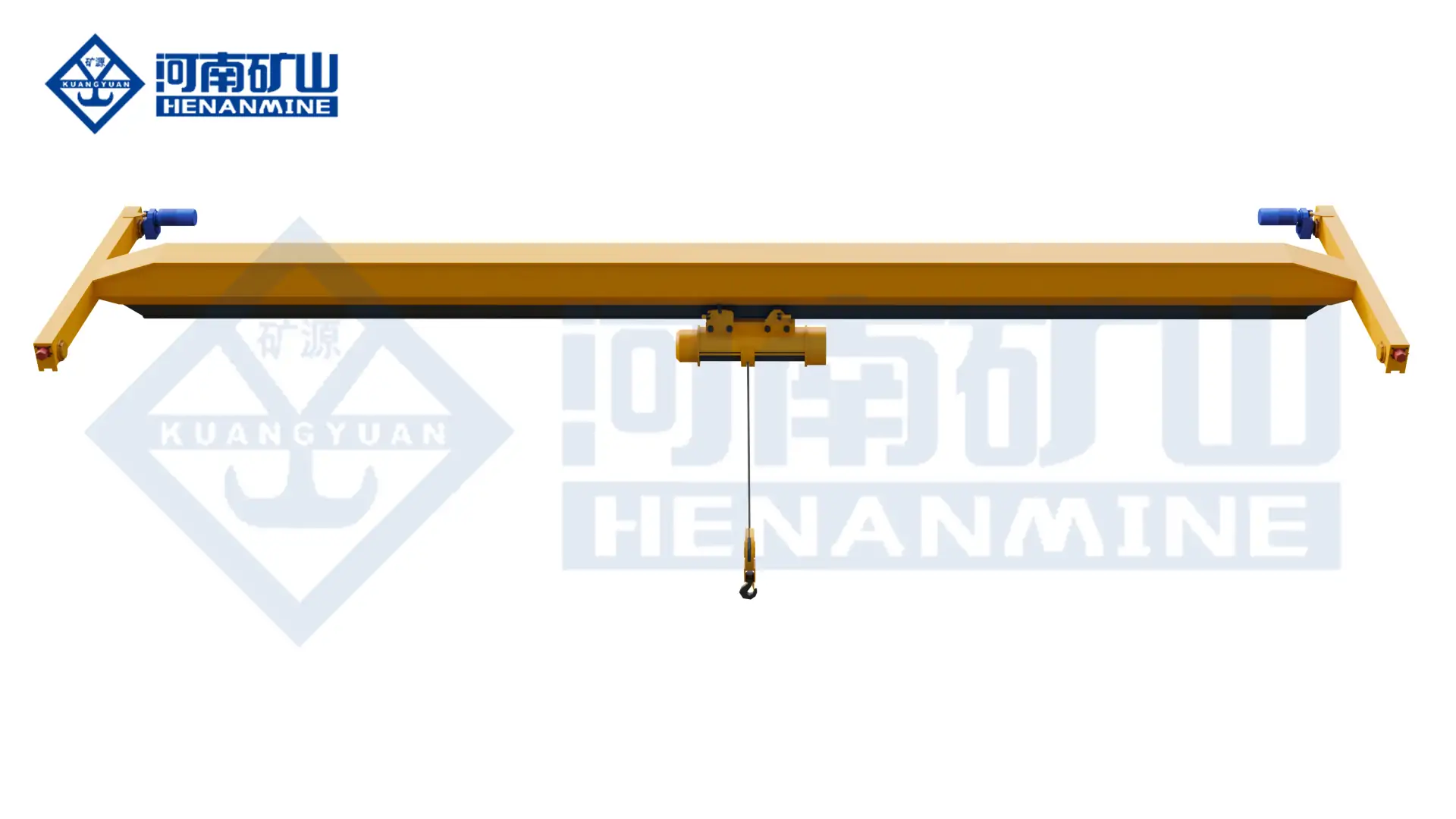
What Henan Mine Crane Supplies
A crane selected for the actual load
Single- and double-girder overhead cranes, suspension layouts and semi-gantry arrangements matched to the load, available headroom and working area. The selection accounts for attachment weight as well as the glass or equipment being lifted.
Motion control for pickup and placement
Dual-speed or variable-frequency motion options support controlled approach to racks, tables and machine stations. Travel speeds, acceleration and operating controls are selected around the handling cycle and the attachment manufacturer’s limits.
Crane and building interfaces in one proposal
General arrangement drawings show span, hook coverage, lifting height and clearances. Agreed wheel reactions, runway interfaces and power requirements give the building designer and installation contractor usable design inputs.
Equipment, documentation and service scope
The offer identifies the crane, any included lifting attachment, inspection documents, packing and shipment terms. Installation support, commissioning, operator training and a recommended spare-parts package can be included in the order.
Where Cranes Work in a Glass Factory
| Factory area | Typical lifting task | Suitable handling arrangement |
|---|---|---|
| Sheet storage and cutting | Move individual sheets between storage frames and the cutting-table loading position. | Overhead or suspension crane with a glass-specific vacuum lifter approved for the sheet size and surface. |
| Laminated and insulating glass production | Transfer units between defined handling stations. | Crane and attachment selected for the complete unit, permitted lifting face and required orientation. |
| Finished-glass storage and dispatch | Move crates or loaded transport racks. | Hook crane with rated lifting beams or rigging connected to the rack’s designated lifting points. |
| Coated or appearance-critical glass | Handle sheets where contact marks or contamination affect product acceptance. | Attachment contact materials, clean lifting faces and crane contamination controls assessed together. |
| Production equipment maintenance | Remove designated motors, pumps, roller assemblies or other service components. | Maintenance hook crane covering the installed component and a clear laydown position. |
| Batch or cullet storage using grab handling | Transfer suitable bulk material where the plant layout calls for a grab. | Separate grab-crane selection for density, abrasion, dust, grab mass and the required cycle. |
Choose the Crane Around the Handling Route
Start with the heaviest complete suspended load
A single pane, a laminated unit and a loaded rack are different lifting jobs. The crane carries the product plus the vacuum frame, lifting beam and rigging. The attachment has its own working-load limit and approved operating positions.
Check the whole movement, including any tilt
Our layout checks pickup, travel, rotation or tilting where specified, and placement. A pane that clears a rack while vertical may need much more space when moved horizontally. Hook approach and the room below the hoist matter as much as the building’s overall height.
Match operating duty to the production shift
Selection considers lifts per hour, load distribution and running time. A crane used for occasional repairs has a different duty from one feeding a cutting line throughout the shift. Maintenance access is planned so routine servicing fits the production schedule.
Select the building arrangement before comparing prices
Existing runways may suit an overhead crane; a suspension layout depends on approved roof or support capacity. A semi-gantry uses an elevated runway on one side and a floor-running leg on the other. Each option has different structural and traffic interfaces.
Compare Crane Configurations for Glass Manufacturing
| Configuration | Best-fit duty | What the proposed arrangement addresses |
|---|---|---|
| Single-girder overhead crane | Sheet handling with a compatible attachment; general factory lifting. | Gross load, hoist duty, low-speed control, hook approaches and available headroom. |
| Double-girder overhead crane | Loaded racks, larger service components or an application needing a different trolley arrangement. | Capacity, lifting geometry, access for servicing and building reactions. Girder count alone does not determine duty class. |
| Suspension crane | Defined production bays with suitable overhead supports. | Support capacity, runway alignment, station coverage and permissible suspension loads. |
| Semi-gantry crane | A storage or service zone alongside an existing building. | Elevated runway interface, floor rail, leg clearance and separation from factory traffic. |
| Grab overhead crane | A grab-fed batch-material or cullet store. | Material properties, bucket design, net payload and transfer cycle; separate from finished-sheet handling. |
Match the Glass Lifter to the Pane
A higher crane rating does not increase the capacity of a glass vacuum lifter. The lifting attachment must be suitable for the glass weight, dimensions, surface condition and every intended lifting orientation.
| Load condition | Attachment selection focus |
|---|---|
| Large or slender sheets | Pad spacing, frame stiffness, overhang and support of the pane throughout the movement. |
| Textured, coated, curved or treated surfaces | Proven pad contact and vacuum sealing on the actual lifting face; surface marking and cleanliness limits. |
| Vertical-to-horizontal transfer | An attachment designed and rated for tilting, with sufficient swept clearance at the rack and receiving table. |
| Insulating glass units or laminated assemblies | Approval for the complete assembly and selected lifting face, including any restrictions from the glass-unit manufacturer. |
| Crates and loaded A-frames | Rated lifting points and rack stability; the handling method must carry the full packaged load. |
The quotation states whether the attachment is included, supplied separately or provided by the buyer. Its identification, rating, power or air connection and control interface are recorded with the crane arrangement.
Design Example: A 1,200 kg Glass Load
Consider a proposed transfer from a storage rack to a processing station. The following illustrative engineering example uses assumed weights.
| Item | Assumed mass |
|---|---|
| Glass load | 1,200 kg |
| Vacuum lifting frame | 350 kg |
| Other below-hook rigging | 100 kg |
| Total static suspended mass | 1,650 kg |
The crane selection starts from 1.65 t of suspended mass. The attachment must also be rated for the 1.2 t glass load in the intended position. Final selection then addresses motion effects, duty, clearances and the approved design basis.
For this transfer, the proposed layout would show the rack pickup position, travel path and receiving station. If the sheet must turn or tilt, the attachment and its complete swept envelope enter the layout. This check can reveal a clearance problem before crane manufacture.
A Defined Crane Specification for Your Factory
Our technical schedule identifies rated load, span, lifting height, duty, motion speeds, control method, wheel reactions and electrical supply. The following 3 t LH electric-hoist bridge crane is a catalog reference from the Henan Mine Crane Product Selection Guide, printed page 32.
| Parameter | Catalog reference |
|---|---|
| Rated lifting capacity | 3 t |
| Crane span | 16.5 m |
| Listed lifting-height options | 6 m, 9 m or 12 m |
| Hoisting speed options | 8 m/min; MD dual-speed option 8 / 0.8 m/min |
| Trolley travel speed | 20 m/min |
| Crane working-class range | A3–A4; the selected configuration is stated in the offer |
| Maximum wheel load at 16.5 m span | 31 kN |
| Catalog electrical supply | 380 V, 50 Hz, three-phase AC |
This reference is not a production-line duty guarantee. High-cycle handling, different supply voltages, variable-frequency drives and special environmental protection receive a project-specific selection. The approval drawing provides the reactions and geometry used for the actual runway design.
Control the Movement and Protect the Product
Approach racks and tables at a controlled speed
Dual-speed hoisting or specified variable-frequency drives help the operator make the final approach. Acceleration settings and any anti-sway function are selected for the suspended frame and glass dimensions. Acceptance criteria can include pickup, stopping and placement trials along the agreed route.
Keep contamination controls specific
For coating, optical or other cleanliness-sensitive areas, the proposal can address covered moving parts, lubricant containment and suitable finishes. The required cleanliness level and verification method are recorded in the specification. A standard factory crane does not carry an automatic cleanroom classification.
Separate furnace-area maintenance from routine sheet handling
Equipment servicing near furnaces is assessed for crane-level ambient temperature, radiant heat, access and shutdown conditions. Where solvent or combustible-dust hazards exist, the documented area classification governs the required protection. Heat protection, dust protection and explosion protection are separate design questions.
Vacuum Safety Is Part of the Complete Lifting System
The attachment specification addresses vacuum indication, loss-of-vacuum alarms, non-return protection and a defined response to loss of power or air. The assessed application determines the need for independent circuits, secondary retention and other safeguards.
The crane brake holds the hoist; it cannot maintain suction at the glass surface. Any claimed holding time must relate to the selected attachment, load surface and verified leakage conditions.
Commissioning should check the complete crane-and-attachment combination on representative glass, including permitted movements, alarms, release controls and emergency lowering arrangements. The operating procedure defines a clear travel area and prevents people from entering beneath suspended glass.
Where process signals or automation are specified, the control description defines lift permission, grip confirmation, destination readiness and recovery after an interrupted cycle. Automated operation is an optional engineered scope.
Manufacturing Quality You Can Review
Henan Mine Crane publishes factory quality-inspection activities involving its quality-assurance and production teams. The April 2026 inspection report provides a view of this work inside the manufacturing facility.
For your order, the inspection scope can include drawing checks, agreed material and fabrication records, electrical function checks and the specified factory tests. Witness points and document requirements can be written into the purchase specification.

From Approval Drawings to Site Handover
| Stage | Available deliverables |
|---|---|
| Technical offer | Selected crane arrangement, gross-load basis, duty and speed schedule, attachment interface and itemized supply scope. |
| Design approval | General arrangement, hook coverage, headroom, wheel reactions, electrical requirements and agreed building interfaces. |
| Manufacture and shipment | Contracted inspection records, factory tests, packing list, handling instructions and shipment documentation. |
| Installation and commissioning | Installation supervision or contracted site services, motion and protection checks, agreed load tests and attachment-interface trials. |
| Operation and maintenance | Operating instructions, inspection and maintenance schedule, training scope and recommended spares with part identification. |
Rails, runway steelwork, building reinforcement, site power, test loads and local inspections are separate line items unless expressly included. The commercial offer states delivery milestones, payment terms, warranty coverage and site-service responsibilities.
A spare-parts package can cover selected brake, contactor, limit-switch and travel-drive components. Vacuum pads, seals, filters, hoses and attachment batteries follow the attachment manufacturer’s maintenance instructions.
Glass Factory Crane Prices
For a standard 5–10 t single-girder overhead crane, allow approximately US$5,000–18,000 per set for the crane equipment. Glass vacuum frames, powered tilting, special controls and site works increase the package price.
| Standard crane configuration | Approximate equipment budget / set |
|---|---|
| 5 t single-girder overhead crane | US$5,000–12,000 |
| 10 t single-girder overhead crane | US$8,000–18,000 |
| 10 t double-girder overhead crane | US$12,000–26,000 |
| 20 t double-girder overhead crane | US$22,000–42,000 |
These are published 2026 market references for standard crane equipment, not a firm Henan Mine Crane quotation or the installed price of a complete glass-handling system. The source ranges are not tied to one fixed span and lifting height; those dimensions are stated in the project offer.
Budget separately for the glass attachment, any tilting mechanism, special cleanliness or heat protection, runway and rails, structural work, freight, import charges, erection, commissioning and local inspection unless included. An itemized Henan Mine Crane offer shows the equipment price and each contracted extra, with a named delivery term.
Glass Manufacturing Crane FAQs
Which crane is suitable for a glass manufacturing plant?
An overhead crane with a compatible glass attachment suits many indoor sheet-handling duties. Suspension and semi-gantry layouts can suit particular buildings or zones. Loaded racks, bulk materials and equipment maintenance receive separate load and duty assessments.
Does crane capacity include the vacuum lifter weight?
The crane selection accounts for the glass plus the vacuum frame and other below-hook rigging. The attachment’s own working-load limit must also cover the glass in each approved operating position.
Can the crane lift both individual sheets and loaded glass racks?
Both duties can be assessed for one crane if its load rating, duty, coverage and controls are suitable. Sheet handling and rack lifting use different approved attachments and procedures.
Can glass be tilted from vertical to horizontal?
Yes, with an attachment specifically designed and rated for that movement. The crane layout must allow clearance for the pane and frame throughout the tilt; a standard hook crane alone does not provide the tilting function.
Is a vacuum lifter suitable for coated or textured glass?
Suitability depends on the lifting face, pad material, seal quality and product limits. The selected attachment should be evaluated on representative glass for secure holding and acceptable surface contact.
What happens if power is lost during a vacuum lift?
The specified attachment needs assessed retention measures, alarms and a recovery procedure. Its verified performance governs the response; the crane’s hoist brake does not maintain vacuum at the glass surface.
How much does a glass factory overhead crane cost?
Published equipment references are approximately US$5,000–18,000 for standard 5–10 t single-girder cranes and US$12,000–26,000 for a standard 10 t double-girder crane. Glass attachments, special features and installation are priced separately unless included.
What is included in a Henan Mine Crane quotation?
The offer identifies the crane configuration, supply boundary, attachment responsibility, documentation, delivery term and commercial conditions. Installation support, commissioning, training and spare parts are listed when contracted.
Explore Crane Configurations
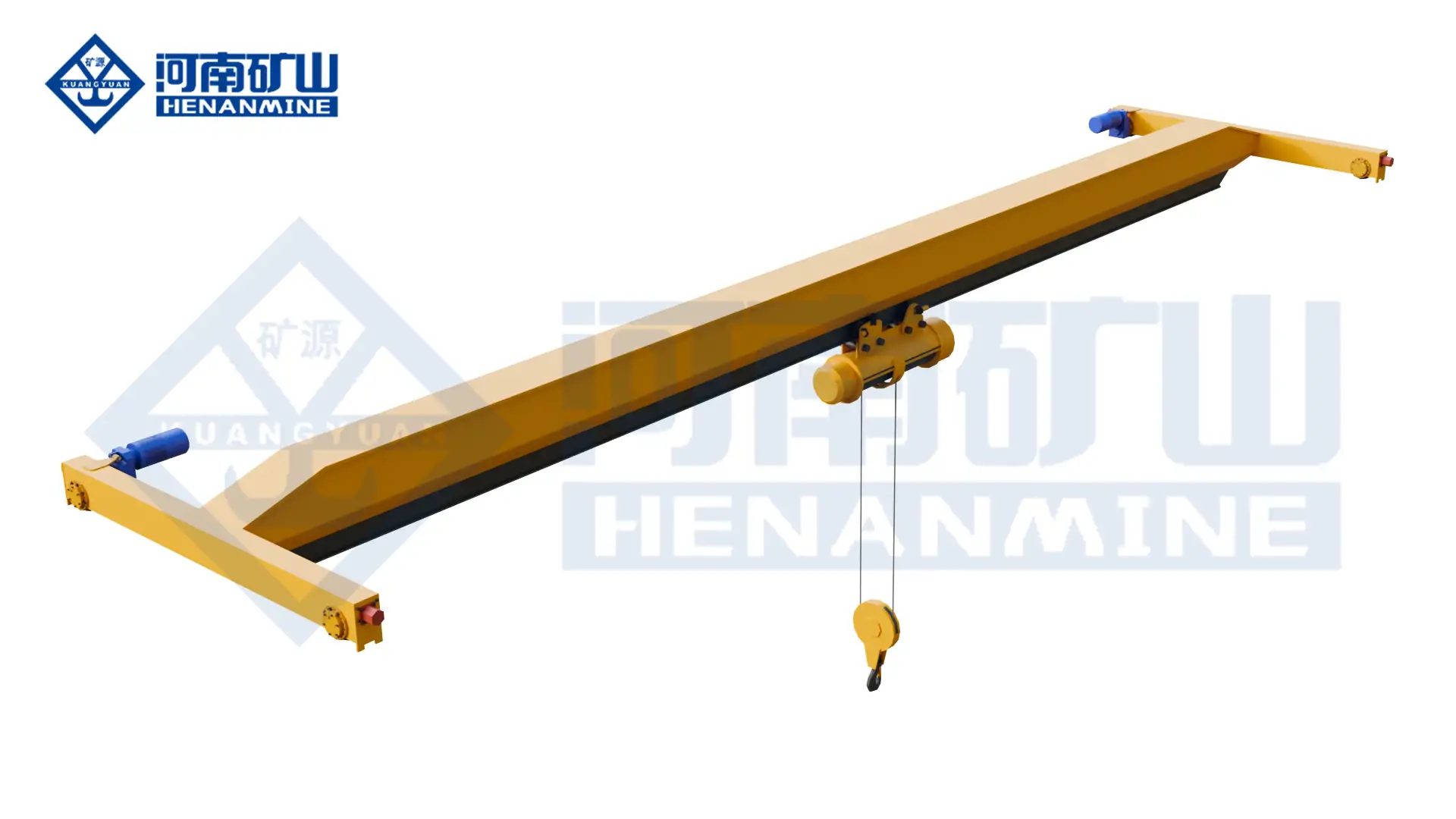
Single-Girder Overhead Crane
A compact overhead arrangement for suitable glass-handling and general factory lifting duties.
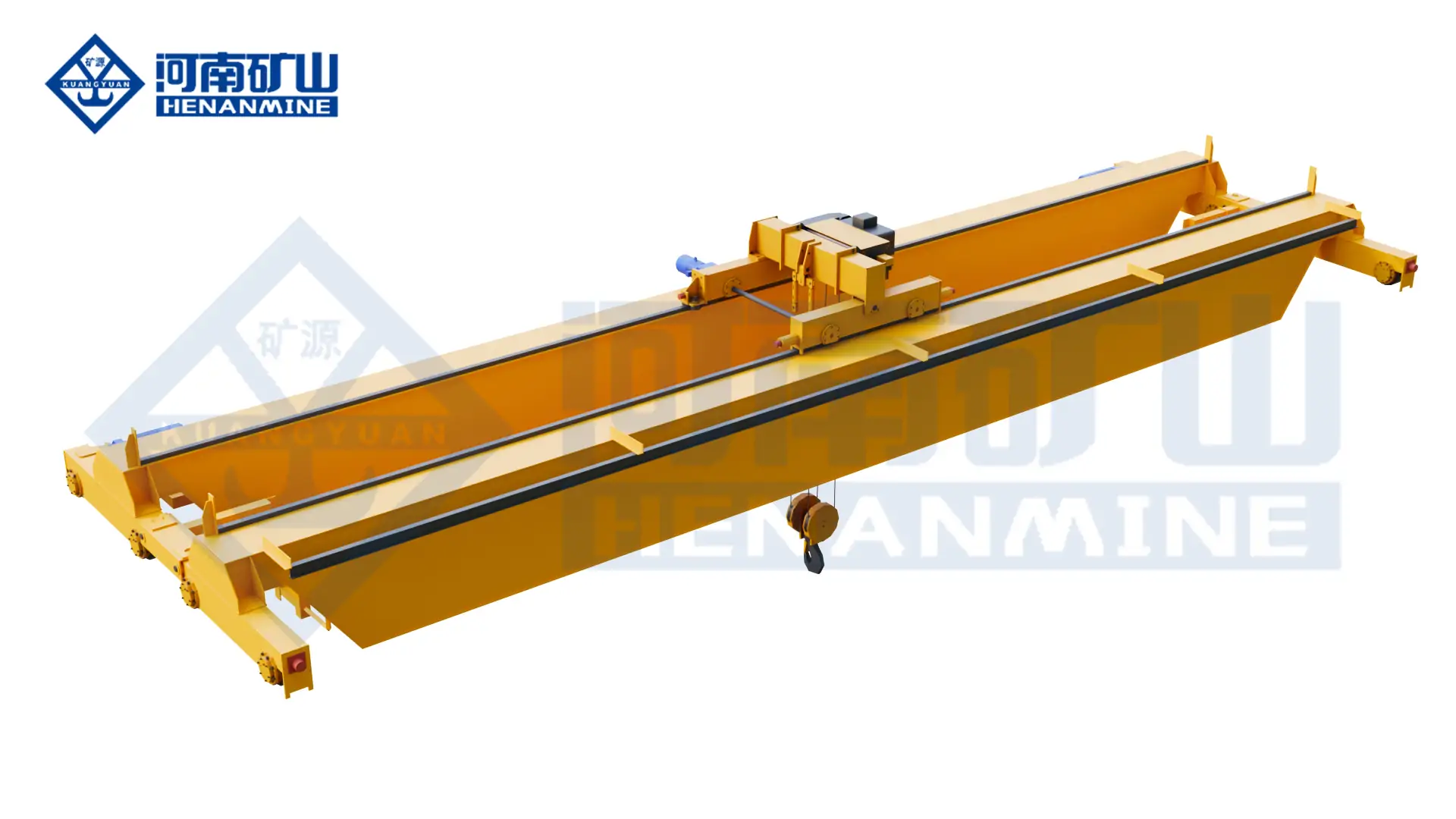
Double-Girder Overhead Crane
An electric-hoist bridge-crane arrangement for defined production, storage and maintenance loads.
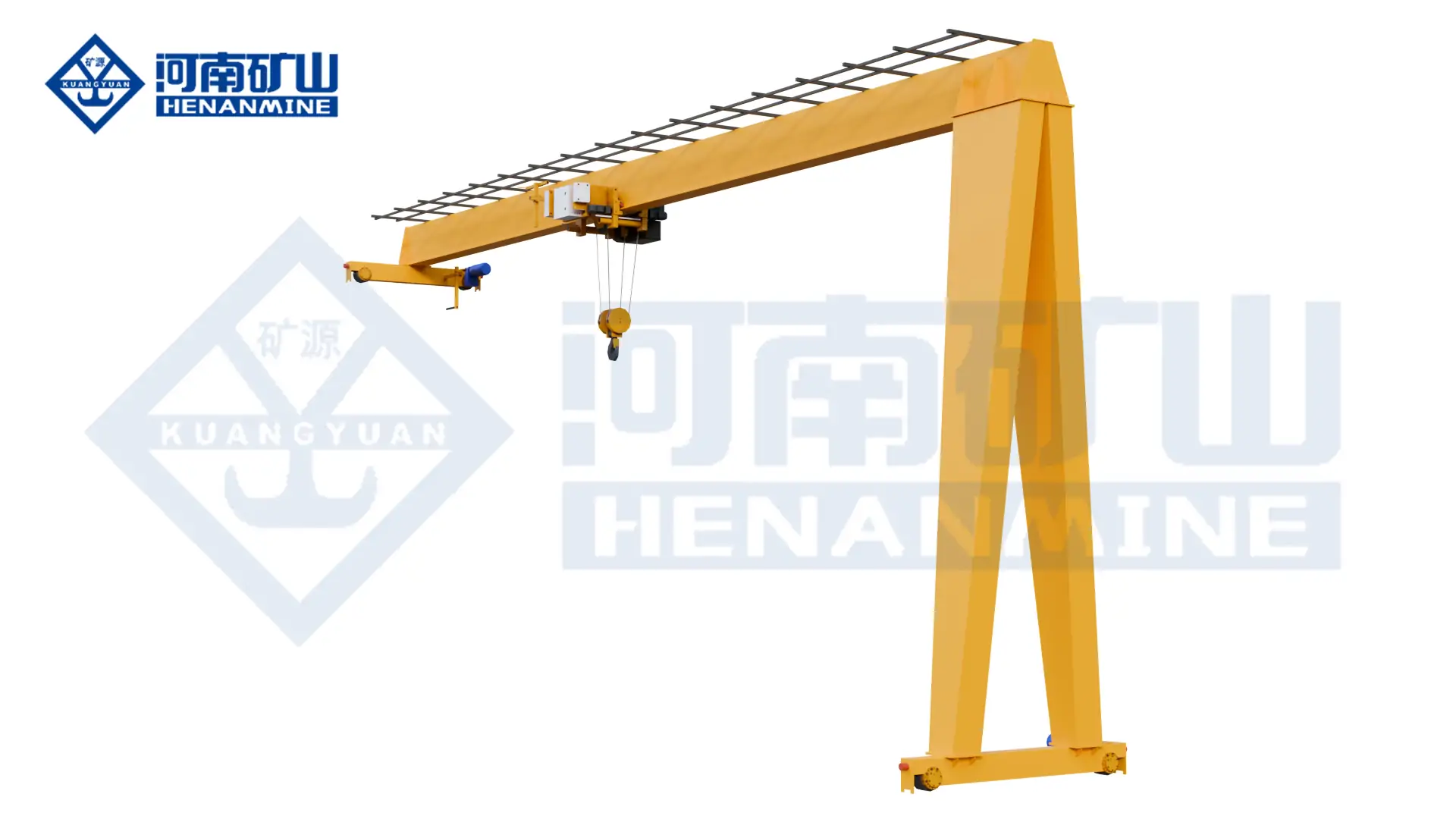
Semi-Gantry Crane
A lifting arrangement for a defined storage or service zone alongside a suitable elevated runway.
Get a Crane Proposal for Your Glass Factory
Receive a recommended arrangement, technical specification and itemized equipment quotation from Henan Mine Crane. Add installation support, commissioning, training and spare parts to the requested scope.
Send the heaviest glass or packaged-load weight, sheet dimensions, lifting orientation, existing attachment details, factory layout, required lift height and operating cycle. A layout sketch or photographs of the pickup and receiving stations help define hook coverage. Include the destination country and power supply for the export offer.
Henan Mine Crane
Email: info@hnksglobal.com
WhatsApp: +86 188 3620 7779