

Henan Mine Crane · Molten-Metal Handling Systems
Foundry Crane
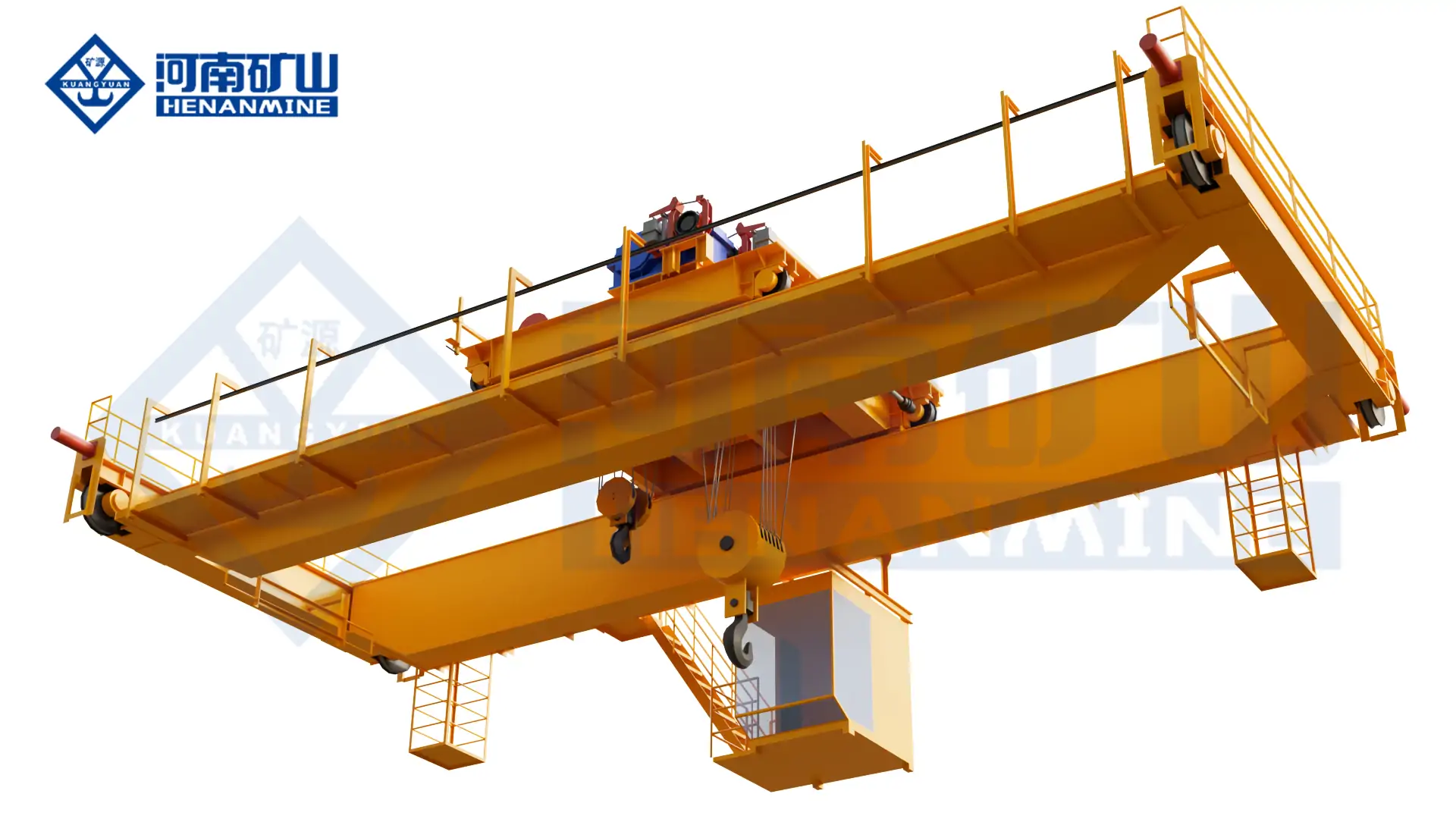
Henan Mine Crane engineers foundry cranes for ladle transfer, furnace charging, pouring and other critical hot-metal operations in iron, steel and non-ferrous foundries. Double-girder and four-girder configurations are matched to the ladle, rated load, operating cycle, process route, heat exposure, runway capacity and required safe-failure response.
Also specified as a ladle crane, casting crane, foundry overhead crane or molten-metal crane, this equipment is purpose-designed for high temperature, dust, shock loading and production-critical service. The load path, braking architecture, thermal protection, control station and emergency functions are established through project risk assessment and the governing crane standard.
CONFIGURATIONS
Double or Four Girder
LISTED PRODUCT RANGE
5–500 t, Model-Dependent
WORKING CLASS
A6–A8, Model-Dependent
PRIMARY APPLICATION
Ladle Transfer and Pouring
What Is a Foundry Crane?
A foundry crane is a special overhead travelling crane designed to lift and transport ladles containing molten iron, steel, aluminium or other liquid metal. A main hoisting mechanism normally carries a ladle beam or gantry-type plate hook that engages the ladle trunnions. An auxiliary hook can support tilting, controlled pouring, maintenance or secondary handling when required by the process.
The terms foundry crane, casting crane and ladle crane overlap in procurement, but the required functions must be stated precisely. Direct lifting of molten metal presents a materially different risk from moving solid billets, scrap, moulds or furnace components. A general metallurgical crane is therefore not automatically acceptable for a direct ladle-handling duty.
Ladle Transfer
Carry molten-metal ladles between furnace, refining, treatment, pouring and casting stations along a defined process route.
Controlled Pouring
Coordinate main and auxiliary hooks for ladle tilting where the pouring method, attachment and operating procedure permit.
Furnace and Charge Handling
Support furnace charging, material-box handling and selected hot-process operations with the correct attachment and protection package.
Foundry Maintenance
Handle moulds, furnace components and production equipment when the selected crane and attachment are approved for the additional load cases.
Selection Considerations
01 / RATED LOAD
Complete Suspended Load
Include liquid metal, ladle and refractory lining, ladle beam or gantry hook, rigging and all allowances required by the selected design basis.
02 / LADLE INTERFACE
Trunnions and Attachment
Define trunnion diameter, centre distance, ladle envelope, pickup clearance, allowable rotation and the geometry of the plate hook or lifting beam.
03 / PROCESS ROUTE
Furnace-to-Pour Path
Establish pickup and placement elevations, transfer distance, obstacles, restricted zones, ladle-car interfaces, pouring points and emergency set-down positions.
04 / DUTY
Load Spectrum and Cycle
State heat schedule, lifts per hour, percentage of lifts near rated load, travel distances, operating hours, production criticality and required design life.
05 / ENVIRONMENT
Heat, Dust and Splash
Record ambient and radiant temperatures, exposure duration, dust concentration, corrosive fumes, splash risk and required enclosure and insulation levels.
06 / SAFETY BASIS
Defined Failure Response
Specify the required response to power loss, motor or gearbox fault, brake fault, overspeed, overload, upper-limit activation and control-system interruption.
07 / RUNWAY
Building and Rail Interface
Verify wheel loads, horizontal reactions, rail section and alignment, column and bracket capacity, thermal environment, clearances and erection access.
08 / CONTROL AND SCOPE
Operation and Project Boundary
Define cabin, remote or automatic control, sightlines, speed ranges, process interlocks, power supply, governing standard, inspection plan and installation responsibility.
Capacity alone cannot determine a foundry crane. Two cranes carrying the same ladle can require different structures, reeving, brakes, controls and thermal protection when the heat cycle, transfer path, production frequency, runway strength or governing safety rules differ.
Compare Foundry and Metallurgical Crane Configurations
The correct product depends on the handled material and process function. The following comparison separates direct ladle handling from other metallurgical duties and establishes an initial specification route.
| Crane Configuration | Listed Product Range | Primary Duty | Selection Direction |
|---|---|---|---|
| YZ Double-Girder Foundry Crane | 50–150 t; 10–35 m span; A7–A8 | Ladle transfer and foundry production with a double-girder, single-trolley arrangement | Medium- and heavy-capacity direct molten-metal handling where the selected safety basis is satisfied |
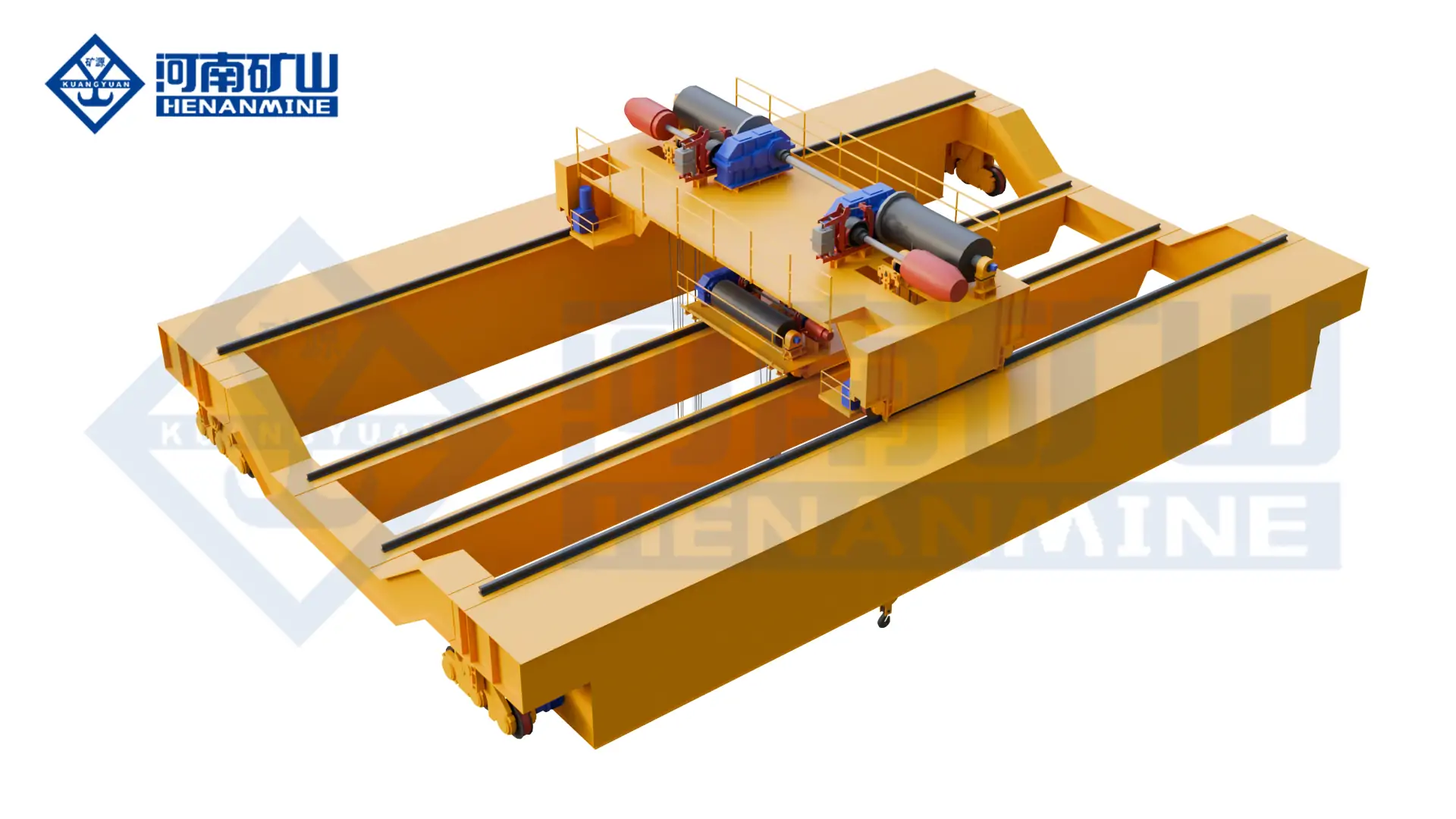
| YZS Four-Girder Casting Crane | 200/50–500/200 t; 10–40 m span; A7–A8 | Ultra-heavy ladle handling with independent main and auxiliary trolleys | Large ladles, demanding torsional load cases, multi-function handling and high production criticality |
| YZD Metallurgical Bridge Crane | 5–200 t; 10–35 m span; A6–A8 | Project-specific metallurgical lifting, including selected hot-metal and high-temperature processes | Flexible range, subject to confirmation of suitability for the exact molten-metal load case |
| YX Metallurgical Bin Crane | 5–50 t; 7.5–35 m span; A6–A7 | Material-box lifting, furnace charging and tipping | Select when the primary load is a charge box or bin rather than a molten-metal ladle |
| Slab Handling Crane | 20–150 t; 10–39 m span; A7–A8 | Solid slab, billet and steel-product handling | Not a substitute for direct molten-ladle lifting; attachment and loss-of-power response are different |
| Quenching Crane | Project-configured high-duty system | Rapid immersion and withdrawal of hot components during heat treatment | Select for quenching cycles, not ladle transfer or pouring |
Published ranges identify separate product families and do not create a universal capacity–span combination. Final values are confirmed by structural calculation, mechanism selection, runway limits and the approved technical specification.
Molten-Metal Lifting, Transfer and Pouring
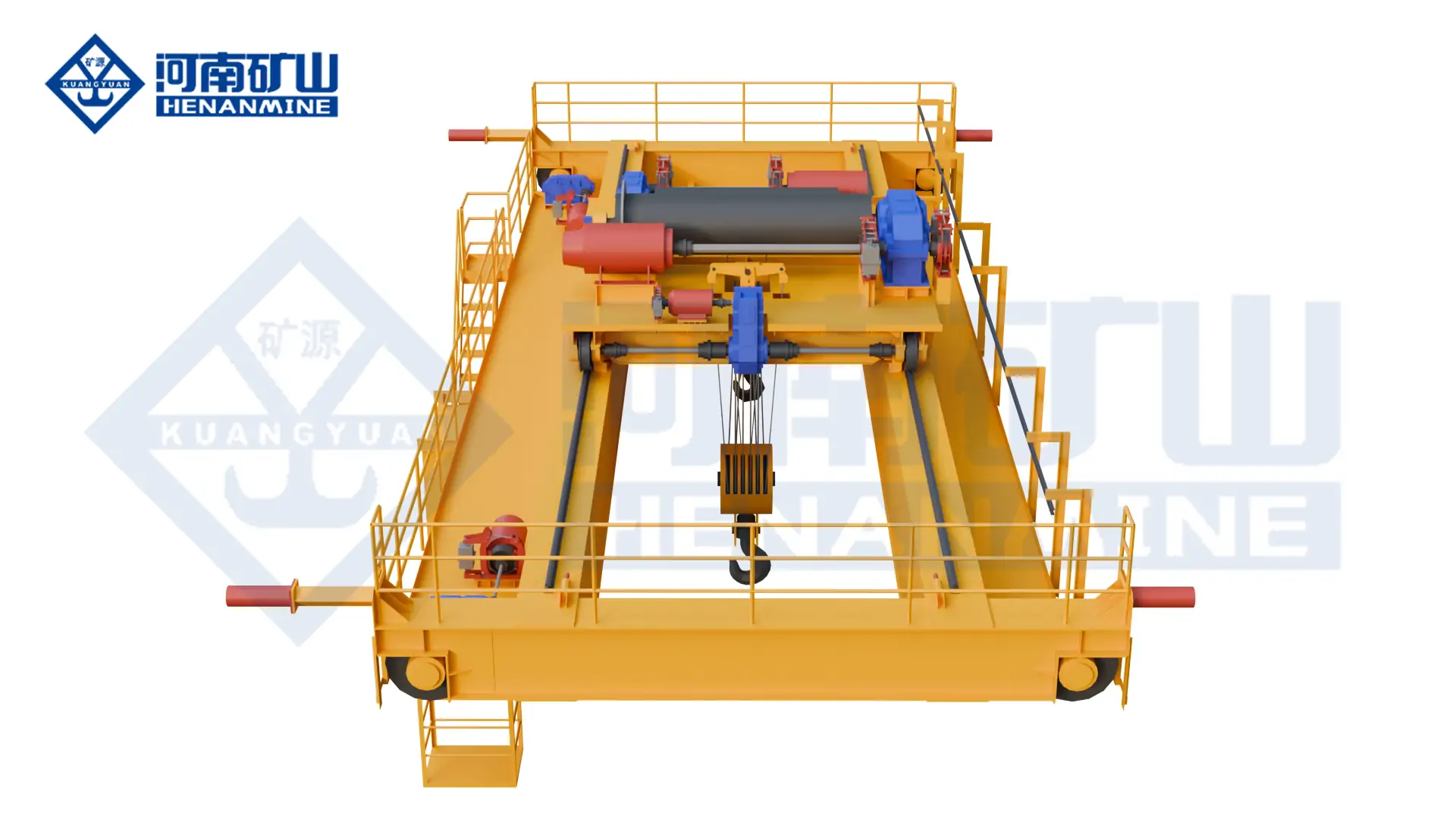
1. Secure Ladle Engagement
The gantry-type plate hook or ladle beam engages both trunnions within the defined clearance envelope. Attachment geometry must control seating, disengagement risk, side loading and inspection access.
2. Stable Vertical Lift
The main hoist raises the complete suspended load with controlled acceleration. Reeving symmetry, drum arrangement, brake control and low-speed capability influence ladle stability.
3. Controlled Cross and Long Travel
Trolley and bridge drives transport the ladle through the approved route. Variable-frequency control, defined approach speeds and interlocks can reduce abrupt motion near furnaces, ladle cars and pouring stations.
4. Pouring or Safe Placement
Where the process requires crane-assisted pouring, the auxiliary hook and ladle arrangement are evaluated as one system. Normal placement and emergency set-down locations are defined before controls and operating procedures are finalized.
Foundry Crane Structure and Hoisting Safety
Engineered Primary Load Path
Girders, trolley frame, drums, ropes, sheaves, equalizing elements, hooks and ladle attachment are evaluated for rated, dynamic, off-centre and process-specific load cases.
Hoisting Redundancy
Dual drive trains, multiple brakes, drum brakes, balancing devices or emergency operating provisions can be specified where required by capacity, risk assessment and governing rules.
Braking and Limits
Service and emergency braking functions, upper limits, overload limiting, overspeed response and travel limits are defined by function, setpoint, independence and test method.
Thermal Protection
Heat shields, protected cables, metallurgical-duty motors, ventilated cabinets, insulated cabins and temperature monitoring can protect critical equipment from radiant heat and dust.
No single component list establishes molten-metal lifting safety. The technical agreement must define the complete safety architecture, credible failure conditions, functional response, verification procedure, destination regulations and responsibilities for crane, runway, power supply and operating procedure.
Foundry Crane Specifications
The product family covers several structural arrangements. Listed values are initial model ranges; each commercial proposal requires confirmation against the ladle, process cycle, building and selected standard.
| Product Family | Capacity | Span | Lifting Height | Working Class | Arrangement |
|---|---|---|---|---|---|
| YZD Metallurgical Crane | 5–200 t | 10–35 m | 8–30 m | A6–A8 | Project-specific metallurgical configuration |
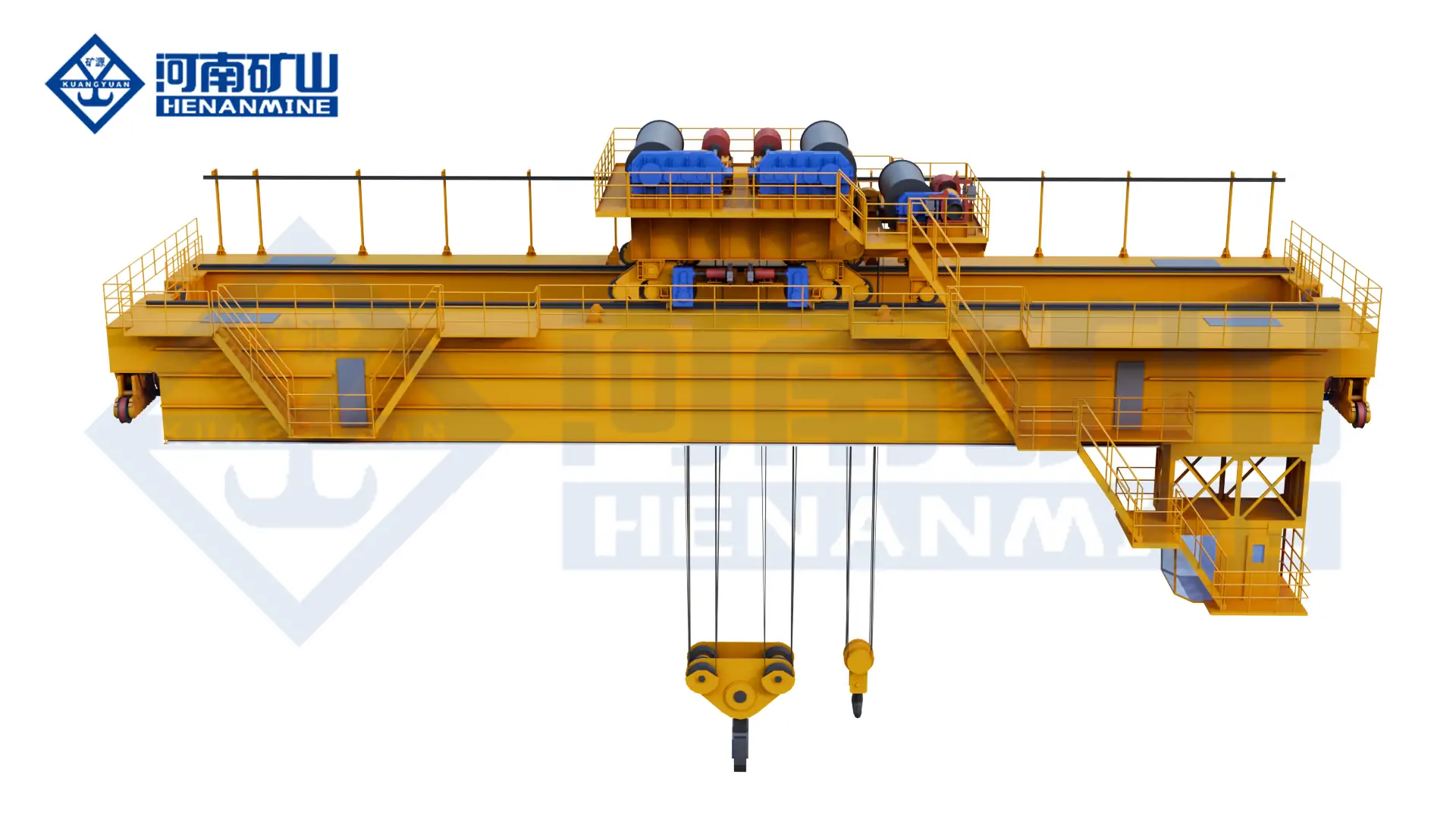
| YZ Double-Girder Foundry Crane | 50–150 t | 10–35 m | 6–25 m | A7–A8 | Double girder, single trolley |
| YZS Four-Girder Casting Crane | 200/50–500/200 t | 10–40 m | 6–30 m | A7–A8 | Four girders, four or six rails, dual trolley |
Control, Monitoring and Operator Protection
Operator Cabin
An enclosed, thermally protected cabin provides a stable operating position for long travel and continuous foundry duty. Sightlines, glazing, access, ventilation and emergency egress require project review.
Remote or Automatic Control
Radio remote, remote station or automatic operation can be evaluated when visibility, exclusion zones, communications, risk assessment and process interlocks support the selected method.
Drive and Motion Control
Variable-frequency drives, low-speed approach, controlled acceleration and coordinated bridge drives support stable transfer. Required speeds follow cycle-time and ladle-stability calculations.
Condition and Safety Monitoring
Load, brake state, motor temperature, cabinet temperature, limits, travel position and selected drivetrain conditions can be monitored, alarmed and recorded within the agreed control scope.
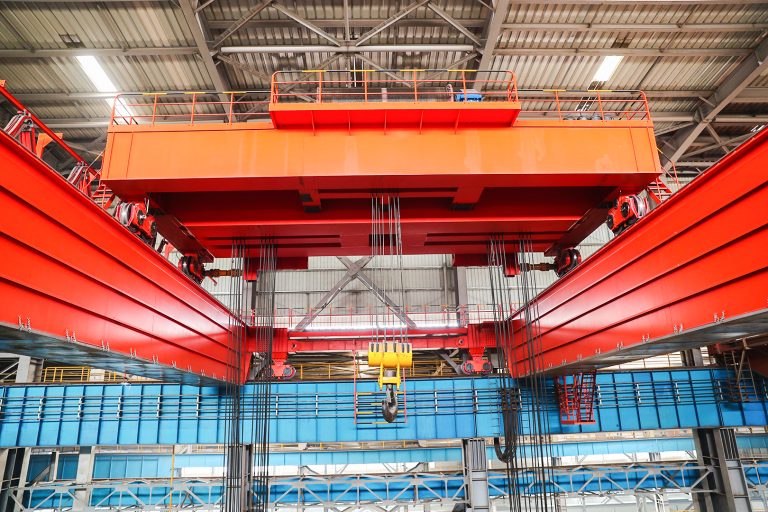
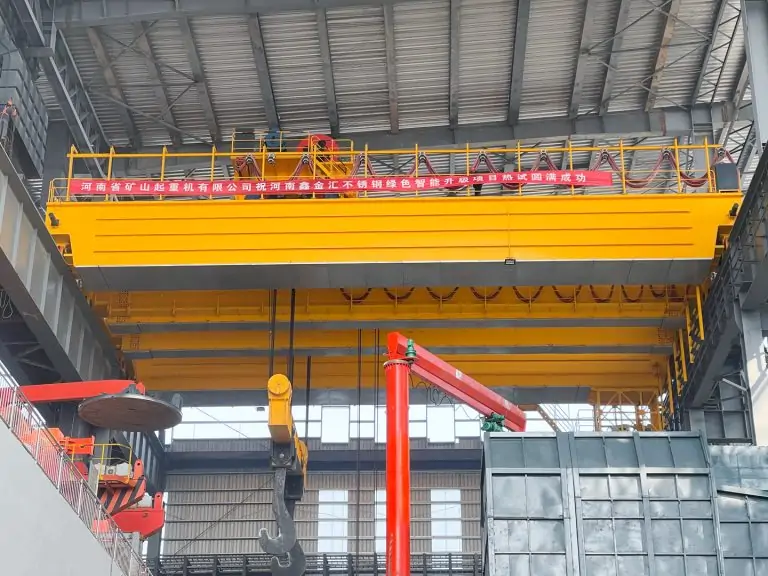
Representative Foundry Crane Projects
A relevant project record identifies the handled load, structural arrangement, operating environment and process function. The following installations demonstrate heavy and ultra-heavy molten-metal crane engineering.
Engineering, Manufacturing and Project Documentation
A foundry crane purchase specification should establish the design basis, safety functions, manufacturing inspections, factory tests and handover records before fabrication. Henan Mine Crane aligns the document schedule with the agreed product scope and destination requirements.
Engineering Package
- Design criteria and duty classification basis
- General arrangement, hook coverage and clearance drawings
- Wheel loads and runway reaction schedule
- Safety-function and control-system narrative
Manufacturing Controls
- Material identification and agreed certificate review
- Welding procedure, inspection and dimensional verification
- Drum, sheave, rope, brake and wheel alignment checks
- Heat shielding, cab and electrical enclosure inspection
Testing and Handover
- Factory mechanism, brake, limit and interlock tests
- Inspection records and component certificates
- Site commissioning and specified load testing
- Operation, maintenance and spare-parts documentation
Applicable standards, third-party inspection, witness points, functional tests, certificate formats and document language must be named in the inquiry and purchase agreement. Compliance is confirmed for the selected crane and project scope, not inferred from another model or installation.
Delivery, Installation, Commissioning and Maintenance
Shipment and Site Readiness
Transport segmentation, packing, unloading route, erection equipment, runway completion, power availability and shutdown permits are coordinated before dispatch.
Erection and Alignment
Installation covers bridge and trolley assembly, rail and wheel interface checks, attachment setup, electrification, cabin systems and verification of process clearances.
Commissioning and Acceptance
Commissioning verifies motions, brakes, limits, overload functions, emergency responses, communications, alarms, interlocks and specified no-load and load tests.
Lifecycle Maintenance
Inspection plans address ropes, sheaves, drums, hooks, ladle attachments, brakes, wheels, rails, heat shields, cabins, electrical equipment and safety functions based on duty and condition.
Foundry Crane Price and Complete Cost Scope
For early capital planning, current international listings for new foundry and ladle crane equipment span approximately US$48,000 to more than US$2,000,000 per set. The range covers materially different products—from relatively basic double-girder models to ultra-heavy four-girder, dual-trolley systems—and cannot be treated as a standard selling price.
Henan Mine Crane quotations are project-specific. Capacity, ladle mass and geometry, span, lifting height, working class, redundant hoisting scope, heat protection, controls, certification, runway work and site services can change the budget substantially. Large 200–500 t systems and complete installed projects may exceed public equipment-only listings.
| Cost Package | Typical Inclusions | Principal Cost Drivers |
|---|---|---|
| Crane Equipment | Bridge, trolley or trolleys, hoisting and travel mechanisms, cabin, controls, electrification and specified safety functions | Capacity, span, lift, duty, speed, redundancy, heat exposure and control architecture |
| Ladle Attachment and Rigging | Gantry-type plate hook, ladle beam, forged hooks, sheaves, rigging interfaces and special monitoring as agreed | Ladle geometry, trunnion interface, heat, load case, rotation and inspection requirements |
| Runway, Building and Electrical Work | Rails, runway beams, columns or reinforcement, conductor system, isolators, feeder and plant interfaces when included | Runway length, wheel loads, existing structure, foundations, power supply and local construction rates |
| Delivery, Erection and Acceptance | Packing, freight, unloading, erection supervision or installation, commissioning, load testing, training and inspection support | Destination, shipment size, access, labor, test loads, shutdown schedule and regulatory process |
A valid commercial comparison uses the same complete suspended load, span, lift, duty, redundancy, heat protection, control method, standards, attachment, runway boundary, delivery term, documentation and site-service scope. Equipment-only offers are not directly comparable with installed-system quotations.
Foundry Crane FAQ
Is a foundry crane the same as a ladle crane or casting crane?
The terms commonly overlap when the crane lifts molten-metal ladles. A purchase specification should still identify the exact material, ladle, attachment, transfer route and pouring function because not every metallurgical crane is approved for direct molten-metal handling.
When is a four-girder foundry crane preferred?
Four-girder construction is evaluated for ultra-heavy ladles, demanding torsional and wheel-load conditions, separate main and auxiliary trolleys, multi-function operation and high production criticality. Final selection depends on structural calculation and risk assessment.
How is foundry crane capacity calculated?
Rated load must account for the molten metal, ladle shell and refractory lining, ladle beam or gantry hook, rigging and allowances required by the governing design basis. Liquid-metal mass alone is not the crane capacity.
Does every foundry crane require two motors and two reducers?
Redundancy depends on rated load, operating risk, destination rules and selected standard. Dual drive trains, multiple brakes or an emergency brake can be required for some projects, while another approved architecture may apply to a different capacity and duty.
Which working class is used for foundry cranes?
Henan Mine Crane foundry product families are listed from A6 to A8, with direct production ladle cranes commonly in the A7–A8 range. The final class follows the selected classification system, operating hours, starts, load spectrum and process criticality.
How is the crane protected from foundry heat?
Protection can include shields below girders and trolley equipment, heat-resistant cables and motors, cooled or ventilated cabinets, protected braking equipment, thermal monitoring and an insulated operator cabin. The package follows measured ambient and radiant exposure.
Can a foundry crane use an existing runway?
An existing runway can be considered after checking rail condition and alignment, vertical and horizontal reactions, columns, brackets, foundations, crane clearances and the effect of heat. Structural verification is required before crane manufacture.
Is cabin or remote control more suitable?
Cabin control is common for intensive ladle transfer because it provides a defined protected station. Radio remote or automatic control can be evaluated when visibility, exclusion zones, communications, emergency response and process risk support the method.
How much does a foundry crane cost?
International listings for new foundry and ladle crane equipment currently span approximately US$48,000 to more than US$2,000,000 per set. Final cost depends on capacity, structure, duty, redundancy, attachment, heat protection, runway work, freight, installation and inspection scope.
What information is required for a foundry crane quotation?
The RFQ should include metal type and temperature, liquid-metal and complete ladle mass, ladle and trunnion drawing, required attachment, span, lift, runway length, operating cycle, transfer route, power supply, site environment, governing standards and delivery and installation boundary.
Request a Foundry Crane Quote
Henan Mine Crane prepares a project-specific foundry crane configuration, safety scope and commercial schedule from the process and site data. The RFQ should include:
- Molten-metal type and temperature, liquid-metal mass, complete ladle mass and normal fill level.
- Ladle drawing, trunnion diameter and centres, required ladle beam or gantry hook and pouring method.
- Runway span, lifting height, runway length, rail elevation, building section and available wheel-load limits.
- Heat schedule, lifts per hour, load spectrum, travel distances, required speeds and production criticality.
- Ambient and radiant heat, dust, fumes, splash exposure, cabin position and preferred control method.
- Power supply, project country, governing standards, inspection plan, delivery term and installation boundary.