

Henan Mine Crane · Project-Configured Lifting Equipment
10 Ton Overhead Crane
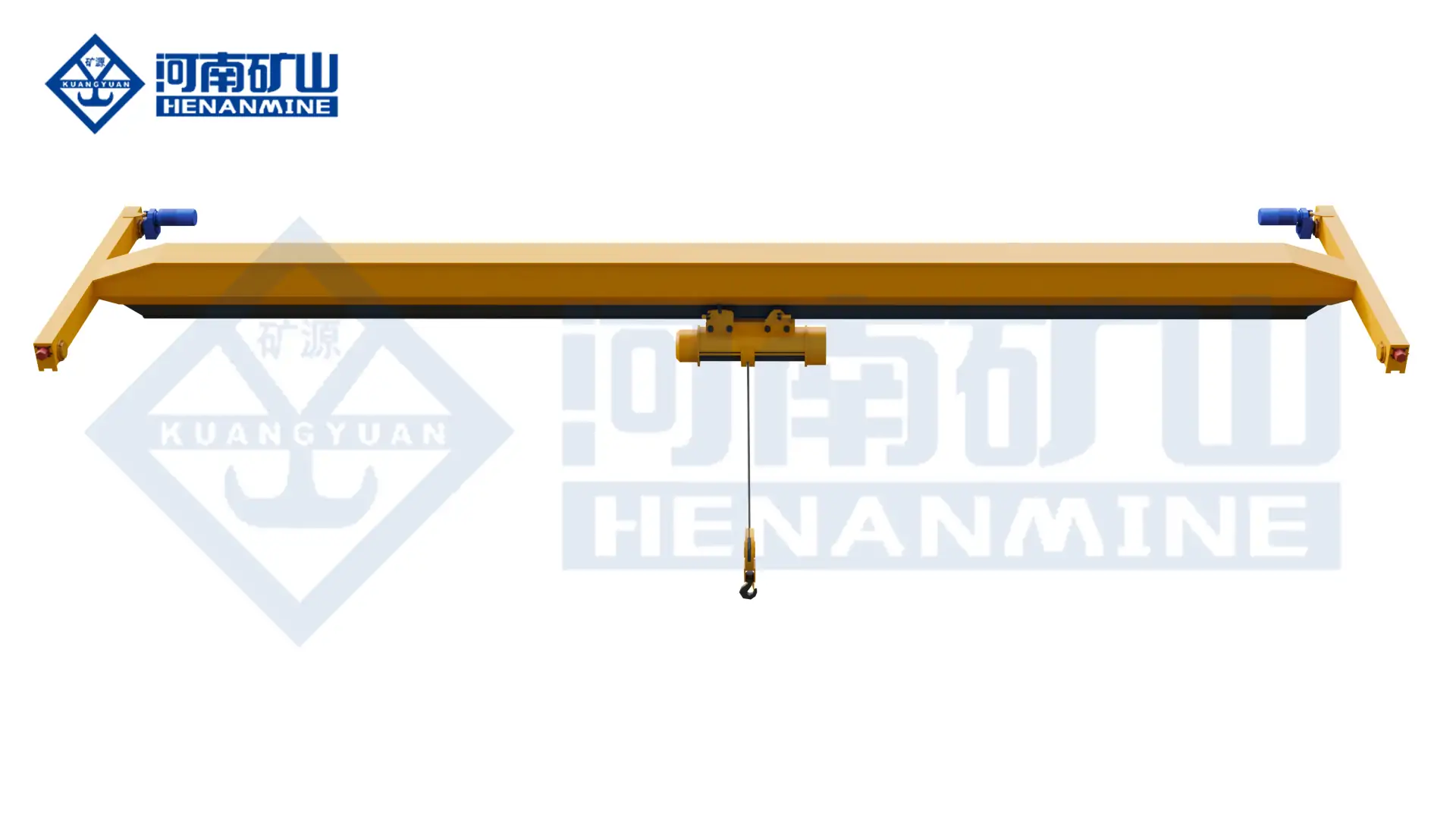
Henan Mine Crane manufactures project-configured 10 ton overhead cranes for machinery production, fabrication, assembly, warehousing and plant maintenance. Single-girder, double-girder, top-running and underhung arrangements are selected from the load spectrum, span, hook envelope, operating duty and building structure.
Current market indications place standard factory-supply equipment at approximately US$10,000–$22,000 for single-girder designs and US$15,000–$32,000 for double-girder designs. Runway systems, freight, installation and site electrical work are separate unless expressly included.
RATED CAPACITY
10 t / 10,000 kg
GENERAL WORKSHOP OPTION
Single Girder + Electric Hoist
CONFIGURATION OPTIONS
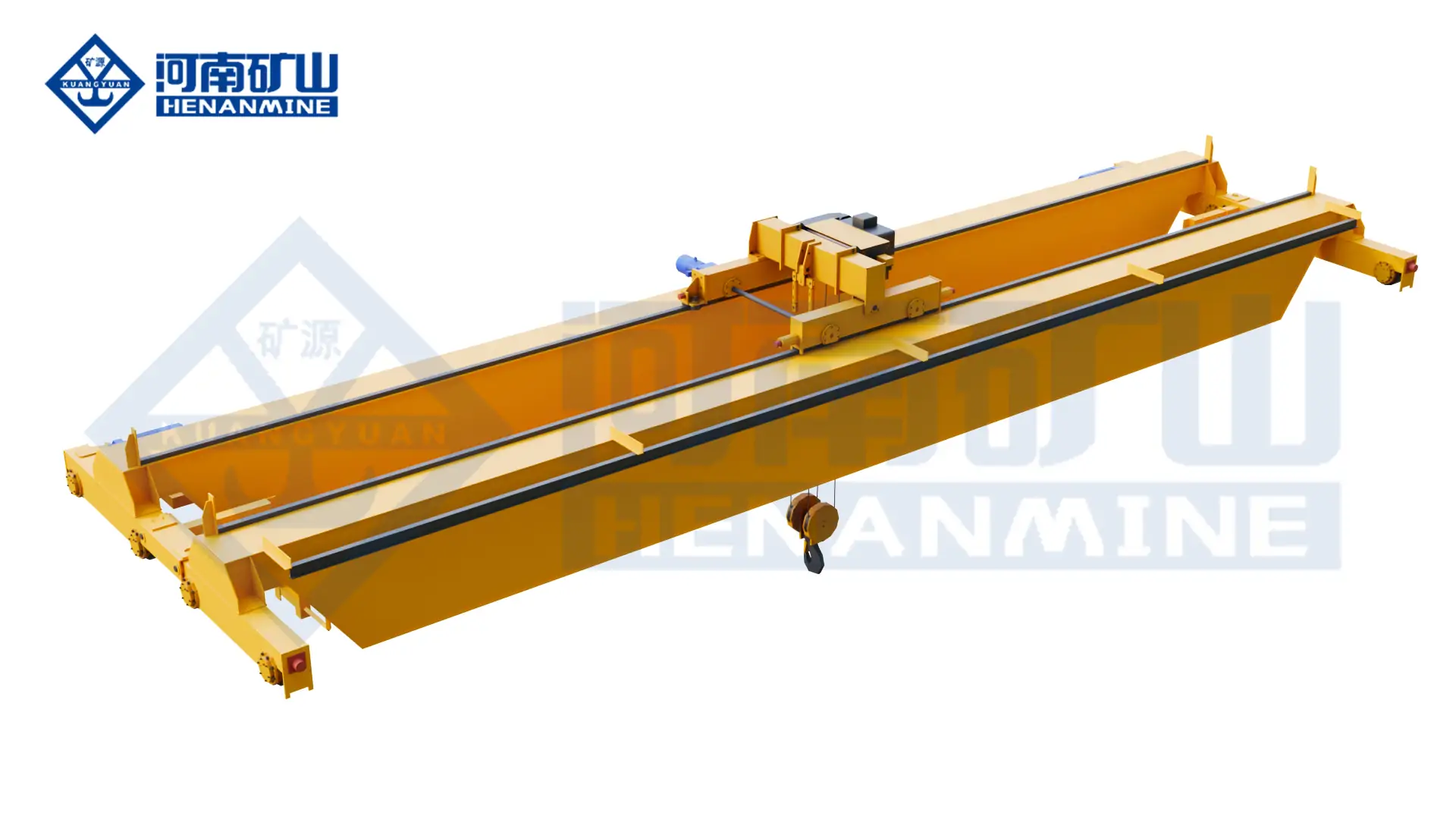
Double Girder & Underhung
INITIAL EQUIPMENT BUDGET
US$10,000–$32,000
10 Ton Overhead Crane Capacity and Applications
A 10 ton overhead crane is an overhead travelling crane rated to lift 10 metric tonnes, or 10,000 kg, within its approved configuration. The bridge travels along parallel runways, the hoist or trolley crosses the bridge, and the hook raises or lowers the load to provide three-axis material handling across a defined bay.
Commercial specifications for a 10 ton bridge crane, 10 ton EOT crane or 10 tonne overhead crane commonly describe the same moving-bridge equipment family. The capacity unit must remain explicit because 10 metric tonnes and 10 US short tons are not equal. For a hook crane, the payload and separately suspended lifting gear must remain within the permitted load for the approved lifting arrangement.
Capacity example: a 9,600 kg component plus a 600 kg lifting beam and slings totals 10,200 kg. That exceeds a 10,000 kg rating. The complete suspended load must remain within the permitted capacity of the selected lifting arrangement.
Machinery and Tooling
Transfer machine components, fixtures, dies and tooling between storage, preparation and production stations. Load geometry, lifting points and placement tolerance form part of the specification.
Fabrication and Assembly
Move fabricated frames, vessels and assemblies through a production bay. The crane layout must cover pickup, welding, inspection and assembly positions without interference from fixed equipment.
Warehouse and Maintenance
Handle suitable unit loads or remove pumps, motors and production machinery for service. Hook coverage must be coordinated with racks, maintenance platforms and removal routes.
Selection Considerations
01 / LOAD
Complete Suspended Load
Define the maximum payload, typical load distribution, attachment mass, dimensions and centre of gravity. Anticipated production changes should be included before capacity is fixed.
02 / COVERAGE
Span and Hook Coverage
Define runway centreline spacing, travel length, highest and lowest hook positions, and all pickup and placement points. Side and end approaches affect usable coverage.
03 / STRUCTURE
Building and Supports
Provide runway elevation, rail details, roof members, doors and overhead services. Existing supports or a new freestanding runway require verification against crane reactions.
04 / DUTY
Operating Cycle
State lifts per hour, travel distances, shifts, operating hours and the proportion of lifts near 10 t. Crane and mechanism duty must match the actual load spectrum.
05 / CONTROL
Motion and Positioning
Select pendant, radio or cabin control together with motion speeds, dual-speed or variable-frequency drives, braking response and required positioning performance.
06 / ENVIRONMENT
Operating Conditions
Temperature, dust, humidity, corrosion, outdoor exposure and hazardous-area classification determine enclosure, coating, component and conformity requirements.
Single and double girder describe the bridge beams. Top running and underhung describe how the bridge travels on its runways. A hoist travelling below one girder does not by itself make the whole crane an underhung design.
10 Ton Overhead Crane Compared with Other Overhead Crane Configurations
Compare bridge structure and application requirements at the same rated load. The linked pages describe product families; special-purpose configurations require confirmation of their 10 t rating, lifting attachment and operating duty in the proposal.
| Configuration | Arrangement | Application | Selection Point |
|---|---|---|---|
| Single-Girder Overhead Crane | One bridge girder with a travelling electric hoist. | Routine workshop, assembly and warehouse hook handling. | Compare hook height, approaches, hoist duty and runway loading. |
| LH Double-Girder Overhead Crane | Two bridge girders support the electric-hoist trolley. | Projects needing a different trolley layout or lifting envelope. | Confirm the complete crane dimensions and duty; girder count alone does not establish service class. |
| LX Underhung Overhead Crane | Bridge end carriages travel on the lower flanges of suitable runway beams. | Layouts where a suspended runway arrangement suits the building. | Assess beams, connections, support loads and clearances. Roof suitability requires verification. |
| Explosion-Proof Overhead Crane | Equipment protection is selected for the classified environment. | Handling in a specified hazardous gas or dust area. | Provide the area classification, substance information and documentation requirements. |
| European-Style Single-Girder Crane | A compact bridge and low-headroom hoist use selected drive and control packages. | Production handling requiring controlled motion and efficient use of vertical space. | Compare the actual hook height, wheel loads, speeds, component schedule and maintenance access. |
| Electromagnetic Overhead Crane | A lifting magnet and power system handle suitable steel products. | Handling selected plates, sections or other ferromagnetic loads. | Account for magnet mass, material condition and the required response to loss of power. |
| Metallurgical Overhead Crane | The crane is designed for the stated hot-material process. | Specified steelmaking or other thermal handling duties. | Describe heat exposure, load containment and fault consequences; molten-metal lifting needs a dedicated design. |
10 Ton Overhead Crane Specifications
The following catalogue data identifies available 10 t configurations within three Henan Mine Crane product families. Single-girder and LX underhung values are shown for the 10 t model; LH double-girder values show the configurable family envelope because the final trolley and mechanism package is selected for the project.
| Parameter | Single-Girder Configuration | LH Double-Girder Family | LX Underhung Configuration |
|---|---|---|---|
| Rated capacity | 10 t | 10 t | 10 t |
| Listed spans | 7.5, 11.5, 14.5, 17.5, 19.5, 22.5, 25.5, 28.5 m | 7.5–31.5 m family range; final span project-selected | 3.5, 8.5, 12.5, 16.5, 20, 22.5 m |
| Listed lifting heights | 6, 9, 12, 18, 24, 30 m | 6–30 m family range; final lift project-selected | 6, 9, 12, 18, 24, 30 m |
| Configurable hoisting speed | 7 m/min or 7/0.7 m/min | Project-selected for mechanism duty and positioning requirements | 7 m/min or 7/0.7 m/min |
| Configurable trolley travel | 20 or 30 m/min | 10–40 m/min family range | 20 m/min |
| Configurable bridge travel | 20 or 30 m/min | 10–40 m/min family range | 20 m/min |
| Working class | A5 catalogue configuration | A3–A5 family range | A3–A5 family range |
| Catalogue motor power | 13.8 kW | Project-defined | 15.2 kW |
The 7/0.7 m/min entry denotes a two-speed hoisting option. Catalogue values establish available equipment ranges, not an automatic combination. Lifting height describes vertical hook travel and does not establish minimum building height.
Confirm crane and mechanism duty, control method, site voltage, frequency and phases separately. Obtain the selected crane weight, wheel loads, wheel spacing, rail or beam interface and hook approaches in the project drawings.
Headroom, Hook Coverage and Runway Loads
Check the Complete Lifting Envelope
Show the highest and lowest required hook positions, load dimensions, slings or lifting beam, and any extraction distance above a machine. Allow for the crane structure, trolley, hook block and clearances to roof members and services.
A low-headroom hoist and an underhung bridge are different design choices. Compare dimensioned arrangements at the required hook position. Include door tracks, lights, ducts and the load route between stations.
Verify Runway Compatibility
A runway previously carrying a 10 t crane may still need modification for a replacement. Different crane weights, wheel spacing, reactions and rail interfaces can change the support requirements.
Where existing building steelwork is unsuitable, a separate engineered support system may be considered. Its columns, bracing and foundations must fit the site and handling routes.
Hoisting, Travel and Control Options
Hoisting Motion
The hoist raises and lowers the load. Select hook travel, braking and speed control around the lifting task, especially when placing a component into machinery.
Trolley Motion
The trolley or travelling hoist moves across the bridge. Its dimensions and stopping positions determine usable side approaches.
Bridge Motion
End carriages move the bridge along the runways. The drive arrangement and runway alignment must work together over the required travel length.
Pendant or radio control should suit operator visibility and access. Discuss variable-speed requirements through the Frequency-Conversion Overhead Crane configuration. Frequent starts, short positioning moves and repeated near-capacity lifts all form part of duty selection; a 10 t rating alone does not define continuous operating capability.
Safety Features and Application Requirements
Include the safety and control schedule in the technical agreement, with required functions and their verification method identified for the selected crane.
Load and Motion Protection
Specify overload protection, hoisting limits, travel limits, brakes, emergency stops and applicable electrical protections. Agree the inspection and functional checks for acceptance.
Runway and Operator Safety
Define end stops, buffers and relevant wheel-protection details. Assess shared-runway separation, operator visibility and safe access for inspection and isolation.
Application-Specific Protection
Hot loads, lifting magnets and classified hazardous areas require additional design decisions. Define thermal protection, braking or retained-load functions around the actual process.
For two-hoist handling, review the Double-Trolley Overhead Crane arrangement. State individual and shared-load limits, lifting-point spacing and coordinated movements. Two hoist ratings cannot simply be added to establish the permissible load of the crane.
Manufacturing and Order Documentation
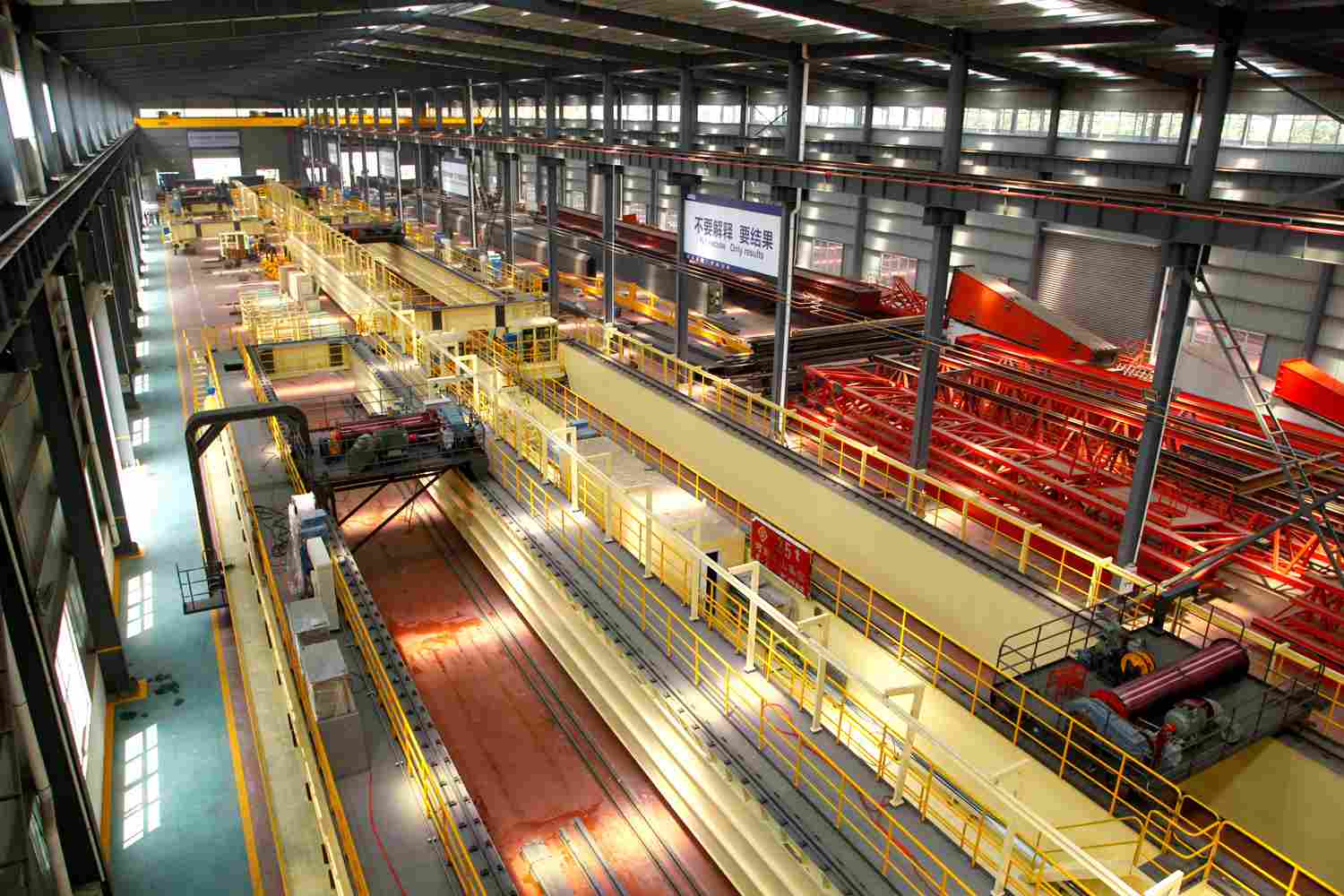
Henan Mine Crane provides manufacturing visibility through the Factory Scene Display. The technical agreement and inspection plan should define approved drawings, material and component identification, fabrication checkpoints, functional tests and records supplied with the equipment.
- General arrangement drawing with crane envelope and hook approaches.
- Runway interface data, wheel loads and support reactions.
- Hoist, motors, brakes, drives, controls and electrical component schedule.
- Electrical drawings, operating instructions and maintenance documentation.
- Dimensional, electrical and functional inspection records within the agreed scope.
- Factory and site test records, including load testing where contractually required.
Project location, governing regulations, design standard, documentation language and conformity scope must be stated before order placement. The signed technical agreement establishes applicable requirements, inspection responsibilities and acceptance criteria.
Installation, Commissioning and Maintenance
Prepare the Site
Survey runway geometry and clearances, confirm structural suitability and arrange the incoming electrical supply. Plan unloading, assembly space and installation equipment.
Agree Commissioning
Define who supplies runway beams, rails, conductors and supports. Agree site inspection, functional testing, applicable load tests, handover and operator familiarisation before installation.
Maintain the Complete System
Plan access to ropes, hooks, brakes, limits, wheels, drives and electrical equipment. Set inspection and maintenance intervals using the supplied manuals, operating duty and applicable requirements.
For an operating workshop, coordinate the installation sequence and required shutdown with production. Confirm component replacement clearances and spare-parts requirements during the layout review.
10 Ton Overhead Crane Price
A standard 10 ton single-girder overhead crane commonly falls within an indicative factory-equipment market budget of US$10,000–$22,000. A double-girder factory package commonly falls within approximately US$15,000–$32,000.
These figures are market budget bands rather than fixed Henan Mine Crane selling prices. Span, lift, working class, hoist or trolley design, controls, environmental protection, destination and contracted scope determine the formal quotation.
| 10 Ton Configuration | Indicative Equipment Budget | Commercial Basis | Principal Cost Variables |
|---|---|---|---|
| Standard Single-Girder Factory Supply | US$10,000–$22,000 | Bridge, end carriages and standard electric-hoist equipment; site work normally separate | Span, lifting height, hoist, speeds, controls and destination voltage |
| Indicative Landed Single-Girder Equipment | US$14,000–$28,000 | Factory equipment with indicative ocean freight, basic import duty and destination port handling | Destination, freight market, duties, port charges and delivery term |
| Double-Girder Factory Supply | US$15,000–$32,000 | Two bridge girders with the selected trolley or electric-hoist arrangement | Trolley design, service access, bridge mass, duty, controls and wheel loads |
| North American Installed-System Benchmark | About US$65,000 single girder; near US$100,000 double girder | U.S.-market installation benchmark rather than factory-export equipment pricing | Regional labor, runway condition, access, erection, startup and testing scope |
Low advertised amounts may cover only a hoist, component kit or basic factory package. Runway beams, columns, foundations, incoming power, international freight, import charges, unloading, erection, site wiring, commissioning and third-party inspection remain outside the price unless expressly included.
Crane Equipment
Bridge, end carriages, hoist or trolley, travel drives, control panel, operator controls and specified protective functions.
Runway and Electrical Scope
Rails, runway beams, columns, brackets, foundations, conductor system and incoming electrical interface.
Delivery and Site Work
Export packing, freight, insurance, unloading, erection, testing, commissioning, training and handover records.
A valid commercial comparison uses the same capacity unit, span, lift, working class, control method, component scope, environmental protection and delivery term. Equipment-only pricing is not directly comparable with an installation-inclusive proposal. A detailed cost structure is available in the 10 Ton Overhead Crane Price Guide.
10 Ton Overhead Crane FAQ
Are the 10 ton overhead cranes supplied as new equipment?
Henan Mine Crane supplies newly manufactured, project-configured equipment. The order documents define the bridge arrangement, hoist, components, controls, drawings, inspection scope, delivery boundary and warranty terms.
How much does a 10 ton overhead crane cost?
Indicative factory-equipment budgets commonly range from US$10,000–$22,000 for single-girder configurations and US$15,000–$32,000 for double-girder configurations. Runways, freight, foundations, installation, site wiring and commissioning remain additional unless expressly included.
Is a 10 ton overhead crane the same as a 10 ton bridge crane or EOT crane?
These terms commonly describe the same electrically powered moving-bridge lifting system. The specification should identify the bridge structure, runway arrangement, hoist and capacity unit so that quotations describe the same equipment.
Which is more suitable at 10 tons: single girder or double girder?
Compare usable hook height, side approaches, crane duty, runway reactions and total installed scope. A single-girder electric-hoist design is a starting option for general handling; a double-girder layout is evaluated where the required lifting envelope or equipment arrangement benefits from it.
How much building height does a 10 ton crane need?
There is no single minimum for every configuration. Provide the required highest hook position, load and rigging dimensions, runway elevation, roof structure and overhead services. A dimensioned proposal establishes the remaining clearances.
Can a 10 ton crane be installed on an existing runway?
It can be assessed using the runway survey, rail or beam details, support information and new crane reactions. The old crane rating alone is insufficient: wheel loads, wheel spacing, geometry and power demand may differ.
Can a 10 ton crane repeatedly lift its full rated load?
The selected duty and mechanism ratings must match the load spectrum and operating cycle. State how often near-capacity lifts occur, the lifting and travel distances, and the number of shifts. Rated capacity does not specify an unrestricted continuous work cycle.
When is a capacity above 10 tons required?
A higher rating is required when the maximum payload plus below-the-hook equipment exceeds the permitted 10 t load or when planned production changes make 10 t insufficient. The higher-capacity alternative must be checked against crane dimensions, runway reactions and total installed cost.
Does the quoted price include installation and runway beams?
The supply scope must say so explicitly. Request separate identification of crane equipment, runway components, supports, power supply, freight, installation, testing and commissioning. This makes equipment-only and installed-system quotations easier to compare.
How long does delivery take?
Delivery depends on drawing approval, configuration, component availability, production scheduling, inspection scope and transport route. Confirm the agreed milestones and any site-readiness requirements in the order documents.
Request A 10 Ton Overhead Crane Quote
A project-specific 10 ton overhead crane proposal is prepared from the load data, workshop drawing and required commercial boundary. The RFQ should include:
- Maximum and typical loads, attachment weights and load dimensions.
- Runway span and length, required hook positions and building cross-section.
- Operating cycle, environment, power supply and project location.
- Required crane, runway, installation, testing and delivery scope.